
#FactCheck- Edited Video Falsely Shows Aaj Tak Anchor Anjana Om Kashyap Apologizing
Executive Summary
A purported video of Hindi news channel Aaj Tak anchor Anjana Om Kashyap is being widely shared on social media. In the viral clip, Kashyap appears to be apologising and questioning her own journalistic credibility. The CyberPeace Research Wing research found the claim to be false. The probe revealed that the viral video was created by manipulating an original video of Anjana Om Kashyap. Her voice and statements were altered to falsely portray her as issuing an apology, whereas she made no such remarks in the original footage.
Claim:
A YouTube user shared the viral video claiming that Anjana Om Kashyap was apologising. The post can be seen here:
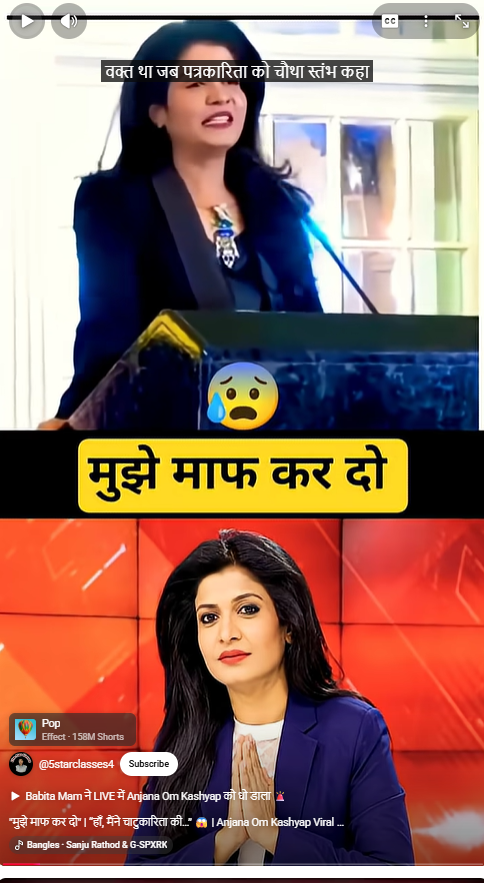
Fact Check
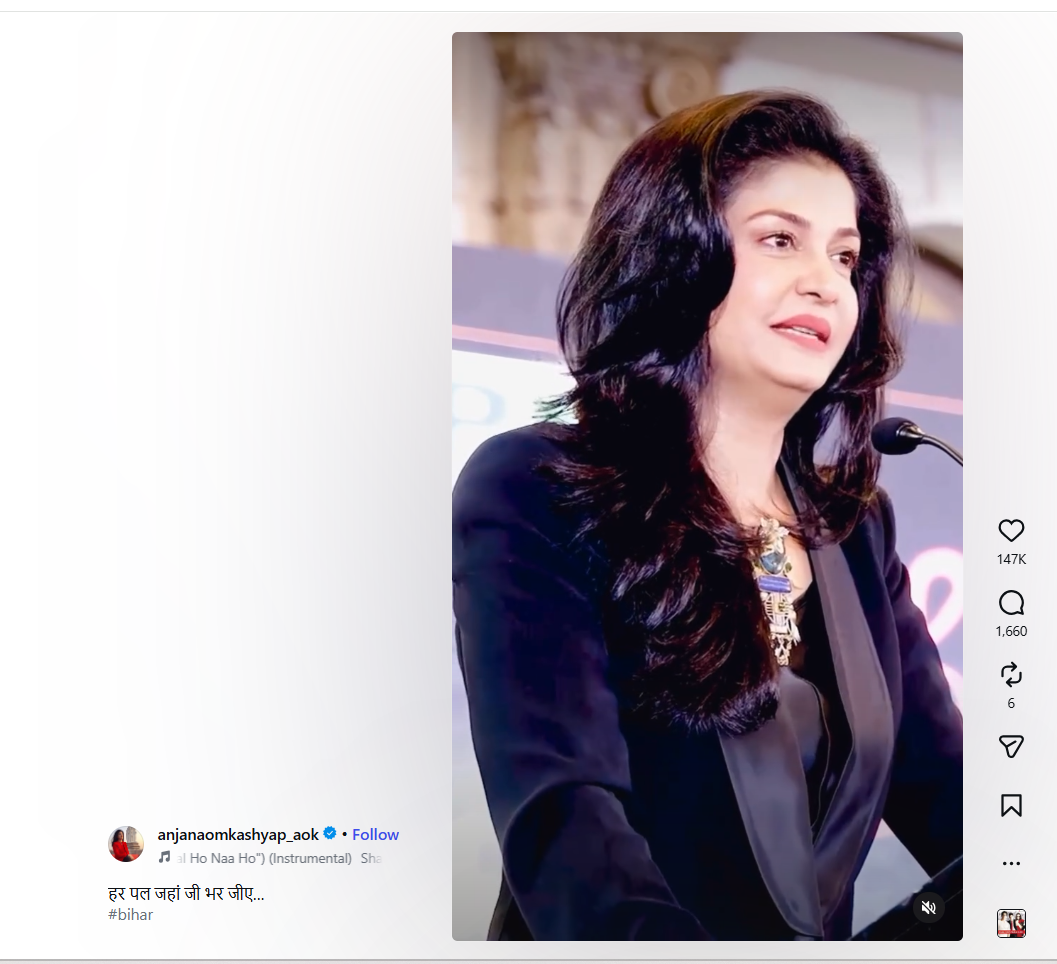
The keyframes of the viral video were analysed using reverse image search. During the research , the original reel was found on Anjana Om Kashyap’s Instagram account, where it was posted on December 26, 2023. In the original reel, Kashyap is seen praising Bihar. At no point does she apologise or make any statements similar to those heard in the viral clip.
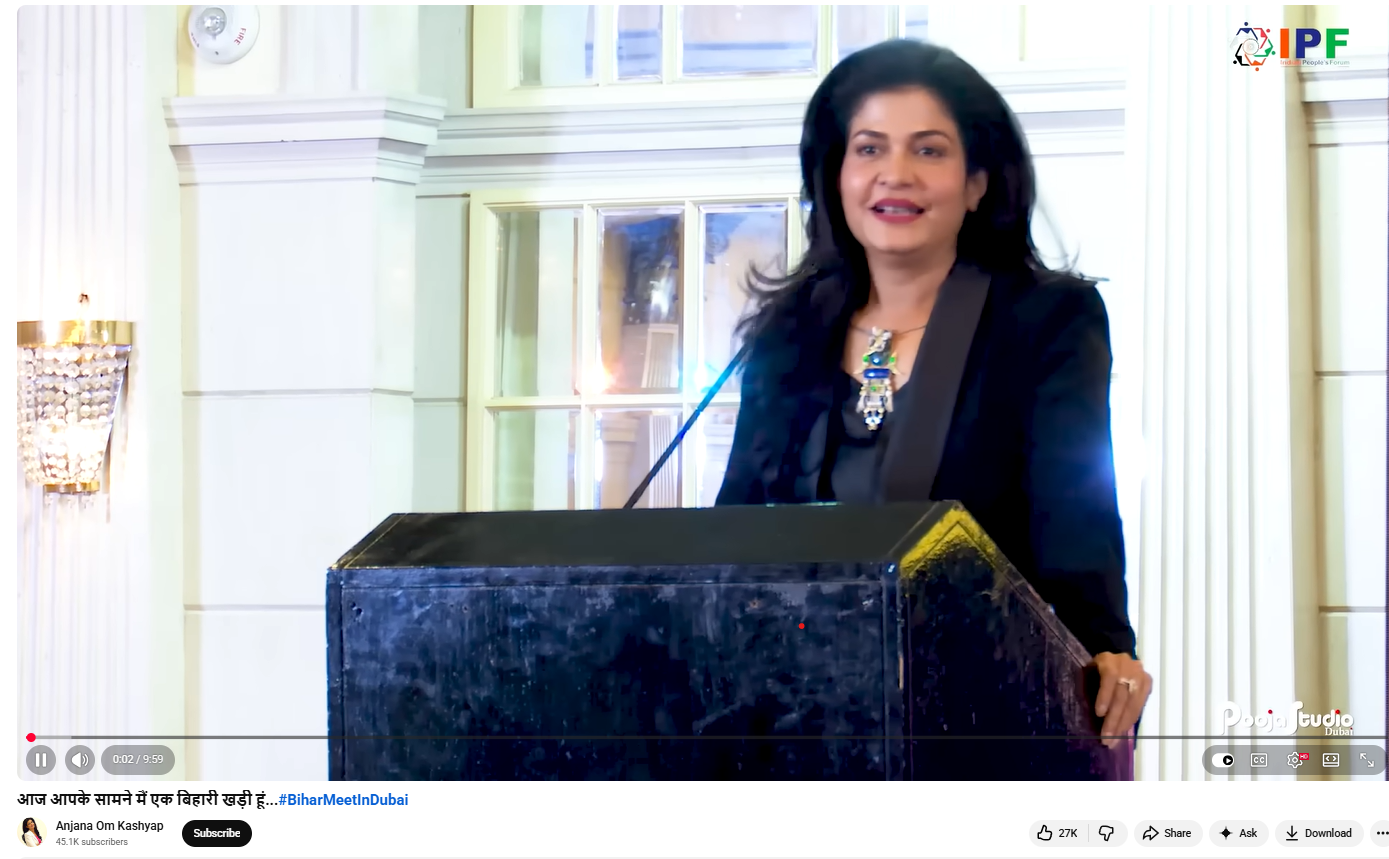
Further research led to the original version of the video on Anjana Om Kashyap’s YouTube channel, uploaded on October 17, 2023. According to the video description, the speech was delivered during the ‘Bihar Meet’ event organised by the Indian People Forum in the UAE. Notably, none of the statements heard in the viral clip appear in the original speech.
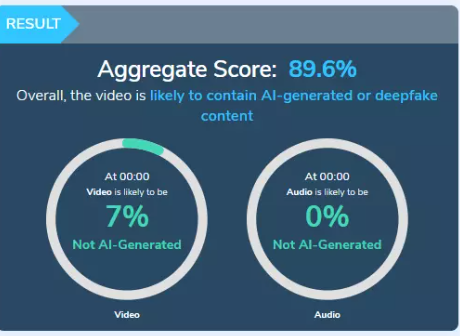
The viral video was also analysed using the AI-detection tool Hive Moderation, which indicated a high likelihood of AI-generated or deepfake manipulation.
Conclusion
The research found that the viral video has been digitally altered and falsely shared on social media. The original video of Anjana Om Kashyap was edited, and the audio was manipulated to create the misleading impression that she was apologising. No such statement was made by her in the authentic video.

Related Blogs

The European Union (EU) has made trailblazing efforts regarding protection and privacy, coming up with the most comprehensive and detailed regulation called the GDPR (General Data Protection Regulation). As countries worldwide continue to grapple with setting their laws, the EU is already taking on issues with tech giants and focusing on the road ahead. Its contentious issues with Meta and the launch of Meta’s AI assistant in the EU are thus seen as a complex process, shaped by stringent data privacy regulations, ongoing debates over copyright, and ethical AI practices. This development is considered important as previously, the EU and Meta have had issues (including fines and and also received a pushback concerning its services), which broadly include data privacy regarding compliance with GDPR, antitrust law concerns- targeting ads, facebook marketplace activities and content moderation with respect to the spread of misinformation.
Privacy and Data Protection Concerns
A significant part of operating Large Language Models (LLMs) is the need to train them with a repository of data/ plausible answers from which they can source. If it doesn’t find relevant information or the request is out of its scope, programmed to answer, it shall continue to follow orders, but with a reduction in the accuracy of its response. Meta's initial plans to train its AI models using publicly available content from adult users in the EU received a setback from privacy regulators. The Irish Data Protection Commission (DPC), acting as Meta's lead privacy regulator in Europe, raised the issue and requested a delay in the rollout to assess its compliance with GDPR. It has also raised similar concerns with Grok, the AI tool of X, to assess whether the EU users’ data was lawfully processed for training it.
In response, Meta stalled the release of this feature for around a year and agreed to exclude private messages and data from users under the age of 18 and implemented an opt-out mechanism for users who do not wish their public data to be used for AI training. This approach aligns with GDPR requirements, which mandate a clear legal basis for processing personal data, such as obtaining explicit consent or demonstrating legitimate interest, along with the option of removal of consent at a later stage, as the user wishes. The version/service available at the moment is a text-based assistant which is not capable of things like image generation, but can provide services and assistance which include brainstorming, planning, and answering queries from web-based information. However, Meta has assured its users of expansion and exploration regarding the AI features in the near future as it continues to cooperate with the regulators.
Regulatory Environment and Strategic Decisions
The EU's regulatory landscape, characterised by the GDPR and the forthcoming AI Act, presents challenges for tech companies like Meta. Citing the "unpredictable nature" of EU regulations, Meta has decided not to release its multimodal Llama AI model—capable of processing text, images, audio, and video—in the EU. This decision underscores the tension between innovation and regulatory compliance, as companies navigate the complexities of deploying advanced AI technologies within strict legal frameworks.
Implications and Future Outlook
Meta's experience highlights the broader challenges faced by AI developers operating in jurisdictions with robust data protection laws. The most critical issue that remains for now is to strike a balance between leveraging user data for AI advancement while respecting individual privacy rights.. As the EU continues to refine its regulatory approach to AI, companies need to adapt their strategies to ensure compliance while fostering innovation. Stringent measures and regular assessment also keep in check the accountability of big tech companies as they make for profit as well as for the public.
Reference:
- https://thehackernews.com/2025/04/meta-resumes-eu-ai-training-using.html
- https://www.thehindu.com/sci-tech/technology/meta-to-train-ai-models-on-european-users-public-data/article69451271.ece
- https://about.fb.com/news/2025/04/making-ai-work-harder-for-europeans/
- https://www.theregister.com/2025/04/15/meta_resume_ai_training_eu_user_posts/
- https://noyb.eu/en/twitters-ai-plans-hit-9-more-gdpr-complaints
- https://www.businesstoday.in/technology/news/story/meta-ai-finally-comes-to-europe-after-a-year-long-delay-but-with-some-limitations-468809-2025-03-21
- https://www.bloomberg.com/news/articles/2025-02-13/meta-opens-facebook-marketplace-to-rivals-in-eu-antitrust-clash
- https://www.nytimes.com/2023/05/22/business/meta-facebook-eu-privacy-fine.html#:~:text=Many%20civil%20society%20groups%20and,million%20for%20a%20data%20leak.
- https://ec.europa.eu/commission/presscorner/detail/en/ip_24_5801
- https://www.thehindu.com/sci-tech/technology/european-union-accuses-facebook-owner-meta-of-breaking-digital-rules-with-paid-ad-free-option/article68358039.ece
- https://www.theregister.com/2025/04/14/ireland_investigation_into_x/
- https://www.theverge.com/2024/7/18/24201041/meta-multimodal-llama-ai-model-launch-eu-regulations?utm_source=chatgpt.com
- https://www.axios.com/2024/07/17/meta-future-multimodal-ai-models-eu?utm_source=chatgpt.com

Executive Summary:
Recently, we came upon some AI-generated deep fake videos that have gone viral on social media, purporting to show Indian political figures Prime Minister Narendra Modi, Home Minister Amit Shah, and External Affairs Minister Dr. S. Jaishankar apologizing in public for initiating "Operation Sindoor." The videos are fake and use artificial intelligence tools to mimic the leaders' voices and appearances, as concluded by our research. The purpose of this report is to provide a clear understanding of the facts and to reveal the truth behind these viral videos.
Claim:
Multiple videos circulating on social media claim to show Prime Minister Narendra Modi, Central Home Minister Amit Shah, and External Affairs Minister Dr. S. Jaishankar publicly apologised for launching "Operation Sindoor." The videos, which are being circulated to suggest a political and diplomatic failure, feature the leaders speaking passionately and expressing regret over the operation.


Fact Check:
Our research revealed that the widely shared videos were deepfakes made with artificial intelligence tools. Following the 22 April 2025 Pahalgam terror attack, after “Operation Sindoor”, which was held by the Indian Armed Forces, this video emerged, intending to spread false propaganda and misinformation.
Finding important frames and visual clues from the videos that seemed suspicious, such as strange lip movements, misaligned audio, and facial distortions, was the first step in the fact-checking process. By putting audio samples and video frames in Hive AI Content Moderation, a program for detecting AI-generated content. After examining audio, facial, and visual cues, Hive's deepfake detection system verified that all three of the videos were artificial intelligence (AI) produced.
Below are three Hive Moderator result screenshots that clearly flag the videos as synthetic content, confirming that none of them are authentic or released by any official government source.


Conclusion:
The artificial intelligence-generated videos that claim Prime Minister Narendra Modi, Home Minister Amit Shah, and External Affairs Minister Dr. S. Jaishankar apologized for the start of "Operation Sindoor" are completely untrue. A purposeful disinformation campaign to mislead the public and incite political unrest includes these deepfake videos. No such apology has been made by the Indian government, and the operation in question does not exist in any official or verified capacity. The public must exercise caution, avoid disseminating videos that have not been verified, and rely on reliable fact-checking websites. Such disinformation can seriously affect national discourse and security in addition to eroding public trust.
- Claim: India's top executives apologize publicly for Operation Sindoor blunder.
- Claimed On: Social Media
- Fact Check: AI Misleads

Executive Summary
As West Bengal heads for vote counting on May 4, 2026, following the second phase of Assembly polling held on April 29, a video is being widely shared on social media. The clip shows security personnel baton-charging civilians, with users claiming it depicts force being used during the West Bengal Assembly Elections 2026. Research by CyberPeace Research Wing found that the viral claim is misleading. The video is actually from Bangladesh and is being falsely linked to the West Bengal elections to spread confusion.
Claim
A Facebook user named “Adv Mohd Salman” shared the clip on April 29, 2026, using Bengal-related hashtags and claiming that voters standing in line were beaten to influence the election outcome. The post alleged that free and fair voting rights were being suppressed.

Fact Check
To verify the claim, we closely examined the viral video. A vehicle visible in the footage had a registration number written in a non-Hindi script. Using Google Lens reverse image search, we found a matching image uploaded on Alamy on December 30, 2018. The image showed a military vehicle with the same script and registration style seen in the viral clip.
According to the description on the platform, the image was taken in Dhaka during Bangladesh’s national elections and showed Bangladeshi army personnel moving through a street near a polling station. This confirms that the viral footage is not related to the 2026 West Bengal Assembly elections.

Conclusion
Our research confirms that the video showing security personnel baton-charging civilians is from Bangladesh, not West Bengal. It is being falsely shared as footage from the 2026 West Bengal Assembly elections to mislead users.
