
#FactCheck- Burning Helicopter Video Not From Iran, Dates Back to 2020 Syria
Executive Summary
A video showing a helicopter engulfed in flames is being widely circulated on social media with the claim that it depicts an American Black Hawk helicopter shot down by Iran during the ongoing Middle East conflict. However, research by the CyberPeace Research Wing found the claim to be false. The viral footage is old and dates back to February 2020, showing a helicopter shot down in Syria, not Iran.
Claim
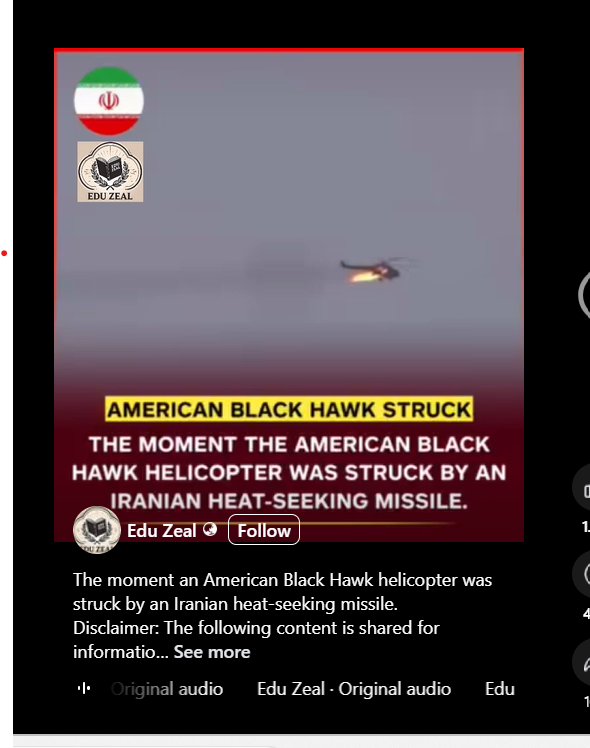
A Facebook post shared from Nigeria on April 6, 2026, claimed: “The moment an American Black Hawk helicopter was struck by an Iranian heat-seeking missile.” The post, which has been shared over 100 times, includes a 50-second video showing a helicopter exploding mid-air and crashing to the ground.
Fact Check
On April 3, a US F-15E Strike Eagle was reportedly shot down over Iran, marking the first such incident since the start of the ongoing Middle East conflict.
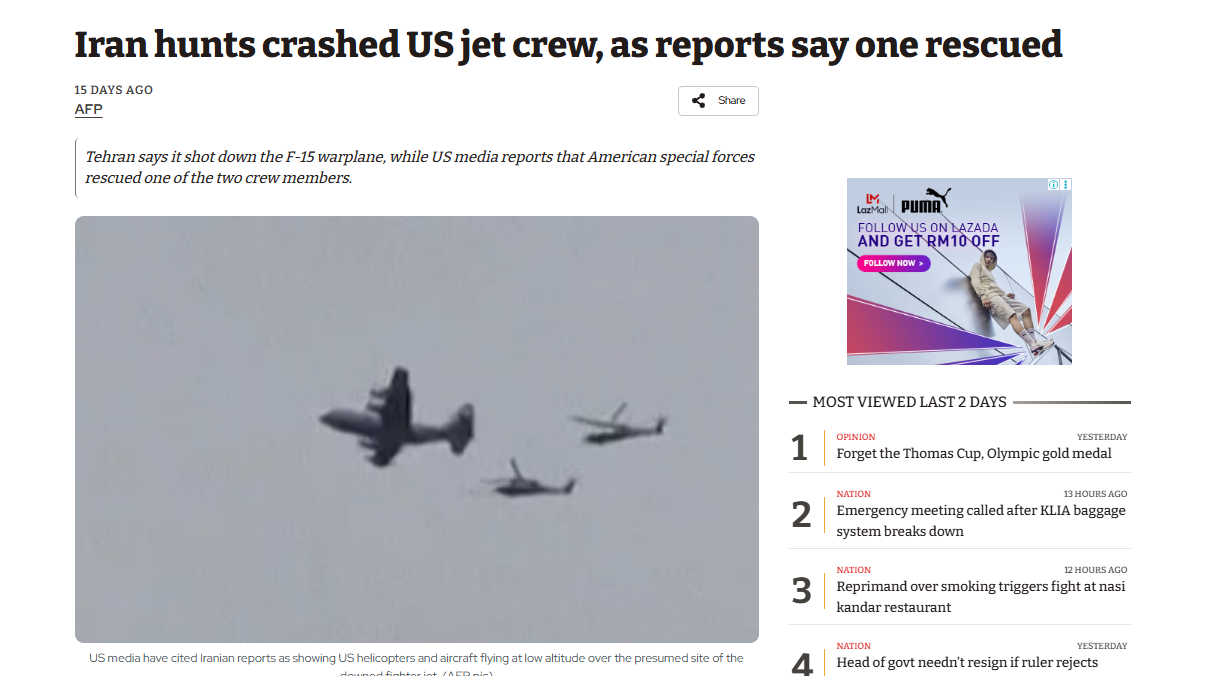
Two Black Hawk helicopter deployed for a search-and-rescue mission for the jet’s crew were also hit by Iranian fire but managed to return to base, despite some crew members being injured.
- http://abcnews.com/Politics/us-fighter-jet-iran-search-rescue-officials/story?id=131685787&utm_source=chatgpt.com
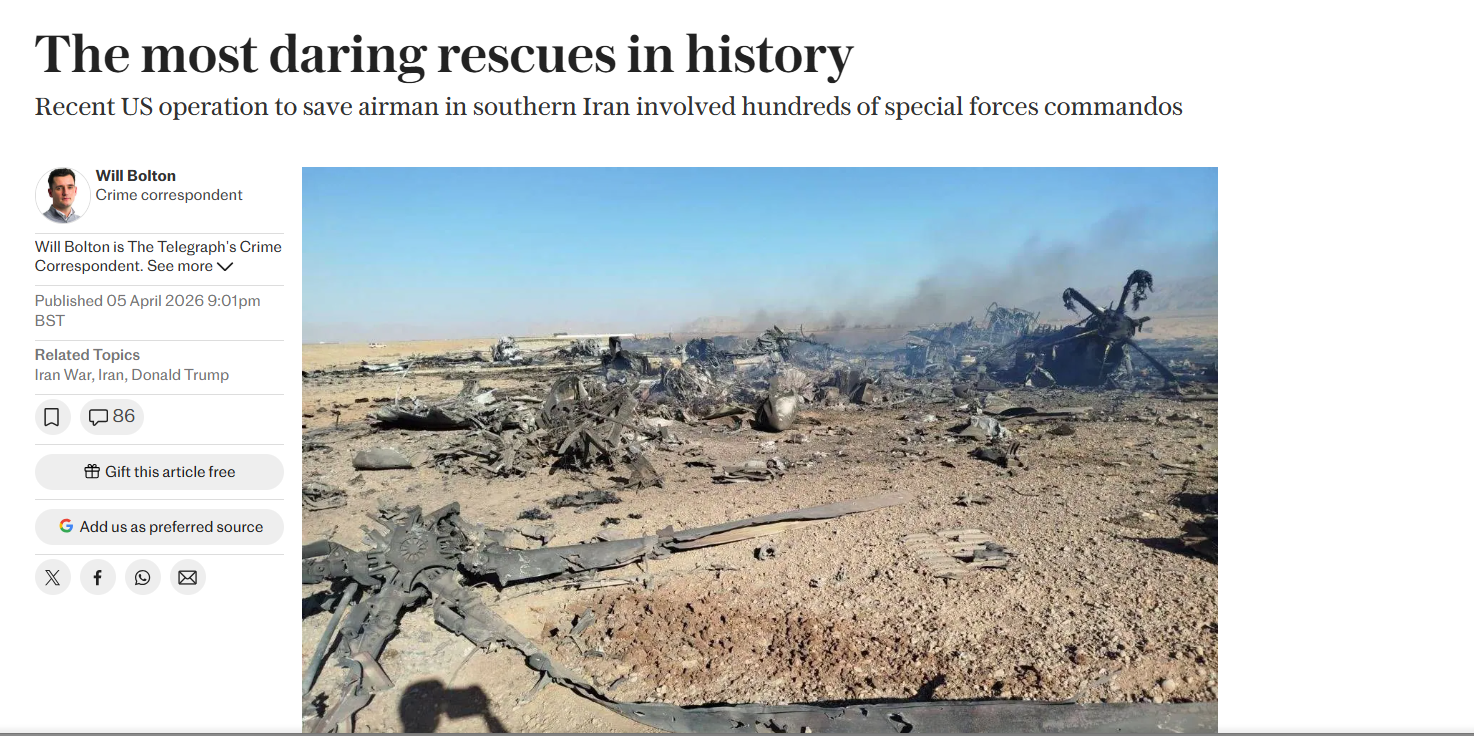
US President Donald Trump had earlier announced the recovery of a missing pilot, describing it as “one of the most daring search and rescue operations in US history.
”
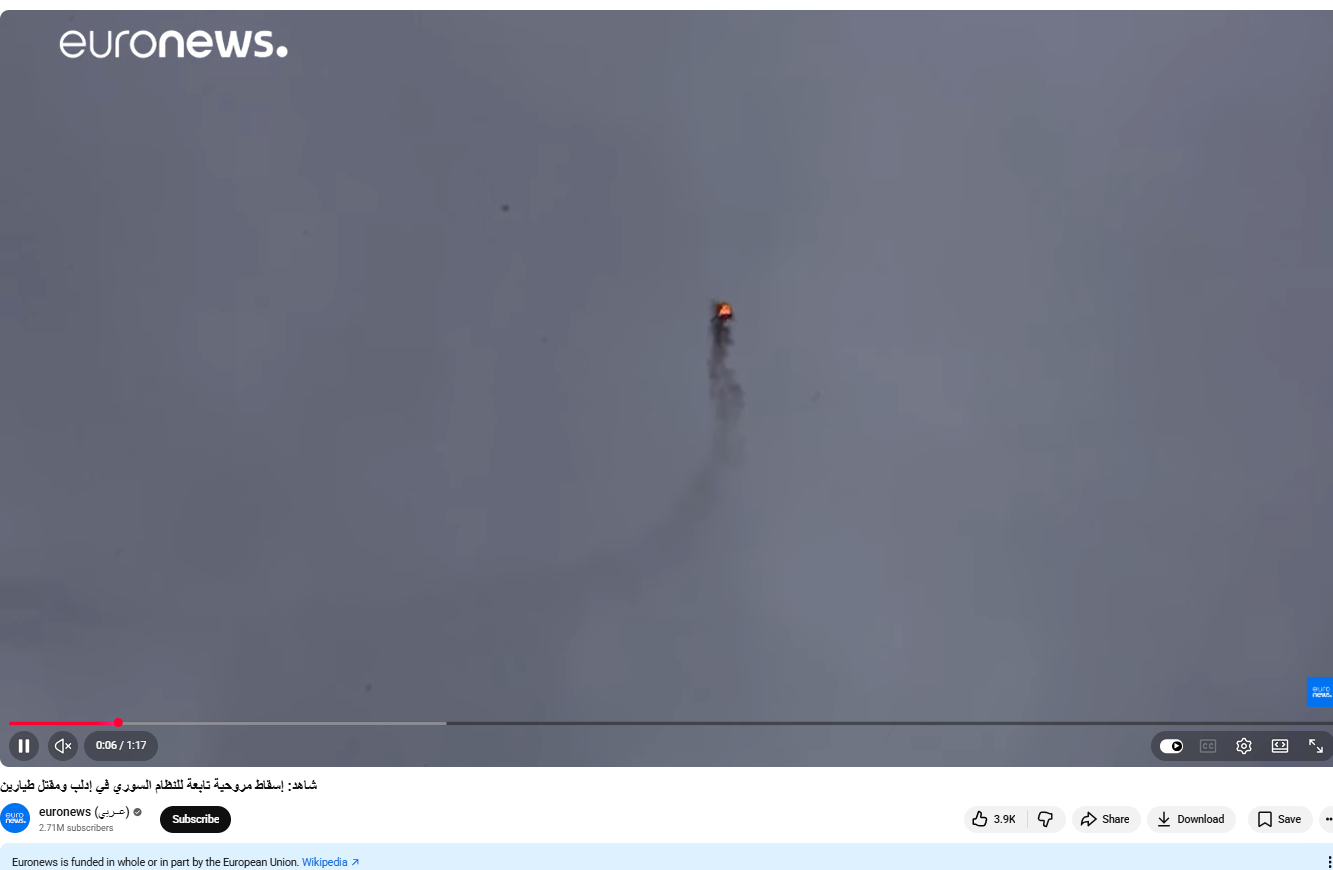
However, the viral video being shared as evidence of the downing of a US aircraft predates these events. Using reverse image search on keyframes from the clip, we found a longer version published by Euronews on February 11, 2020. The Arabic title of the video translates to: “Syrian regime helicopter shot down in Idlib, two pilots killed.” Reports indicate that the incident occurred in Idlib, Syria, in February 2020, where a military helicopter was shot down and caught fire before crashing.
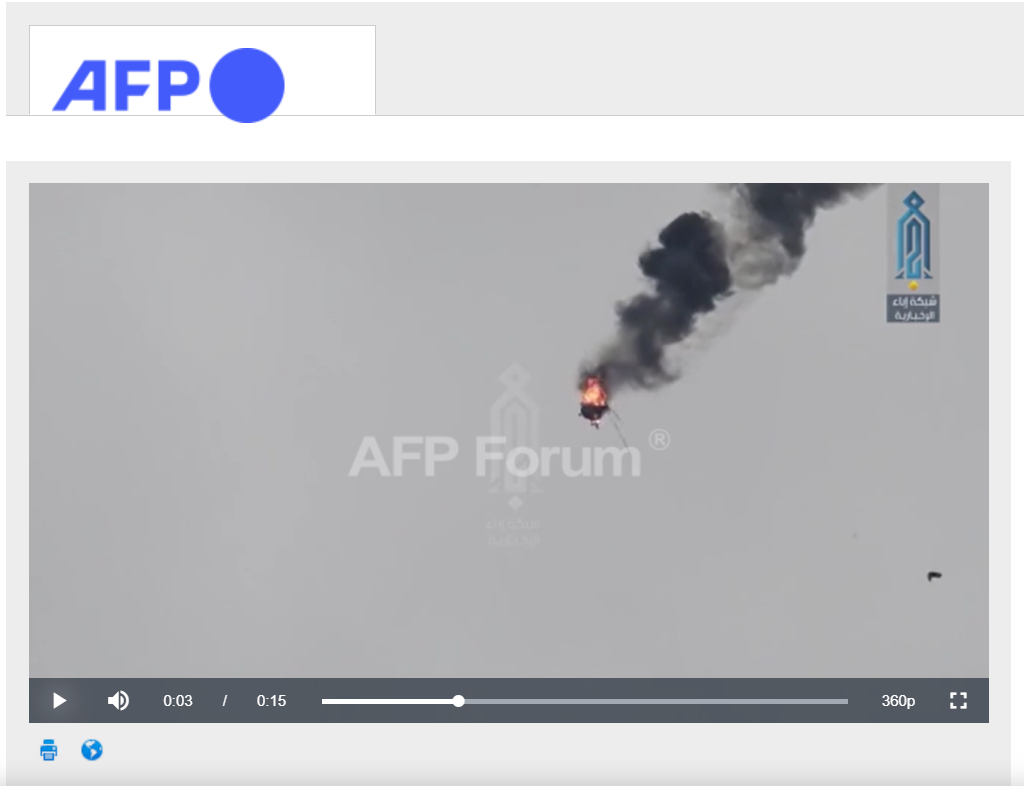
The incident was also covered by other international media outlets, including AFP, which distributed images and videos of the crash.
- https://www.afpforum.com/AFPForum/Search/ViewMedia.aspx?mui=1&hid=5DFA75509C25E3CDC3F24CA3B41C1A9A854C8AA3EB2BC1C64FCC0192F0506138
Conclusion
The viral claim is false. The footage does not show an American helicopter shot down by Iran. Instead, it is an old video from February 2020 depicting a helicopter crash in Syria, which is being shared with a misleading and unrelated narrative.

Related Blogs

WhatsApp messages masquerading as an offer from Maruti Suzuki with links luring unsuspecting users with the promise of Maruti Suzuki 40th Anniversary Celebration presents, have been making the rounds on the app. If you receive such messages try to stay away from it, as it can be a scam.
The Research Wing of CyberPeace Foundation along with Autobot Infosec Private Limited have conducted a study based on a WhatsApp message that contained a link pretending to be a free gift offer from Maruti Suzuki which asks users to participate in a survey in order to get a chance to win a Maruti Baleno Sigma MT car.
Warning SignsThe campaign pretends to be an offer from Maruti Suzuki but is hosted on a third party domain instead of the official Maruti Suzuki website which makes it more suspicious.
The domain names associated with the campaign have been registered in very recent times.
Multiple redirections have been noticed between the links.
No reputed site would ask its users to share the campaign on WhatsApp.
The prize is kept really attractive to lure the laymen.
Grammatical mistakes have been noticed.
A congratulations message appears on the landing page with an attractive photo of Maruti Suzuki cars that asks users to participate in a quick survey in order to get a “Maruti Suzuki BALENO Sigma MT”. Also, the bottom of the page seems to appear like a comment section with public comments establishing the truthfulness of the offer.
The survey starts with some basic questions like Do you know Maruti Suzuki?, How old are you?, How do you think of Maruti Suzuki?, Are you male or female? Etc. Once the user answers the questions a “congratulatory message” is displayed.
On clicking the OK button users are given three attempts to win the prize. After completing all the attempts a message pops up that the user has won “Maruti Suzuki BALENO Sigma MT”. It then prompts the user to share the message on WhatsApp.
Strangely enough the user has to keep clicking the WhatsApp button until the progress bar completes. After clicking on the green ‘WhatsApp’ button multiple times it shows a section where an instruction has been given to complete registration in order to get the prize.
After clicking on the green ‘Complete registration’ button, it redirects the user to multiple advertisements web pages varying each time the user clicks on the button.
During the analysis the research team found a javascript code called hm.js was being executed in the background from the host hm[.]baidu[.]com which is a subdomain of Baidu and is used for Baidu Analytics, also known as Baidu Tongji. The important part is that Baidu is a Chinese multinational technology company specializing in Internet-related services, products and artificial intelligence, headquartered in Beijing’s Haidian district, China.To read the full report, please click (https://www.cyberpeace.org/CyberPeace/Repository/20210828Research-report-on-Maruti-Suzuki-40th-Anniversary-Celebration-free-gift-scam.pdf) here:
Conclusive Summary
1. The whole research activity was performed in a secured sandbox environment where the WhatsApp application was not installed. If any user opens the link from a device like smartphones where the WhatsApp application is installed, the sharing features on the site will open the Whatsapp application on the device to share the link.
2. The campaign collects browser and system information from the users.
3. Most of the domain names associated with the campaign have the registrant country as China.
4. Cybercriminals used Cloudflare technologies to mask the real IP addresses of the front-end domain names used in this Maruti Suzuki 40th Anniversary Celebration free gift campaign. But during the phases of investigation, the research team has identified a domain name that was requested in the background and has been traced as belonging to China.
CyberPeace Advisory
1. CyberPeace Foundation and Autobot Infosec recommend that people should avoid opening such messages sent via social platforms.
2. If at all, the user gets into this trap, it could lead to whole system compromise such as access to the microphone, Camera, Text Messages, Contacts, Pictures, Videos, Banking Applications, etc as well as financial losses.
3. Do not share confidential details like login credentials, banking information with such a type of scam.
4. Do not share or forward fake messages containing links without proper verification.
5. There is a need for International Cyber Cooperation between countries to bust the cybercriminal gangs running the fraud campaigns affecting individuals and organizations, to make Cyberspace resilient and peaceful.
Introduction
In today’s digital era, warfare is being redefined. Defence Minister Rajnath Singh recently stated that “we are in the age of Grey Zone and hybrid warfare where cyber-attacks, disinformation campaigns and economic warfare have become tools to achieve politico-military aims without a single shot being fired.” The crippling cyberattacks on Estonia in 2007, Russia’s interference in the 2016 US elections, and the ransomware strike on the Colonial Pipeline in the United States in 2021 all demonstrate how states are now using cyberspace to achieve strategic goals while carefully circumventing the threshold of open war.
Legal Complexities: Attribution, Response, and Accountability
Grey zone warfare challenges the traditional notions of security and international conventions on peace due to inherent challenges such as :
- Attribution
The first challenge in cyber warfare is determining who is responsible. Threat actors hide behind rented botnets, fake IP addresses, and servers scattered across the globe. Investigators can follow digital trails, but those trails often point to machines, not people. That makes attribution more of an educated guess than a certainty. A wrong guess could lead to misattribution of blame, which could beget a diplomatic crisis, or worse, a military one. - Proportional Response
Even if attribution is clear, designing a response can be a challenge. International law does give room for countermeasures if they are both ‘necessary’ and ‘proportionate’. But defining these qualifiers can be a long-drawn, contested process. Effectively, governments employ softer measures such as protests or sanctions, tighten their cyber defences or, in extreme cases, strike back digitally. - Accountability
States can be held responsible for waging cyber attacks under the UN’s Draft Articles on State Responsibility. But these are non-binding and enforcement depends on collective pressure, which can be slow and inconsistent. In cyberspace, accountability often ends up being more symbolic than real, leaving plenty of room for repeat offences.
International and Indian Legal Frameworks
Cyber law is a step behind cyber warfare since existing international frameworks are often inadequate. For example, the Tallinn Manual 2.0, the closest thing we have to a rulebook for cyber conflict, is just a set of guidelines. It says that if a cyber operation can be tied to a state, even through hired hackers or proxies, then that state can be held responsible. But attribution is a major challenge. Similarly, the United Nations has tried to build order through its Group of Governmental Experts (GGE) that promotes norms like “don’t attack. However, these norms are not binding, effectively leaving practice to diplomacy and trust.
India is susceptible to routine attacks from hostile actors, but does not yet have a dedicated cyber warfare law. While Section 66F of the IT ACT, 2000, talks about cyber terrorism, and Section 75 lets Indian courts examine crimes committed abroad if they impact India, grey-zone tactics like fake news campaigns, election meddling, and influence operations fall into a legal vacuum.
Way Forward
- Strengthen International Cooperation
Frameworks like the Tallinn Manual 2.0 can form the basis for future treaties. Bilateral and multilateral agreements between countries are essential to ensure accountability and cooperation in tackling grey zone activities. - Develop Grey Zone Legislation
India currently relies on the IT Act, 2000, but this law needs expansion to specifically cover grey zone tactics such as election interference, propaganda, and large-scale disinformation campaigns. - Establish Active Monitoring Systems
India must create robust early detection systems to identify grey zone operations in cyberspace. Agencies can coordinate with social media platforms like Instagram, Facebook, X (Twitter), and YouTube, which are often exploited for propaganda and disinformation, to improve monitoring frameworks. - Dedicated Theatre Commands for Cyber Operations
Along with the existing Defence Cyber Agency, India should consider specialised theatre commands for grey zone and cyber warfare. This would optimise resources, enhance coordination, and ensure unified command in dealing with hybrid threats.
Conclusion
Grey zone warfare in cyberspace is no longer an optional tactic used by threat actors but a routine activity. India lacks the early detection systems, robust infrastructure, and strong cyber laws to counter grey-zone warfare. To counter this, India needs sharper attribution tools for early detection and must actively push for stronger international rules in this global landscape. More importantly, instead of merely blaming without clear plans, India should focus on preparing for solid retaliation strategies. By doing so, India can also learn to use cyberspace strategically to achieve politico-military aims without firing a single shot.
References
- Tallinn Manual 2.0 on the International Law Applicable to Cyber Operations (Michael N. Schmitt)
- UN Document on International Law in Cyberspace (UN Digital Library)
- NATO Cyber Defence Policy
- Texas Law Review: State Responsibility and Attribution of Cyber Intrusions
- Deccan Herald: Defence Minister on Grey Zone Warfare
- VisionIAS: Grey Zone Warfare
- Sachin Tiwari, The Reality of Cyber Operations in the Grey Zone

Executive Summary:
A video is circulating on social media claiming to be footage of the aftermath of Iran's missile strikes on Israel. The video shows destruction, damaged infrastructure, and panic among civilian casualties. After our own digital verification, visual inspection, and frame-by-frame inspection, we have determined that the video is fake. The video is just AI-generated clips and not related to any incident.

Claim:
The viral video claims that a recent military strike by Iran resulted in the destruction of parts of Israel, following an initial missile attack launched by Iran. The footage appears current and depicts significant destruction of buildings and widespread chaos in the streets.

FACT CHECK:
We conducted our research on the viral video to determine if it was AI-generated. During the research we broke the video into individual still frames, and upon closely examining the frames, several of the visuals he showed us had odd-shaped visual features, abnormal body proportions, and flickering movements that don't occur in real footage. We took several still frames and checked them in image search sites to see if they had appeared before. The search results revealed that several clips in the video had appeared previously, in separate and unrelated circumstances, which indicates that they are neither recent nor original.

While examining the Instagram profile, we noticed that the account frequently shares visually dramatic AI content that appears digitally created. Many earlier posts from the same page include scenes that are unrealistic, such as wrecked aircraft in desolate areas or buildings collapsing in unnatural ways. In the current video, for instance, the fighter jets shown have multiple wings, which is not technically or aerodynamically possible in real life. The profile’s bio, which reads "Resistance of Artificial Intelligence," suggests that the page intentionally focuses on sharing AI-generated or fictional content.

We also ran the viral post through Tenorshare.AI for Deep-Fake detection, and the result came 94% AI. All findings resulting from our research established that the video is synthetic and unrelated to any event occurring in Israel, and therefore debunked a false narrative propagated on social media.

Conclusion:
Our research found that the video is fake and contains AI-generated images and is not related to any real missile strike or destruction occurring in Israel. The source is specific to fuel the panic and misinformation in a context of already-heightened geopolitical tension. We call on viewers not to share this unverified information and to rely on trusted sources. When there are sensitive international developments, the dissemination of fake imagery can promote fear, confusion, and misinformation on a global scale.
- Claim: Real Footage of Iran’s Missile Strikes on Israel
- Claimed On: Social Media
- Fact Check: False and Misleading
