
#FactCheck -AI-Generated Image Falsely Claims Mukesh and Nita Ambani Gifted Luxury Car to Suryakumar Yadav
Executive Summary
A picture circulating on social media allegedly shows Reliance Industries chairman Mukesh Ambani and Nita Ambani presenting a luxury car to India’s T20 team captain Suryakumar Yadav. The image is being widely shared with the claim that the Ambani family gifted the cricketer a luxury car in recognition of his outstanding performance. However, research conducted by the CyberPeace found the viral claim to be false. The research revealed that the image being circulated online is not authentic but generated using artificial intelligence (AI).
Claim
On February 8, 2025, a Facebook user shared the viral image claiming that Mukesh Ambani and Nita Ambani gifted a luxury car to Suryakumar Yadav following his brilliant innings. The post has been widely circulated across social media platforms. In another instance, a user shared a collage in which one image shows Suryakumar Yadav receiving an award, while another depicts him with Nita Ambani, further amplifying the claim.
- https://www.facebook.com/61559815349585/posts/122207061746327178/?rdid=0MukeT6c7WK1uB8m#
- https://archive.ph/wip/UH9Xh

Fact Check:
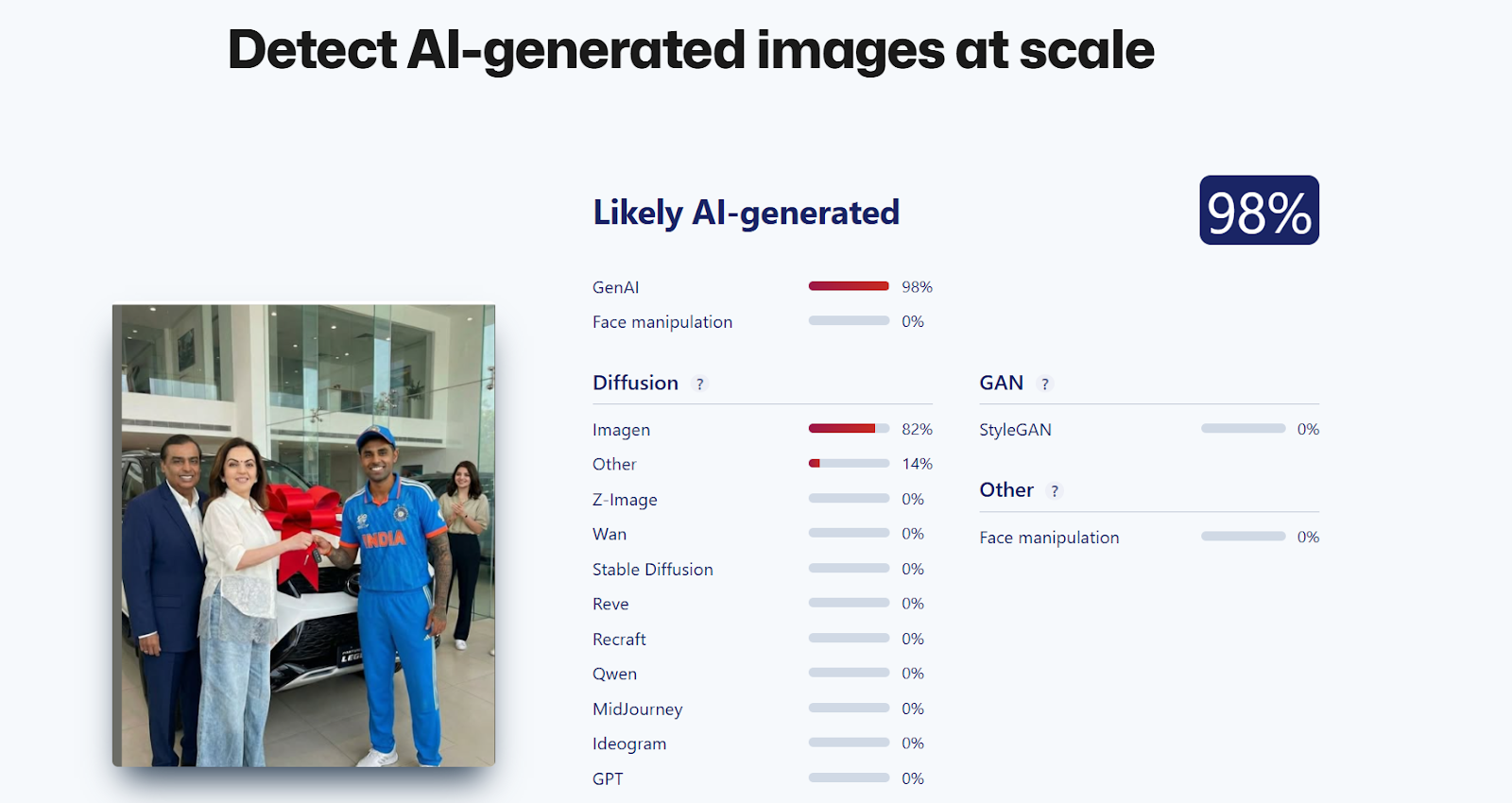
Upon closely examining the viral image, certain visual inconsistencies raised suspicion that it might be AI-generated. To verify its authenticity, the image was analysed using the AI detection tool Hive Moderation, which indicated a 99 percent probability that the image was AI-generated.

In the next step of the research, the image was also analysed using another AI detection tool, Sightengine, which found a 98 percent likelihood that the image was created using artificial intelligence.
Conclusion
The research clearly establishes that the viral image claiming Mukesh Ambani and Nita Ambani gifted a luxury car to Suryakumar Yadav is misleading. The picture is not real and has been generated using AI.

Related Blogs
Executive Summary
Despite a truce announced in mid-April, sporadic violence has continued between Israel and the Iran-backed Hezbollah in Lebanon. Meanwhile, a video circulating widely on social media shows a multi-storey building engulfed in flames, with users falsely linking it to the ongoing conflict. Posts sharing the clip claim it depicts a Hezbollah strike on an Israeli military headquarters, alleging that several soldiers were killed and that Israel is censoring visuals from the incident. However, research by the CyberPeace Research Wing found the claim to be misleading. The video is unrelated to the Israel-Hezbollah conflict. Verification shows that the footage actually captures a fire at an apartment building in New York City. Firefighters can be seen at the scene attempting to control the blaze.
Claim
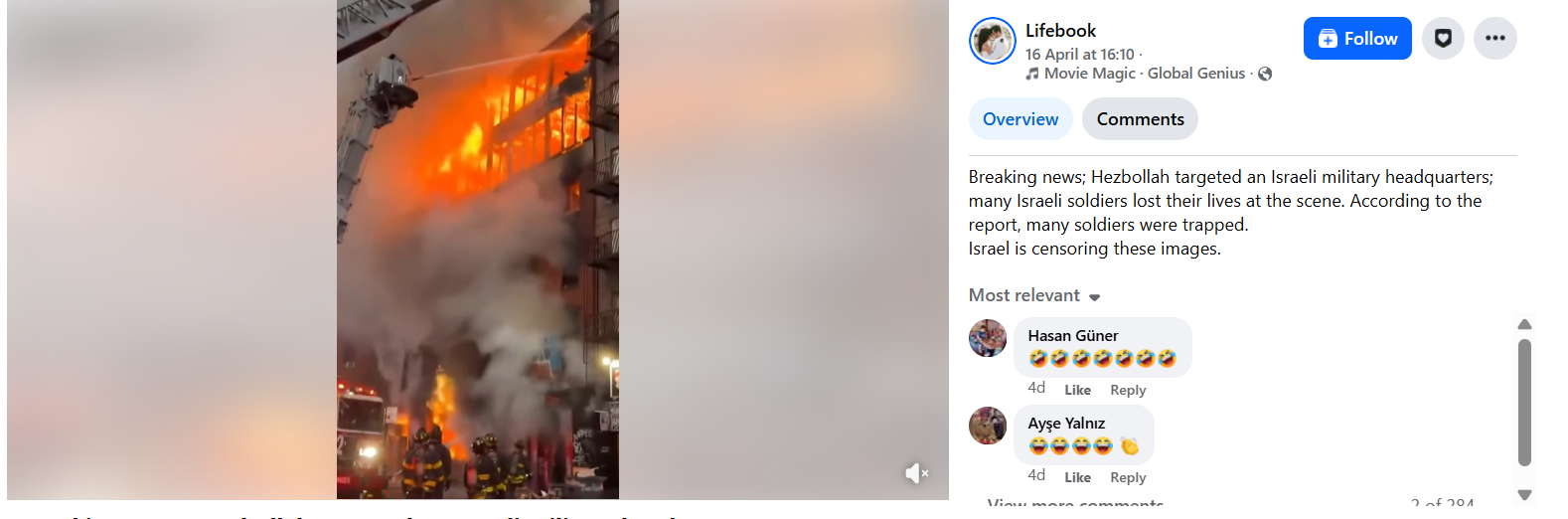
A Facebook post shared on April 16, 2026, read: “Breaking news; Hezbollah targeted an Israeli military headquarters; many Israeli soldiers lost their lives at the scene… Israel is censoring these images.” The video has garnered more than 240,000 views.
- https://perma.cc/BQ6X-4LAT
- https://www.facebook.com/watch/?v=1283830349750737
Fact Check
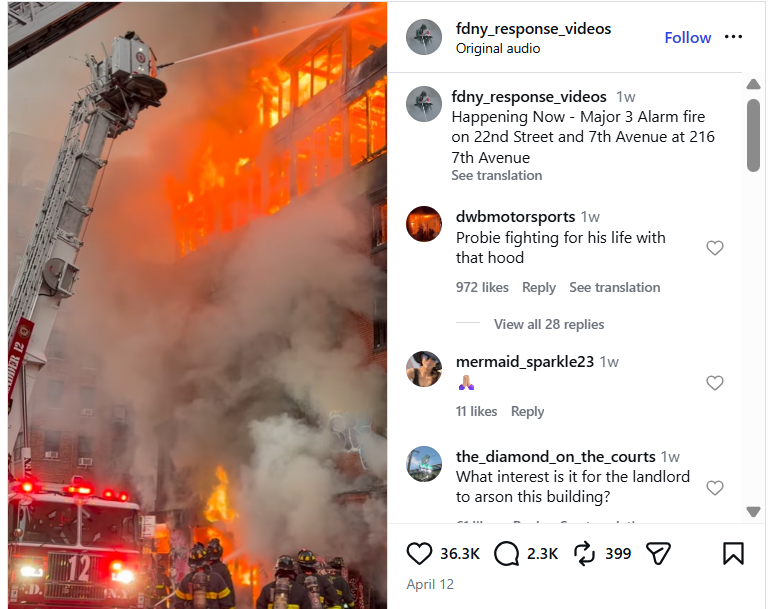
A reverse image search using keyframes from the viral clip led to a higher-quality version posted on April 12, 2026, by an Instagram account titled “FDNY response video.” The caption stated: “Happening now — Major 3 alarm fire on 22nd Street and 7th Avenue at 216 7th Avenue.”
- https://www.instagram.com/p/DXB0ePqjgGD/
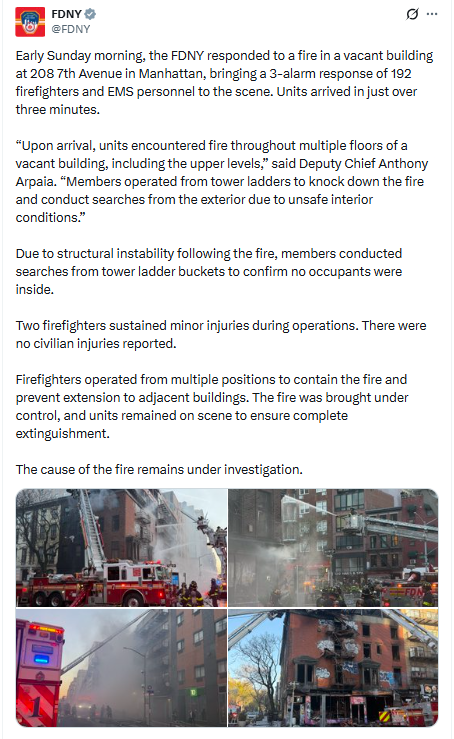
Further verification found that images of the same incident were shared on April 13, 2026, by the official X account of the New York City Fire Department. According to the post, no civilians were injured in the fire, although two firefighters sustained minor injuries while battling the blaze.
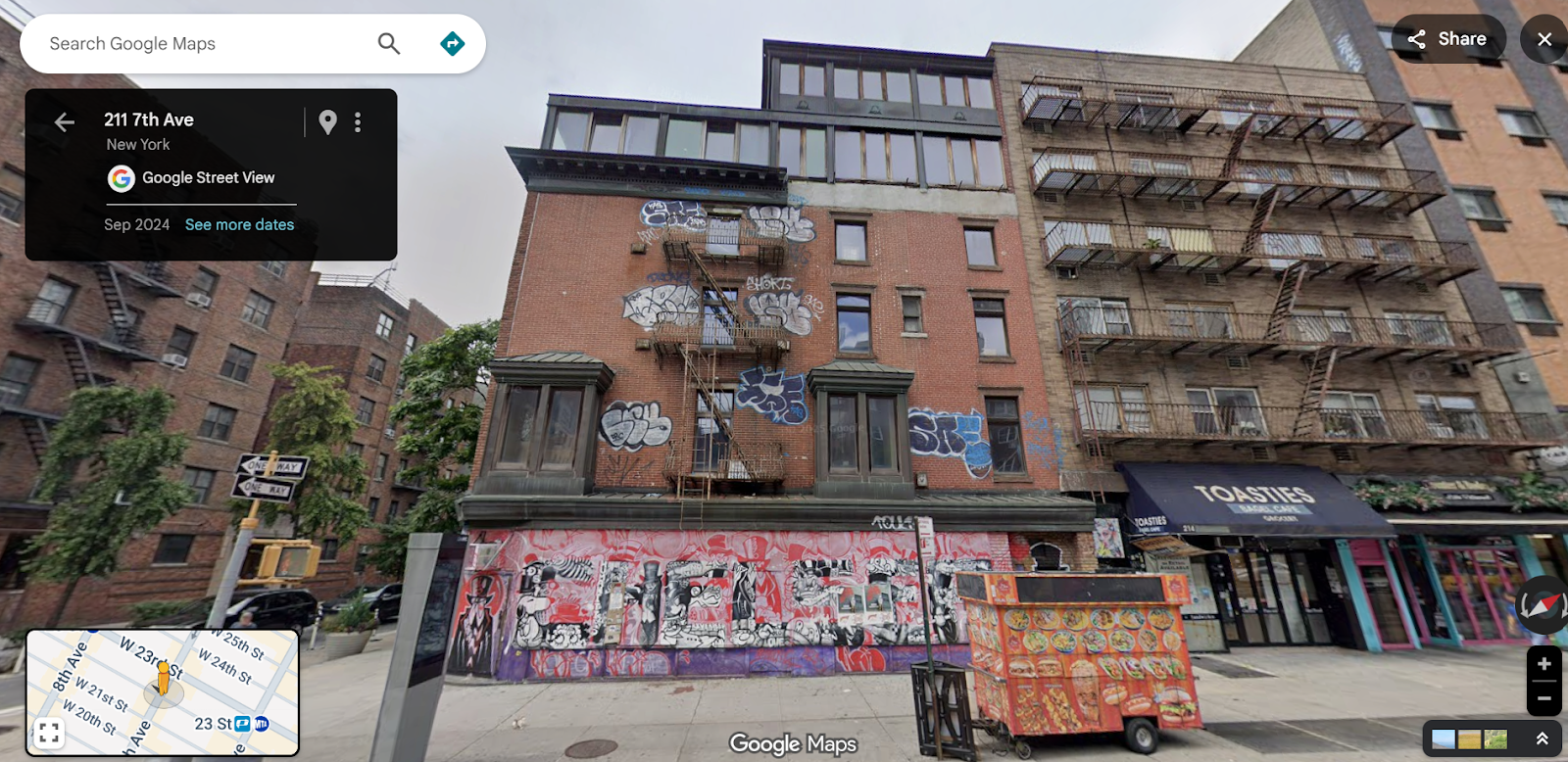
Using the location details mentioned in the posts, visible structures in the video were matched with Google Maps street imagery, confirming that the footage was indeed filmed in New York City.
Conclusion
The research establishes that the viral video is being shared with a false claim. It does not show any attack on an Israeli military facility but rather a residential building fire in New York City.

Introduction
In a distressing incident that highlights the growing threat of cyber fraud, a software engineer in Bangalore fell victim to fraudsters who posed as police officials. These miscreants, operating under the guise of a fake courier service and law enforcement, employed a sophisticated scam to dupe unsuspecting individuals out of their hard-earned money. Unfortunately, this is not an isolated incident, as several cases of similar fraud have been reported recently in Bangalore and other cities. It is crucial for everyone to be aware of these scams and adopt preventive measures to protect themselves.
Bangalore Techie Falls Victim to ₹33 Lakh
The software engineer received a call from someone claiming to be from FedEx courier service, informing him that a parcel sent in his name to Taiwan had been seized by the Mumbai police for containing illegal items. The call was then transferred to an impersonator posing as a Mumbai Deputy Commissioner of Police (DCP), who alleged that a money laundering case had been registered against him. The fraudsters then coerced him into joining a Skype call for verification purposes, during which they obtained his personal details, including bank account information.
Under the guise of verifying his credentials, the fraudsters manipulated him into transferring a significant amount of money to various accounts. They assured him that the funds would be returned after the completion of the procedure. However, once the money was transferred, the fraudsters disappeared, leaving the victim devastated and financially drained.
Best Practices to Stay Safe
- Be vigilant and skeptical: Maintain a healthy level of skepticism when receiving unsolicited calls or messages, especially if they involve sensitive information or financial matters. Be cautious of callers pressuring you to disclose personal details or engage in immediate financial transactions.
- Verify the caller’s authenticity: If someone claims to represent a legitimate organisation or law enforcement agency, independently verify their credentials. Look up the official contact details of the organization or agency and reach out to them directly to confirm the authenticity of the communication.
- Never share sensitive information: Avoid sharing personal information, such as bank account details, passwords, or Aadhaar numbers, over the phone or through unfamiliar online platforms. Legitimate organizations will not ask for such information without proper authentication protocols.
- Use secure communication channels: When communicating sensitive information, prefer secure platforms or official channels that provide end-to-end encryption. Avoid switching to alternative platforms or applications suggested by unknown callers, as fraudsters can exploit these.
- Educate yourself and others: Stay informed about the latest cyber fraud techniques and scams prevalent in your region. Share this knowledge with family, friends, and colleagues to create awareness and prevent them from falling victim to similar schemes.
- Implement robust security measures: Keep your devices and software updated with the latest security patches. Utilize robust anti-virus software, firewalls, and spam filters to safeguard against malicious activities. Regularly review your financial statements and account activity to detect any unauthorized transactions promptly.
Conclusion:
The incident involving the Bangalore techie and other victims of cyber fraud highlights the importance of remaining vigilant and adopting preventive measures to safeguard oneself from such scams. It is disheartening to see individuals falling prey to impersonators who exploit their trust and manipulate them into sharing sensitive information. By staying informed, exercising caution, and following best practices, we can collectively minimize the risk and protect ourselves from these fraudulent activities. Remember, the best defense against cyber fraud is a well-informed and alert individual.

Executive Summary
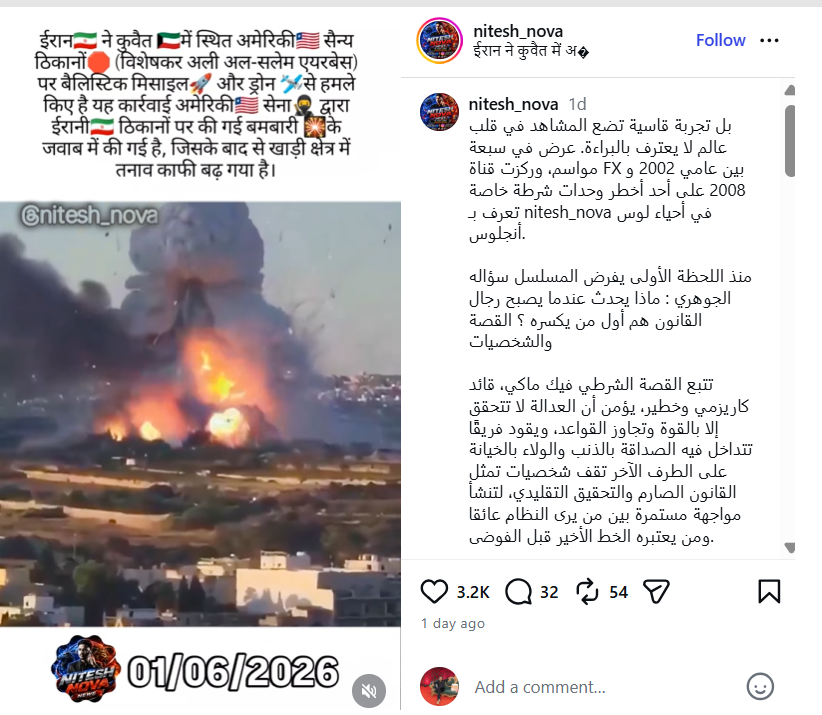
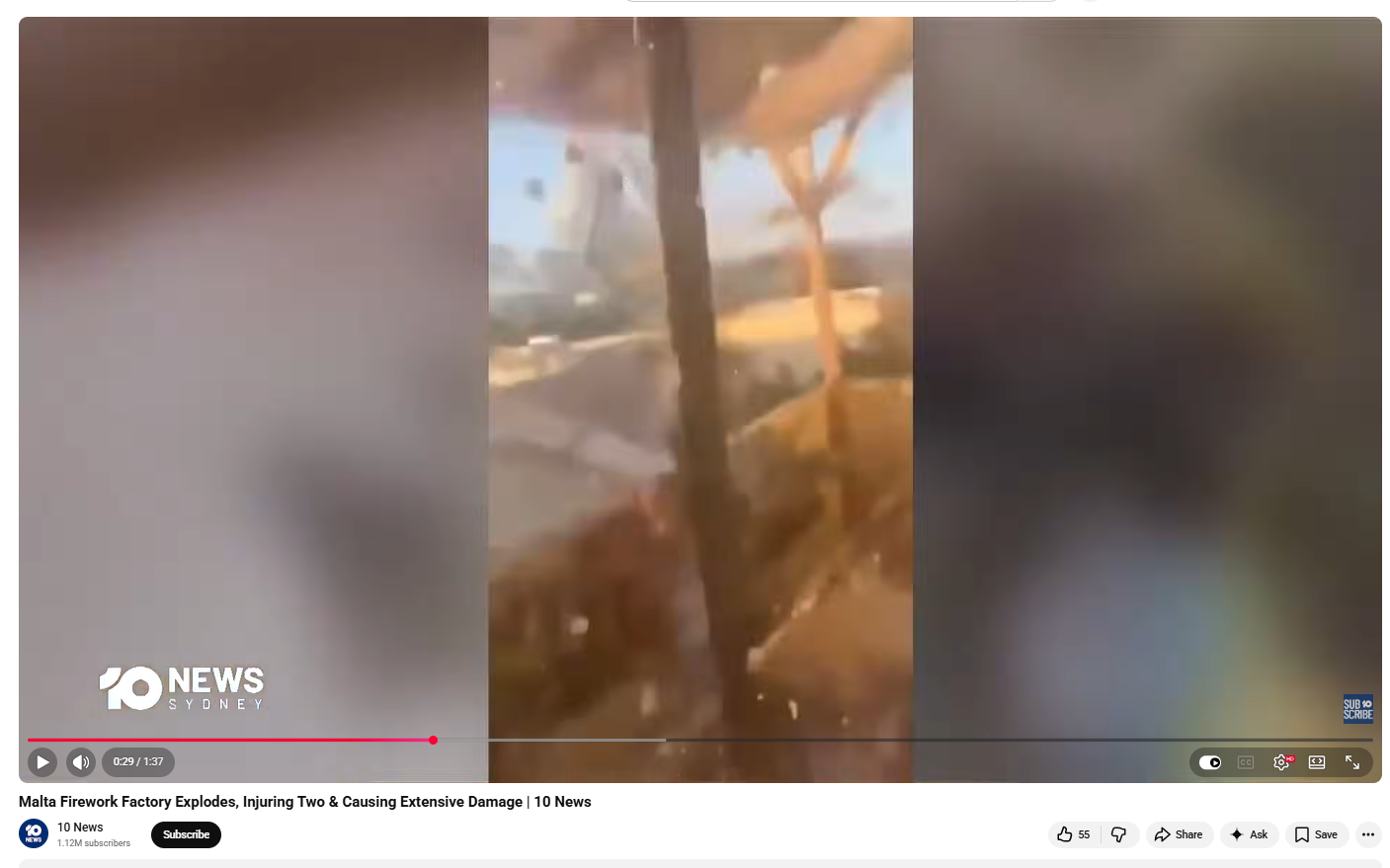
Amid heightened tensions in West Asia, claims are circulating on social media alleging that Iran carried out missile and drone strikes on US military bases in Kuwait, particularly the Ali Al-Salem Air Base. The claim is being accompanied by a viral video showing massive explosions, fire, and thick plumes of smoke, which users say depicts the alleged Iranian attack. CyberPeace Research Wing research found that the viral video is from an explosion at a fireworks factory in Malta, a European country. It has no connection to the ongoing tensions in West Asia. However, Iran has claimed that it targeted US military bases in response to American strikes. Meanwhile, the United States has stated that it successfully intercepted and neutralized several Iranian missile and drone attacks.
Claim:
Instagram user ‘nitesh_nova’ posted a video on June 2, 2026 (archive link), stating: “Iran has carried out ballistic missile and drone attacks on US military bases in Kuwait, particularly the Ali Al-Salem Air Base. This action was taken in response to US airstrikes on Iranian positions, following which tensions in the Gulf region have significantly escalated.”
https://perma.cc/PQ7N-JYQS?type=standard
https://www.instagram.com/nitesh_nova/
Fact Check
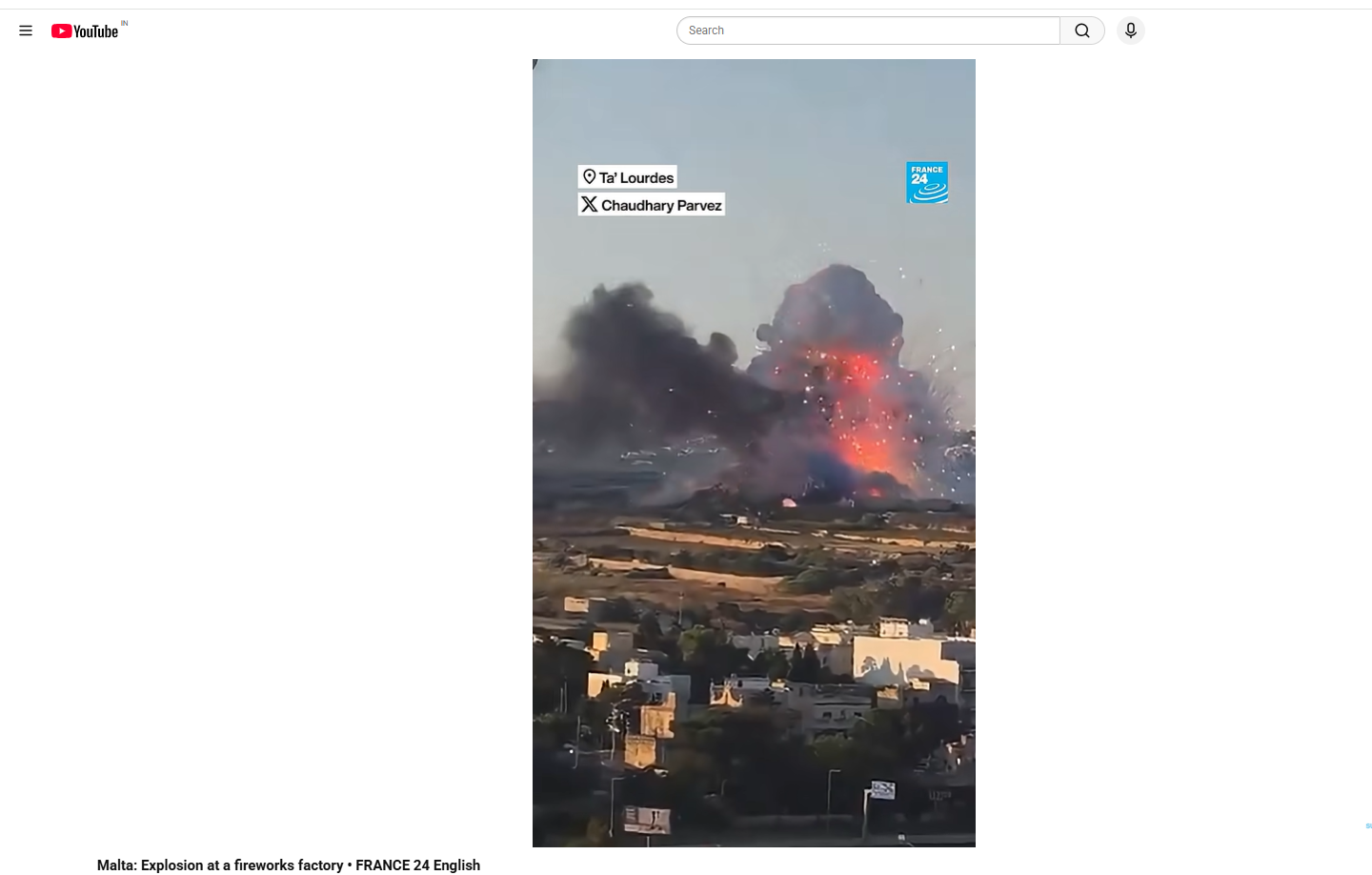
A review of keyframes from the video using reverse image search tools led to reports identifying the footage as an industrial accident. The same visuals were found in news coverage published by France 24, which confirmed that the explosion occurred at a fireworks factory in Malta on June 1, 2026. The incident resulted in injuries to two individuals, although no workers were present inside the facility at the time of the blast.
https://www.youtube.com/watch?v=LTLGO-fu_QA
Further verification from 10 News Australia also supports the same context, showing the identical footage and reporting it as a fireworks factory explosion in Malta, posted on June 2, 2026.10 News Australia report
https://www.youtube.com/watch?v=8Lppvtdr50k
Conclusion:
The viral video being shared with claims of an Iranian missile strike on a US military base in Kuwait is misleading. The footage actually shows a fireworks factory explosion in Malta and has no connection to the ongoing geopolitical tensions in West Asia. Social media users are advised to verify such sensitive content before sharing, as misattributed visuals can significantly distort the understanding of real-world conflicts.
