
#FactCheck - Viral Video of Aircraft Carrier Destroyed in Sea Storm Is AI-Generated
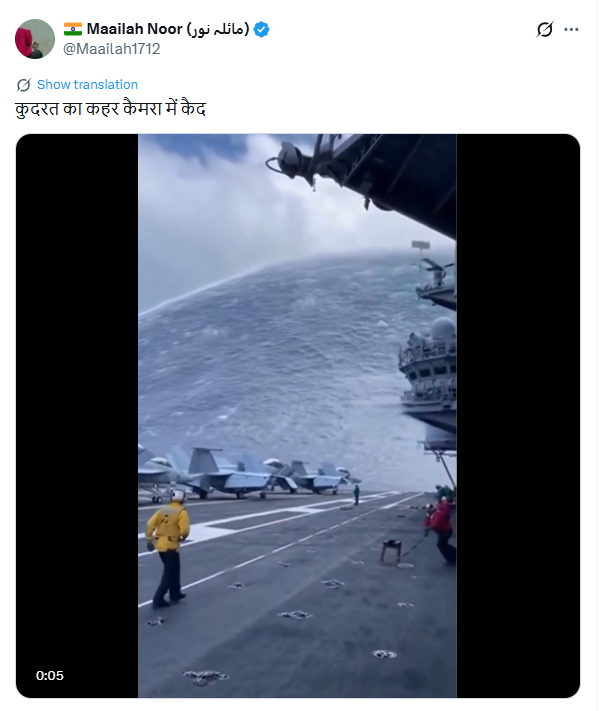
Social media users are widely sharing a video claiming to show an aircraft carrier being destroyed after getting trapped in a massive sea storm. In the viral clip, the aircraft carrier can be seen breaking apart amid violent waves, with users describing the visuals as a “wrath of nature.”
However, CyberPeace Foundation’s research has found this claim to be false. Our fact-check confirms that the viral video does not depict a real incident and has instead been created using Artificial Intelligence (AI).
Claim:
An X (formerly Twitter) user shared the viral video with the caption,“Nature’s wrath captured on camera.”The video shows an aircraft carrier appearing to be devastated by a powerful ocean storm. The post can be viewed here, and its archived version is available here.
https://x.com/Maailah1712/status/2011672435255624090
Fact Check:
At first glance, the visuals shown in the viral video appear highly unrealistic and cinematic, raising suspicion about their authenticity. The exaggerated motion of waves, structural damage to the vessel, and overall animation-like quality suggest that the video may have been digitally generated. To verify this, we analyzed the video using AI detection tools.
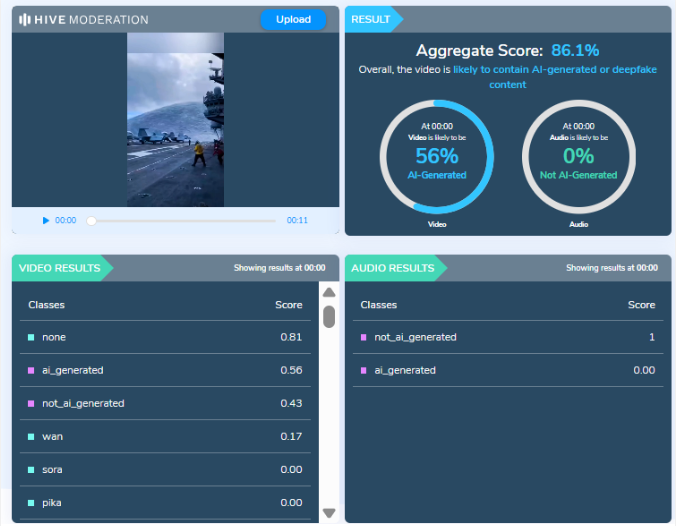
The analysis conducted by Hive Moderation, a widely used AI content detection platform, indicates that the video is highly likely to be AI-generated. According to Hive’s assessment, there is nearly a 90 percent probability that the visual content in the video was created using AI.
Conclusion
The viral video claiming to show an aircraft carrier being destroyed in a sea storm is not related to any real incident.It is a computer-generated, AI-created video that is being falsely shared online as a real natural disaster. By circulating such fabricated visuals without verification, social media users are contributing to the spread of misinformation.

Related Blogs
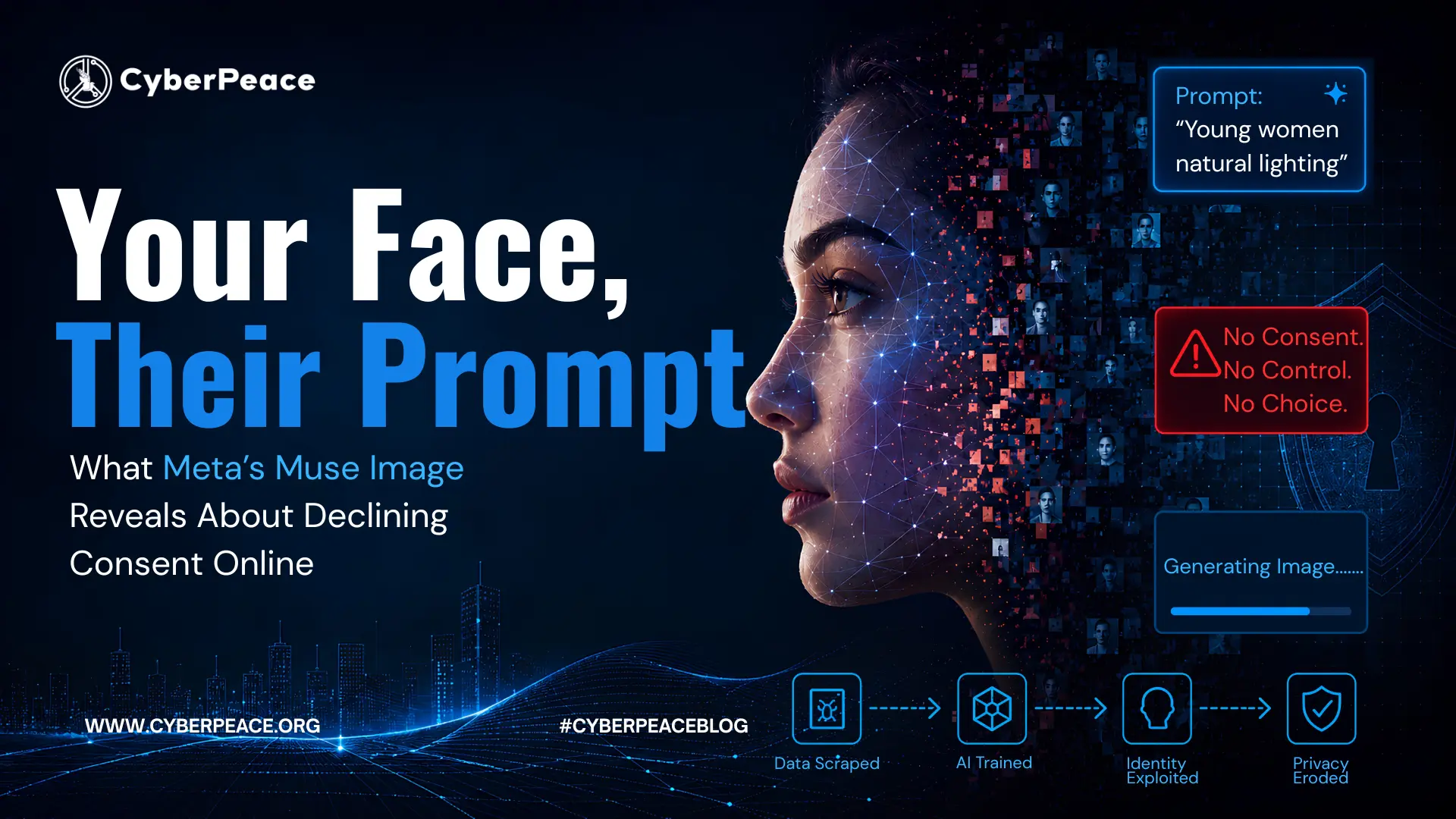
When your digital identity becomes raw material for someone else’s imagination, who really owns your face?
On July 7, 2026, Meta launched Muse Image, the first standalone image-generation model developed by Meta Superintelligence Labs under Alexandr Wang. Positioned as a competitor to OpenAI’s GPT Images 2.0 and Google’s Nano Banana 2, the launch highlights Meta’s growing ambitions in the generative AI race. Yet beneath the technical advancements lies a far more consequential question than what AI can create, but about who gets to decide what it creates with?
That ambition of generative AI comes with a cost, and one of Muse Image's most controversial design choices is its integration with Instagram, which allows public profiles to become creative references for AI-generated images. Users can tag public Instagram accounts in prompts and generate AI images inspired by that person’s publicly available content. Meta presents this as a new form of personalization and creativity. However, critics argue that the feature transforms years of personal photographs into a massive library of AI-ready human identities, where non-action automatically becomes permission. The concern is not just that AI can generate realistic images. The concern is that consent itself is being manipulated in a way.
The opt-out system most users never asked for
Muse Image operates through Meta AI’s integration with Instagram. A user can reference a public Instagram profile in a prompt, allowing the system to generate images influenced by that person’s existing content and likeness. Under the default arrangement, the person whose profile is being referenced may not necessarily approve the generation beforehand.
Meta does provide users with controls to restrict this functionality. The setting exists under Instagram’s “Sharing and reuse” options, where users can disable permissions related to the use of their posts and reels with Meta’s AI features. But the larger issue is the direction in which responsibility flows. Instead of requiring active permission before someone’s likeness becomes available for AI-generated content, the burden is placed on individuals to discover the feature, understand the implications, locate the setting, and disable it. In a digital environment where users already navigate endless privacy menus, cookie banners, and terms of service agreements, expecting meaningful awareness from billions of people becomes unrealistic. Consent that depends on finding the exit door is very different from consent that begins with a choice.
A guide for opting-out
One way of opting out is to have a private account. As verified, Meta does not encroach on private accounts as of now for image-generation.
But if you have a public account, here are the steps that can be followed to secure yourself from Meta’s Muse automatic consent:
On your profile, tap the menu bar which is on the top right (≡), you will enter into ‘setting and activity’, after that you will see an option of ‘sharing and refuse’ and then disable the options under it, namely- Allow people to reuse your content on Instagram and with AI features at Meta. Notably, the changes made will be only for your future content not the already existing content on your public profile.
Why “public” does not mean “available for anything”
The debate around Muse Image highlights a deeper misunderstanding at the center of modern digital platforms: the difference between visibility and reuse. When someone makes an Instagram account public, they are generally making a decision about the audience. They are allowing others to view their photos, discover their profile, or engage with their content. That decision was never traditionally understood as permission for their face, appearance, personal moments, or identity markers to become reusable components in AI-generated media. A photograph posted online has context. It represents a specific moment, purpose, relationship, or expression. Generative AI changes that equation because it separates identity from context. A person’s likeness can be extracted from its original context and placed into entirely new situations created by someone else. Muse Image does not just expand who can see your content. It expands what can be done with it. That distinction is what scales the problem for every public user on the app. The privacy implications become significantly larger because of Instagram’s global reach. With billions of users worldwide, even a small percentage of affected public accounts represents an enormous number of people. Many public profiles do not belong to celebrities, influencers, or creators who intentionally operate as public brands. They belong to students, professionals, small businesses, artists, photographers, and everyday users who simply chose visibility within a social network.
For years, platforms encouraged people to share more, build audiences, and maintain a public digital presence. Now, the meaning of that public presence is changing after the fact. The question becomes: should a decision made years ago to share photos socially automatically extend into permission for generative AI systems built years later?
There is also a catch while opting out. Changing these settings only protects your content from being used in future AI generations, it does not undo anything that has already happened. Any AI images previously created using your public profile will remain unaffected. Essentially, the opt-out works as a shield for what comes next, not a reset button for what has already been created.
A familiar pattern in the AI era
Muse Image reflects a broader pattern emerging across the technology industry. New AI capabilities are introduced at massive scale, participation becomes the default, and individual control arrives afterward through settings that many users may never find. The same debates that once surrounded targeted advertising, data collection, and algorithmic profiling are now moving into a far more personal territory, the human identity itself. Faces are not ordinary data points. Unlike a username, password, or preference setting, a person cannot simply replace their appearance once it has been widely replicated.
Technical solutions such as AI watermarking and content labels may help identify generated material, but they address authenticity after creation. They do not answer the question of whether the generation should have happened in the first place.
Innovation cannot replace consent
The technological progress behind Muse Image is significant. Better image generation, improved text rendering, and more personalized creative tools represent genuine advances in artificial intelligence. But capability alone cannot determine acceptability. The future of AI will not only depend on how realistic images become, how powerful models become, or how quickly companies can deploy new features. It will also depend on whether people feel they have meaningful control over their own digital identities. Muse Image is therefore more than another AI product launch. It represents a defining question for the next phase of the internet: Will our online presence remain something we control, or will it become something others can generate?

Executive Summary
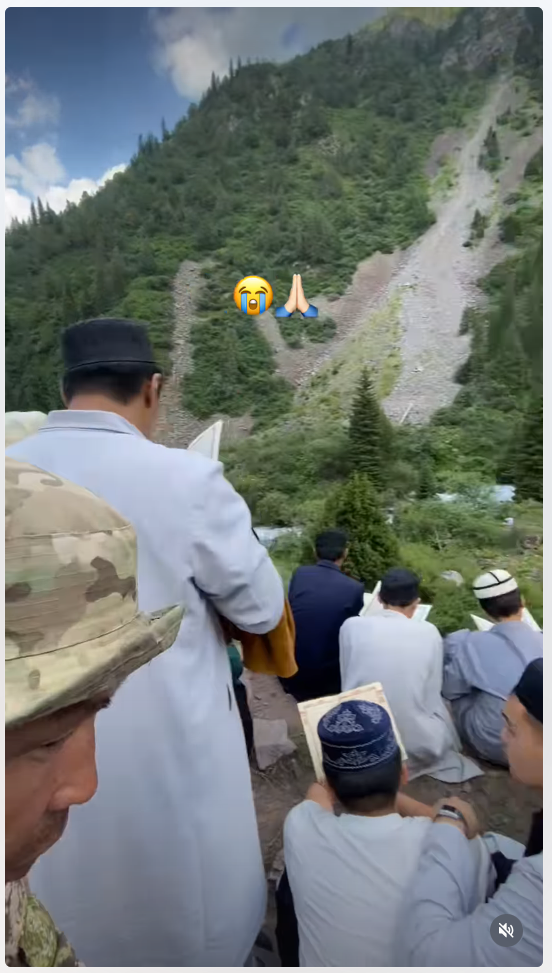
A video is being shared on social media with the claim that the Quran is being recited in Nepal to seek protection from floods. Research by the CyberPeace Research Wing found that the video is actually from Kyrgyzstan, a Central Asian country, and dates back to June. It shows people praying for the safety of a six-year-old boy who had been swept away by floodwaters.
Claim:
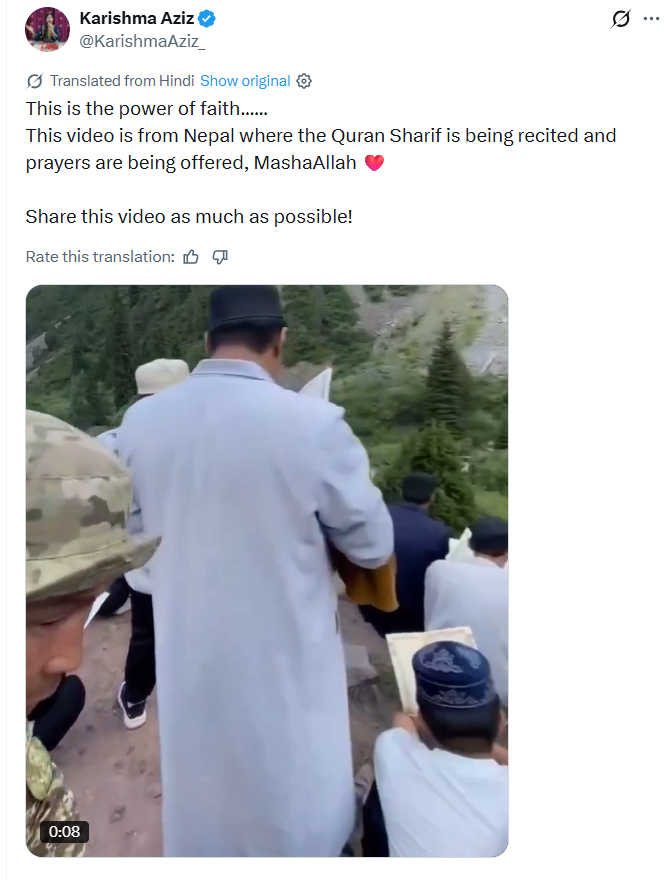
The video is being shared on X with a caption making the viral claim. It reads, “This is the power of faith. This video is from Nepal, where the Holy Quran is being recited and prayers are being offered. Mashallah.”
https://x.com/KarishmaAziz_/status/2095053199531286855
Fact Check
During our research into the viral video claiming that the Quran is being recited in Nepal to seek protection from floods, a reverse image search using keyframes led us to the same video uploaded on an Instagram account on June 25.
https://www.instagram.com/reels/DaAtnyUN4WP/
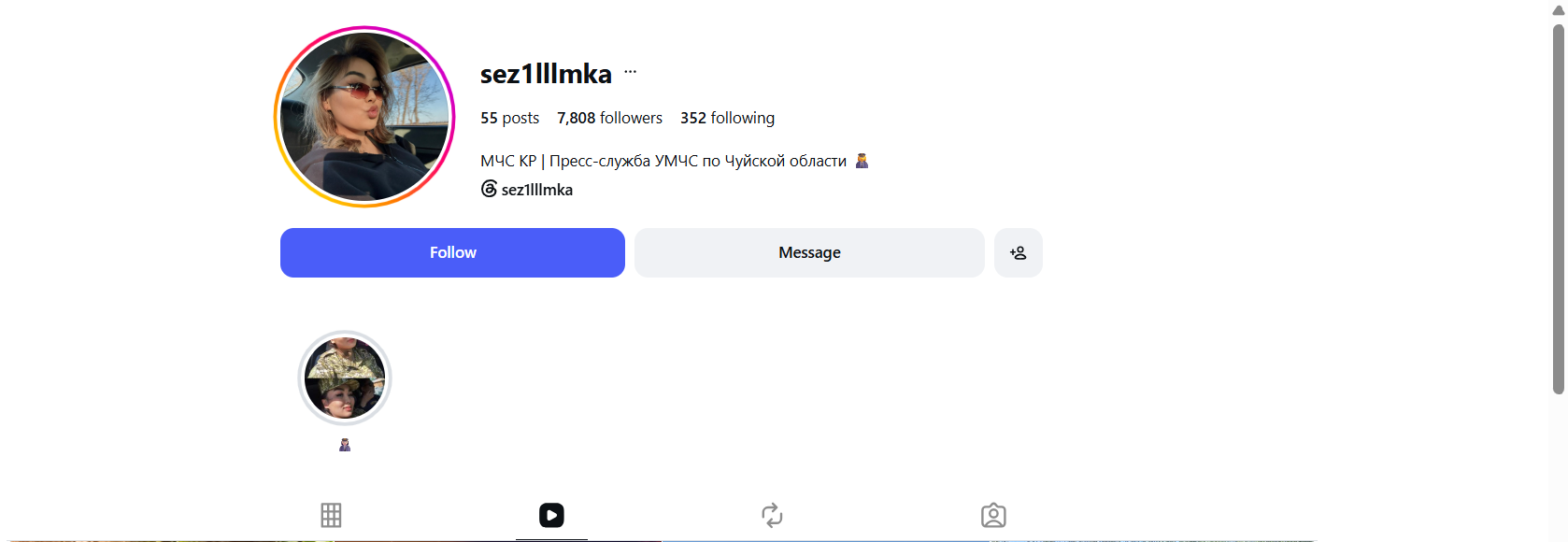
We translated the bio of the said Instagram account and found that it is associated with the Press Department of the Ministry of Emergency Situations in Kyrgyzstan’s Chuy Region. We also found several videos uploaded on the account featuring uniformed personnel wearing the same attire as those seen in the viral video.
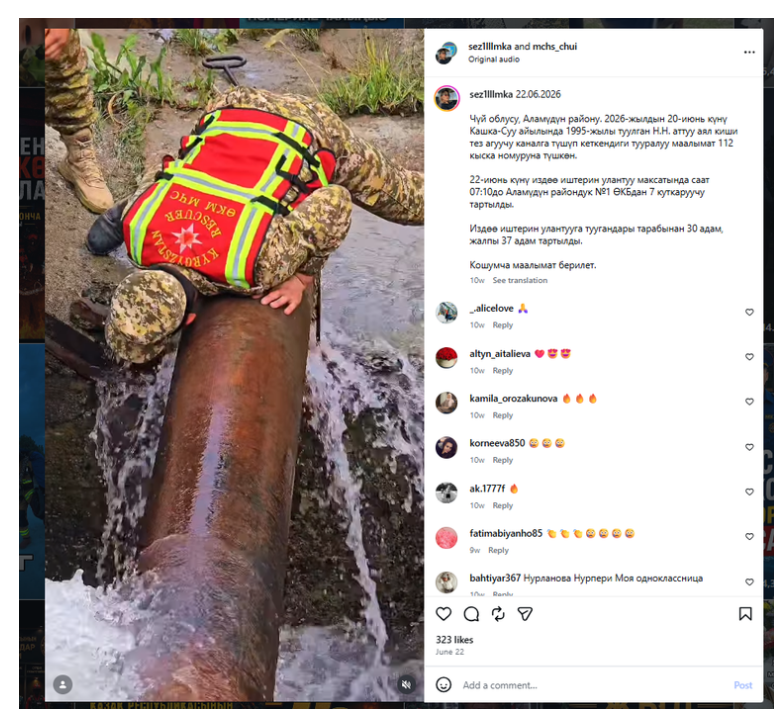
The life jackets worn by the uniformed personnel in these videos also clearly bear the words “Kyrgyzstan Rescue.”
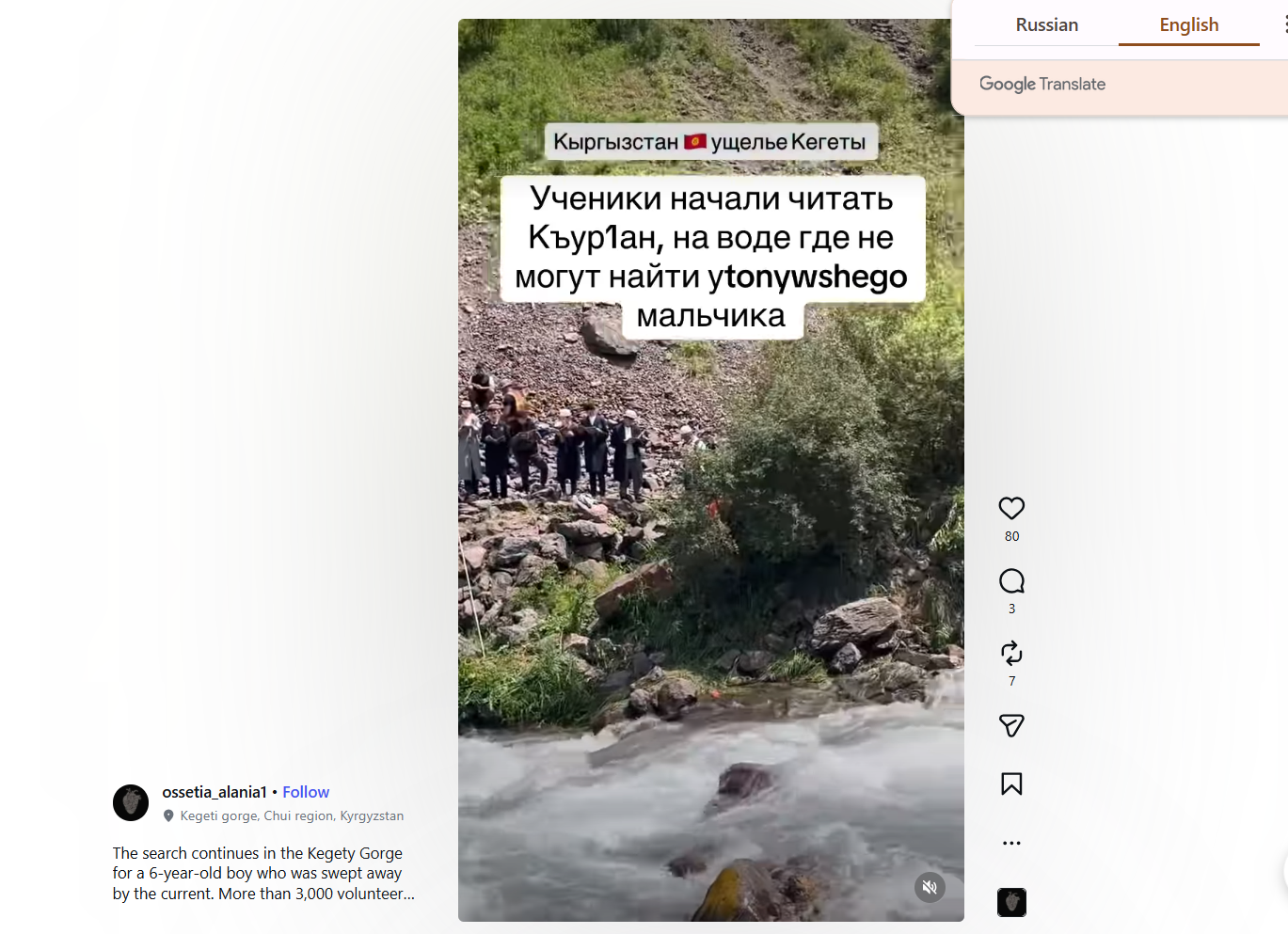
During our research, we also found several Instagram posts published on June 25 featuring visuals similar to those in the viral video. The captions stated that Hafizs were reciting the Quran and offering prayers for the safety of a six-year-old boy during his rescue operation.
https://www.instagram.com/reels/DaBK3nYtfDf/https://www.instagram.com/reels/DaBK3nYtfDf/
In this regard, we also found a report published on June 26 by a Kyrgyz news website. The report stated that on June 23, a car carrying two women and five children fell into the Kegety River. The two women and three children managed to get out of the vehicle, but two children remained trapped inside. The body of a 12-year-old girl had already been recovered by the rescue team. Later, on June 26, the body of the other child was also recovered.
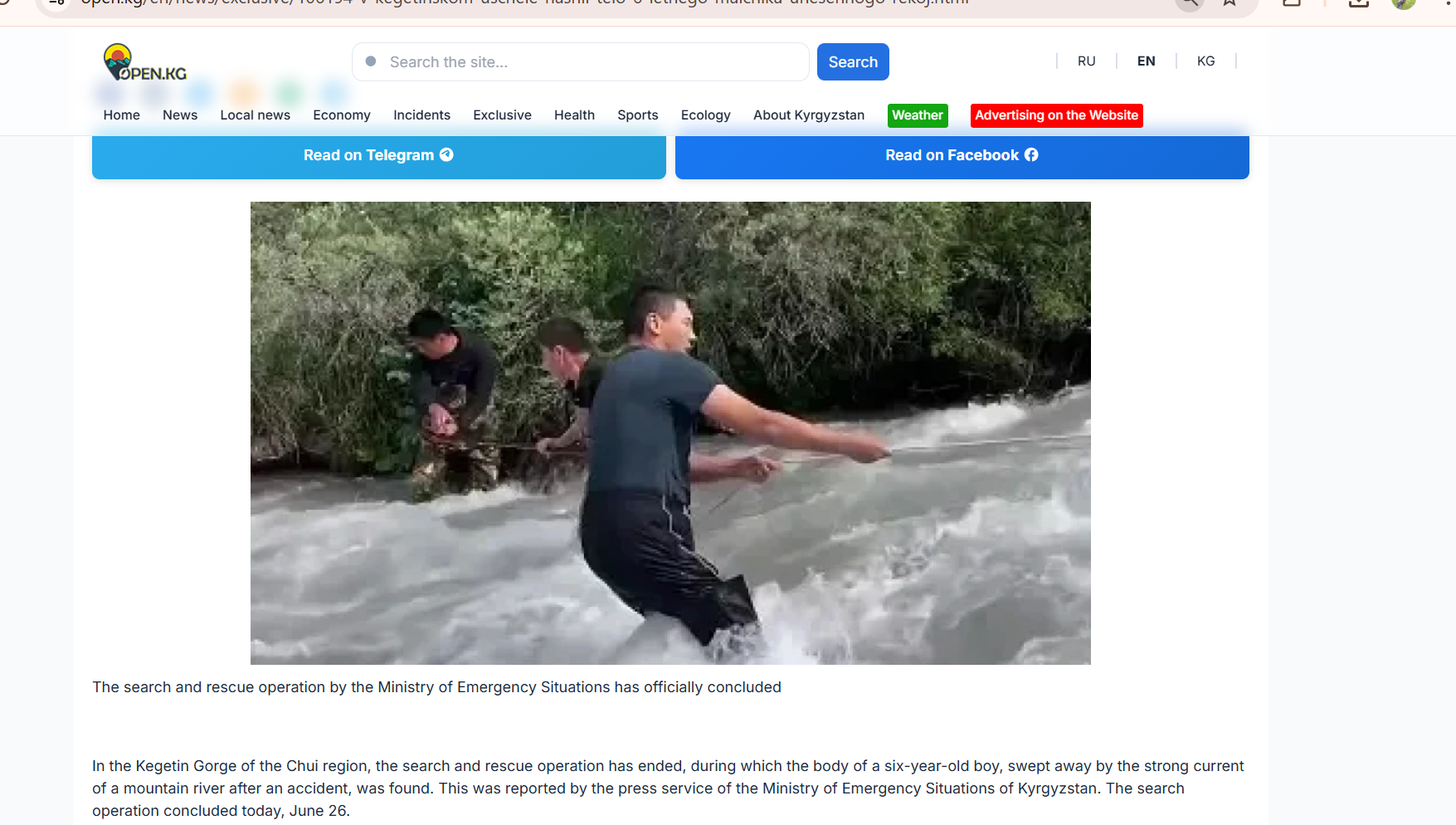
Conclusion
Our research found that the viral claim is false. The video being shared with the claim that the Quran was being recited in Nepal to seek protection from floods is actually from Kyrgyzstan and dates back to June. The evidence gathered during our research, including the original social media posts and reports from Kyrgyzstan, confirms that the footage is related to a rescue operation involving children after a car fell into the Kegety River. Therefore, the viral video has no connection with the recent floods in Nepal and is being shared with a false claim.

Executive Summary:
A video of Pakistani Olympic gold medalist and Javelin player Arshad Nadeem wishing Independence Day to the People of Pakistan, with claims of snoring audio in the background is getting viral. CyberPeace Research Team found that the viral video is digitally edited by adding the snoring sound in the background. The original video published on Arshad's Instagram account has no snoring sound where we are certain that the viral claim is false and misleading.

Claims:
A video of Pakistani Olympic gold medalist Arshad Nadeem wishing Independence Day with snoring audio in the background.

Fact Check:
Upon receiving the posts, we thoroughly checked the video, we then analyzed the video in TrueMedia, an AI Video detection tool, and found little evidence of manipulation in the voice and also in face.


We then checked the social media accounts of Arshad Nadeem, we found the video uploaded on his Instagram Account on 14th August 2024. In that video, we couldn’t hear any snoring sound.

Hence, we are certain that the claims in the viral video are fake and misleading.
Conclusion:
The viral video of Arshad Nadeem with a snoring sound in the background is false. CyberPeace Research Team confirms the sound was digitally added, as the original video on his Instagram account has no snoring sound, making the viral claim misleading.
- Claim: A snoring sound can be heard in the background of Arshad Nadeem's video wishing Independence Day to the people of Pakistan.
- Claimed on: X,
- Fact Check: Fake & Misleading
