
#FactCheck - Gorakhpur Holika Dahan Video Shared With False Claim About Delhi Murder
Executive Summary
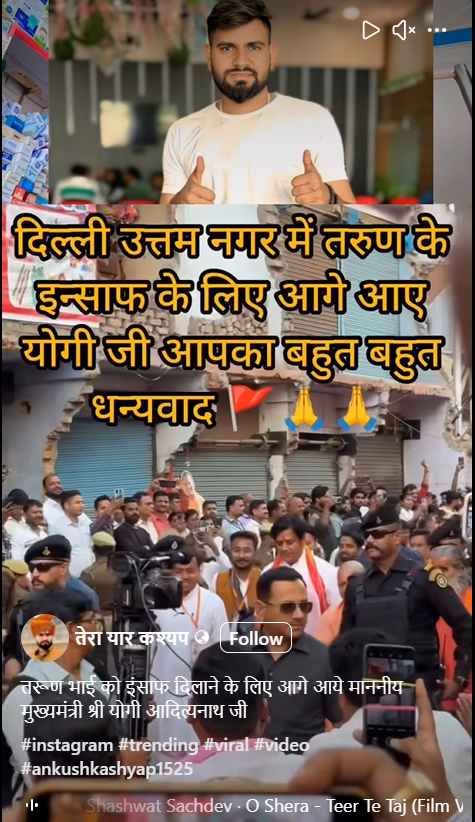
A dispute over water balloons on the day of Holi in the Uttam Nagar area of Delhi reportedly turned violent, resulting in the brutal murder of a young man named Tarun Khatik. Following the incident, a video is being widely shared on social media and linked to the murder case. In the viral video, Yogi Adityanath, Chief Minister of Uttar Pradesh, can be seen walking alongside Ravi Kishan, Member of Parliament from Gorakhpur. People standing along the route are seen showering flowers on them. Several users claim that the video shows the chief minister visiting the house of Tarun Khatik to meet his family.
However, research by CyberPeace found the viral claim to be misleading. Our research revealed that the video has no connection to the Tarun Khatik murder case. In fact, the video is from a Holika Dahan celebration held in Gorakhpur, which is now being shared on social media with a misleading claim.
Claim Post:
An Instagram user shared the viral video on March 10, 2026, writing: “Tarun bhai ko insaaf dilane ke liye aage aaye maananiya mukhyamantri Shri Yogi Adityanath ji.”
Fact Check:
To verify the claim, we extracted several key frames from the viral video and conducted a reverse image search using Google Lens. During the search, we found the same video posted on a Facebook account on March 2, 2026.
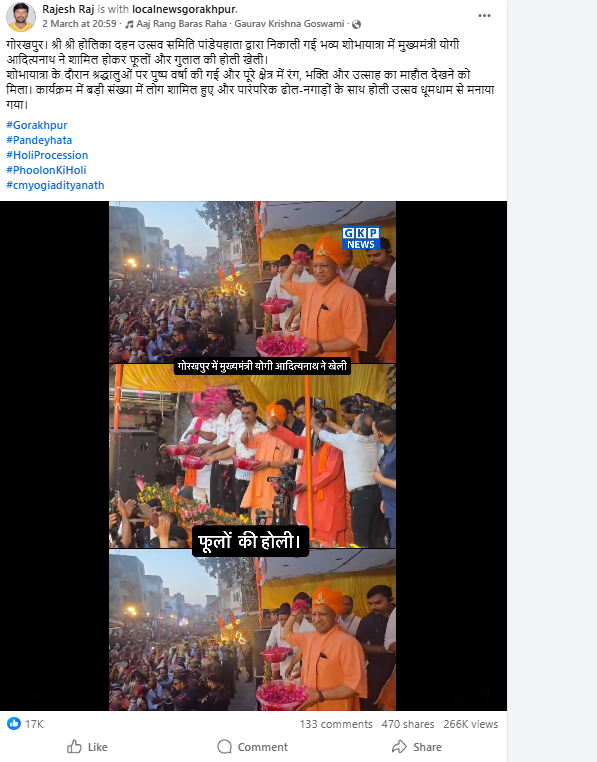
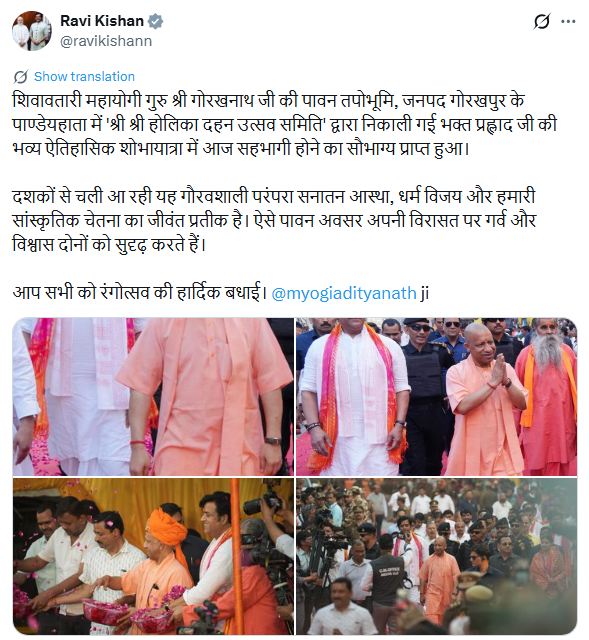
According to the caption of the Facebook post, the video shows a grand procession organised by the Shri Shri Holika Dahan Utsav Samiti, Pandeyhata in Gorakhpur. Yogi Adityanath attended the procession and was seen celebrating Holi with people by playing with flowers and coloured powder. During the procession, flower petals were showered on devotees, and the entire area witnessed a festive atmosphere filled with colours, devotion, and enthusiasm. A large number of people participated in the celebration, and the festival was celebrated with traditional drums and music. During further research, we also found images related to the viral video on the official X (formerly Twitter) account of Ravi Kishan. These images were shared on March 2, 2026, and the caption confirmed that they were taken during the Holika Dahan celebration in Gorakhpur.
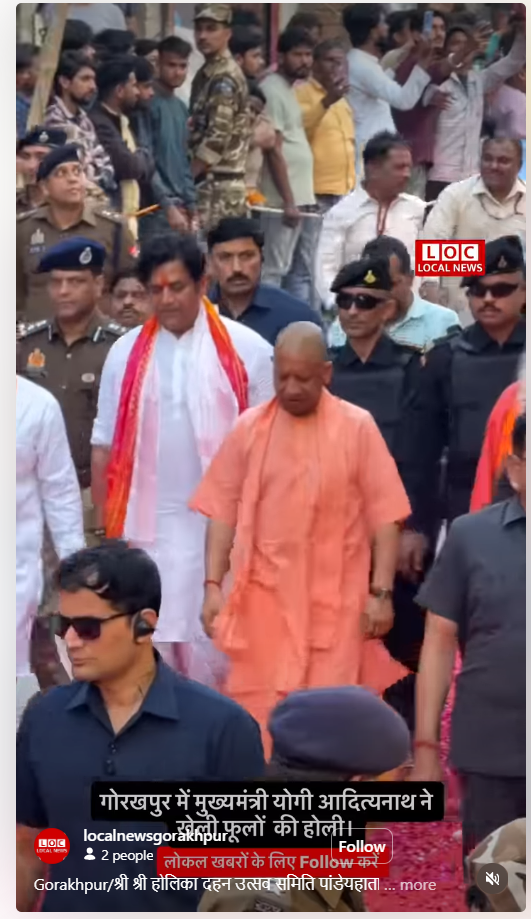
At the end of the research, we also found the same video uploaded on March 3, 2026 on the Instagram page Local News Gorakhpur. According to the information in the post, Yogi Adityanath and several other leaders participated in the grand procession organised by the Shri Shri Holika Dahan Utsav Samiti, Pandeyhata. People celebrated Holi with flowers and coloured powder during the event.
Conclusion:
Our research found that the viral video has no connection with the Tarun Khatik murder case in Uttam Nagar, Delhi. The video actually shows Yogi Adityanath participating in a Holika Dahan celebration in Gorakhpur. Therefore, the video is being shared on social media with a misleading claim.

Related Blogs

Introduction
Google India announced sachet loans on the Google Pay application to help small businesses in the country. Google India said that merchants in India often need smaller loans, hence, the tech giant launched sachet loans on the Gpay application. The company will provide loans to small businesses, which can be repaid in easier repayment instalments. To provide the load services, Google Pay has partnered with DMI Finance. This move comes at the Google for India, 2023, the flagship event to launch the Indian interventions planned by the big tech.
What is a Sachet Loan?
The loan system is the primary backbone of the global banking system. Since we have seen a massive transition towards the digital mode of transactions and banking operations, many online platforms have emerged. With the advent of QR codes, the Unified Payment Interface (UPI) has been rampantly used by Indians for making small or petty payments. Seeing this, Sachet loans made an advent as well, Sachet loans are essentially small-ticket loans ranging from Rs 10,000 to Rs 1 lakh, with repayment tenures between 7 days and 12 months. This nano-credit addresses immediate financial needs and is designed for swift approval and disbursement. Satchel loans are one of the most sought-after loan forms in the Western world. The ease of accessibility and easy repayment options have made it a successful form of money lending, which in turn has sparked the interest of the tech giant Google to execute similar operations in India.
Google Pay
Pertaining to the fact that UPI payments are the most preferred form of online payment, google came out with GPay in 2013 and now enjoys a user base of 67 million Indians. Google Pay has a 36.10% mobile application market share in India, and 26% of the UPI payments made have been through Google Pay. Google Pay adoption for in-store payments in India was higher in 2023 than it was in early 2019, signalling a growing use among consumers. The numbers shown here refer to the share of respondents who indicated they used Google Pay in the last 12 months, either for POS transactions with a mobile device in stores and restaurants or for online shopping. Eight out of 10 respondents from India indicated they had used Google Pay in a POS setting between April 2022 and March 2023, with an additional seven out of 10 saying they used Google Pay during this same time for online payments.
Pertaining to the Indian spectrum, the following aspects should be kept into consideration:
- PhonePe, Google Pay and Paytm accounted for nearly 96% of all UPI transactions by value in March
- PhonePe remained the top UPI app, processing 407.63 Cr transactions worth INR 7.07 Lakh Cr
- While Google Pay and Paytm retained second and third positions, respectively, Amazon Pay pushed CRED to the fifth spot in terms of the number of transactions
- Walmart-owned PhonePe, Google Pay and Paytm continued their dominance in India’s UPI payments space, together processing 94% of payments in March 2023.
- According to data from the National Payments Corporation of India (NPCI), the top three apps accounted for nearly 96% of all UPI transactions by value. This translates to about 841.91 Cr transactions worth INR 13.44 Lakh Cr between the three apps.
Conclusion
The big tech giant Google.org has been fundamental in creating and provisioning best-in-class services which are easily accessible to all the netizens. Satchel loans are the new services introduced by the platform and the widespread access of Gpay will go a long way in providing financial services and ease to the deprived and needy lot of the Indian population. This transition can also be seen by other payment portals like Paypal and Paytm, which clearly shows India's massive potential in leading the world of online banking and UPI transactions. As per stats, 40% of global online banking transactions take place in India. These aspects, coupled with the cores of Digital India and Make in India, clearly show how India is the global destination for investment in the current era.
References
- https://www.livemint.com/companies/news/google-enters-retail-loan-business-in-india-11697697999246.html
- https://www.statista.com/statistics/1389649/google-pay-adoption-in-india/#:~:text=Eight%20out%20of%2010%20respondents,same%20time%20for%20online%20payments
- https://playtoday.co/blog/stats/google-pay-statistics/#:~:text=67%20million%20active%20users%20of%20Google%20Pay%20are%20in%20India.&text=Google%20Pay%20users%20in%20India,in%2Dstore%20and%20online%20purchases.
- https://inc42.com/buzz/phonepe-google-pay-paytm-process-94-of-upi-transactions-march-2023/
Executive Summary
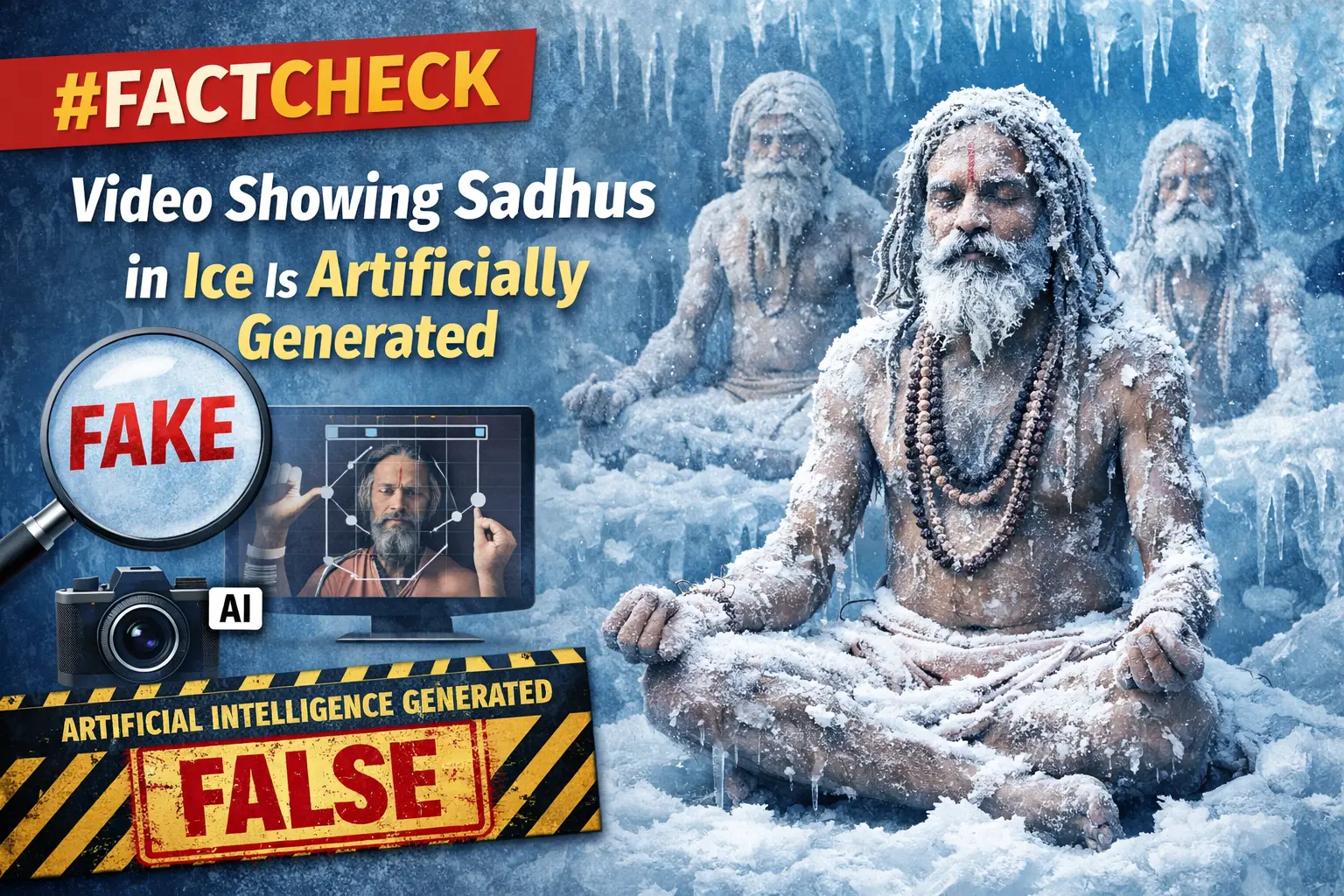
A video showing a group of Hindu ascetics (sadhus) allegedly performing intense penance while their bodies appear to be covered in ice is being widely shared on social media. Users are circulating the video as real and claiming that it represents an ancient tradition of Sanatan Dharma. CyberPeace research found the viral claim to be false.The research revealed that the video circulating on social media is not real but has been generated using artificial intelligence (AI).
Claim
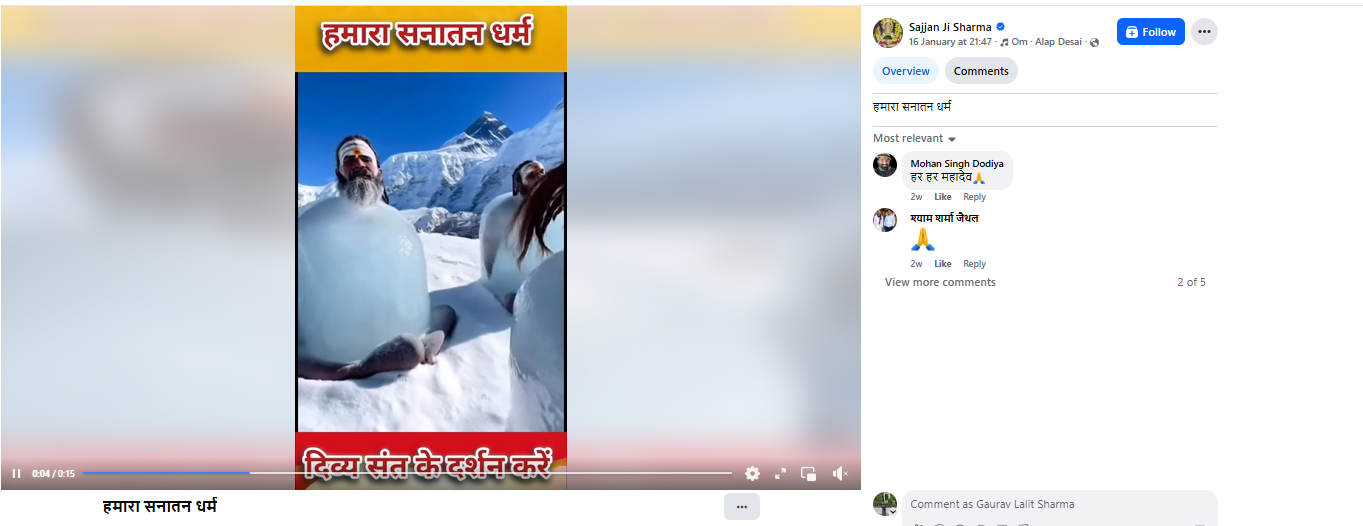
On social media platform Facebook, a user shared the viral video on January 16, 2026. The video shows several ascetics engaged in penance, with their bodies seemingly covered in ice. Users shared the video while claiming that it depicts an authentic spiritual practice rooted in Sanatan Dharma.
Links to the post, archive link, and screenshots can be seen below.
Fact Check:
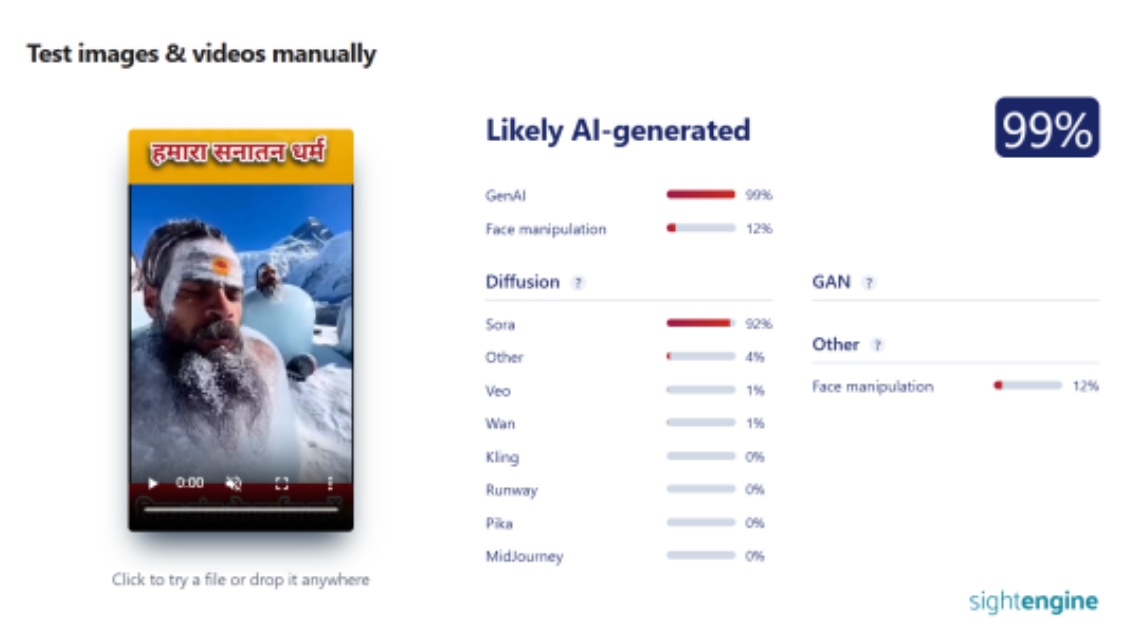
To verify the authenticity of the viral claim, CyberPeace searched relevant keywords on Google. However, no credible or reliable media reports supporting the claim were found. A close examination of the viral video raised suspicion that it may have been AI-generated. To verify this, the video was analysed using the AI detection tool Hive Moderation. According to the results, the video was found to be 99 percent AI-generated.

In the next step of the research, the same video was analysed using another AI detection tool, Sightengine. The results again indicated that the video was 99 percent AI-generated.
Conclusion
CyberPeace concludes that the video circulating on social media is not real. The viral video showing ascetics covered in ice was generated using artificial intelligence and does not depict an actual religious or spiritual practice.
Introduction
In an extensive order of 144 pages passed on May 29, 2026, Justice Sachin Datta of the Delhi High Court inter alia affirmed the right of an acquitted or discharged person to reinstate their digital identity. In a batch of more than 30 petitions relating to acquittals, family dispute cases, quashed criminal cases, and parties to proceedings, the petitioners argued that court documents and accusations, having lost their purpose, have kept occupying the search engine, leading to infringement of dignity, privacy, and career and personal life of these individuals. Citing Article 21 of the Indian Constitution as its foundation, the court affirmed that a right to life and personal liberty also includes a right to privacy and to leave behind failed proceedings and adopted wide de-indexing policies, including, where necessary, global de-indexing, thereby ushering in India's "right to be forgotten."
The Constitutional Argument: Article 21 and the Digital Self
The constitutional basis of the right to be forgotten in India rests on the landmark nine-judge bench ruling in Justice K.S. Puttaswamy v. Union of India. In 2017, the Supreme Court ruled privacy to be a fundamental right under Article 21 of the Constitution and stated informational privacy is a facet of personal liberty. The Supreme Court observed that individuals have an interest in determining how the information concerning them is gathered, disseminated, and accessed.
Building upon this precedent, Justice Sachin Datta held that the right to be forgotten flows naturally from the constitutional guarantee of informational privacy. The judgment represents one of the most significant judicial applications of the Puttaswamy principles, particularly in the context of search engines and online judicial records. Noting the absence of a fully operational statutory framework despite the enactment of the Digital Personal Data Protection Act, 2023, the court exercised its constitutional jurisdiction to protect individuals from enduring digital harm caused by continued public accessibility of outdated or irrelevant personal information.
INDIAN APPLICATION OF THE GLOBAL PRECEDENT
Tracing back the genesis of this right, it lies in the worldwide jurisdiction on privacy, especially the European Court of Justice's landmark ruling of 2014 in Google Spain SL v. AEPD and Mario Costeja Gonzlez, where it ruled that it is within one's power to ask search engines to de-list links that show personal information that is found to be outdated or irrelevant. This led to a legislated right to erasure by the inclusion of Article 17 in the General Data Protection Regulation (GDPR), creating the right throughout the EU. India, on the other hand, saw a slow process of evolution when it came to this right. The Madras High Court acknowledged the right to be forgotten partially in 2021 when it directed a petitioner's name to be deleted from an acquittal judgment, which was affirmed by a Division Bench in 2024. Nevertheless, the above were merely judgments confined to the facts of a particular case. However, the decision of the Delhi High Court dated May 2026 proves to be the benchmark in laying down a comprehensive constitutional framework under Article 21 with guiding principles on when a request for de-linking would be entertained and, if warranted, would be extended throughout the world.
Anatomy of the Framework by the Delhi High Court
While Justice Sachin Datta’s ruling recognizes the right to be forgotten, its actual import lies in devising an operative framework. The Court noted that it would maintain judicial records indefinitely in keeping with open justice principles, but an individual's name may not act as a perennial search key with respect to private entities' search engines. Thus, courts will be allowed to de-index judicial records (except their legal reasoning, findings, and ratio decidendi, which will continue to be accessible) from the names appearing therein from search engines and legal databases. While personally identifying data will be obfuscated, the underlying legal reasoning will not be rendered unusable, as access to unredacted records will continue to be available to courts, parties, and authorities. Such orders are also possible to be effective internationally, rendering avoidance difficult. However, the right cannot be absolute, as it is largely unavailable for convicted individuals (particularly if convicted of offenses against women or children or crimes of breach of trust). Courts must pass a proportionality test in considering the balance between privacy and the public right to know. By stating that masking information has an impact on discoverability, not access, it achieves a reconciliation between informational privacy and open justice so that acquitted accused are not held hostage to past accusations forever in the online age.
The Road to Implementation
However, the judgment presents a thick knot of practical issues, the solution to which may take considerable time to untangle. How will petitions for masking orders be filed by those who need them? Will there be a prescribed form? How will legal database systems such as Indian Kanoon and SCC Online operationalize name-based de-indexing while keeping their vast archives usable for lawyers? More significantly, what kind of legal force will global directions for de-indexing hold over those search engines whose main servers lie outside of Indian territory?
This is not to say the judgment isn't important. It simply presents a predictable, almost mundane set of issues that all ambitious pronouncements on constitutional rights face when translated into the world of administration issues that came up even when the EU was first struggling with enforcing the GDPR in 2018. India now has its framework, and the details of its implementation will undoubtedly come through future rounds of litigation, guidelines, and perhaps even legislation.
What remains abundantly clear, though, is the message conveyed by the Delhi High Court that digital permanency is a crime, especially when it causes the most incriminating of a person's legal actions to follow them perpetually, even long after they have been given due process by the system. As Justice Datta eloquently put it, privacy in the digital age is 'not about secrecy but about an individual's control over the dissemination of personal information.' "Now an element of constitutional law in India, the verdict is a declaration that will resonate long beyond the thirty-odd petitions that called it into being.
Conclusion
The ultimate finding of the 2026 right-to-be-forgotten judgment in Delhi High Court reinforces human dignity in the digital era. The Court has acknowledged the need for acquittals and exonerations to have meaningful implications offline, ensuring an individual is not eternally punished through online searches for alleged wrongdoing. Building on the right to privacy established by K.S. Puttaswamy v. Union of India, informational privacy now stands at the core of constitutional guarantees, and India joins the nations establishing precedents to balance openness with dignity.
