
Ransomware Attack on e-Nagarpalika Portal
Introduction
A hacking operation has corrupted data on Madhya Pradesh's e-Nagarpalika portal, a vital online platform for paying civic taxes that serves 413 towns and cities in the state. Due to this serious security violation, the portal has been shut down. The incident occurred in December 2023. This affects citizens' access to vital online services like possessions, water, and municipal tax payments, as well as the issuing of obituaries and certain documents offered via online portal. Ransomware which is a type of malware encodes and conceals a victim's files, and data making it inaccessible and unreachable unless the attacker is paid a ransom. When ransomware initially appeared, encryption was the main method of preventing individuals' data from such threats.
The Intrusion and Database Corruption: Exposing the Breach's Scope
The extent of the assault on the e-Nagarpalika portal was revealed by the Principal Secretary of the Urban Administration and Housing Department of Madhya Pradesh, in a startling revelation. Cybercriminals carried out a highly skilled assault that led to the total destruction of the data infrastructure covering all 413 of the towns for which the website was responsible.
This significant breach represents a thorough infiltration into the core of the electronic civic taxation system, not just an arrangement. Because of the attackers' nefarious intent, the data integrity was compromised, raising questions about the safeguarding of private citizen data. The extent of the penetration reaches vital city services, causing a reassessment of the current cybersecurity safeguards in place.
In addition to raising concerns about the privacy of personal information, the hacked information system casts doubt on the availability of crucial municipal services. Among the vital services affected by this cyberattack are marriage licenses, birth and death documents, and the efficient handling of possessions, water, and municipal taxes.
The weaknesses of electronic systems, which are the foundation of contemporary civic services, are highlighted by this incident. Beyond the attack's immediate interruption, citizens now have to deal with concerns about the security of their information and the availability of essential services. This tragedy is a clear reminder of the urgent need for robust safety safeguards as authorities work hard to control the consequences and begin the process of restoration.
Offline Protections in Place
The concerned authority informed the general population that the offsite data, which has been stored up on recordings every three days, is secure despite the online attack. This preventive action emphasises how crucial offline restores are to lessening the effects of these kinds of cyberattacks. The choice to keep the e-Nagarpalika platform offline until a certain time highlights how serious the matter is and how urgently extensive reconstruction must be done to restore the online services offer
Effect on Civic Services
The e-Nagarpalika website is crucial to providing online municipal services, serving as an invaluable resource for citizens to obtain necessary paperwork and carry out diverse transactions. Civic organisations have been told to function offline while the portal remains unavailable until the infrastructure is fully operational. This interruption prompts worries about possible delays and obstacles citizens face when getting basic amenities during this time.
Examination and Quality Control
Information technology specialists are working diligently to look into the computer virus and recover the website, in coordination with the Madhya Pradesh State Electronic Development Corporation Limited, the state's cyber police, and the Indian Computer Emergency Response Team (CERT-In). Reassuringly for impacted citizens, authorities note that there is currently no proof of data leaks arising from the hack.
Conclusion
The computerised attack on the e-Nagarpalika portal in Madhya Pradesh exposes the weakness of computer networks. It has affected the essential services to public services offered via online portal. The hack, which exposed citizen data and interfered with vital services, emphasises how urgently strong safety precautions are needed. The tragedy is a clear reminder of the need to strengthen technology as authorities investigate and attempt to restore the system. One bright spot is that the offline defenses in place highlight the significance of backup plans in reducing the impact of cyberattacks. The ongoing reconstruction activities demonstrate the commitment to protecting public data and maintaining the confidentiality of essential city operations.
References
- https://government.economictimes.indiatimes.com/tag/cyber+attack
- https://www.techtarget.com/searchsecurity/definition/ransomware#:~:text=Ransomware%20is%20a%20type%20of,accessing%20their%20files%20and%20systems.
- https://www.business-standard.com/india-news/mp-s-e-nagarpalika-portal-suffers-cyber-attack-data-corrupted-officials-123122300519_1.html
- https://www.freepressjournal.in/bhopal/mp-govts-e-nagar-palika-portal-hacked-data-of-over-400-cities-leaked

Related Blogs

Digital vulnerabilities like cyber-attacks and data breaches proliferate rapidly in the hyper-connected world that is created today. These vulnerabilities can compromise sensitive data like personal information, financial data, and intellectual property and can potentially threaten businesses of all sizes and in all sectors. Hence, it has become important to inform all stakeholders about any breach or attack to ensure they can be well-prepared for the consequences of such an incident.
The non-reporting of reporting can result in heavy fines in many parts of the world. Data breaches caused by malicious acts are crimes and need proper investigation. Organisations may face significant penalties for failing to report the event. Failing to report data breach incidents can result in huge financial setbacks and legal complications. To understand why transparency is vital and understanding the regulatory framework that governs data breaches is the first step.
The Current Indian Regulatory Framework on Data Breach Disclosure
A data breach essentially, is the unauthorised processing or accidental disclosure of personal data, which may occur through its acquisition, sharing, use, alteration, destruction, or loss of access. Such incidents can compromise the affected data’s confidentiality, integrity, or availability. In India, the Information Technology Act of 2000 and the Digital Personal Data Protection Act of 2023 are the primary legislation that tackles cybercrimes like data breaches.
- Under the DPDP Act, neither materiality thresholds nor express timelines have been prescribed for the reporting requirement. Data Fiduciaries are required to report incidents of personal data breach, regardless of their sensitivity or impact on the Data Principal.
- The IT (Indian Computer Emergency Response Team and Manner of Performing Functions and Duties) Rules, 2013, the IT (Reasonable Security Practices and Procedures and Sensitive Personal Data or Information) Rules, 2011, along with the Cyber Security Directions, under section 70B(6) of the IT Act, 2000, relating to information security practices, procedure, prevention, response and reporting of cyber incidents for Safe & Trusted Internet prescribed in 2022 impose mandatory notification requirements on service providers, intermediaries, data centres and corporate entities, upon the occurrence of certain cybersecurity incidents.
- These laws and regulations obligate companies to report any breach and any incident to regulators such as the CERT-In and the Data Protection Board.
The Consequences of Non-Disclosure
A non-disclosure of a data breach has a manifold of consequences. They are as follows:
- Legal and financial penalties are the immediate consequence of a data breach in India. The DPDP Act prescribes a fine of up to Rs 250 Crore from the affected parties, along with suits of a civil nature and regulatory scrutiny. Non-compliance can also attract action from CERT-In, leading to more reputational damage.
- In the long term, failure to disclose data breaches can erode customer trust as they are less likely to engage with a brand that is deemed unreliable. Investor confidence may potentially waver due to concerns about governance and security, leading to stock price drops or reduced funding opportunities. Brand reputation can be significantly tarnished, and companies may struggle with retaining and attracting customers and employees. This can affect long-term profitability and growth.
- Companies such as BigBasket and Jio in 2020 and Haldiram in 2022 have suffered from data breaches recently. Poor transparency and delay in disclosures led to significant reputational damage, legal scrutiny, and regulatory actions for the companies.
Measures for Improvement: Building Corporate Reputation via Transparency
Transparency is critical when disclosing data breaches. It enhances trust and loyalty for a company when the priority is data privacy for stakeholders. Ensuring transparency mitigates backlash. It demonstrates a company’s willingness to cooperate with authorities. A farsighted approach instils confidence in all stakeholders in showcasing a company's resilience and commitment to governance. These measures can be further improved upon by:
- Offering actionable steps for companies to establish robust data breach policies, including regular audits, prompt notifications, and clear communication strategies.
- Highlighting the importance of cooperation with regulatory bodies and how to ensure compliance with the DPDP Act and other relevant laws.
- Sharing best public communications practices post-breach to manage reputational and legal risks.
Conclusion
Maintaining transparency when a data breach happens is more than a legal obligation. It is a good strategy to retain a corporate reputation. Companies can mitigate the potential risks (legal, financial and reputational) by informing stakeholders and cooperating with regulatory bodies proactively. In an era where digital vulnerabilities are ever-present, clear communication and compliance with data protection laws such as the DPDP Act build trust, enhance corporate governance, and secure long-term business success. Proactive measures, including audits, breach policies, and effective public communication, are critical in reinforcing resilience and fostering stakeholder confidence in the face of cyber threats.
References
- https://www.meity.gov.in/writereaddata/files/Digital%20Personal%20Data%20Protection%20Act%202023.pdf
- https://www.cert-in.org.in/PDF/CERT-In_Directions_70B_28.04.2022.pdf
- https://chawdamrunal.medium.com/the-dark-side-of-covering-up-data-breaches-why-transparency-is-crucial-fe9ed10aac27
- https://www.dlapiperdataprotection.com/index.html?t=breach-notification&c=IN

Executive Summary
Talks between the United States and Iran over a ceasefire reportedly held in Islamabad on Saturday ended without a resolution. Meanwhile, a video circulating on social media claims to show US troops returning home following a ceasefire in the Middle East conflict.
However, a research by the CyberPeace found the claim to be false. The viral video is not linked to any recent ceasefire. It actually dates back to March and shows the return of Iowa National Guard troops after months of deployment in the Middle East.
Claim
An X (formerly Twitter) user posted the video on April 7, 2026, claiming,“Another victory for Iran: American soldiers have started arriving home. After leaving the Middle East, American soldiers are saying, ‘Why did we fight for Israel? If Iran is talking about peace, we will also stand with them.’”

Fact Check
To verify the claim, we extracted keyframes from the viral video and conducted a reverse image search using Google Lens. This led us to posts by Newsradio 1040 WHO, which had shared the same footage on March 12 across Facebook and Instagram.


In its caption, the radio station stated that nearly 600 Iowa soldiers had returned home after a nine-month deployment in the Middle East as part of Operation Inherent Resolve. The segment, narrated by journalist Claire Burnett, explained that the soldiers belonged to the 2nd Brigade Combat Team, 34th Infantry Division, and had been deployed to Iraq and Syria. The footage was recorded at the 132nd Wing base of the Iowa Air National Guard in Des Moines.

For further confirmation, a March 12 report by KCCI 8 News also showed the same aircraft and troops, verifying the authenticity and timeline of the footage

Operation Inherent Resolve, launched in 2014, is a US-led campaign aimed at supporting local forces in the fight against the Islamic State (ISIS) and ensuring its lasting defeat.
https://www.kcci.com/article/iowans-welcome-national-guard-unit-home-from-deployment-in-middle-east/70729105

Conclusion
The viral claim is false and misleading. The video does not show US troops returning due to any recent ceasefire between the United States and Iran. Instead, it captures the routine homecoming of Iowa National Guard soldiers in March after completing a scheduled deployment in the Middle East.There is no evidence linking the footage to current geopolitical developments or any ceasefire agreement. The claim has been taken out of context and shared with a misleading narrative to create confusion around ongoing international events.

Executive Summary
A ‘deep depression’ formed over the Bay of Bengal made landfall along the Andhra Pradesh and Odisha coasts in late September 2026, affecting several districts. A video is going viral on social media in connection with the weather system, purportedly showing its impact. Some users are sharing the video claiming that it shows the effects of the storm in Odisha. CyberPeace Research fact-checked the viral claim and found that the impact of the storm was reported in Andhra Pradesh, Odisha, Telangana and Chhattisgarh. However, the viral video showing the destruction caused by the storm is actually from Bhadradri Kothagudem in Telangana.
Claim
Instagram user ‘deepak_.pandey900’ posted a video on September 24, 2026, along with an archive link, claiming that “Cyclone Arnab, which formed over the Bay of Bengal, made landfall along the north Andhra Pradesh and south Odisha coasts between 11 pm and 1 am. Heavy rainfall is occurring in the coastal districts of both states due to its impact. Schools have been closed in 10 districts of southern Odisha, and around 5,000 people have been shifted to safer locations. Traffic was disrupted after four bridges in Malkangiri were submerged, and the National Highway was also closed as a precautionary measure. Strong winds caused 10 fishing boats to sink and dozens of others to be damaged in Bhadrak.”
https://www.instagram.com/deepak_.pandey900/reel/DdrZwOaBYjd

Fact Check
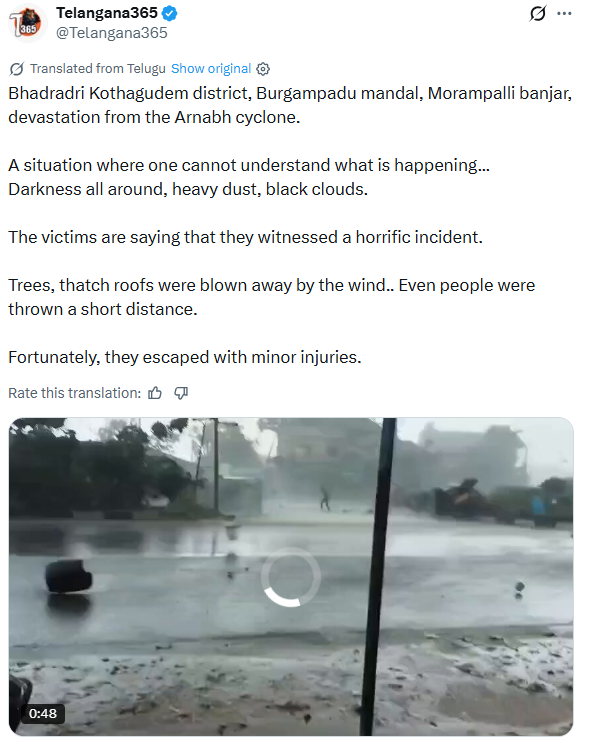
To verify the viral claim, we first conducted a Google Lens search using keyframes extracted from the video. X user ‘Telangana365’ shared the video on September 23, 2026, with the caption: “The ‘Arnab cyclone’ has caused massive destruction in Morampalli Banjara of Burgampadu mandal in Bhadradri Kothagudem district. The situation is such that it is difficult to understand what is happening. It is completely dark, with heavy dust and dark clouds all around. According to the victims, they witnessed a terrifying scene. Strong winds uprooted trees and blew away thatched roofs... people were even thrown some distance by the gusts of wind. Fortunately, they suffered only minor injuries.”
https://x.com/Telangana365/status/2102743504715907406?s=20
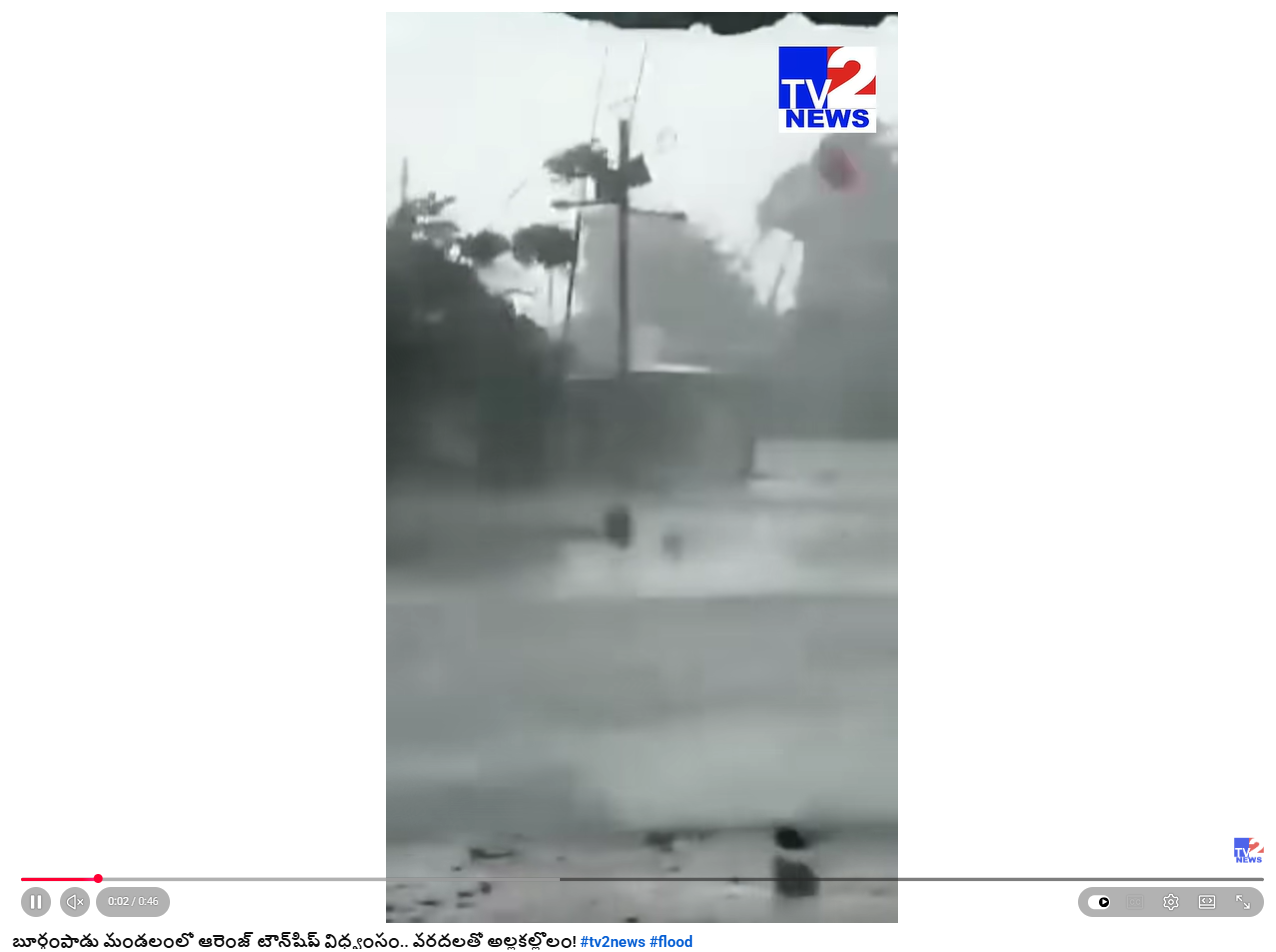
The video was also posted on the YouTube channel ‘TV2_NEWS’ on September 23, 2026, identifying it as footage from Burgampadu mandal in Telangana.
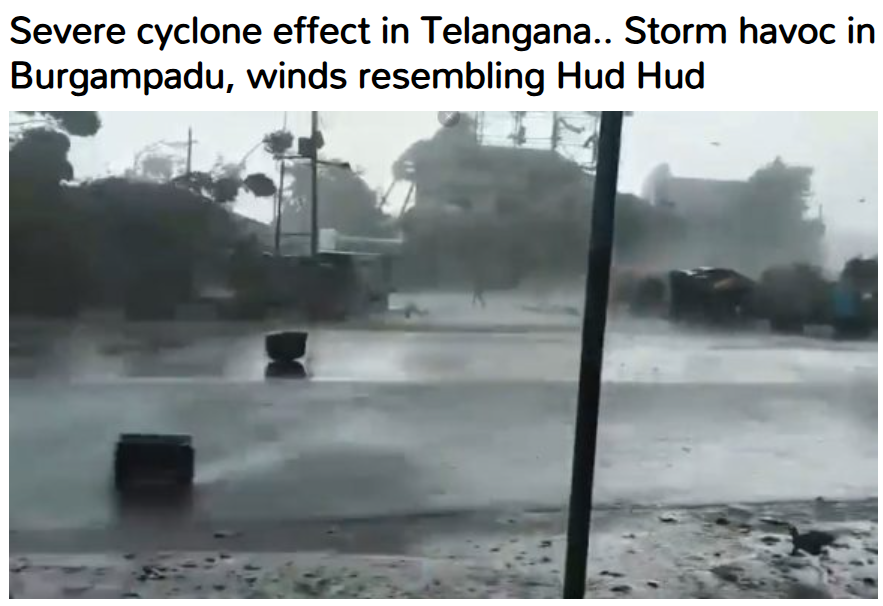
A report published on the website of Telangana-based news portal ‘Big TV’ on September 24, 2026, used a keyframe from the video. According to the report, “Cyclone Arnab, which formed over the Bay of Bengal, has caused widespread destruction. Its impact has been felt not only in Odisha and Andhra Pradesh but also significantly in Telangana. The cyclone caused destruction in Bhadradri Kothagudem district soon after crossing the coast. It suddenly wreaked havoc in Morampalli Banjara of Burgampadu mandal. Heavy rainfall and strong winds engulfed the area. Several people were injured during the incident.”
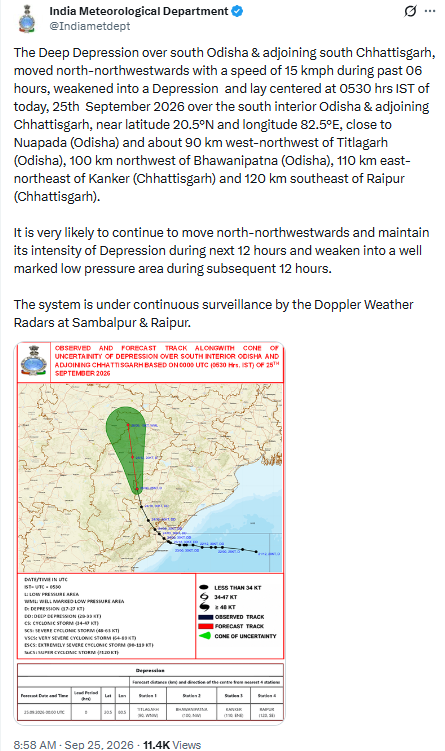
According to information shared by the India Meteorological Department (IMD) on its X handle at around 9 am on September 25, 2026, “The Deep Depression over south Odisha and adjoining south Chhattisgarh moved north-northwestwards at a speed of 15 kmph during the past six hours. It weakened into a Depression and lay centred at 5:30 am on September 25, 2026, over interior south Odisha and adjoining Chhattisgarh. It is very likely to continue moving north-northwestwards and maintain its intensity as a Depression for the next 12 hours. Thereafter, it is expected to weaken into a Well-Marked Low Pressure Area during the subsequent 12 hours.”
Conclusion:
The Deep Depression that formed over the Bay of Bengal caused heavy rainfall in Andhra Pradesh, Telangana and Odisha. However, the viral video showing the destruction caused by the storm is actually from Telangana.
