
High-risk warning by the Indian government of bugs in Google Chrome, Microsoft Edge and Adobe
Introduction
The Computer Emergency Response Team (CERT-in) is a nodal agency of the government established and appointed as a national agency in respect of cyber incidents and cyber security incidents in terms of the provisions of section 70B of the Information Technology (IT) Act, 2000. CERT-In has issued a cautionary note to Microsoft Edge, Adobe and Google Chrome users. Users have been alerted to many vulnerabilities by the government's cybersecurity agency, which hackers might use to obtain private data and run arbitrary code on the targeted machine. Users are advised by CERT-In to apply a security update right away in order to guard against the problem.
Vulnerability note
Vulnerability notes CIVN-2023-0361, CIVN-2023-0362 and CIVN-2023-0364 for Google Chrome for Desktop, Microsoft Edge and Adobe respectively, include more information on the alert. The problems have been categorized as high-severity issues by CERT-In, which suggests applying a security upgrade right now. According to the warning, there is a security risk if you use Google Chrome versions earlier than v120.0.6099.62 on Linux and Mac, or earlier than 120.0.6099.62/.63 on Windows. Similar to this, the vulnerability may also impact users of Microsoft Edge browser versions earlier than 120.0.2210.61.
Cause of the Problem
These vulnerabilities are caused by "Use after release in Media Stream, Side Panel Search, and Media Capture; Inappropriate implementation in Autofill and Web Browser UI, “according to the explanation in the issue note on the CERT-In website. The alert further warns that individuals who use the susceptible Microsoft Edge and Google Chrome browsers could end up being targeted by a remote attacker using these vulnerabilities to send a specially crafted request.” Once these vulnerabilities are effectively exploited, hackers may obtain higher privileges, obtain sensitive data, and run arbitrary code on the system of interest.
High-security issues: consequences
CERT-In has brought attention to vulnerabilities in Google Chrome, Microsoft Edge, and Adobe that might have serious repercussions and put users and their systems at risk. The vulnerabilities found in widely used browsers, like Adobe, Microsoft Edge, and Google Chrome, present serious dangers that might result in data breaches, unauthorized code execution, privilege escalation, and remote attacks. If these vulnerabilities are taken advantage of, private information may be violated, money may be lost, and reputational harm may result.
Additionally, the confidentiality and integrity of sensitive information may be compromised. The danger also includes the potential to interfere with services, cause outages, reduce productivity, and raise the possibility of phishing and social engineering assaults. Users may become less trusting of the impacted software as a result of the urgent requirement for security upgrades, which might make them hesitant to utilize these platforms until guarantees of thorough security procedures are provided.
Advisory
- Users should update their Google Chrome, Microsoft Edge, and Adobe software as soon as possible to protect themselves against the vulnerabilities that have been found. These updates are supplied by the individual software makers. Furthermore, use caution when browsing and refrain from downloading things from unidentified sites or clicking on dubious links.
- Make use of reliable ad-blockers and strong, often updated antivirus and anti-malware software. Maintain regular backups of critical data to reduce possible losses in the event of an attack, and keep up with best practices for cybersecurity. Maintaining current security measures with vigilance and proactiveness can greatly lower the likelihood of becoming a target for prospective vulnerabilities.
References

Related Blogs
.webp)
Executive Summary
Amid heightened tensions following Israel and US actions against Iran, a video is being widely shared on social media. The footage shows thick black smoke rising into the sky from a location, suggesting a major explosion or attack. However, research conducted by the CyberPeace found the viral claim to be misleading. Our research revealed that the video is not recent and has no connection to the current Israel-Iran tensions. In fact, the footage is nearly a year old and shows a fire at a casino in Mexico, now being shared out of context.
Claim
Users circulating the video claim that it shows an attack on Tel Aviv, Israel. On March 1, 2026, a user on X shared the clip with the caption, “Iran has drained the oil out of Tel Aviv,” implying a devastating retaliatory strike. (Post and archive links provided above.)
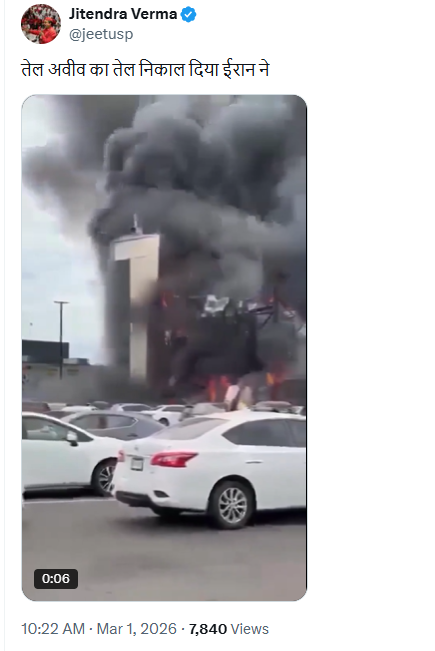
Fact Check:
To verify the authenticity of the video, we extracted key frames and performed a reverse image search using Google Lens. During the search, we found the same visuals in a Spanish media report published on January 16, 2025. This confirmed that the video predates the ongoing geopolitical developments.
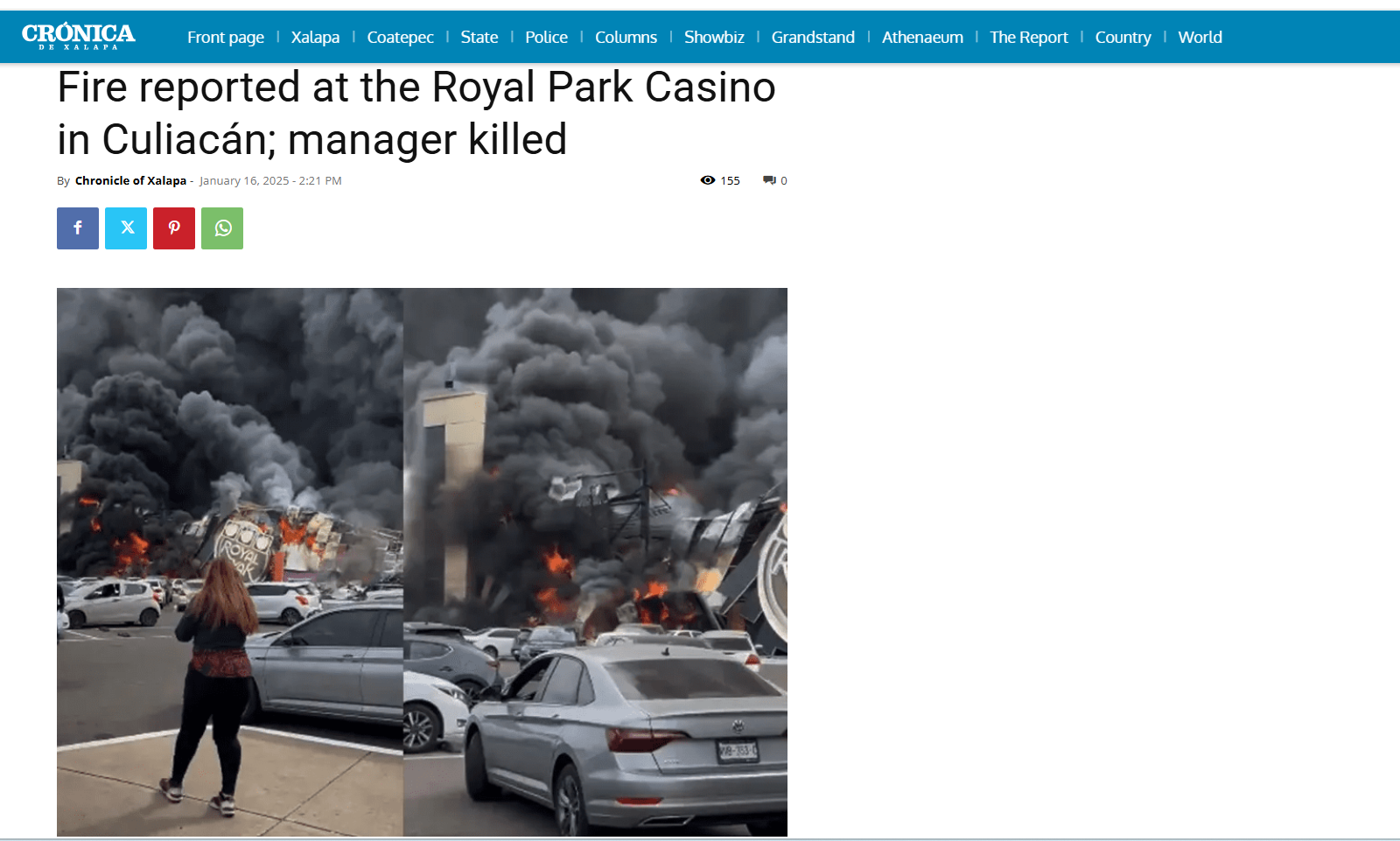
According to the report, the footage shows a fire at the Royal Park Casino located inside the Cinépolis plaza in Culiacán, Mexico. Local outlet Meganoticias Culiacán reported on X that the casino was “completely burned down.” The structure reportedly collapsed following the blaze, and emergency responders confirmed that several people were injured. Further keyword searches led us to the same footage on the official YouTube channel of Milenio, uploaded on January 17, 2025. The report clearly states that the fire occurred at the Royal Yacht Casino in Mexico and is unrelated to any recent military developments.

Conclusion
Evidence gathered during our research clearly establishes that the viral video is not related to any missile attack by Iran on Israel. The claim is false. The footage is from a fire incident at a casino in Mexico and is being misleadingly shared in the context of current international tensions, potentially creating unnecessary panic and confusion.

Introduction
Misinformation has been a significant concern in recent times, especially in the online information landscape. This past month, misinformation has been linked to the communal tensions that have flared up in the North Tripura district. While the law enforcement agencies were quick to respond, misinformation about the law and order situation spread rapidly. Shri Amitabh Ranjanon, Tripura’s Director General of Police, issued a public statement on 21st October 2024, Monday, clarifying “The state's law and order situation has improved, and misinformation is being spread about it”. This instance is a classic example of how misinformation can affect the delivery of good governance to citizens or hamper the relationship between the citizenry and the state mechanisms. Such misinformation undermines the efforts of the law enforcement agencies striving to maintain peace, and distorted narratives can colour public opinion about the authorities and create cycles of misplaced distrust.
DGP's Statement
DGP Amitabh Ranjanon clarified during an event to commemorate Police Commemoration Day, stating that the state has recorded a lesser number of crimes this year compared to the last 10 years. He emphasized that senior police officials promptly respond to any law and order issues and additional forces have been deployed as necessary. Ranjan highlighted the peaceful celebration of Durga Puja as a testament to the effective law enforcement measures in place, demonstrating communal harmony.
Impact of Misinformation in communal settings
Misinformation in communal settings can cause anxiety, fear, and distrust among community members, leading to conflicts. It undermines public confidence in law enforcement and government institutions. The spread of false information can erode trust in law enforcement and government bodies, hindering their ability to address and solve conflicts. Therefore, precise data and accurate information are essential in every environment to avoid the harm caused by misinformation.
Preventive Measures Against Misinformation
- Look for authenticated sources
In a digital landscape filled with information from various sources, it’s essential to differentiate between credible and unreliable content. Authenticated sources are typically reputable organizations and officials. Users must rely on authenticated sources to ensure the information's accuracy and credibility. Users must verify the source, confirm the claims made in the source by comparing them with other credible sources for accuracy, and follow fact-checking practices.
- Exercise caution on social media information
Social media platforms can rapidly disseminate information, but they can also serve as breeding grounds for misinformation. The ease of sharing content can lead to the spread of unverified claims, rumours, or even outright falsehoods. Therefore, exercising caution when engaging with information on these platforms is crucial. Users must scrutinize headlines and images as well, especially since misleading images can distort the truth with the advent of AI. One must always read beyond the headline and check the context of the images used and not make split-second decisions and impressions. Users must engage in critical thinking and share informed opinions responsibly, to promote discussions about the validity of shared content.
- Role of Awareness
Awareness about misinformation is essential for navigating the complexities of modern communication. People can make better decisions and help create a more informed society by being aware of the strategies used to disseminate false information. Users need to become knowledgeable about typical misinformation strategies, hone their cognitive abilities to critically assess internet content, and verify the reliability of sources before they form opinions, make decisions or share ahead.
Final words
By integrating these simple best practices into our daily lives we can cultivate a more informed public, reduce the spread of online misinformation, and enhance critical thinking skills among peers and the larger digital community.
References
- https://www.theweek.in/wire-updates/national/2024/10/21/cal8-tr-dgp.html
- https://www.newindianexpress.com/nation/2024/Oct/21/tripura-dgp-says-misinformation-being-spread-about-states-law-and-order-situation
- https://indianexpress.com/article/north-east-india/tripura/police-inaction-tripura-dgp-amitabh-ranjan-sharp-decline-crime-rate-9632509/
- https://www.newindianexpress.com/nation/2024/Oct/21/tripura-dgp-says-misinformation-being-spread-about-states-law-and-order-situation
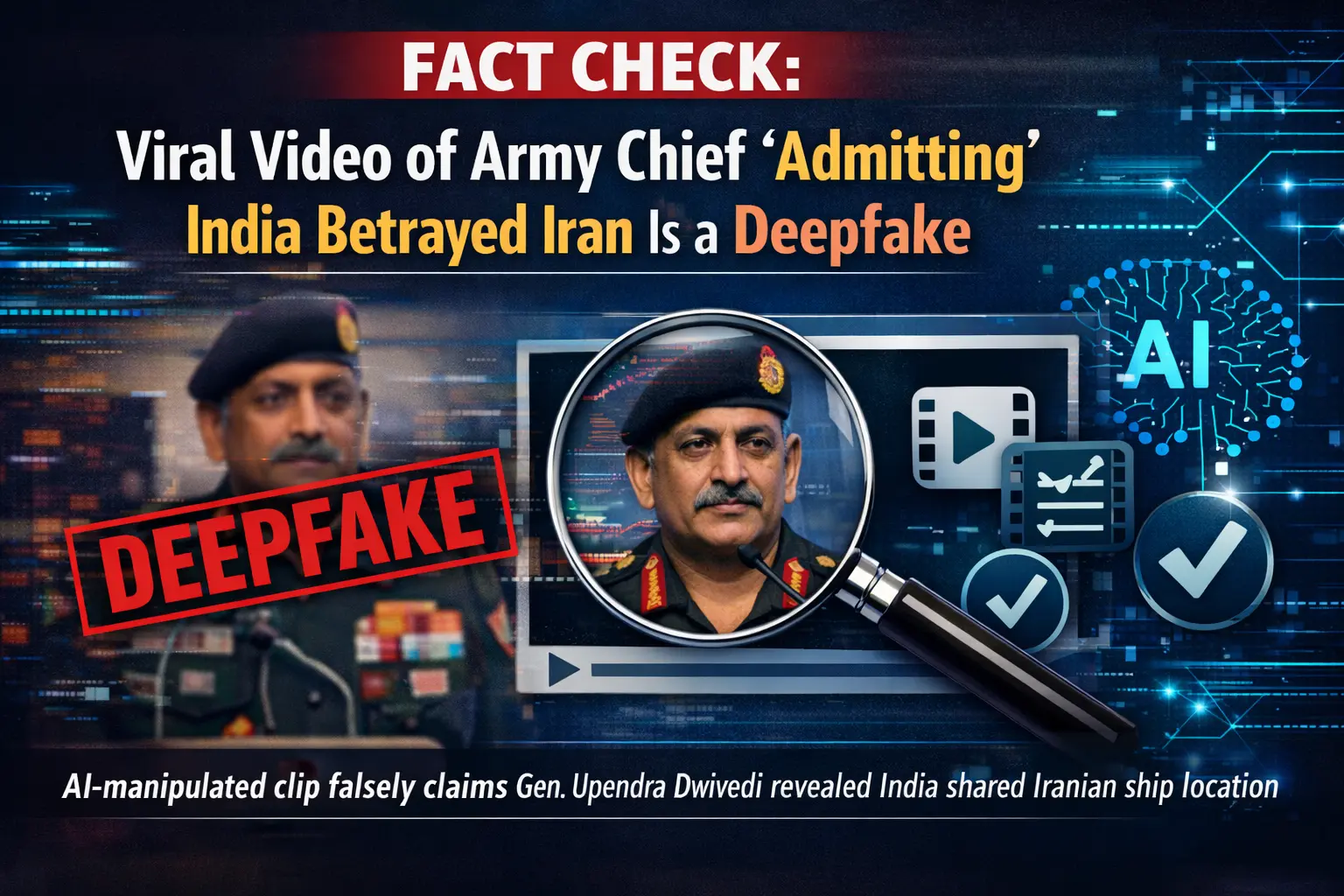
Executive Summary
A 57-second video featuring India’s Chief of Army Staff Upendra Dwivedi is widely circulating on social media. The clip is being shared with the claim that the Army chief admitted India had “betrayed” Iran by providing the location of an Iranian naval ship to Israel, allegedly leading to its destruction The video is spreading amid heightened tensions in West Asia involving United States, Israel, and Iran. According to posts sharing the claim, the Iranian naval vessel IRIS Dena, which had participated in a naval event in Visakhapatnam and was returning to Iran with around 130 personnel onboard, was torpedoed by a US submarine near the southern coast of Sri Lanka on March 4 while sailing in the Indian Ocean.
In the viral clip, the speaker—presented as the Indian Army chief—appears to say that India informed Israel about the exact location of the Iranian ship after it left Indian waters, describing Israel as a strategic ally and suggesting that the attack occurred in international waters. The clip also claims that India had no direct involvement in the alleged joint US-Israel torpedo strike.
However, research conducted by the CyberPeace found the claim to be false. Our research shows that the video does not contain a genuine statement from Army Chief Upendra Dwivedi and is in fact a manipulated clip.
Claim
On X (formerly Twitter), a page named GPX (@GPX_Press) shared the video on March 9 with the caption: “India confesses it BETRAYED Iran by leaking the location of an Iranian ship to Israel, leading to its total destruction!”
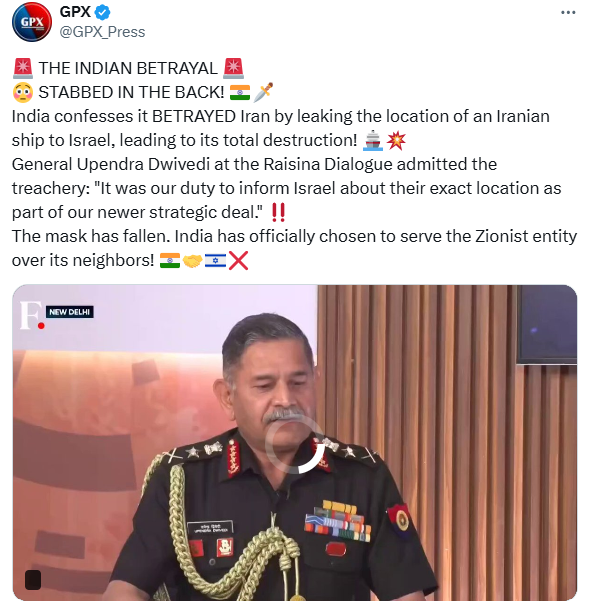
Fact Check
During the verification process, researchers noticed a ticker in the viral video reading “Raisina Dialogue 2026 × Firstpost.” Using this clue, we conducted a keyword search on YouTube and located a video uploaded by Firstpost on March 7 titled “India’s Army Chief Speaks on Op Sindoor, Pakistan and Future of Warfare | Raisina Dialogue 2026.”
In the 21-minute interview, Army Chief Upendra Dwivedi is seen speaking with strategic affairs expert Harsh V. Pant. According to the video description, the discussion focuses on lessons from Operation Sindoor and the evolving nature of modern warfare.

The viral clip appears to be taken from this interview. However, throughout the conversation, Dwivedi does not mention any conflict involving the United States, Israel, and Iran, nor does he refer to the sinking of an Iranian naval ship in the Indian Ocean. This indicates that the circulating clip has been edited and misrepresented to create a misleading narrative.
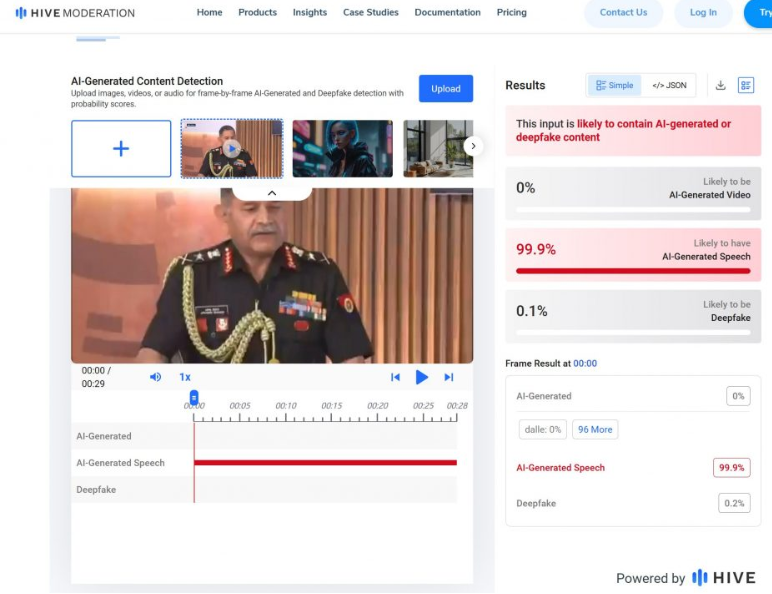
For additional verification, the viral video was analyzed using the AI detection tool Hive Moderation. The results suggested a 99.9% probability that the speech in the clip was generated using AI, indicating manipulation of the original footage.
Conclusion
The research makes it clear that the viral video does not reflect an authentic statement by India’s Army Chief Upendra Dwivedi. The clip has been altered and the audio appears to be AI-generated. In other words, the circulating video is a deepfake being shared with a misleading claim.
