
#FactCheck: Viral Video of Armless Woman Performing Gymnastics Is AI-Generated
Executive Summary
A video of a young woman without arms performing gymnastics has been widely shared on social media. In the video, the woman can be seen without both arms, yet she performs several difficult gymnastics moves with remarkable ease and confidence. Her impressive physical balance and practice have left viewers amazed. Users sharing the video are praising not only her talent but also her courage, confidence and determination. Many users are also describing it as an inspiring example of overcoming challenges and pursuing one's dreams with unwavering spirit.
However, a probe by the Research Wing of CyberPeace found that the video being shared on social media is not genuine but was generated using Artificial Intelligence (AI). The video shows the young woman performing difficult gymnastics moves with apparent ease, but a technical analysis revealed signs of AI-generated content. Therefore, sharing the video as a real incident or as the performance of an actual gymnast is misleading.
Claim:
A video circulating on social media shows a young woman without arms performing gymnastics, with users hailing her courage and determination.
https://www.facebook.com/reel/1793394471856936

Fact Check
During our research of the viral video, we first conducted a reverse image search of its different keyframes. We also searched Google using relevant keywords. However, we could not find the viral video in any credible media report.
During the reverse search, we found the same viral video on the Instagram account @arenaathletics1, where it was posted on September 13. The post also carries an “AI-generated content” label. The video has garnered more than 20 million views. Several users in the comment section have also identified the video as AI-generated.

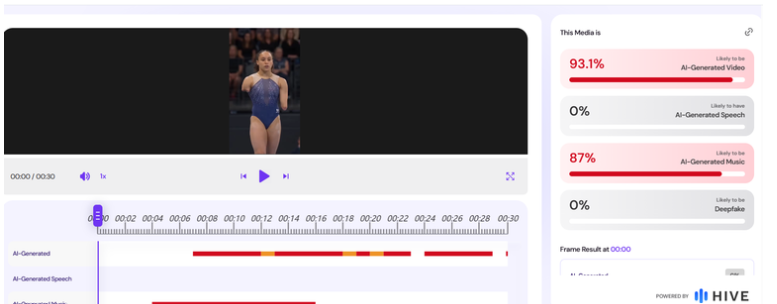
We then checked the viral video using the AI detection tool Hive Detect. In its analysis, the tool identified the video as likely AI-generated, assigning it a 93.1 percent score for AI-generated content.
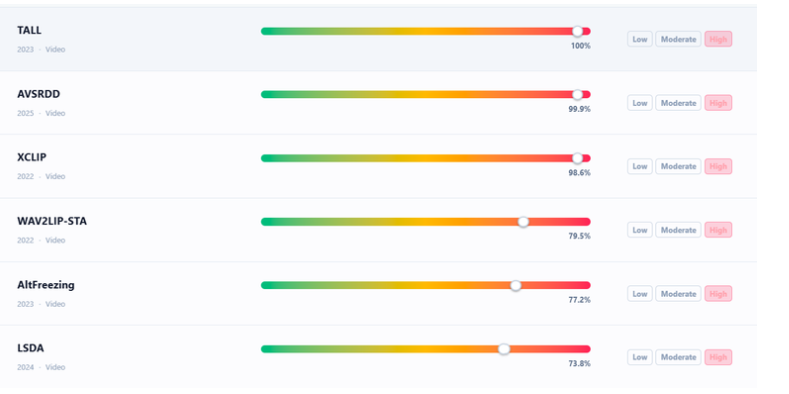
Additionally, six detectors on Deepfake-O-Meter identified the viral video as AI-generated with a high probability.
Conclusion
Our research found sufficient evidence to establish that the viral video showing a young woman without arms performing gymnastics is not genuine. The video was found on an Instagram account carrying an “AI-generated content” label, while analysis using AI detection tools, including Hive Detect and Deepfake-O-Meter, also indicated a high likelihood of AI-generated content. Therefore, the video is AI-generated and is being misleadingly shared as a real-life performance, rather than an authentic video of a gymnast.

Related Blogs

Introduction
Whatsapp is one of the leading OTT messaging platforms, which has been owned by the tech giant Meta since 2013. WhatsApp enjoys a user base of nearly 2.24 billion people globally, with almost 487 million users in India. Since the advent of Whatsapp, it has been the most commonly used messaging app, and it has made an impact to such an extent that it is used for professional as well as personal purposes. Meta powers the platform and follows similar guidelines and policies as its parent company.
The New Feature
Users of WhatsApp on the web and desktop can now access one account from various devices. One WhatsApp account may now be used on up to four handsets thanks to a new update from Meta. Be aware that the multi-device capability has been planned for some time and is finally being made available to stable WhatsApp users. Each linked device (up to four devices can be linked) will function independently, and the independent devices will continue to receive messages even if the central device’s network connection is lost. Remember that WhatsApp will automatically log out of all the companion devices if the primary smartphone is dormant for an extended period. Four more gadgets may be a mix of four PCs and smartphones or four smartphones. This feature is now available for updates and downloads on Android as well as iOS platforms.
Potential issues
As we go deeper into the digital age, it is the responsibility of the tech giants to pilot innovation with features of security by design. Thus such new features should be accompanied by coherent safety and security policies or advisories to ensure the users understand the implications of the new features. Convenience over conditions is an essential part of cyberspace. It points to the civic duty of netizens to go through the conditions of any app rather than only focus on the convenience it creates. The following potential issues may arise from the new features on Whatsapp –
- Increased cybercrime- The bad actors now do not need to access SIM cards to commit frauds over the platforms as now on a single number 4 devices can be used hence the cybercriminal activity can increase over the platform. It is also pertinent for the platform to create SoPs for fake accounts which use multiple devices, as they pose a direct threat to the users and their interests.
- Difficulty in identifying and tracing- The LEAs will face a significant issue in identifying the bad actors and tracing them as the individual’s involvement through a linked device needs to be given legal validity and scope for investigation. This may also cause issues in evidence handling and analysis.
- Surge in Misinformation and Disinformation- With access to multiple devices, the screen time of an individual is also bound to increase. This leads to more time spent online, thus causing a rise in instances of misinformation and disinformation by bad actors. Thus the aspect of fack checking is of prime importance.
- Potential Oversharing of Personal Data- With the increased accessibility on different devices, it is very easy for the app to seek data from all devices on which the app is running, thus leading to a bigger reservoir of personal data for the platforms and data fiduciaries.
- Higher risk of Phishing, Ransomware and Malware Attacks- As the devices under the same login credentials and mobile number will increase, the message can be viewed on all the devices, thus increasing the risk of widespread embedded ransomware and malware in multiple devices is and ever-present threat.
- One number, more criminals- This feature will allow cybercriminals to operate using one device only, earlier they used to forge Adhaar cards to get new sims, but this feature will enable the bad actors to commit crimes and attacks from one single SIM using 4 different devices.
- Rise in Digital Footprint- As the number of devices increases, the users will generate more digital footprints. As a tech giant, Meta will have access to a bigger database, which increases the risk of data breaches by third-party actors.
Conclusion
In the fast-paced digital world, it is important to remain updated about new software, technologies and policies for our applications or forms of tech. This was a long-awaited feature from WhatsApp, and its value of it doesn’t lie in technological advancement only but also in the formulation of policies to govern this technology towards the trust and safety aspect of users. The platforms, in synergy with the policy makers, need to create a robust framework to accommodate the new features and add-ons on apps vehicle, staying in compliance with the laws of the land. Awareness about new features and vulnerabilities is a must for all netizens, and it is a shared responsibility for all netizens to spread the word about safety and security mechanisms.
.webp)
Introduction
The Digital Personal Data Protection (DPDP) Act, of 2023, introduces a framework for the protection of personal data in India. Data fiduciaries are the entity that essentially determines the purpose and means of processing of personal data. The small-scale industries also fall within the ambit of the term. Startups/Small companies and Micro, Small, and Medium Enterprises (MSMEs) while determining the purpose of processing of personal data in the capacity of ‘data fiduciary’ are also required to comply with the DPDP Act provisions. The obligations set for the data fiduciary will apply to them unilaterally, though compliance with this Act and can be challenging due to resource constraints and limited expertise in data protection.
DPDP Act, 2023 Section 17(3) gives power to the Central Government to exempt Startups from being obligated to comply with the Act, taking into account the volume and nature of personal data processed. It is the nation's first standalone law on data protection and privacy, which sets forth strict rules on how data fiduciaries can collect and process personal data, focusing on consent-based mechanisms and personal data protection. Small-scale industries are given more time to comply with the DPDP Act. The detailed provisions to be notified in further rulemaking called ‘DPDP rules’.
Obligations on Data Fiduciary under the DPDP Act, 2023
The DPDP Act focuses on processing digital personal data in a manner that recognizes both the right of individuals to protect their personal data and the need to process such personal data for lawful purposes and for matters connected therewith or incidental thereto. Hence, small-scale industries also need to comply with provisions aimed at protecting digital personal data.
The key requirements to be considered:
- Data Processing Principles: Ensuring that data processing is done lawfully, fairly, and transparently. Further, the collection and processing of personal data is only for specific, clear, and legitimate purposes and only the data necessary for the stated purpose. Ensuring that the data is accurate and up to date is also necessary. An important part is that the data is not retained longer than necessary and appropriate security measures are taken to protect the said data.
- Consent Management: Clear and informed consent should be obtained from individuals before collecting their personal data. Further, individuals have the option to withdraw their consent easily.
- Rights of Data Principals: Data principals (individuals) whose data is being collected have the right to Information, the right to correction and erasure of data, the right to grievance redressa, Right to nominate.the right to access, correct, and delete their personal data. Data fiduciaries need to be mindful of mechanisms to handle requests from data principals regarding their concerns.
- Data Breach Notifications: Data fiduciaries are required to notify the data protection board and the affected individuals in case a data breach has occurred.
- Appropriate technical and organisational measures: A Data Fiduciary shall implement appropriate technical and organisational measures to ensure effective observance of the provisions of this Act and the rules made thereunder.Cross-border Data Transfers: Compliance with regulations in relation to the transfer of personal data outside of India should be ensured.
Challenges for Small Scale Industries for the DPDP Act Compliance
While small-scale industries have high aims for their organisational growth and now in the digital age they also need to place reliance on online security measures and handling of personal data, with the DPDP act in the picture it becomes an obligation to consider and comply with. As small-scale industries including MSMEs, they might face certain challenges in fulfilling these obligations but digital data protection measures will also boost the competitive market and customer growth in their business. Bringing reforms in methods aimed at better data governance in today's digital era is significant.
One of the major challenges for small-scale industries could be ensuring a skilled workforce that understands and educates internal stakeholders about the DPDP Act compliances. This could undoubtedly become an additional burden.
Further, the limited resources can make the implementation of data protection, which is oftentimes complex for a layperson in the case of a small-scale industry, difficult to implement. Limitations in resources are often financial or human resources.
Cybersecurity, cyber awareness, and protection from cyber threats need some form of expertise, which is lacking in small enterprises. The outsourcing of such expertise is a decision that is sometimes taken too late, and some form of harm can take place between the periods by which an incident can occur.
Investment in the core business or enterprise many times doesn't include technology other than the basic requirements to run the business, nor towards ensuring that the data is secure and all compliances are met. However, in the fast-moving digital world, all industries need to be mindful of their efforts to protect personal data and proper data governance.
Recommendations
To ensure the proper and effective personal data handling practices as per the provisions of the act, the small companies/startups need to work backend and frontend and ensure that they take adequate measures to comply with the act. While such industries have been given more time to ensure compliance, there are some suggestions for them to be compliant with the new law.
Small companies can ensure compliance with the DPDP Act by implementing robust data protection policies, investing in and providing employee training on data privacy, using age-verification mechanisms, and adopting privacy-by-design principles. Conduct a gap analysis to identify areas where current practices fall short of DPDP Act requirements. Regular audits, secure data storage solutions, and transparent communication with users about data practices are also essential. Use cost-effective tools and technologies for data protection and management.
Conclusion
Small-scale industries must take proactive steps to align with the DPDP Act, 2023 provisions. By understanding the requirements, leveraging external expertise, and adopting best practices, small-scale industries can ensure compliance and protect personal data effectively. In the long run, complying with the new law would lead to greater trust and better business for the enterprises, resulting in a larger revenue share for them.
References
- https://pib.gov.in/PressReleaseIframePage.aspx?PRID=1959161
- https://www.financialexpress.com/business/digital-transformation-dpdp-act-managing-data-protection-compliance-in-businesses-3305293/
- https://economictimes.indiatimes.com/tech/technology/big-tech-coalition-seeks-12-18-month-extension-to-comply-with-indias-dpdp-act/articleshow/104726843.cms?from=mdr

Introduction
The Ministry of Communications, Department of Telecommunications notified the Telecommunications (Telecom Cyber Security) Rules, 2024 on 22nd November 2024. These rules were notified to overcome the vulnerabilities that rapid technological advancements pose. The evolving nature of cyber threats has contributed to strengthening and enhancing telecom cyber security. These rules empower the central government to seek traffic data and any other data (other than the content of messages) from service providers.
Background Context
The Telecommunications Act of 2023 was passed by Parliament in December, receiving the President's assent and being published in the official Gazette on December 24, 2023. The act is divided into 11 chapters 62 sections and 3 schedules. The said act has repealed the old legislation viz. Indian Telegraph Act of 1885 and the Indian Wireless Telegraphy Act of 1933. The government has enforced the act in phases. Sections 1, 2, 10-30, 42-44, 46, 47, 50-58, 61, and 62 came into force on June 26, 2024. While, sections 6-8, 48, and 59(b) were notified to be effective from July 05, 2024.
These rules have been notified under the powers granted by Section 22(1) and Section 56(2)(v) of the Telecommunications Act, 2023.
Key Provisions of the Rules
These rules collectively aim to reinforce telecom cyber security and ensure the reliability of telecommunication networks and services. They are as follows:
The Central Government agency authorized by it may request traffic or other data from a telecommunication entity through the Central Government portal to safeguard and ensure telecom cyber security. In addition, the Central Govt. can instruct telecommunication entities to establish the necessary infrastructure and equipment for data collection, processing, and storage from designated points.
● Obligations Relating To Telecom Cybersecurity:
Telecom entities must adhere to various obligations to prevent cyber security risks. Telecommunication cyber security must not be endangered, and no one is allowed to send messages that could harm it. Misuse of telecommunication equipment such as identifiers, networks, or services is prohibited. Telecommunication entities are also required to comply with directions and standards issued by the Central Govt. and furnish detailed reports of actions taken on the government portal.
● Compulsory Measures To Be Taken By Every Telecommunication Entity:
Telecom entities must adopt and notify the Central Govt. of a telecom cyber security policy to enhance cybersecurity. They have to identify and mitigate risks of security incidents, ensure timely responses, and take appropriate measures to address such incidents and minimize their impact. Periodic telecom cyber security audits must be conducted to assess network resilience against potential threats for telecom entities. They must report security incidents promptly to the Central Govt. and establish facilities like a Security Operations Centre.
● Reporting of Security Incidents:
- Telecommunication entities must report the detection of security incidents affecting their network or services within six hours.
- 24 hours are provided for submitting detailed information about the incident, including the number of affected users, the duration, geographical scope, the impact on services, and the remedial measures implemented.
The Central Govt. may require the affected entity to provide further information, such as its cyber security policy, or conduct a security audit.
CyberPeace Policy Analysis
The notified rules reflect critical updates from their draft version, including the obligation to report incidents immediately upon awareness. This ensures greater privacy for consumers while still enabling robust cybersecurity oversight. Importantly, individuals whose telecom identifiers are suspended or disconnected due to security concerns must be given a copy of the order and a chance to appeal, ensuring procedural fairness. The notified rules have removed "traffic data" and "message content" definitions that may lead to operational ambiguities. While the rules establish a solid foundation for protecting telecom networks, they pose significant compliance challenges, particularly for smaller operators who may struggle with costs associated with audits, infrastructure, and reporting requirements.
Conclusion
The Telecom Cyber Security Rules, 2024 represent a comprehensive approach to securing India’s communication networks against cyber threats. Mandating robust cybersecurity policies, rapid incident reporting, and procedural safeguards allows the rules to balance national security with privacy and fairness. However, addressing implementation challenges through stakeholder collaboration and detailed guidelines will be key to ensuring compliance without overburdening telecom operators. With adaptive execution, these rules have the potential to enhance the resilience of India’s telecom sector and also position the country as a global leader in digital security standards.
References
● Telecommunications Act, 2023 https://acrobat.adobe.com/id/urn:aaid:sc:AP:767484b8-4d05-40b3-9c3d-30c5642c3bac
● CyberPeace First Read of the Telecommunications Act, 2023 https://www.cyberpeace.org/resources/blogs/the-government-enforces-key-sections-of-the-telecommunication-act-2023
● Telecommunications (Telecom Cyber Security) Rules, 2024
