
#FactCheck: Scripted Video Shared as Assault on Bhelpuri Vendor at Patna Railway Station
Executive Summary
A disturbing video showing a man assaulting a bhelpuri vendor is being widely shared on social media. In the video, a man approaches the bhelpuri vendor, eats bhelpuri from his basket, spits on him and appears to assault him. Social media users are sharing the video claiming that it is from Patna and are demanding action against the man seen behaving indecently. CyberPeace Research Wing’s Research found that the video is scripted. It is being shared on social media with a misleading claim.
Claim:
A social media user shared the viral video with the caption: “A video has surfaced showing the alleged mistreatment of a young man selling bhelpuri at Patna Junction railway station. It is alleged that some people misbehaved with the vendor after eating bhelpuri and put bhelpuri into his mouth. Why should a poor, hardworking person be treated this way? The Bihar government and the concerned railway authorities should investigate the video and take appropriate action. Samrat Choudhary ji, please also look into this incident reported at Patna railway station.”
https://www.facebook.com/reel/29198229276436585

Fact Check
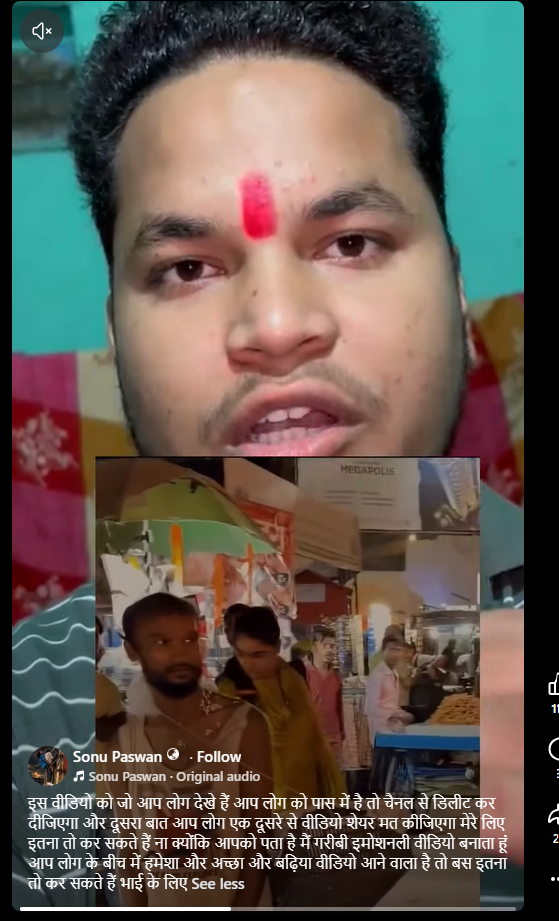
To verify the truth behind the video being shared with the claim that a bhelpuri vendor was assaulted, we conducted a reverse image search of its keyframes. During the search, we found a video uploaded on September 18 on the Facebook account of a user identified as Sonu Paswan. The person seen assaulting the vendor in the viral clip can also be seen in this video. In the video, he explains that the viral clip was scripted and was recorded solely for entertainment purposes. He appeals to people not to take the video seriously or share it further. He also says that after the video went viral, he had to delete several videos, due to which much of his effort went to waste.
https://www.facebook.com/reel/2161698368111775
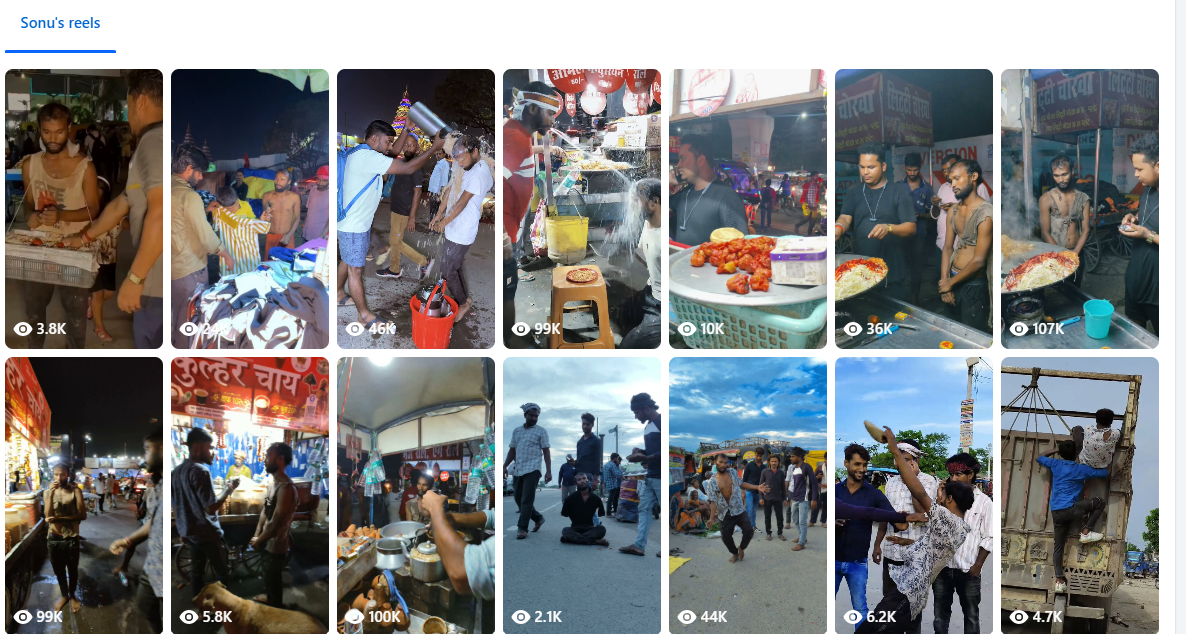
Additionally, upon examining Sonu Paswan’s Facebook account, we found several other videos in which the same two men seen in the viral video can be seen acting together in different situations.
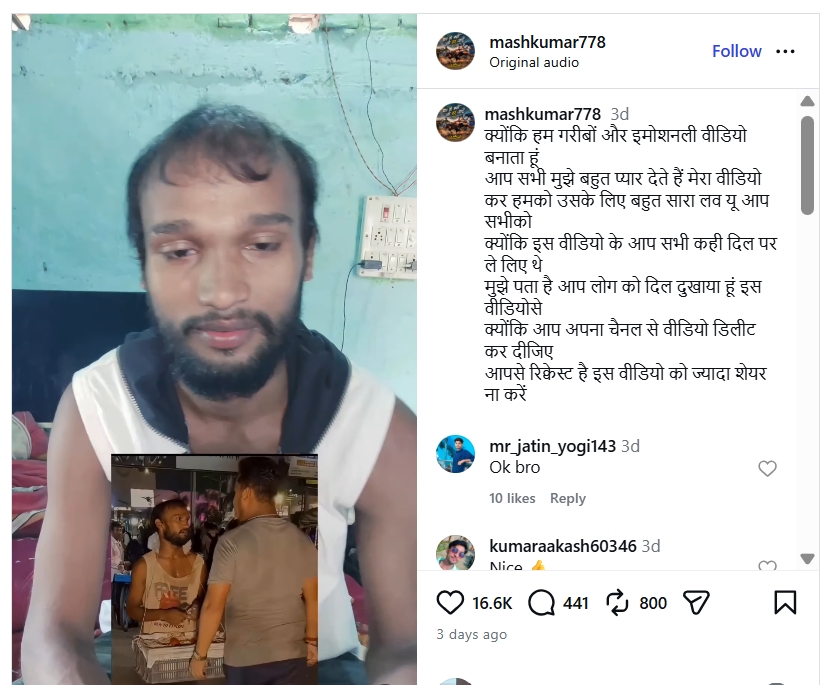
Additionally, we found a video uploaded on Sonu Paswan’s Instagram account on September 18. In the video, he explains that the person selling bhelpuri/bhujia in the viral clip is Sonu Kumar, while the person seen assaulting him is a member of their team. Sonu Kumar says in the video that they work together to create videos on poverty and emotional issues. He also appeals to people to watch the viral clip as entertainment and not share it further. This makes it clear that the viral video is scripted.
https://www.instagram.com/p/Dda41TdzMxO/
Conclusion
Our Research found that the video being shared with the claim that a bhelpuri vendor was assaulted and mistreated at Patna railway station is scripted.

Related Blogs

Executive Summary:
Recently, our team encountered a post on X (formerly Twitter) pretending Chandra Arya, a Member of Parliament of Canada is speaking in Kannada and this video surfaced after he filed his nomination for the much-coveted position of Prime Minister of Canada. The video has taken the internet by storm and is being discussed as much as words can be. In this report, we shall consider the legitimacy of the above claim by examining the content of the video, timing and verifying information from reliable sources.

Claim:
The viral video claims Chandra Arya spoke Kannada after filing his nomination for the Canadian Prime Minister position in 2025, after the resignation of Justin Trudeau.

Fact Check:
Upon receiving the video, we performed a reverse image search of the key frames extracted from the video, we found that the video has no connection to any nominations for the Canadian Prime Minister position.Instead, we found that it was an old video of his speech in the Canadian Parliament in 2022. Simultaneously, an old post from the X (Twitter) handle of Mr. Arya’s account was posted at 12:19 AM, May 20, 2022, which clarifies that the speech has no link with the PM Candidature post in the Canadian Parliament.
Further our research led us to a YouTube video posted on a verified channel of Hindustan Times dated 20th May 2022 with a caption -
“India-born Canadian MP Chandra Arya is winning hearts online after a video of his speech at the Canadian Parliament in Kannada went viral. Arya delivered a speech in his mother tongue - Kannada. Arya, who represents the electoral district of Nepean, Ontario, in the House of Commons, the lower house of Canada, tweeted a video of his address, saying Kannada is a beautiful language spoken by about five crore people. He said that this is the first time when Kannada is spoken in any Parliament outside India. Netizens including politicians have lauded Arya for the video.”

Conclusion:
The viral video claiming that Chandra Arya spoke in Kannada after filing his nomination for the Canadian Prime Minister position in 2025 is completely false. The video, dated May 2022, shows Chandra Arya delivering an address in Kannada in the Canadian Parliament, unrelated to any political nominations or events concerning the Prime Minister's post. This incident highlights the need for thorough fact-checking and verifying information from credible sources before sharing.
- Claim: Misleading Claim About Chandra Arya’s PM Candidacy
- Claimed on: X (Formerly Known As Twitter)
- Fact Check: False and Misleading

Introduction
Over the past few years, the virtual space has been an irreplaceable livelihood platform for content creators and influencers, particularly on major social media platforms like YouTube and Instagram. Yet, if this growth in digital entrepreneurship is accompanied by anything, it is a worrying trend, a steep surge in account takeover (ATO) attacks against these actors. In recent years, cybercriminals have stepped up the quantity and level of sophistication of such attacks, hacking into accounts, jeopardising the follower base, and incurring economic and reputational damage. They don’t just take over accounts to cause disruption. Instead, they use these hijacked accounts to run scams like fake livestreams and cryptocurrency fraud, spreading them by pretending to be the original account owner. This type of cybercrime is no longer a nuisance; it now poses a serious threat to the creator economy, digital trust, and the wider social media ecosystem.
Why Are Content Creators Prime Targets?
Content creators hold a special place on the web. They are prominent users who live for visibility, public confidence, and ongoing interaction with their followers. Their social media footprint tends to extend across several interrelated platforms, e.g., YouTube, Instagram, X (formerly Twitter), with many of these accounts having similar login credentials or being managed from the same email accounts. This interconnectivity of their online presence crosses multiple platforms and benefits workflow, but makes them appealing targets for hackers. One entry point can give access to a whole chain of vulnerabilities. Attackers, once they control an account, can wield its influence and reach to share scams, lead followers to phishing sites, or spread malware, all from the cover of a trusted name.
Popular Tactics Used by Attackers
- Malicious Livestream Takeovers and Rebranding - Cybercriminals hijack high-subscriber channels and rebrand them to mimic official channels. Original videos are hidden or deleted, replaced with scammy streams using deep fake personas to promote crypto schemes.
- Fake Sponsorship Offers - Creators receive emails from supposed sponsors that contain malware-infected attachments or malicious download links, leading to credential theft.
- Malvertising Campaigns - These involve fake ads on social platforms promoting exclusive software like AI tools or unreleased games. Victims download malware that searches for stored login credentials.
- Phishing and Social Engineering on Instagram - Hackers impersonate Meta support teams via DMs and emails. They direct creators to login pages that are cloned versions of Instagram's site. Others pose as fans to request phone numbers and trick victims into revealing password reset codes.
- Timely Exploits and Event Hijacking - During major public or official events, attackers often escalate their activity. Hijacked accounts are used to promote fake giveaways or exclusive live streams, luring users to malicious websites designed to steal personal information or financial data.
Real-World Impact and Case Examples
The reach and potency of account takeover attacks upon content creators are far-reaching and profound. In a report presented in 2024 by Bitdefender, over 9,000 malicious live streams were seen on YouTube during a year, with many having been streamed from hijacked creator accounts and reassigned to advertise scams and fake content. Perhaps the most high-profile incident was a channel with more than 28 million subscribers and 12.4 billion total views, which was totally taken over and utilised for a crypto fraud scheme live streaming. Additionally, Bitdefender research indicated that over 350 scam domains were utilised by cybercriminals, directly connected via hijacked social media accounts, to entice followers into phishing scams and bogus investment opportunities. Many of these pieces of content included AI-created deep fakes impersonating recognisable personalities like Elon Musk and other public figures, providing the illusion of authenticity around fake endorsements (CCN, 2024). Further, attackers have exploited popular digital events such as esports events, such as Counter-Strike 2 (CS2), by hijacking YouTube gaming channels and livestreaming false giveaways or referring viewers to imitated betting sites.
Protective Measures for Creators
- Enable Multi-Factor Authentication (MFA)
Adds an essential layer of defence. Even if a password is compromised, attackers can't log in without the second factor. Prefer app-based or hardware token authentication.
- Scrutinize Sponsorships
Verify sender domains and avoid opening suspicious attachments. Use sandbox environments to test files. In case of doubt, verify collaboration opportunities through official company sources or verified contacts.
- Monitor Account Activity
Keep tabs on login history, new uploads, and connected apps. Configure alerts for suspicious login attempts or spikes in activity to detect breaches early. Configure alerts for suspicious login attempts or spikes in activity to detect breaches early.
- Educate Your Team
If your account is managed by editors or third parties, train them on common phishing and malware tactics. Employ regular refresher sessions and send mock phishing tests to reinforce awareness.
- Use Purpose-Built Security Tools
Specialised security solutions offer features like account monitoring, scam detection, guided recovery, and protection for team members. These tools can also help identify suspicious activity early and support a quick response to potential threats.
Conclusion
Account takeover attacks are no longer random events, they're systemic risks that compromise the financial well-being and personal safety of creators all over the world. As cybercriminals grow increasingly sophisticated and realistic in their scams, the only solution is a security-first approach. This encompasses a mix of technical controls, platform-level collaboration, education, and investment in creator-centric cybersecurity technologies. In today's fast-paced digital landscape, creators not only need to think about content but also about defending their digital identity. As digital platforms continue to grow, so do the threats targeting creators. However, with the right awareness, tools, and safeguards in place, a secure and thriving digital environment for creators is entirely achievable.
References
- https://www.bitdefender.com/en-au/blog/hotforsecurity/account-takeover-attacks-on-social-media-a-rising-threat-for-content-creators-and-influencers
- https://www.arkoselabs.com/account-takeover/social-media-account-takeover/
- https://www.imperva.com/learn/application-security/account-takeover-ato/
- https://www.security.org/digital-safety/account-takeover-annual-report/
- https://www.niceactimize.com/glossary/account-takeover/
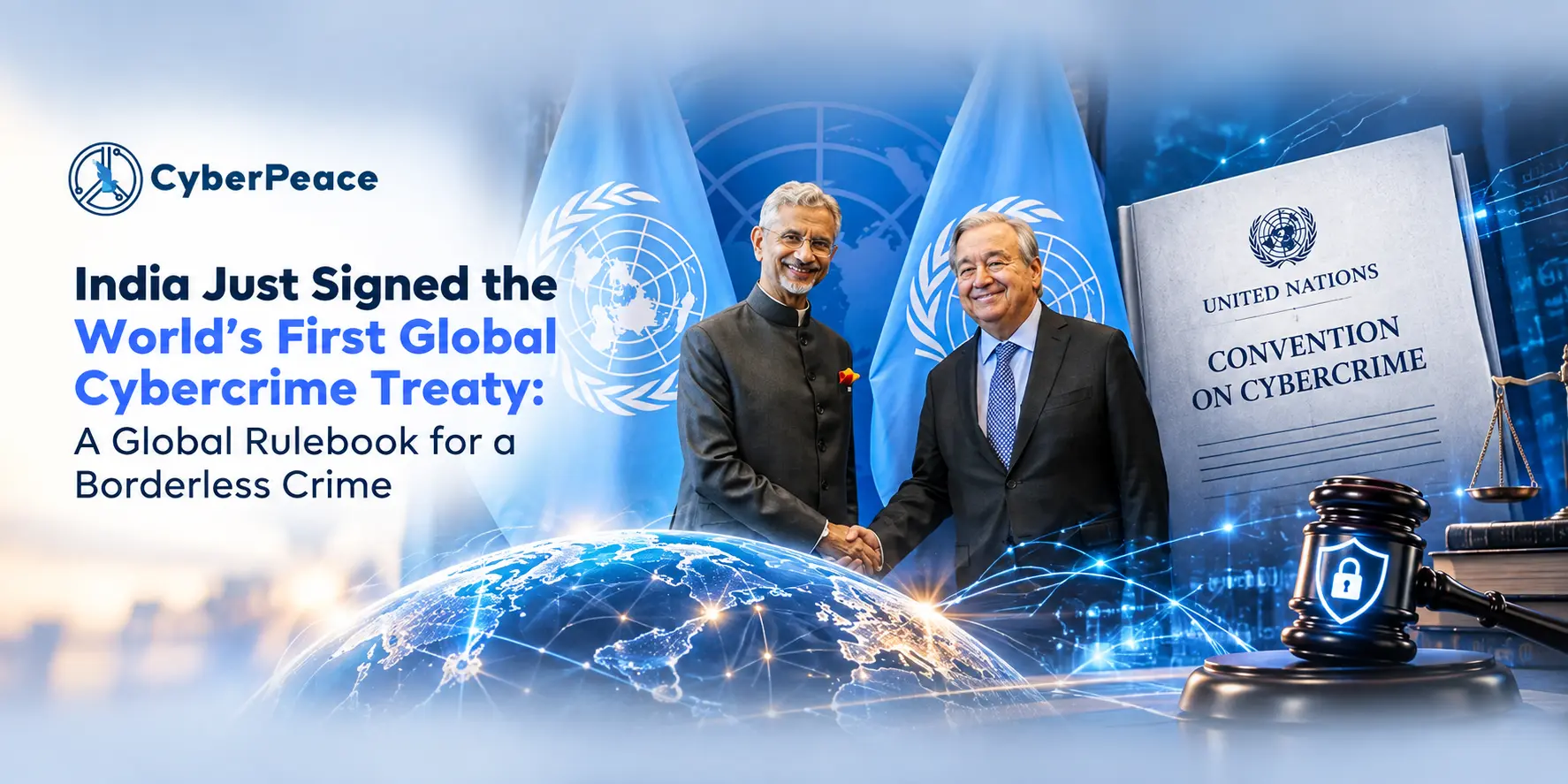
On 25 September 2026, at UN Headquarters in New York, External Affairs Minister S. Jaishankar signed the United Nations Convention against Cybercrime on the sidelines of the 81st session of the UN General Assembly, calling it a step that "strengthens international cooperation for a safer digital future."
The signature places India among the growing list of nations joining what is officially the first comprehensive global treaty dedicated to cybercrime. What Jaishankar's brief statement did not mention is that this same treaty has spent the better part of three years drawing sustained, detailed criticism from human rights organisations, technology companies, and digital rights groups, who argue it risks becoming a tool for surveillance rather than a tool against crime.
A Conversation CyberPeace Has Been Having for Years
For CyberPeace, India’s signature is not an isolated development but the latest chapter in a conversation the organisation has been following since the Convention was still being negotiated.
In December 2024, CyberPeace published its analysis of the emerging UN Convention against Cybercrime, examining its objectives, proposed offences, mechanisms for international cooperation, electronic evidence and its relationship with the Budapest Convention. The analysis also highlighted an important principle embedded in the emerging framework: that stronger cybercrime enforcement must operate alongside due process, privacy and human-rights safeguards.
That conversation continued in October 2025, when CyberPeace published The Digital Leviathan: The UN Cybercrime Treaty and the Future of Global Governance. The piece examined the Convention not merely as a cybercrime instrument, but as part of a larger evolution in global digital governance, particularly around cross-border evidence, international cooperation and the changing architecture of cyber sovereignty.
And in August 2026, CyberPeace returned to the question from the operational side in The World Is Rewriting the Rules Against Cyber-Enabled Transnational Crime. The analysis placed the Convention alongside the wider international response to transnational cyber-enabled crime, including scam networks, financial fraud and increasingly sophisticated criminal ecosystems that operate across multiple jurisdictions.
What the Convention actually is
The treaty's full, formal title is unusually descriptive for a UN instrument: the United Nations Convention against Cybercrime, Strengthening International Cooperation for Combating Certain Crimes Committed by Means of Information and Communications Technology Systems and for the Sharing of Evidence in Electronic Form of Serious Crimes. The UN General Assembly adopted it unanimously on 24 December 2024, following three years of negotiation, and it opened for signature at a ceremony in Hanoi, Vietnam, in October 2025. It will remain open for signature at UN Headquarters through 31 December 2026, and comes into force ninety days after the fortieth country ratifies it.
At its core, the Convention gives signatory states a shared legal framework for two things: preventing and prosecuting offences committed through digital systems, and cooperating across borders when evidence, offenders, or victims of a crime are scattered across multiple jurisdictions, a structural problem that has long frustrated cybercrime investigations. It also includes provisions specifically addressing the recovery of criminal proceeds, adding a financial dimension that lets states cooperate not just on prosecuting offenders but on tracing and reclaiming stolen money that has moved across borders, often through mule accounts and shell transactions designed to outrun any single country's jurisdiction.
Why India signed, in its own words
Jaishankar's public reasoning was concise. Cybercrime, in the government's framing, does not respect national boundaries, and India's own cybercrime caseload, spanning cross-border financial fraud, romance scams, and organised online extortion networks often operating from outside India's borders, has repeatedly run into exactly the jurisdictional walls this Convention is designed to lower. Prof. Triveni Singh, a well known cybercrime expert and former IPS officer, put the practical case plainly: "Cybercrime does not stop at national borders. Criminals can operate from one country and target victims in another. This convention can help countries share evidence and work together faster. For India, stronger international cooperation can make it easier to investigate cross-border cyber fraud and trace stolen money."
The part the announcement leaves out
Here is where the story gets considerably more complicated than a signing ceremony photo suggests. Since before the Convention's text was even finalised, a wide coalition of digital rights organisations, including the Electronic Frontier Foundation, Human Rights Watch, the Global Network Initiative, and Privacy International, has warned that the treaty's language is dangerously broad, and that its safeguards against misuse are considerably weaker than they need to be.
Cisco, one of the few major technology companies to comment publicly, stated the Convention does not do enough to "sufficiently protect basic human rights." UN Secretary-General António Guterres, notably, has himself urged countries to sign and ratify the Convention while simultaneously calling for its implementation to be "rooted in human rights," a somewhat unusual dual message from the very institution that produced the text, and one that implicitly acknowledges the concerns raised against it.
Where this leaves India
None of this means India's signature was unwarranted. The jurisdictional friction Prof. Triveni Singh described is real and well documented, and a shared international framework for evidence sharing genuinely could accelerate investigations that currently stall for months while agencies wait on slow, bilateral mutual legal assistance requests. India's existing domestic cybercrime coordination architecture is already substantial, spanning I4C, the National Cybercrime Reporting Portal, and newer mechanisms like the Citizen Financial Cyber Fraud Reporting and Management System and the Sahyog platform, and a global treaty that maps onto this existing infrastructure could genuinely close gaps that purely domestic tools cannot reach, particularly in cases where the perpetrator, the server, and the victim all sit in different countries, a pattern that has become close to the default in organised online financial fraud rather than the exception.
But the criticisms levelled at the Convention are not fringe objections; they come from some of the most established digital rights organisations in the world, and they focus specifically on the treaty's most powerful surveillance and cross-border cooperation provisions, the very mechanisms India will now need to operationalise domestically. Signing the Convention is also only the first procedural step; India's obligations under it will not take practical effect until the instrument is ratified domestically, a process that typically allows room for a signatory state to clarify how broadly or narrowly it intends to apply the treaty's more expansive provisions. How India chooses to implement those provisions, whether through the kind of judicial oversight and narrow, offence-specific application human rights groups have called for, or through the broader interpretation the treaty's text technically permits, will likely determine whether this Convention becomes a genuine tool against fraud and organised cybercrime, or a broader instrument whose reach eventually extends well past the digital offences it was signed to address.
References
- The420.in, "India Signs UN Cybercrime Convention to Strengthen Global Fight Against Digital Crime." ANI, "EAM Jaishankar signs UN Convention against Cybercrime on UNGA sidelines." https://aninews.in/news/world/us/eam-jaishankar-signs-un-convention-against-cybercrime-on-unga-sidelines20260926063207/
- Ministry of Cyber Affairs, "India signs UN Convention against Cybercrime at UNGA 81." https://ministryofcyberaffairs.com/news/india-signs-un-convention-against-cybercrime-at-unga-81-95b7e43b-7e29-4722-a4a7-304bca55b71c
- Electronic Frontier Foundation, "UN Cybercrime Convention Negotiations Enter Final Phase With Troubling Surveillance Powers Still on the Table." https://www.eff.org/deeplinks/2023/08/un-cybercrime-convention-negotiations-enter-final-phase-troubling-surveillance
- Electronic Frontier Foundation, "First Draft of UN Cybercrime Convention Drops Troubling Provisions, But Dangerous And Open-Ended Cross Border Surveillance Powers Are Still on the Table."
- https://www.eff.org/deeplinks/2023/07/first-draft-un-cybercrime-treaty-drops-troubling-provisions-dangerous-and-open
- Global Network Initiative, "GNI Calls on Member States Not to Support the UN Cybercrime Convention." https://globalnetworkinitiative.org/gni-statement-on-uncc/
- Just Security, "The UN Cybercrime Convention: Analyzing the Risks to Human Rights and Global Privacy." https://www.justsecurity.org/98738/cybercrime-convention-human-rights/
- TechRadar Pro, "UN cybercrime convention inadequate, says Human Rights Watch." https://techradar.com/pro/un-cybercrime-convention-inadequate-says-human-rights-watch
- Digital Watch Observatory, "Comparative analysis: the Budapest Convention vs the UN Convention Against Cybercrime." https://dig.watch/updates/comparative-analysis-the-budapest-convention-vs-the-un-convention-against-cybercrime
- epicenter.works, "Cybercrime Convention: Cross-Border Human Rights Violations." https://epicenter.works/en/content/cybercrime-convention-cross-border-human-rights-violations
- UN Press, "Secretary-General Urges All Countries to Sign, Ratify New UN Convention against Cybercrime, Calls for Solutions Rooted in Human Rights." https://press.un.org/en/2025/sgsm22961.doc.htm
- https://cyberpeace.org/resources/blogs/the-digital-leviathan-the-un-cybercrime-treaty-and-the-future-of-global-governance
- https://cyberpeace.org/resources/blogs/the-world-is-rewriting-the-rules-against-cyber-enabled-transnational-crime
