
#FactCheck: AI-Manipulated Video Falsely Shows Sushant Singh and The Wire Journalist Calling Balakot Airstrike a 'Fake Operation'
Executive Summary
A video showing two people talking over a video call is going viral on social media. Some users have identified one of the individuals in the video as the person seen in a previous video related to the Indian Army, claiming that he is Praveen Sawhney. The video is being shared with claims that the 2019 Balakot airstrike was a fake operation. CyberPeace Research found that the person seen in the viral video is actually Sushant Singh and that the video has been manipulated using AI. No such claim was made in the original interview.
Claim:
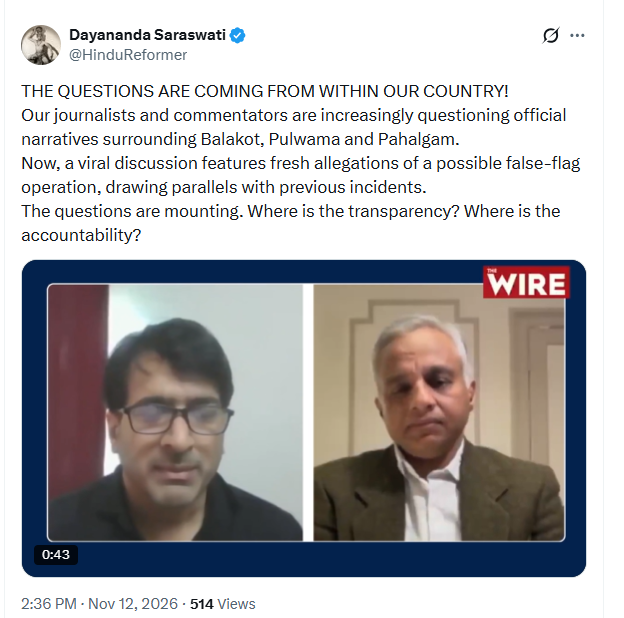
The video is being shared with the claim that Praveen Sawhney gave an interview to a journalist from The Wire, in which both described the 2019 Pulwama attack and the subsequent Balakot airstrike against Pakistan as a "fake operation".
https://x.com/HinduReformer/status/2120805380628553890
Fact Check
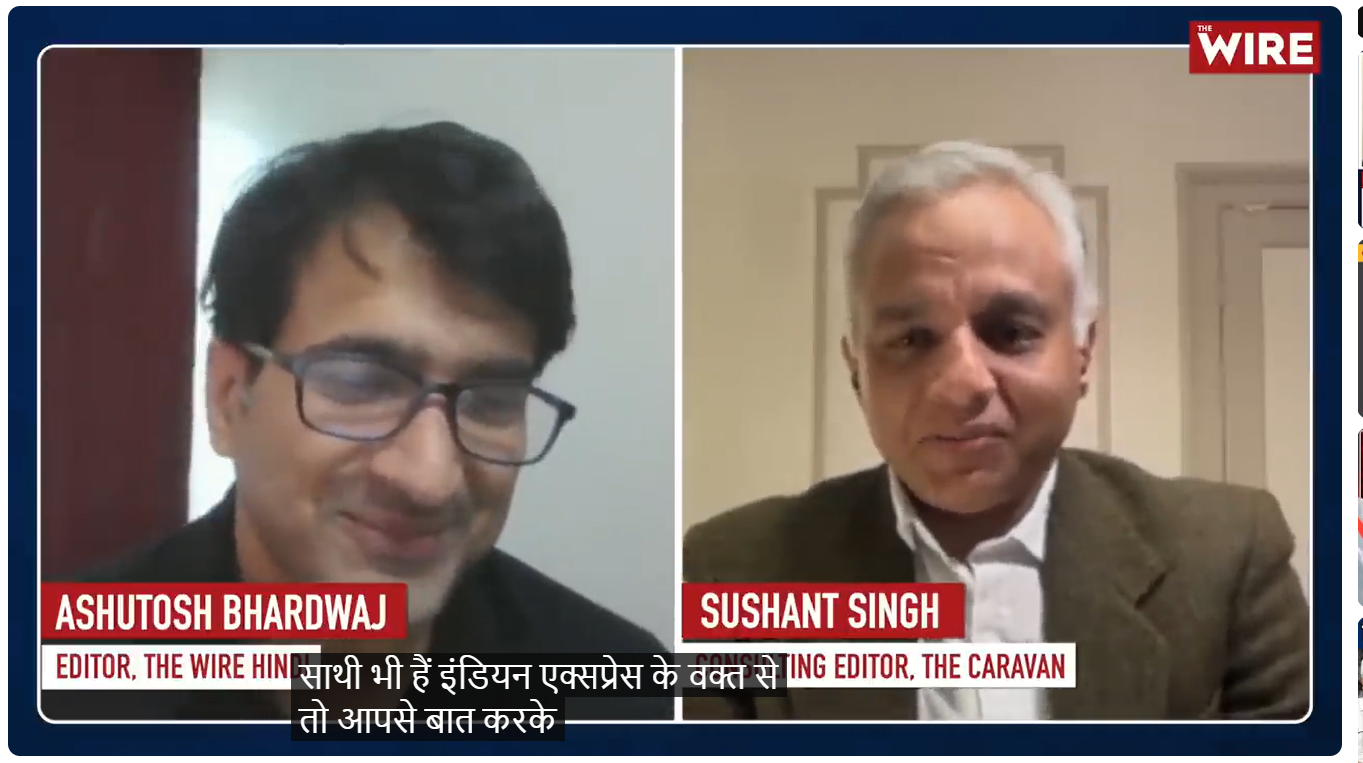
A reverse image search using keyframes from the viral video led us to the original video, uploaded on the official YouTube channel of The Wire on March 10, 2025. At around the three-minute mark, Ashutosh Bhardwaj and Sushant Singh can be seen discussing the 2019 Lok Sabha elections and the politicisation of the Indian Army's actions ahead of the polls. However, there is no mention of any "False Flag Operation" in the original video, contrary to the claim made in the viral clip. Neither of the journalists featured in the interview made any such statement. Throughout the interview, they discuss India's military operations, their impact and broader institutional issues.
https://www.youtube.com/watch?v=fHYfvc635cY&t=325s
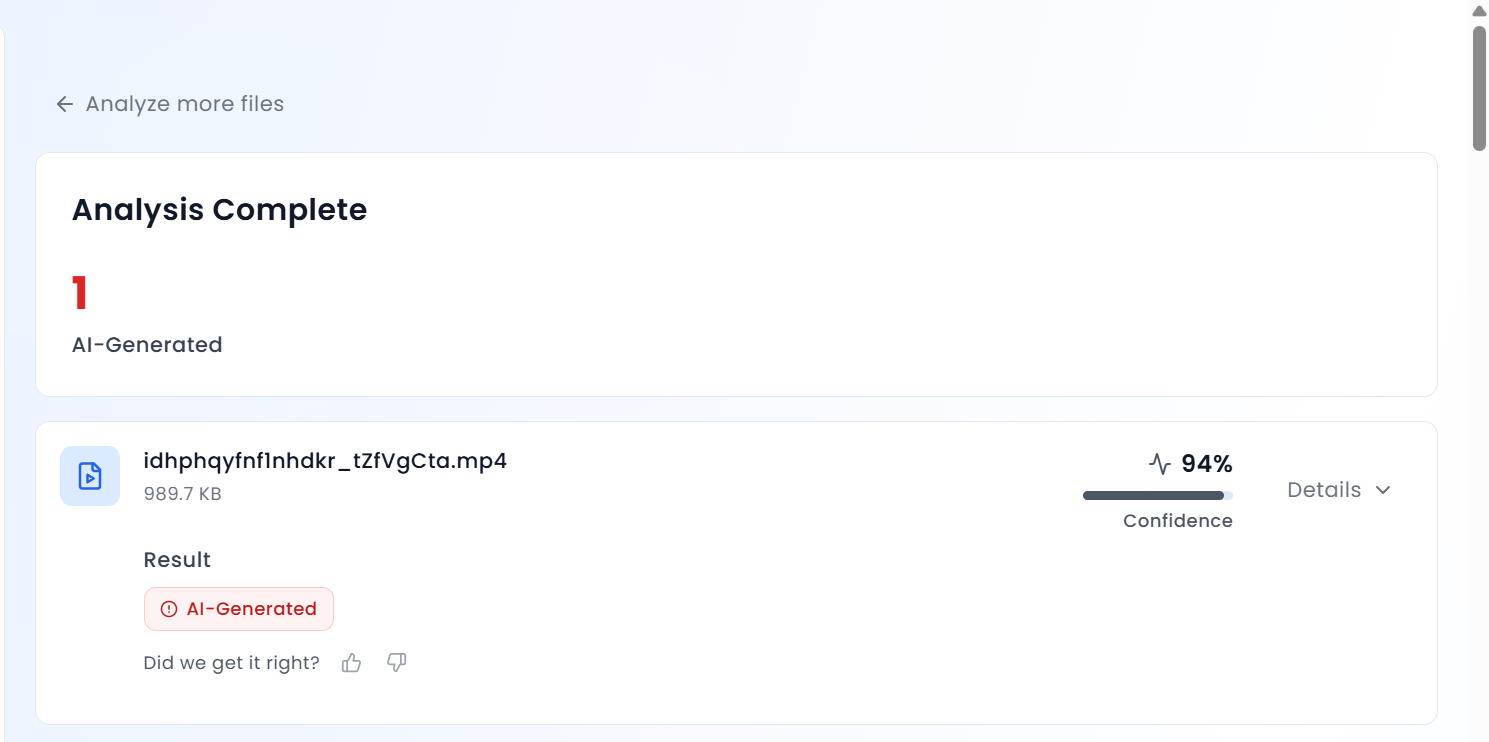
Further, we suspected that the viral video had been AI-generated. To verify this, we scanned the video using the AI detection tool Aurigin.ai. According to the tool's results, the viral video was generated using AI.
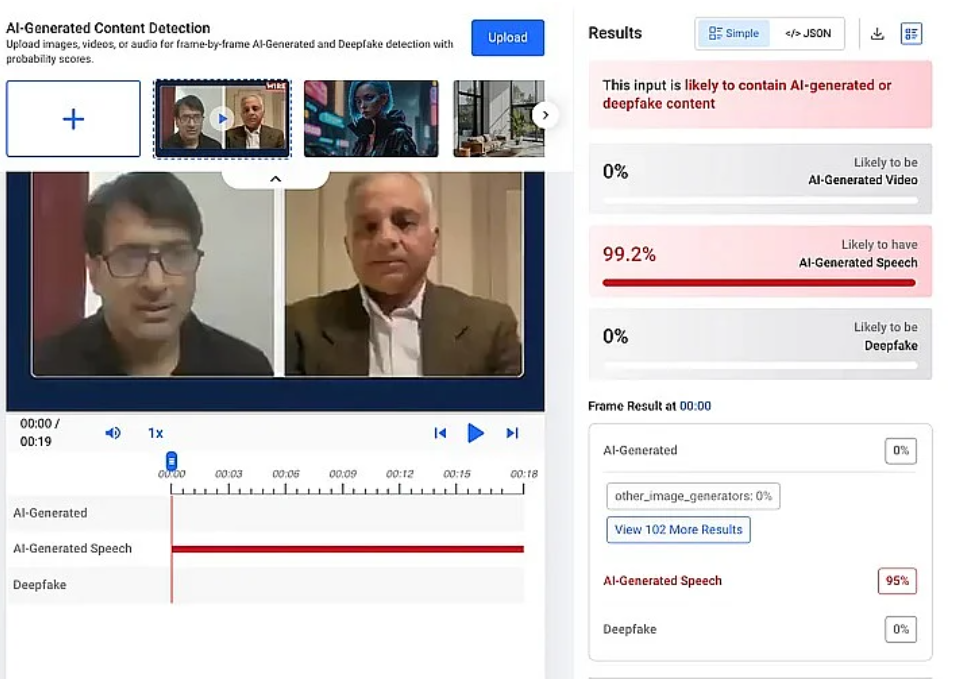
We also scanned the video using another AI detection tool, HIVE Moderation. According to the results, the viral video is 99 per cent likely to be AI-generated.
Conclusion
Our research found that the person seen in the viral video is actually Sushant Singh and that the video has been manipulated using AI. No such claim was made in the original interview.

Related Blogs

AI and other technologies are advancing rapidly. This has ensured the rapid spread of information, and even misinformation. LLMs have their advantages, but they also come with drawbacks, such as confident but inaccurate responses due to limitations in their training data. The evidence-driven retrieval systems aim to address this issue by using and incorporating factual information during response generation to prevent hallucination and retrieve accurate responses.
What is Retrieval-Augmented Response Generation?
Evidence-driven Retrieval Augmented Generation (or RAG) is an AI framework that improves the accuracy and reliability of large language models (LLMs) by grounding them in external knowledge bases. RAG systems combine the generative power of LLMs with a dynamic information retrieval mechanism. The standard AI models rely solely on pre-trained knowledge and pattern recognition to generate text. RAG pulls in credible, up-to-date information from various sources during the response generation process. RAG integrates real-time evidence retrieval with AI-based responses, combining large-scale data with reliable sources to combat misinformation. It follows the pattern of:
- Query Identification: When misinformation is detected or a query is raised.
- Evidence Retrieval: The AI searches databases for relevant, credible evidence to support or refute the claim.
- Response Generation: Using the evidence, the system generates a fact-based response that addresses the claim.
How is Evidence-Driven RAG the key to Fighting Misinformation?
- RAG systems can integrate the latest data, providing information on recent scientific discoveries.
- The retrieval mechanism allows RAG systems to pull specific, relevant information for each query, tailoring the response to a particular user’s needs.
- RAG systems can provide sources for their information, enhancing accountability and allowing users to verify claims.
- Especially for those requiring specific or specialised knowledge, RAG systems can excel where traditional models might struggle.
- By accessing a diverse range of up-to-date sources, RAG systems may offer more balanced viewpoints, unlike traditional LLMs.
Policy Implications and the Role of Regulation
With its potential to enhance content accuracy, RAG also intersects with important regulatory considerations. India has one of the largest internet user bases globally, and the challenges of managing misinformation are particularly pronounced.
- Indian regulators, such as MeitY, play a key role in guiding technology regulation. Similar to the EU's Digital Services Act, the Information Technology (Intermediary Guidelines and Digital Media Ethics Code) Rules, 2021, mandate platforms to publish compliance reports detailing actions against misinformation. Integrating RAG systems can help ensure accurate, legally accountable content moderation.
- Collaboration among companies, policymakers, and academia is crucial for RAG adaptation, addressing local languages and cultural nuances while safeguarding free expression.
- Ethical considerations are vital to prevent social unrest, requiring transparency in RAG operations, including evidence retrieval and content classification. This balance can create a safer online environment while curbing misinformation.
Challenges and Limitations of RAG
While RAG holds significant promise, it has its challenges and limitations.
- Ensuring that RAG systems retrieve evidence only from trusted and credible sources is a key challenge.
- For RAG to be effective, users must trust the system. Sceptics of content moderation may show resistance to accepting the system’s responses.
- Generating a response too quickly may compromise the quality of the evidence while taking too long can allow misinformation to spread unchecked.
Conclusion
Evidence-driven retrieval systems, such as Retrieval-Augmented Generation, represent a pivotal advancement in the ongoing battle against misinformation. By integrating real-time data and credible sources into AI-generated responses, RAG enhances the reliability and transparency of online content moderation. It addresses the limitations of traditional AI models and aligns with regulatory frameworks aimed at maintaining digital accountability, as seen in India and globally. However, the successful deployment of RAG requires overcoming challenges related to source credibility, user trust, and response efficiency. Collaboration between technology providers, policymakers, and academic experts can foster the navigation of these to create a safer and more accurate online environment. As digital landscapes evolve, RAG systems offer a promising path forward, ensuring that technological progress is matched by a commitment to truth and informed discourse.
References
- https://experts.illinois.edu/en/publications/evidence-driven-retrieval-augmented-response-generation-for-onlin
- https://research.ibm.com/blog/retrieval-augmented-generation-RAG
- https://medium.com/@mpuig/rag-systems-vs-traditional-language-models-a-new-era-of-ai-powered-information-retrieval-887ec31c15a0
- https://www.researchgate.net/publication/383701402_Web_Retrieval_Agents_for_Evidence-Based_Misinformation_Detection
Introduction: Reasons Why These Amendments Have Been Suggested.
The suggested changes in the Information Technology (Intermediary Guidelines and Digital Media Ethics Code) Rules, 2021, are the much-needed regulatory reaction to the blistering emergence of synthetic information and deepfakes. These reforms are due to the pressing necessity to govern risks within the digital ecosystem as opposed to regular reformation.
The Emergence of the Digital Menace
Generative AI tools have also facilitated the generation of very realistic images, videos, audio, and text in recent years. Such artificial media have been abused to portray people in situations they are not in or in statements they have never said. The market size is expected to have a compound annual growth rate(CAGR) from 2025 to 2031 of 37.57%, resulting in a market volume of US$400.00 bn by 2031. Therefore, tight regulatory controls are necessary to curb a high prevalence of harm in the Indian digital world.
The Gap in Law and Institution
None of the IT Rules, 2021, clearly addressed synthetic content. Although the Information Technology Act, 2000 dealt with identity theft, impersonation and violation of privacy, the intermediaries were not explicitly obligated on artificial media. This left a loophole in enforcement, particularly since AI-generated content might get around the old system of moderation. These amendments bring India closer to the international standards, including the EU AI Act, which requires transparency and labelling of AI-driven content. India addresses such requirements and adapts to local constitutional and digital ecosystem needs.
II. Explanation of the Amendments
The amendments of 2025 present five alternative changes in the current IT Rules framework, which address various areas of synthetic media regulation.
A. Definitional Clarification: Synthetic Generation of Information Introduction.
Rule 2(1)(wa) Amendment:
The amendments provide an all-inclusive definition of what is meant by “synthetically generated information” as information, which is created, or produced, changed or distorted with the use of a computer resource, in a way that such information can reasonably be perceived to be genuine. This definition is intentionally broad and is not limited to deepfakes in the strict sense but to any artificial media that has gone through algorithmic manipulation in order to have a semblance of authenticity.
Expansion of Legal Scope:
Rule 2(1A) also makes it clear that any mention of information in the context of unlawful acts, namely, including categories listed in Rule 3(1)(b), Rule 3(1)(d), Rule 4(2), and Rule 4(4), should be understood to mean synthetically generated information. This is a pivotal interpretative protection that does not allow intermediaries to purport that synthetic versions of illegal material are not under the control of the regulation since they are algorithmic creations and not descriptions of what actually occurred.
B. Safe Harbour Protection and Content Removal Requirements
Amendment, rule 3(1)(b)- Safe Harbour Clarification:
The amendments add a certain proviso to the Rule (3) (1)(b) that explains a deletion or facilitation of access of synthetically produced information (or any information falling within specified categories) which the intermediaries have made in good faith as part of reasonable endeavours or at the receipt of a complaint shall not be considered a breach of the Section 79(2) (a) or (b) of the Information Technology Act, 2000. This coverage is relevant especially since it insures the intermediaries against liability in situations where they censor the synthetic contents in advance of a court ruling or governmental warnings.
C. Labelling and Metadata Requirements that are mandatory on Intermediaries that enable the creation of synthetic content
The amendments establish a new framework of due diligence in Rule 3(3) on the case of intermediaries that offer tools to generate, modify, or alter the synthetically generated information. Two fundamental requirements are laid down.
- The generated information must be prominently labelled or embedded with a permanent, unique metadata or identifier. The label or metadata must be:
- Visibly displayed or made audible in a prominent manner on or within that synthetically generated information.
- It should cover at least 10% of the surface of the visual display or, in the case of audio content, during the initial 10% of its duration.
- It can be used to immediately identify that such information is synthetically generated information which has been created, generated, modified, or altered using the computer resource of the intermediary.
- The intermediary in clause (a) shall not enable modification, suppression or removal of such label, permanent unique metadata or identifier, by whatever name called.
D. Important Social Media Intermediaries- Pre-Publication Checking Responsibilities
The amendments present a three-step verification mechanism, under Rule 4(1A), to Significant Social Media Intermediaries (SSMIs), which enables displaying, uploading or publishing on its computer resource before such display, uploading, or publication has to follow three steps.
Step 1- User Declaration: It should compel the users to indicate whether the materials they are posting are synthetically created. This puts the first burden on users.
Step 2-Technical Verification: To ensure that the user is truly valid, the SSMIs need to provide reasonable technical means, such as automated tools or other applications. This duty is contextual and would be based on the nature, format and source of content. It does not allow intermediaries to escape when it is known that not every type of content can be verified using the same standards.
Step 3- Prominent Labelling: In case the synthetic origin is verified by user declaration or technical verification, SSMIs should have a notice or label that is prominently displayed to be seen by users before publication.
The amendments provide a better system of accountability and set that intermediaries will be found to have failed due diligence in a case where it is established that they either knowingly permitted, encouraged or otherwise failed to act on synthetically produced information in contravention of these requirements. This brings in an aspect of knowledge, and intermediaries cannot use accidental errors as an excuse for non-compliance.
An explanation clause makes it clear that SSMIs should also make reasonable and proportionate technical measures to check user declarations and keep no synthetic content published without adequate declaration or labelling. This eliminates confusion on the role of the intermediaries with respect to making declarations.
III. Attributes of The Amendment Framework
- Precision in Balancing Innovation and Accountability.
The amendments have commendably balanced two extreme regulatory postures by neither prohibiting nor allowing the synthetic media to run out of control. It has recognised the legitimate use of synthetic media creation in entertainment, education, research and artistic expression by adopting a transparent and traceable mandate that preserves innovation while ensuring accountability.
- Overt Acceptance of the Intermediary Liability and Reverse Onus of Knowledge
Rule 4(1A) gives a highly significant deeming rule; in cases where the intermediary permits or refrains from acting with respect to the synthetic content knowing that the rules are violated, it will be considered as having failed to comply with the due diligence provisions. This description closes any loopholes in unscrupulous supervision where intermediaries can be able to argue that they did so. Standard of scienter promotes material investment in the detection devices and censor mechanisms that have been in place to offer security to the platforms that have sound systems, albeit the fact that the tools fail to capture violations at times.
- Clarity Through Definition and Interpretive Guidance
The cautious definition of the term “synthetically generated information” and the guidance that is provided in Rule 2(1A) is an admirable attempt to solve confusion in the previous regulatory framework. Instead of having to go through conflicting case law or regulatory direction, the amendments give specific definitional limits. The purposefully broad formulation (artificially or algorithmically created, generated, modified or altered) makes sure that the framework is not avoided by semantic games over what is considered to be a real synthetic content versus a slight algorithmic alteration.
- Insurance of non-accountability but encourages preventative moderation
The safe harbour clarification of the Rule 3(1)(b) amendment clearly safeguards the intermediaries who voluntarily dismiss the synthetic content without a court order or government notification. It is an important incentive scheme that prompts platforms to implement sound self-regulation measures. In the absence of such protection, platforms may also make rational decisions to stay in a passive stance of compliance, only deleting content under the pressure of an external authority, thus making them more effective in keeping users safe against dangerous synthetic media.
IV. Conclusion
The Information Technology (Intermediary Guidelines and Digital Media Ethics Code) Rules 2025 suggest a structured, transparent, and accountable execution of curbing the rising predicaments of synthetic media and deepfakes. The amendments deal with the regulatory and interpretative gaps that have always existed in determining what should be considered as synthetically generated information, the intermediary liabilities and the mandatory labelling and metadata requirement. Safe-harbour protection will encourage the moderation proactively, and a scienter-based liability rule will not permit the intermediaries to escape liability when they are aware of the non-compliance but tolerate such non-compliance. The idea to introduce pre-publication verification of Significant Social Media Intermediaries adds the responsibility to users and due diligence to the platform. Overall, the amendments provide a reasonable balance between innovation and regulation, make the process more open with its proper definitions, promote responsible conduct on the platform and transform India and the new standards in the sphere of synthetic media regulation. They collaborate to enhance the verisimilitude, defence of the users, and visibility of the systems of the digital ecosystem of India.
V. References
2. https://www.statista.com/outlook/tmo/artificial-intelligence/generative-ai/worldwide
Introduction
The rapid adoption of artificial intelligence (AI) tools and applications in companies has been largely presented as a groundbreaking development for enterprises. The potential for increased productivity and efficiently scaled companies eliminates repetitive tasks and builds a narrative that practically writes itself for executives. What has largely been ignored, however, is its effect on its users- the employees. Evidence from across the United States, United Kingdom, and continental Europe indicates an increase in psychological disengagement from work, along with an increase in the number of people who are actively sabotaging the very systems that companies have invested millions of dollars to implement, as a direct result of being forced to work with AI.
The Backdrop: Quiet Quitting
Quiet quitting is a form of employee disengagement wherein workers meet only the basic expectations of their job without. Gallup puts global employee engagement at just 21%. State of the Global Workplace 2026 report which analysed employee well-being across 160 countries reports that in India, employee and manager engagement has declined. Around 62% of workers describe themselves as not engaged, and another 17% are actively disengaged — not just drifting, but potentially pulling in the opposite direction. What does this mean for productivity? Gallup estimates this costs the global economy roughly $8.9 trillion in lost productivity each year, around 9% of world GDP. This is the workplace AI has entered into.
How AI Is Changing the Nature of Work
The promise was simpler work but employees report that the reality is often more of it. AI raises output expectations without necessarily reducing effort. Workers now lose the equivalent of 51 working days per year to technology friction, nearly two full months up 42% from 2025. Poorly integrated systems force employees to spend hours troubleshooting or correcting AI-generated outputs, adding cognitive load rather than removing it. Focus efficiency dropped to a three-year low of 60%, as collaboration time surged 34% and multitasking climbed 12%. AI is not eliminating work. It is transforming it into something more demanding and more fragmented. The psychological dimension is equally documented. TalentLMS research found that 54% of employees report persistent workplace unhappiness, with one in five experiencing it frequently or constantly. 29% report unmanageable workloads during this transition, and 15% do not clearly understand their role expectations in an AI-transformed workplace. When workers cannot see where they fit, withdrawal is a rational response.
Then there is the fear. IBM announced it would not replace roughly 7,800 back-office positions that could be handled by AI, framing it as natural attrition. Klarna said its AI assistant was doing the work of 700 full-time customer service agents. Dropbox laid off 16% of its workforce, with its CEO explicitly citing the need to “make room for AI.” AI was the leading cause of job cuts in March 2026 the first time that has happened since tracking began.
The Causal Link: AI Anxiety to Quiet Quitting
A peer-reviewed study published in March 2025 establishes the causal mechanism between forced AI adoption and employee disengagement. Conducted across 457 employees in Turkish SMEs, it found that AI anxiety does not directly compel people to resign. Instead, it triggers quiet quitting a form of progressive disengagement that functions as a precursor to departure. Drawing on Withdrawal Progression Theory, the study frames quiet quitting as a preliminary stage of turnover intention, where withdrawal progresses from mild detachment toward eventual exit. The integrated causal chain runs as follows: forced AI adoption creates work intensification and job anxiety, which produce burnout and loss of autonomy, which trigger psychological withdrawal, which precedes turnover. DHR Global’s Workforce Trends Report for 2026 found that overall employee engagement dropped from 88% to 64% in a single year. Crucially, 69% of C-suite leaders say their company has communicated clearly about AI’s impact on jobs but only 12% of entry-level staff agree. When the people most exposed to displacement are also the least informed about what is happening to their roles, disengagement is not a mystery. It is a response to a vacuum of information.
From Disengagement to Active Withdrawal
Quiet quitting is then a natural response. But what has emerged alongside it is something more active, and it is where the disengagement crisis tips into something organisations are unprepared for. The Writer and Workplace Intelligence survey of 2,400 knowledge workers found that 29% of employees admit to willfully withdrawing from their company’s AI strategy. Among Gen Z workers, that figure jumps to 44%. Active withdrawal takes several forms: entering proprietary data into public AI chatbots, using unapproved tools, outright refusing to engage with mandated platforms, and in some cases deliberately generating low-quality outputs to make the technology look ineffective. For Gen Z, the resistance has a structural logic. Junior roles in finance, law, and tech the traditional “learning by doing” rungs of the career ladder have declined by 32% since 2022. For a 22-year-old, AI is not a tool; it is a competitor that has already taken their first job. Workers who resist AI out of fear for their jobs are making themselves more vulnerable to the outcome they dread. 77% of executives say employees who refuse to become proficient in AI will not be considered for promotions or leadership roles, and 60% are considering cutting those who refuse to adopt it entirely.
Meanwhile, 75% of executives admit their company’s AI strategy is “more for show” than a meaningful guide to outcomes. Only 29% report significant ROI from generative AI, despite 97% claiming to have already deployed agents across their organisation. 39% of business leaders admit they made employees redundant as a result of deploying AI of whom 55% concede they made the wrong decisions about those redundancies. Organisations are moving fast, getting it wrong, and the cost is being absorbed by the workforce.
Conclusion
AI is not directly causing quiet quitting. However, AI is changing how we view working relationships; it will continue to result in predictable outcomes of poor execution of AI (i.e. passive to active disengagement) and radically change the way that we work, primarily by creating an increase in job demands, reducing autonomy, and raising worker anxiety without providing any transparency about future AI technology use. If AI continues to create a challenging work environment, it may lead to increased psychological detachment from work and ultimately result in productivity losses, possibly canceling out the very gains expected from AI integration. This globally rising disengagement from AI tools begets the question: is technology being deployed responsibly?
References
- https://www.gallup.com/workplace/349484/state-of-the-global-workplace.aspx
- https://www.walkme.com/news-releases/enterprises-lose-51-workdays-per-employee-to-technology-friction-annually-despite-record-ai-investment-walkme-global-study-of-3750-finds/.
- https://www.activtrak.com/resources/state-of-the-workplace/
- https://peoplemanagingpeople.com/employee-retention/quiet-cracking/
- https://www.webpronews.com/the-quiet-revolt-gen-z-workers-are-deliberately-undermining-ai-deployments-from-the-inside/
- https://www.uctoday.com/productivity-automation/44-of-gen-z-workers-are-sabotaging-your-enterprise-ai-rollout-the-problem-isnt-gen-z/
- https://pmc.ncbi.nlm.nih.gov/articles/PMC11939379/
- https://huntscanlon.com/workforce-trends-2026-leaders-confront-burnout-disengagement-and-ai-driven-change/
- https://fortune.com/2026/04/08/gen-z-workers-sabotage-ai-rollout-backlash/
- https://peoplemanagingpeople.com/employee-retention/quiet-cracking/
- https://www.hrgrapevine.com/us/content/article/2026-04-09-ai-adoption-is-tearing-companies-apart-says-new-report
- https://economictimes.indiatimes.com/news/new-updates/india-leads-in-workplace-disengagement-as-quiet-quitting-trend-rises-why-are-indians-mentally-checking-out-at-jobs/articleshow/130104773.cms?from=mdr
