
#FactCheck- Viral video of massive fire falsely linked to Israel-Iran conflict; actually from Dagestan gas pipeline blast
Executive Summary
A video showing a massive fire with thick black smoke is being widely shared on social media with the claim that it depicts a recent Israeli attack on Iran. CyberPeace Research Wing research found that the claim is false. The viral video is not related to Iran or any Israel-Iran conflict. It actually shows a gas pipeline fire in Kizilyurt city of Russia’s Dagestan region.
Claim:
A video circulating on X shows a large fire breaking out at a location with thick black smoke rising. The clip is being shared with a caption claiming, “Israel has carried out more than 500 surgical strikes on Iran in the last 24 hours.” Post link: https://x.com/ocjain4/status/2064700017361985702, https://x.com/ocjain4/status/2064700017361985702

Fact Check:
A reverse image search using keyframes from the viral video led to visuals published in a report on a Dagestan-based media outlet dated June 9. The report stated that the Russian Emergency Situations Ministry’s Dagestan department received reports of three explosions at a methane gas station.
https://riadagestan.ru/news/incidents/v_dagestane_vzorvalas_azs
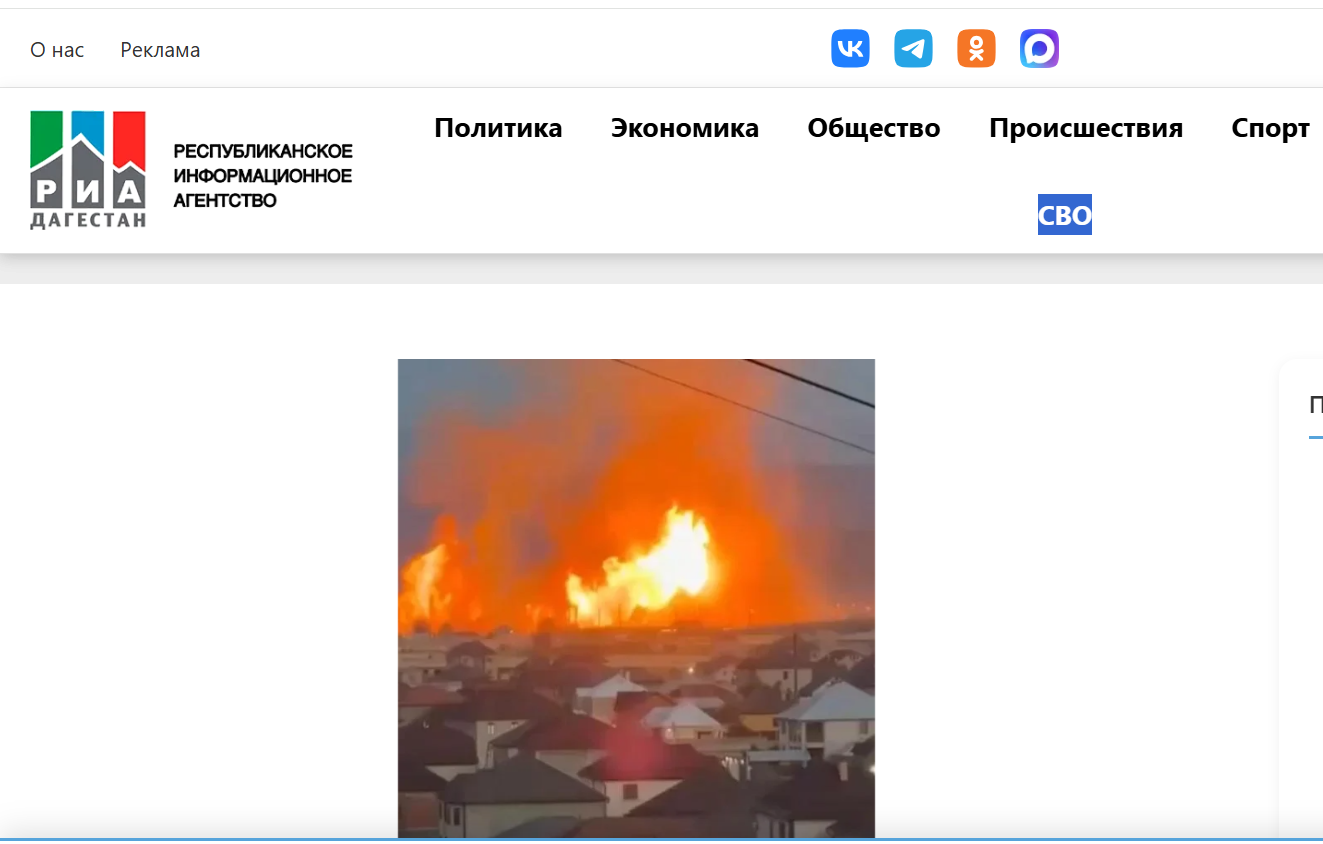
Further research found that several Russian media outlets also published the same visuals on June 9, describing them as a pipeline explosion and fire in Kizilyurt, Dagestan

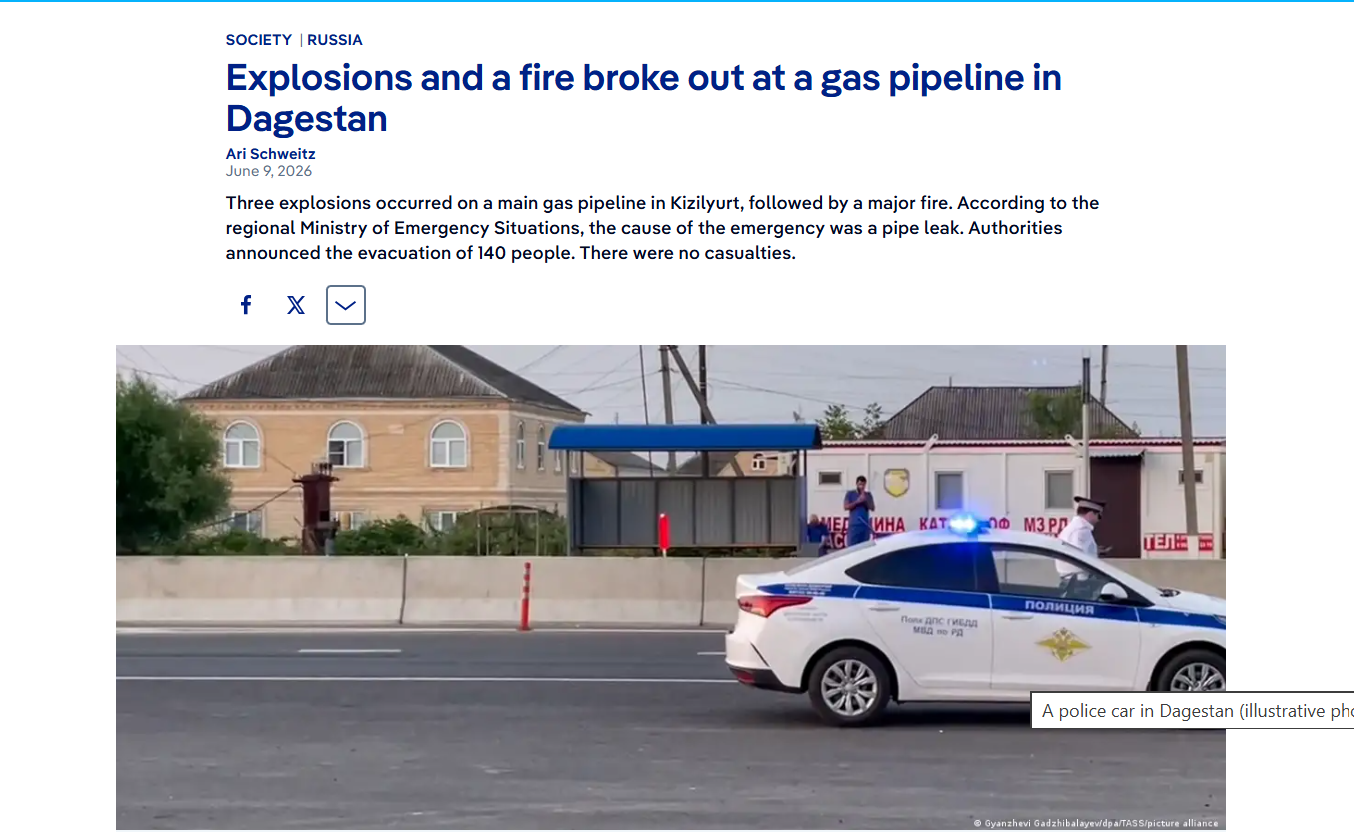
We also found a report published by DW on June 9, 2026, which stated that three explosions occurred on the Mozdok–Kazimagomed gas pipeline in Kizilyurt, Dagestan, resulting in a massive fire with flames rising up to 15 meters. According to local authorities, no casualties or injuries were reported..
https://www.dw.com/ru/na-gazoprovode-v-dagestane-progremeli-tri-vzryva-voznik-pozar/a-77481599
Conclusion:
The research clearly shows that the viral video is unrelated to the Israel-Iran conflict. It actually depicts a gas pipeline fire in Russia’s Dagestan region, which has been falsely shared as a recent Israeli strike on Iran.

Related Blogs

Introduction:
Welcome to the third edition of our blog on digital forensics series. In our previous blog we discussed the difference between copying, cloning, and imaging in the context of Digital Forensics, and found out why imaging is a better process. Today we will discuss the process of evidence collection in Digital Forensics. The whole process starts with making sure the evidence collection team has all necessary tools required for the task.
Investigating Tools and Equipment:
Below are some mentioned tools that the team should carry with them for a successful evidence collection:
- Anti-static bags
- Faraday bags
- Toolkit having screwdrivers(nonmagnetic), scissors, pins, cutters, forceps, clips etc.
- Rubber gloves
- Incident response toolkit (Software)
- Converter/Adapter: USB, SATA, IDE, SCSI
- Imaging software
- Volatile data collection tools (FTK Imager, Magnet Forensics RAM Capture)
- Pens, permanent markers
- Storage containers
- Batteries
- Video cameras
- Note/sketch pads
- Blank storage media
- Write-Blocker device
- Labels
- Crime scene security tapes
- Camera
What sources of Data are necessary for Digital Evidence?
- Hard-Drive (Desktop, Laptop, External, Server)
- Flash Drive
- SD Cards
- Floppy Disks
- Optical Media (CD, DVD)
- CCTV/DVR
- Internal Storage of Mobile Device
- GPS (Mobile/Car)
- Call Site Track (Towers)
- RAM

Evidence Collection
The investigators encounter two primary types of evidence during the course of gathering evidence: non-electronic and electronic evidence.
The following approaches could be used to gather non-electronic evidence:
- In the course of looking into electronic crimes, recovering non-electronic evidence can be extremely important. Be cautious to make sure that this kind of evidence is retrieved and kept safe. Items that may be relevant to a later review of electronic evidence include passwords, papers or printouts, calendars, literature, hardware and software manuals, text or graphical computer printouts, and photos. These items should be secured and kept for further examination.
- They are frequently found close to the computer or other related hardware. Locating, securing, and preserving all evidence is required by departmental procedures.
Three scenarios arise for the collection of digital evidence from computers:
Situation 1: The desktop is visible, and the monitor is on.
- Take a picture of the screen and note the data that is visible.
- Utilize tools for memory capturing to gather volatile data.
- Look for virtual disks. If so, gather mounted data's logical copies.
- Give each port and connection a label.
- Take a picture of them.
- Turn off network access to stop remote access.
- Cut off the power or turn it off.
- Locate and disconnect the hard drive by opening the CPU chassis.
- Take all evidence and place it in anti-magnetic (Faraday) bags.
- Deliver the evidence to the forensic lab.
- Keep the chain of custody intact.
Situation 2: The monitor is turned on, but it either has a blank screen (sleep mode) or an image for the screensaver.
- Make a small mouse movement (without pressing buttons). The work product should appear on the screen, or it should ask for a password.
- If moving the mouse does not result in a change to the screen, stop using the mouse and stop all keystrokes.
- Take a picture of the screen and note the data that is visible.
- Use memory capturing tools to gather volatile data (always use a write blocker to prevent manipulation during data collection).
- Proceed further in accordance with Situation 1.
Situation 3: The Monitor Is Off
- Write down the "off" status.
- After turning on the monitor, check to see if its status matches that of situations 1 or 2 above, and then take the appropriate action.
- Using a phone modem, cable, confirm that you are connected to the outside world. Try to find the phone number if there is a connection to the phone.
- To protect evidence, take out the floppy disks that might be there, package each disk separately, and label the evidence. Put in a blank floppy disk or a seizure disk, if one is available. Avoid touching the CD drive or taking out CDs.
- Cover the power connector and every drive slot with tape.
- Note the serial number, make, and model.
- Take a picture of the computer's connections and make a diagram with the relevant cables.
- To enable precise reassembly at a later date, label all connectors and cable ends, including connections to peripheral devices. Put "unused" on any connection ports that are not in use. Recognize docking stations for laptop computers in an attempt to locate additional storage media.
- All evidence should be seized and placed in anti-magnetic (Faraday) bags.
- All evidence should be seized and placed in anti-magnetic (Faraday) bags.
- Put a tag or label on every bag.
- Deliver the evidence to the forensic lab.
- Keep the chain of custody intact.
Following the effective gathering of data, the following steps in the process are crucial: data packaging, data transportation, and data storage.
The following are the steps involved in data packaging, transportation, and storage:
Packaging:
- Label every computer system that is gathered so that it can be put back together exactly as it was found
When gathering evidence at a scene of crime,
- Before packing, make sure that every piece of evidence has been appropriately labeled and documented.
- Latent or trace evidence requires particular attention, and steps should be taken to preserve it.
- Use paper or antistatic plastic bags for packing magnetic media to prevent static electricity. Do not use materials like regular plastic bags (instead use faraday bags) that can cause static electricity.
- Be careful not to bend, fold, computer media like tapes, or CD-ROM.
- Make sure that the labels on every container used to store evidence are correct.
Transporting
- Make sure devices are not packed in containers and are safely fastened inside the car to avoid shock and excessive vibrations. Computers could be positioned on the floor of the car,and monitors could be mounted on the seat with the screen down .
When transporting evidence—
- Any electronic evidence should be kept away from magnetic sources. Radiation transmitters, speaker magnets, and heated seats are a few examples of items that can contaminate electronic evidence.
- Avoid leaving electronic evidence in your car for longer than necessary. Electronic devices can be harmed by extremes in temperature, humidity.
- Maintain the integrity of the chain of custody while transporting any evidence.
Storing
- Evidence should be kept safe and away from extremes in humidity and temperature. Keep it away from dust, moisture, magnetic devices, and other dangerous impurities. Be advised that extended storage may cause important evidence—like dates, times, and system configurations—to disappear. Because batteries have a finite lifespan, data loss may occur if they malfunction. Whenever the battery operated device needs immediate attention, it should be informed to the relevant authority (eg., the chief of laboratory, the forensic examiner, and the custodian of the evidence).
CONCLUSION:
Thus, securing the crime scene to packaging, transportation and storage of data are the important steps in the process of collecting digital evidence in forensic investigations. Keeping the authenticity during the process along with their provenance is critical during this phase. It is also important to ensure the admissibility of evidence in legal proceedings. This systematic approach is essential for effectively investigating and prosecuting digital crimes.
Background
Cyber slavery and online trafficking have become alarming challenges in Southeast Asia. Against this backdrop, India successfully rescued 197 of its citizens from Mae Sot in Thailand on November 10, 2025, using two Indian Air Force flights. The evacuees had fled Myanmar’s Myawaddy region in October after intense military operations forced them to escape. This was India’s second rescue effort within a week, following the November 6 mission that brought back 270 nationals from similar conditions. The operations were coordinated by the Indian Embassy in Bangkok and the Consulate in Chiang Mai, with crucial assistance from the Royal Thai Government.
The Operation and Bilateral Cooperation
The operation was carried out with the presence and supervision of Prime Minister Anutin Charnvirakul of Thailand and Indian Ambassador Nagesh Singh, who were both present at the ceremony in Mae Sot. This way, the two countries have not only proved but also cemented their bond to fight the crimes which were mentioned before and more than that, they have even promised to facilitate communication between their authorities. Prime Minister Charnvirakul thanked India for the quick intervention and added that Thailand would be giving the needed support for the repatriation of the other victims as well.
“Both parties reaffirmed their strong commitment to the fight against cross-border crimes, including cyber scams and human trafficking, in the region and to improving cooperation among the relevant agencies in both countries.”, Embassy of India, Bangkok.
The Cyber Scam Network
The Myawaddy area in Myanmar has made a quick shift to become a hotspot for the entire world of cybercrimes. Moreover, the crimes are especially committed by the organised criminal groups that take advantage of foreign nationals. After the Myanmar military imposed a restriction in late October, over 1,500 people from 28 nations moved to Thailand because of the KK Park cyber hub and other centres being raided.
A UN report (2025) indicated that this fraud activity is part of a larger network that extends the countries populated with very low-tech criminals who target the most naïve, and they are the very ones who end up being tortured. The trafficked persons often belong to the local population or come from neighbouring countries and are recruited with the promise of high salaries as IT or customer service agents, only to be imprisoned in a compound where they are forced to perform phishing, investment fraud, and cryptocurrency scams aimed at the victims all over the globe. These centres operate in border territories having poor governance, easy-to-cross borders, and little police presence, hence making human trafficking a major factor contributing to cybercrime.
India’s Response and Preventive Measures
The Indian Embassy in Thailand worked hand in hand with the Thai government to facilitate bringing back and repatriating the Indian citizens who had entered Thailand illegally when they were escaping Myanmar.
The embassy was far from helpless in the matter. In the case of the embassy's advisory, they suggested to the citizens that:
- It is mandatory to check the authenticity of the job offers and the agents before securing employment in other countries.
- Such employment by means of tourist or visa-free entry permits should be avoided, as such entries allow only for a short-duration visit or tourism.
- Be careful of ads claiming high pay for online or remote work in Southeast Asia.
The embassy reiterated the Government of India’s commitment to ensuring easy access to assistance for citizens overseas and to addressing the growing intersection between cyber fraud and human trafficking.
CyberPeace Analysis and Advisory
The case of Myawaddy demonstrates that cybercrime and human trafficking have grappled to become a complicated global threat. The scam centres gradually come to depend on the trafficked labour of people who are being forced to commit the fraud digitally under coercion. This underlines the requirement for the cybersecurity measures that consider the rights of humans and the protection of the victims, not only the technical defence.
- Cybercrime–Human Trafficking Convergence:
Cybercrime has moved up to the level of a human trafficking operation. The unwilling victims of such fraud schemes are scared for their very lives or even more, not of a reliable way out. This situation is such that one cannot tell where cyber exploitation ends and forced labour begins.
- Cross-Border Enforcement Challenges:
To effectively carry out their unlawful acts, the criminals use legal and jurisdictional loopholes that are present across borders. Dismantling such networks requires the regional cooperation of India, Thailand, and ASEAN countries.
- Socioeconomic Vulnerability:
The situation with unemployment being stagnant and the public not being educated about the situation makes people, especially the youth, very prone to scams of getting hired overseas. Thus, to prevent this uneducated flocking to the fraudsters, it is necessary to constantly implant in them the knowledge of online literacy and the importance of verification of job offers.
- Public–Private Coordination:
The scammers’ mode of operation usually includes online recruitment through social media and encrypted platforms where their victims can be found and contacted. In this regard, cooperation among government institutions, tech platforms, and civil society is imperative to put an end to the operation of these digital trafficking channels.
CyberPeace Expert Advisory
To lessen the possibility of such incidents, CyberPeace suggests the following preventive and policy measures:
Individuals:
- Trust but verify: Before giving your approval to anything, always verify the job offer by official embassy websites or MEA-approved recruiting agencies first.
- Watch out for red flags: If a recruiter offers a very high salary for almost no work, asks for tourist visas, or gives no written contract, be very careful and pull out immediately.
- Protect your documents: Give a trusted person the responsibility of keeping both digital and physical copies of your passport and visa, and also register your travel with the MADAD portal.
- Report if in doubt: If an agent looks suspicious, contact the nearest Indian Embassy or Consulate or report it to cybercrime.gov.in or the 1930 Helpline.
Policymakers and Agencies:
- Strengthen Bilateral Task Forces: Set up armed forces of cyber and human trafficking enforcement units in South and Southeast Asian countries.
- Support Regional Awareness Campaigns: In addition to targeted advisories in local languages, the most vulnerable job seekers in Tier-2 and Tier-3 cities should also receive such awareness in their languages.
- Overseas Employment Advertising should be regulated: All digital job postings should be made to meet transparency standards and fraudulent recruitment should be punished with heavy fines.
- Invest in Digital Forensics and Intelligence Sharing: Create common databases for monitoring international cybercriminal groups.
Conclusion
The return of Indian citizens from Thailand represents a significant humanitarian and diplomatic milestone and highlights that cybercrime, though carried out through digital channels, remains deeply human in nature. International cooperation, well-informed citizens, and a rights-based cybersecurity approach are the minimum requirements for a global campaign against the new breed of cybercrime that is characterised by fraud and trafficking working hand in hand. CyberPeace reminds everyone that digital vigilance, verification, and collaboration across borders are the most effective ways to prevent online abuse and such crimes.
Reference
- https://www.ndtv.com/india-news/197-indians-repatriated-from-thailand-by-special-indian-air-force-flights-9611934
- https://www.thehindu.com/news/national/india-airlifts-citizens-who-worked-in-myanmar-cybercrime-hub-from-thailand/article70264322.ece
- https://www.mea.gov.in/Images/attach/03-List-4-2024.pdf

Executive Summary
A poster is being shared on social media claiming that Prime Minister Narendra Modi has submitted his resignation to President Droupadi Murmu. The post also includes a screenshot of an X (formerly Twitter) account allegedly belonging to President Droupadi Murmu, stating that the Prime Minister has tendered his resignation, along with his Union Council of Ministers, to the President. Research by the CyberPeace Research Wing proved the viral claim to be fake. The research revealed that the poster being shared on social media is fabricated.
Claim:
Sharing the viral poster on the social media platform Instagram, a user wrote, “President Droupadi Murmu accepted the resignation of Prime Minister Narendra Modi and requested him to continue in office until the formation of the new government. This is part of the constitutional process of Indian democracy. What is your opinion? Is this just a formality or a step towards a new beginning?” The archive link and screenshot of the post are given below:
https://www.instagram.com/reels/DcA0HqhN3Fr/

FactCheck
To ascertain the truth behind the viral claim, we conducted a search on Google using relevant keywords. During this, we did not find any credible media reports confirming the viral claim. In the next step of the research, we scanned the X account of the Prime Minister’s Office (PMO). We did not find any such post there either. The link and screenshot of the relevant post are given below:

Proceeding further with the research, we scanned the X account of the President. We did not find any post confirming the viral claim there as well. The link and screenshot of the relevant post are given below:

In the next stage of our research, we found a report published on the DD News website on June 5, 2024. According to the report, ahead of the formation of the next Bharatiya Janata Party (BJP)-led NDA government, Prime Minister Narendra Modi, along with his Council of Ministers, had tendered his resignation to President Droupadi Murmu. This paved the way for the dissolution of the 17th Lok Sabha, which ran from 2019 to 2024. President Droupadi Murmu accepted the resignation of Prime Minister Modi and his Council of Ministers, and requested them to continue in office until the new government assumed charge. The link and screenshot of the post are given below:

Conclusion:
In our research, the viral claim turned out to be fake. The research revealed that the poster being shared on social media is fake.
