
#FactCheck -False Claim About Indian Ships Paying Iran in Yuan to Pass Strait of Hormuz Goes Viral Amid Geopolitical Tensions
Executive Summary
Amid the ongoing geopolitical tensions involving the US, Israel, and Iran, and reports of disruptions in the Strait of Hormuz affecting cargo ship movement and global crude oil prices, several posts on social media have made a viral claim. The posts allege that Indian cargo vessels are being allowed to pass through the Strait of Hormuz after payments to Iran were made in Chinese currency, the yuan. The claim has been widely circulated from certain social media accounts, suggesting a shift in India’s trade and payment arrangements. However, a fact-check by CyberPeace Research Wing has found the claim to be false.
Claim
A social media user “MEHF voice 2.0” shared a viral post (archived link), claiming that an Indian oil tanker secured passage through the Strait of Hormuz by making payments in Chinese yuan. The post further suggested that India had formed a new alignment with China, bypassing the US dollar system.

Fact Check
Due to US sanctions, Iran is excluded from the international banking network SWIFT, which prevents direct trade settlements in US dollars or euros. As a result, India and Iran conduct trade through a specially designed rupee–rial payment mechanism. According to a Ministry of Commerce and Industry release (based on a written reply in Parliament), India and Iran established this arrangement to facilitate bilateral trade using local currencies instead of the US dollar.

Further, information from the Indian Embassy in Tehran notes that rupee-based payments are processed through UCO Bank and Iranian banks with vostro accounts, enabling trade settlement outside sanctioned banking channels. IDBI Bank has also been part of efforts to expand rupee-based transactions with Iran.
The Ministry of External Affairs’ official fact-check handle has also debunked this claim, confirming that it is false.

Conclusion
The viral claim that Indian oil tankers are paying in Chinese yuan to pass through the Strait of Hormuz is false. India and Iran conduct trade settlements through a rupee–rial payment mechanism, not through the Chinese currency.

Related Blogs

Introduction
A recent massive scam has been uncovered in the Indian state of Gujarat, where the Criminal Investigation Department (CID) has blacklisted 30,000 SIM cards that were used for illegal activities. The scam has created a huge uproar in the state, and its implications are significant. In this blog, we will discuss the details of the Gujarat scam and its impact on the state.
What is sim card fraud?
Sim card fraud occurs when someone uses a fake or cloned sim card to impersonate someone else. This allows the fraudster to gain access to sensitive information or conduct transactions on behalf of the victim. The use of fraudulent sim cards has become increasingly common in recent years, with scammers targeting individuals and businesses around the world.
The Gujarat Scam: The Gujarat scam involves the use of SIM cards for illegal activities such as extortion, blackmail, and cybercrime. The CID has identified that the SIM cards were obtained using fake documents and were used for illegal activities. The scam has been happening for a while, involving several individuals, including businessmen, politicians, and government officials.
The CID has conducted raids across the state and has arrested several individuals involved in the scam. They have also seized a significant amount of cash, mobile phones, and other electronic devices used for illegal activities. The investigation is ongoing, and more arrests are expected in the coming days.
The Gujarat scam is not an isolated incident, as similar scams have been reported in other parts of the country. The Telecom Regulatory Authority of India (TRAI) has also reported that several telecom operators are not following the regulations and are not verifying the authenticity of documents used to obtain SIM cards.
Impact on the State: The Gujarat scam has caused significant damage to the state’s reputation, and it has also affected the economy. The scam has highlighted the lack of regulation in the telecom industry, and it has exposed the loopholes in the system that criminals are exploiting.
The blacklisting of 30,000 SIM cards will affect several individuals who may have obtained them legally but were unaware of their use for illegal activities. The blacklisting may also impact businesses that rely on mobile phones for their operations.
The scam has also raised concerns about personal information and data safety. With the use of fake documents to obtain SIM cards, it is evident that personal information is not secure and can be easily misused. The government needs to take steps to ensure that personal information is protected and that the telecom industry is regulated to prevent such scams from happening in the future.
Steps Taken by the Government: The Gujarat scam has prompted the government to take action to prevent such incidents from happening in the future. The government has announced that it will implement stricter regulations in the telecom industry to prevent the misuse of SIM cards. The government has also announced that it will introduce a system to verify the authenticity of documents used to obtain SIM cards.
The government has also urged citizens to be vigilant and report any suspicious activity related to the misuse of SIM cards. The government has assured citizens that it will take strict action against those involved in the scam and that it will ensure the safety of personal information and data.
The TRAI has also taken steps to address the issue. It has directed telecom operators to verify the authenticity of documents used to obtain SIM cards and to follow the regulations. The TRAI has also introduced a new system to identify and deactivate inactive SIM cards.
Here are some key takeaways from the Gujarat Sim scam: These takeaways should be kept in mind to prevent such incidents from happening in the future and to ensure the safety of citizens and businesses.
Need for Stricter Regulations: The Gujarat Sim scam has highlighted the need for stricter regulations in the telecom industry. The government needs to ensure that telecom operators follow the regulations and verify the authenticity of documents used to obtain SIM cards. This will help prevent the misuse of SIM cards and illegal activities.
Importance of Personal Information Security: The scam has raised concerns about personal information and data safety. It is important to ensure that personal information is protected and that the telecom industry is regulated to prevent such scams from happening in the future.
Impact on Reputation and Economy: The Gujarat scam has caused significant damage to the state’s reputation, and it has also affected the economy. The blacklisting of 30,000 SIM cards will impact several individuals who may have obtained them legally but were unaware of their use for illegal activities. The scam has also raised concerns about the safety of businesses that rely on mobile phones for their operations.
Need for Vigilance: The government has urged citizens to be vigilant and report any suspicious activity related to the misuse of SIM cards. It is important for citizens to be aware of the regulations and to report any illegal activities to prevent such incidents from happening in the future.
Strong Action Against Criminals: The blacklisting of 30,000 SIM cards and the arrests made by the CID sends a strong message to those involved in illegal activities that they will not be spared. It is important for the government to take strict action against those involved in the scam to deter others from engaging in such activities.
Conclusion
The Gujarat scam has exposed vulnerabilities in the telecom industry and highlighted the need for stricter regulations to prevent such incidents from happening in the future. The blacklisting of 30,000 SIM cards has sent a strong message to those involved in illegal activities that they will not be spared. The government’s efforts to implement stricter regulations and ensure the safety of personal information and data are commendable. It is now up to the citizens to be vigilant and report any suspicious activity to prevent such incidents from happening in the future.
The telecom industry plays a vital role in the country’s development, and it is important to ensure that it is regulated to prevent the misuse of its services. Overall, the Gujarat Sim scam has highlighted the need for stricter regulations, personal information security, vigilance, and strong action against criminals.
Reference:
Executive Summary
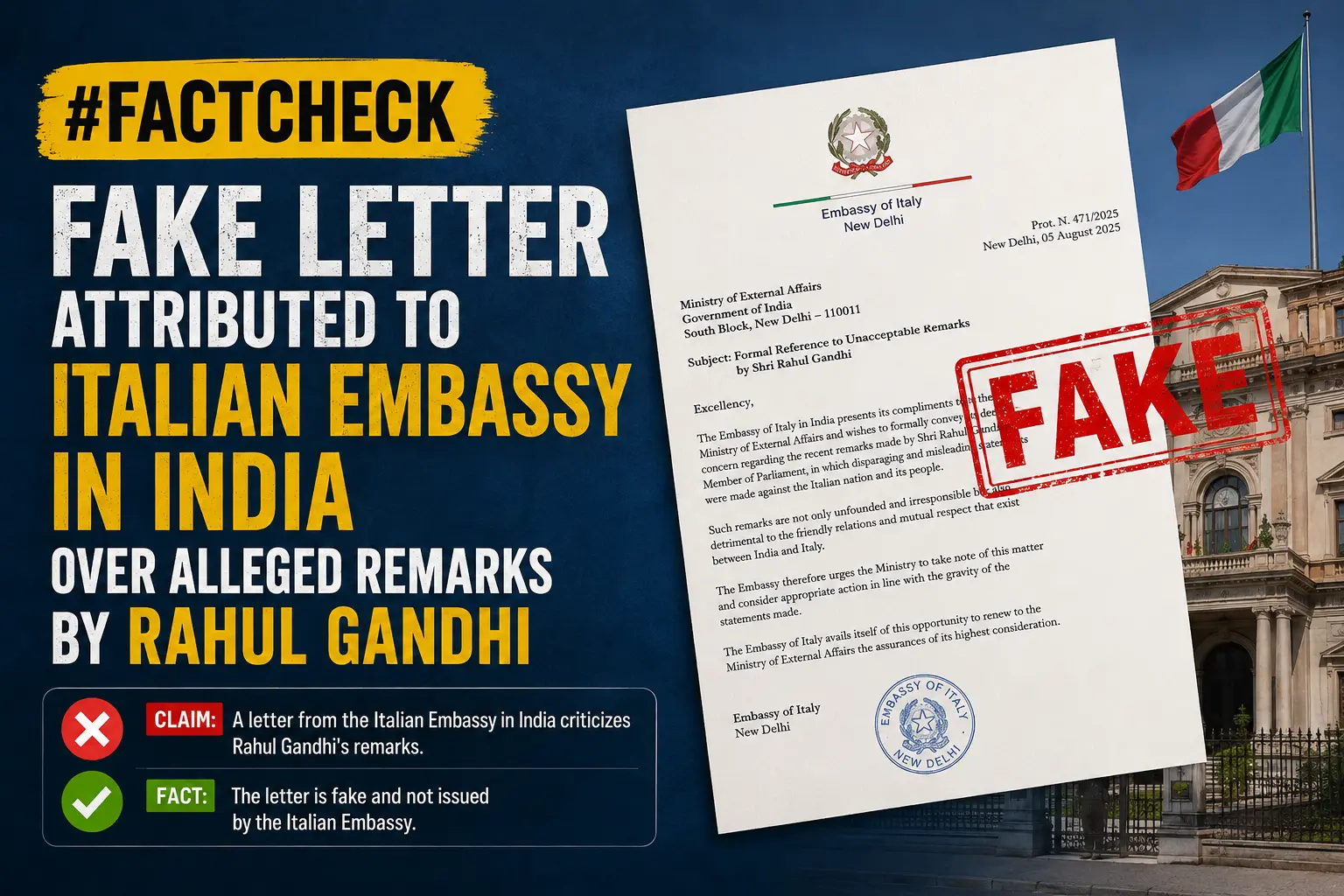
A letter purportedly issued by the Embassy of Italy in New Delhi is being widely shared on social media. The letter claims that the embassy expressed “deep concern” and “strong disapproval” over alleged remarks made by Leader of Opposition in the Lok Sabha Rahul Gandhi about Italian Prime Minister Giorgia Meloni. The purported statement says political disagreement is an essential part of democracy, but disrespect toward the Italian prime minister is not acceptable. CyberPeace Research Wing’s research found the viral claim to be false. To verify the authenticity of the purported statement, we first searched the official website and social media accounts of the Embassy of Italy in India using relevant keywords. However, we found no official statement matching the contents of the viral letter or any response from the embassy regarding Rahul Gandhi or Giorgia Meloni.
Claim
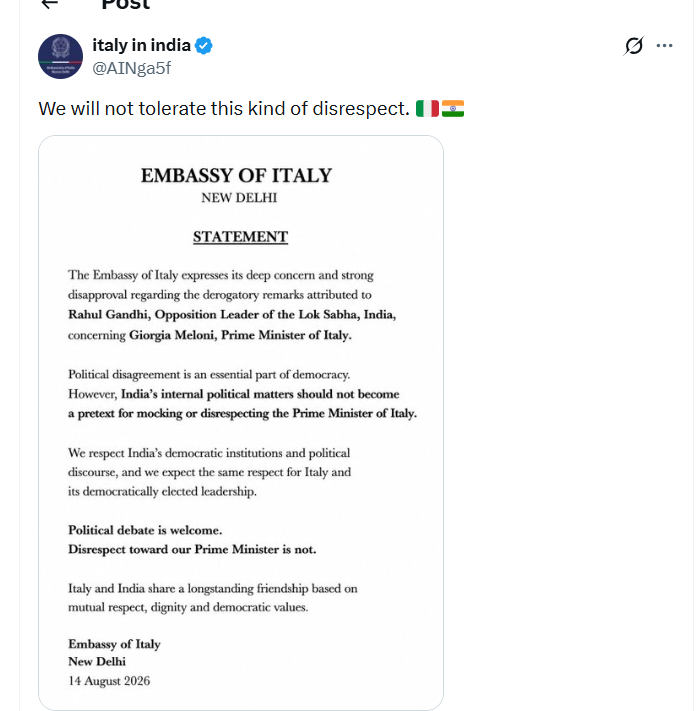
A user on X (formerly Twitter) shared the purported letter claiming that the Embassy of Italy had expressed strong disapproval over Rahul Gandhi’s alleged remarks about Italian Prime Minister Giorgia Meloni.
The purported statement reads: “The Embassy of Italy expresses its deep concern and strong disapproval regarding the derogatory remarks attributed to Rahul Gandhi, Opposition Leader of the Lok Sabha, India, concerning Giorgia Meloni, Prime Minister of Italy.”
It further states that political disagreement is an essential part of democracy but that India’s internal political matters should not become a pretext for mocking or disrespecting the Italian prime minister. The purported statement also says that while political debate is welcome, “disrespect toward our Prime Minister is not.”
https://x.com/AINga5f/status/2088109663128522982?s=20
https://archive.ph/st0qb
FactCheck
To verify the claim, we conducted a Google search using relevant keywords. However, we did not find any credible media report confirming that the Embassy of Italy had issued such a statement.
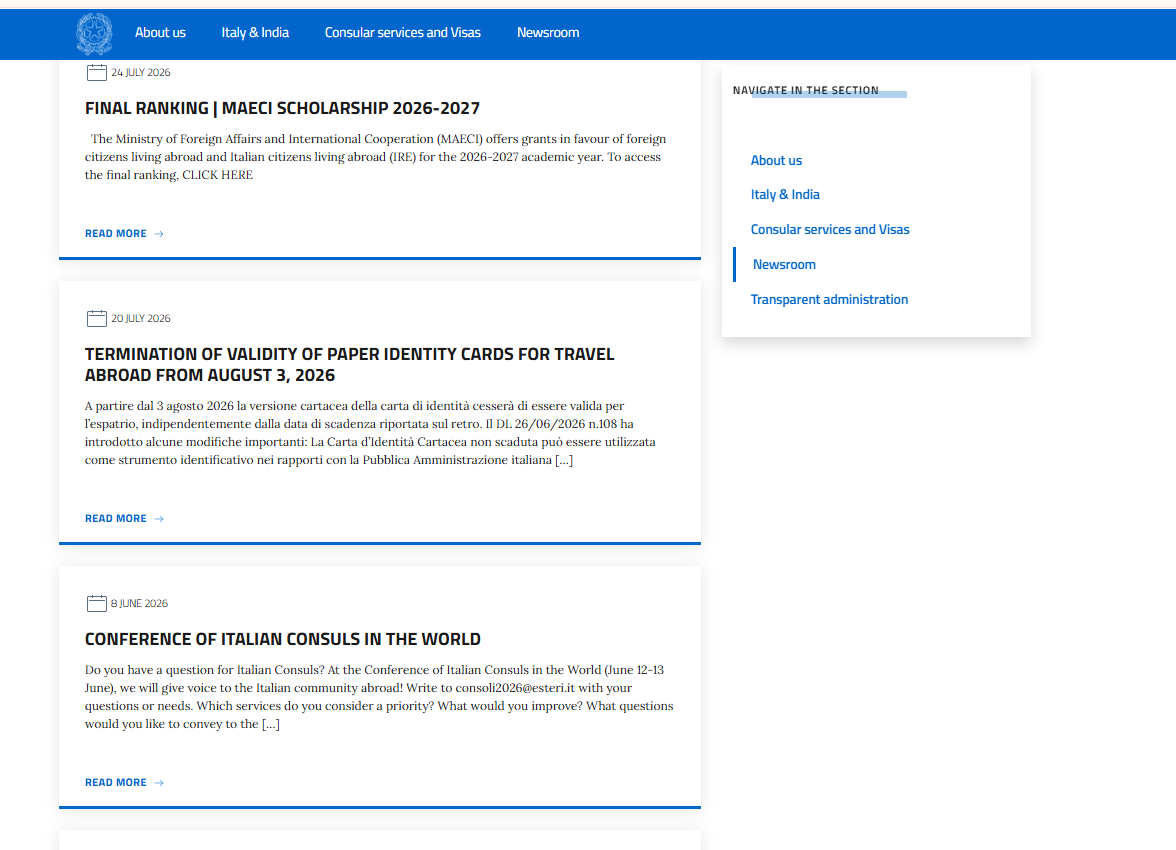
We then checked the official website of the Embassy of Italy in New Delhi for any statement or update concerning Rahul Gandhi or Giorgia Meloni. However, no report or official statement matching the viral letter was found.
https://ambnewdelhi.esteri.it/en/news/
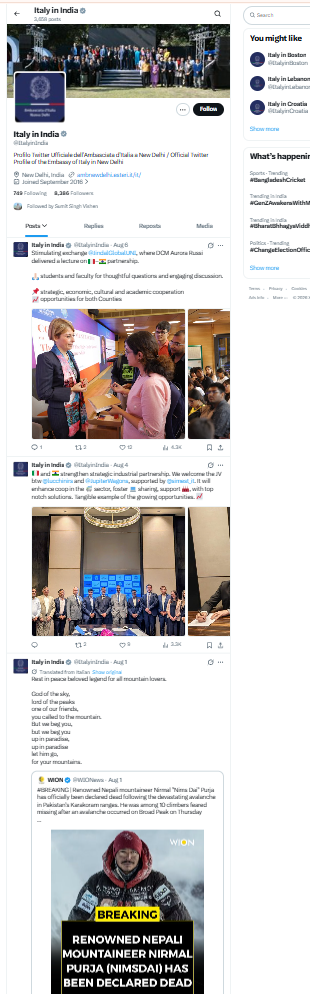
Next, we checked the embassy’s official X account for any post related to the alleged statement. However, no such post was found on the account.
https://x.com/italyinindia?lang=en
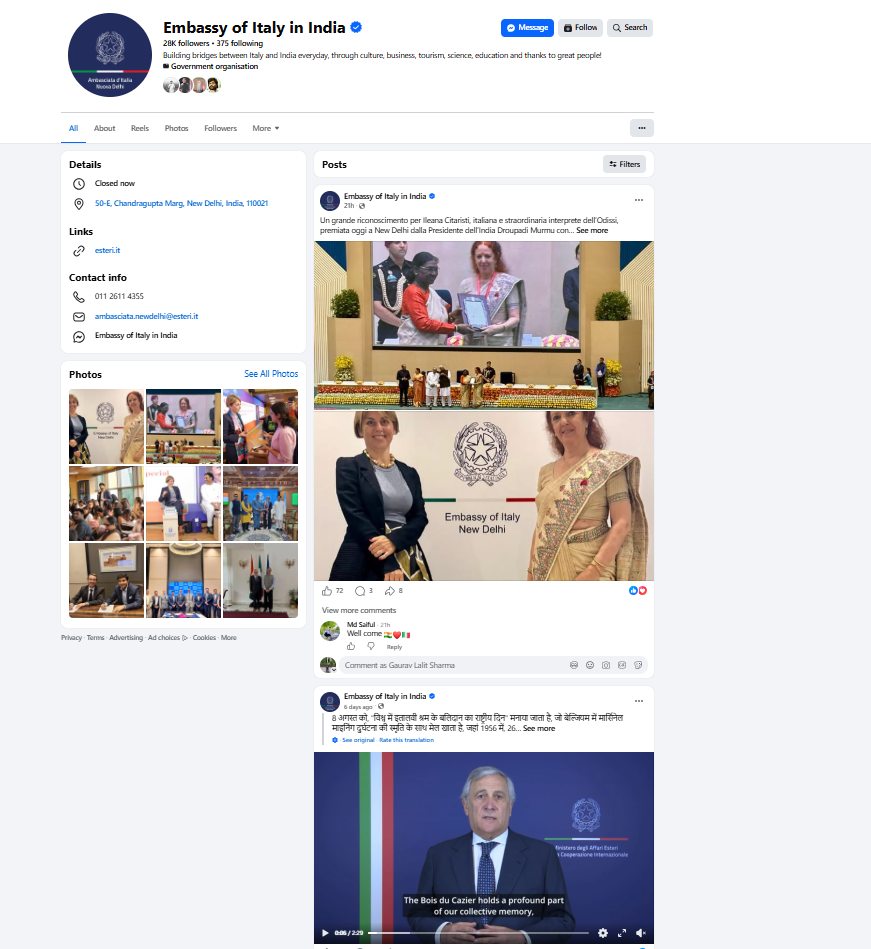
As part of our further research, we checked the official Facebook account of the Embassy of Italy in India. No post or statement confirming the viral claim was found there either.
https://www.facebook.com/ItalyInIndia/
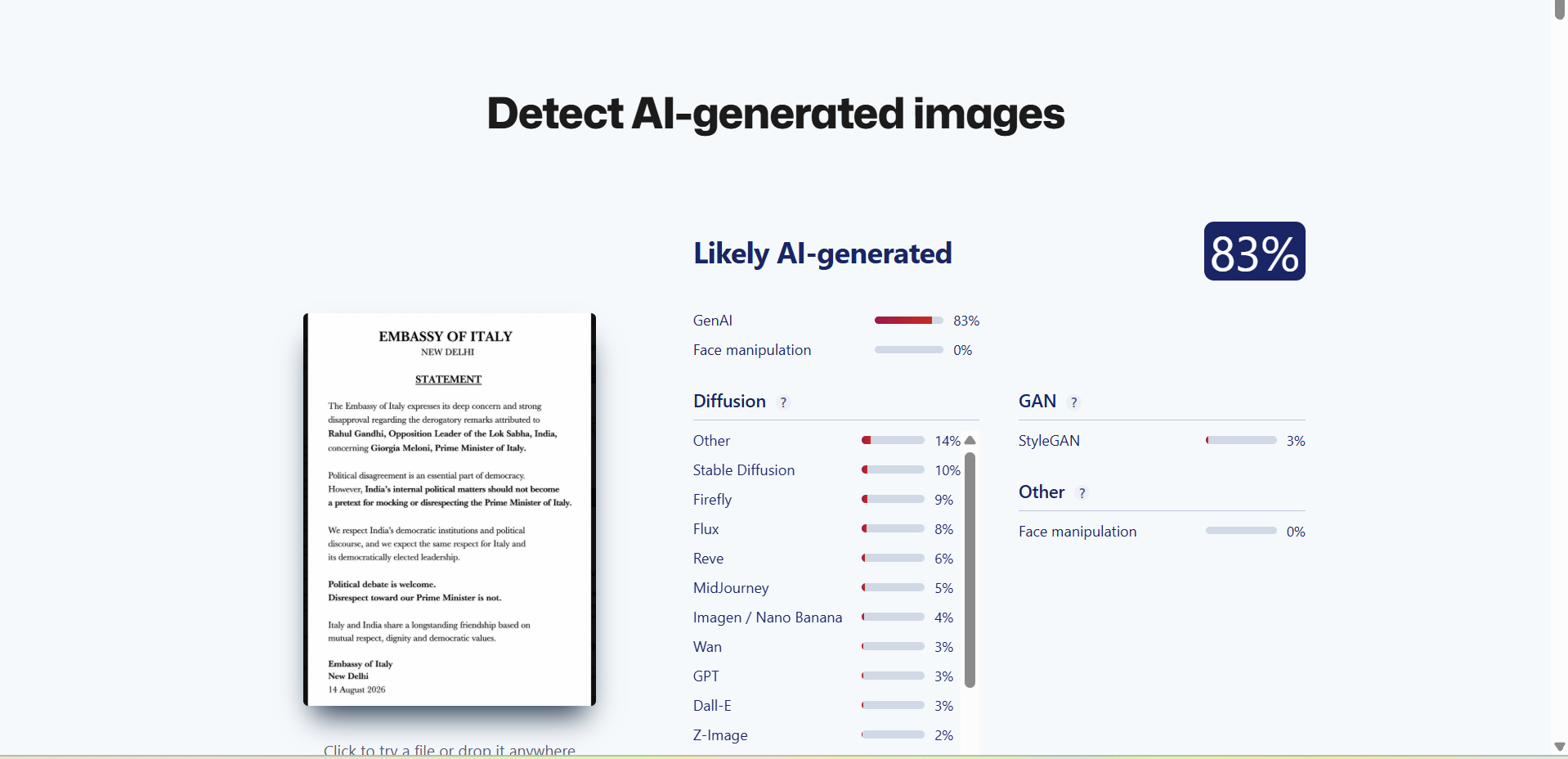
Finally, we scanned the viral letter using the AI-detection tool Sightengine. The tool indicated an 83 per cent probability that the viral letter was AI-generated.
Conclusion
The viral letter attributed to the Embassy of Italy in New Delhi is fake. Our research found no official statement on the embassy’s website or its verified social media accounts confirming the contents of the viral letter. Moreover, the letter was flagged by Sightengine as having an 83 per cent probability of being AI-generated. Therefore, the purported statement should not be considered an authentic communication from the Embassy of Italy.
Executive Summary:
A viral claim alleges that following the Supreme Court of India’s August 11, 2025 order on relocating stray dogs, authorities in Delhi NCR have begun mass culling. However, verification reveals the claim to be false and misleading. A reverse image search of the viral video traced it to older posts from outside India, probably linked to Haiti or Vietnam, as indicated by the use of Haitian Creole and Vietnamese language respectively. While the exact location cannot be independently verified, it is confirmed that the video is not from Delhi NCR and has no connection to the Supreme Court’s directive. Therefore, the claim lacks authenticity and is misleading
Claim:
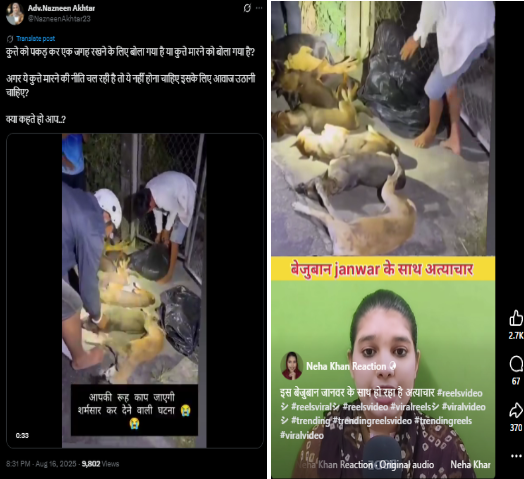
There have been several claims circulating after the Supreme Court of India on 11th August 2025 ordered the relocation of stray dogs to shelters. The primary claim suggests that authorities, following the order, have begun mass killing or culling of stray dogs, particularly in areas like Delhi and the National Capital Region. This narrative intensified after several videos purporting to show dead or mistreated dogs allegedly linked to the Supreme Court’s directive—began circulating online.
Fact Check:
After conducting a reverse image search using a keyframe from the viral video, we found similar videos circulating on Facebook. Upon analyzing the language used in one of the posts, it appears to be Haitian Creole (Kreyòl Ayisyen), which is primarily spoken in Haiti. Another similar video was also found on Facebook, where the language used is Vietnamese, suggesting that the post associates the incident with Vietnam.
However, it is important to note that while these posts point towards different locations, the exact origin of the video cannot be independently verified. What can be established with certainty is that the video is not from Delhi NCR, India, as is being claimed. Therefore, the viral claim is misleading and lacks authenticity.


Conclusion:
The viral claim linking the Supreme Court’s August 11, 2025 order on stray dogs to mass culling in Delhi NCR is false and misleading. Reverse image search confirms the video originated outside India, with evidence of Haitian Creole and Vietnamese captions. While the exact source remains unverified, it is clear the video is not from Delhi NCR and has no relation to the Court’s directive. Hence, the claim lacks credibility and authenticity.
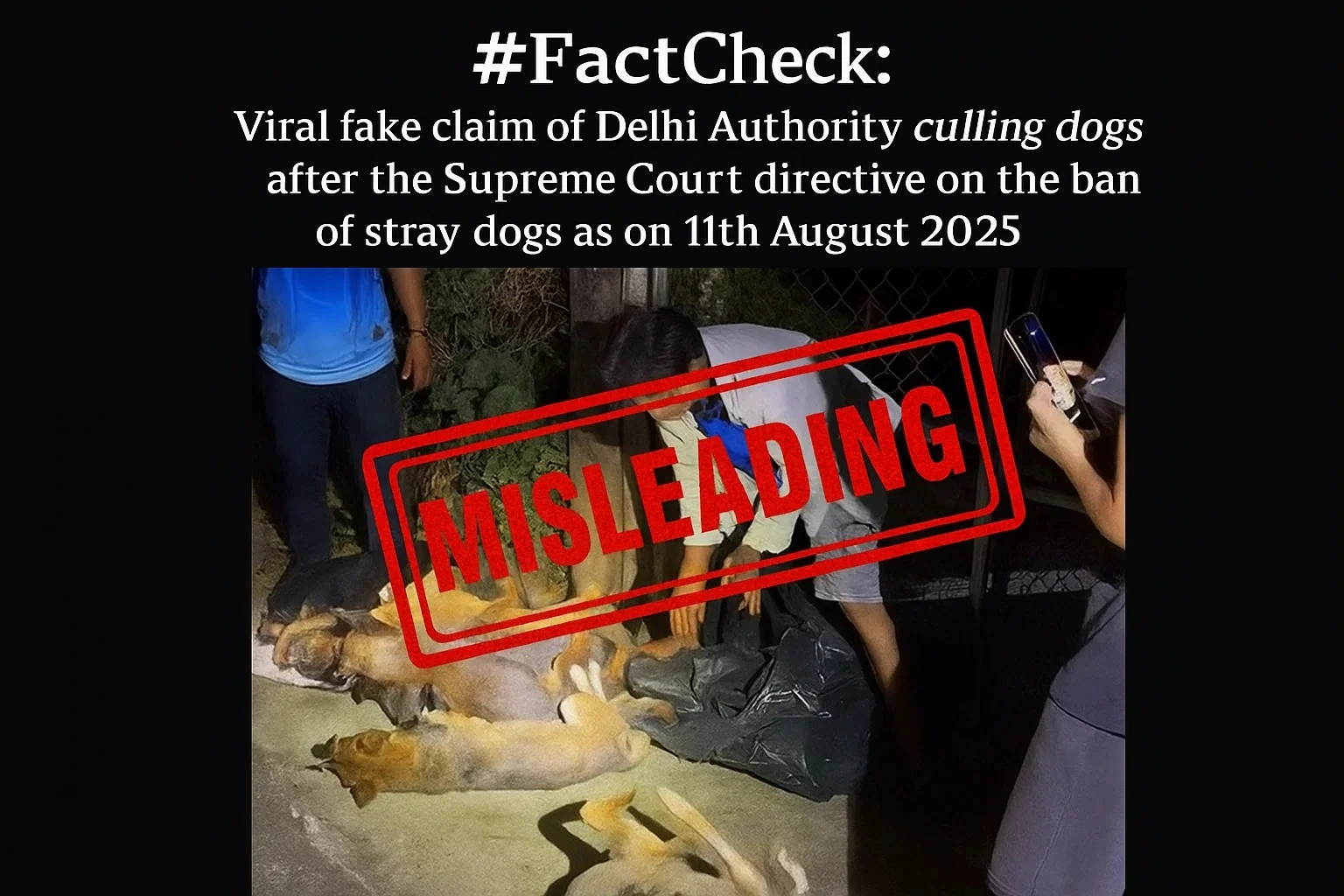
Claim: Viral fake claim of Delhi Authority culling dogs after the Supreme Court directive on the ban of stray dogs as on 11th August 2025
Claimed On: Social Media
Fact Check: False and Misleading
