
#FactCheck - Viral Video Falsely Attributes Statements on ‘Operation Sindoor’ to Army Chief
Executive Summary
A video widely circulated on social media claims to show a confrontation between a Zee News journalist and Chief of Army Staff (COAS) General Upendra Dwivedi during the Indian Army’s Annual Press Briefing 2026. The video alleges that General Dwivedi made sensitive remarks regarding ‘Operation Sindoor’, including claims that the operation was still ongoing and that diplomatic intervention by former US President Donald Trump had restricted India’s military response. Several social media users shared the clip while questioning the Indian Army’s operational decisions and demanding accountability over the alleged remarks. The CyberPeace concludes that the viral video claiming to show a discussion between a Zee News journalist and Chief of Army Staff General Upendra Dwivedi on ‘Operation Sindoor’ is misleading and digitally manipulated. Although the visuals were sourced from the Indian Army’s Annual Press Briefing 2026, the audio was artificially created and added later to misinform viewers. The Army Chief did not make any remarks regarding diplomatic interference or limitations on military action during the briefing.
Claim:
An X (formerly Twitter) user, Abbas Chandio (@AbbasChandio__), shared the video on January 14, asserting that it showed a Zee News journalist questioning the Army Chief about the status and outcomes of ‘Operation Sindoor’ during a recent press conference. In the clip, the journalist is purportedly heard challenging the Army Chief over his earlier statement that the operation was “still ongoing,” while the COAS is allegedly heard responding that diplomatic intervention during the conflict limited the Army’s ability to pursue further military action. Here is the link and archive link to the post, along with a screenshot.
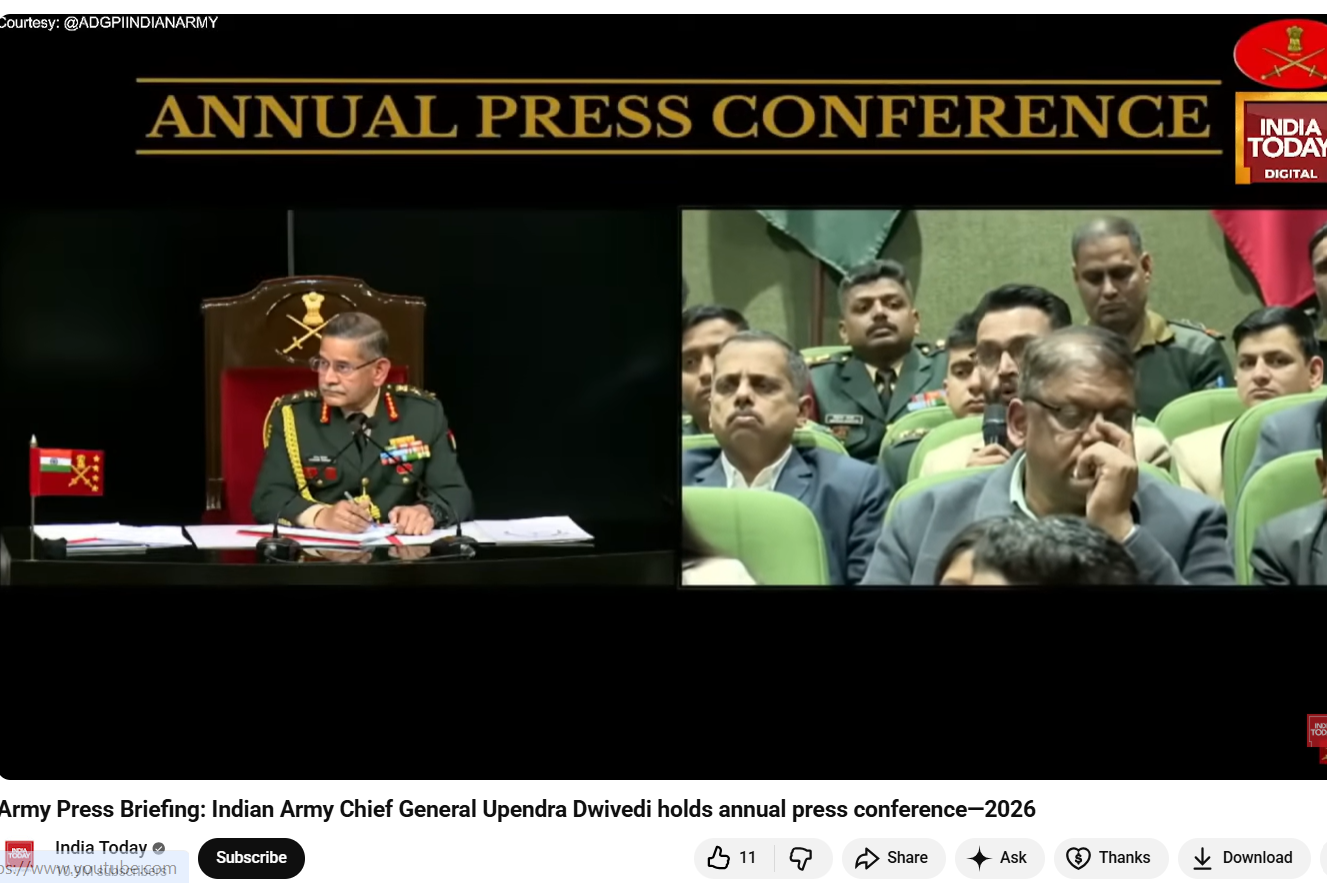
The reverse image search also directed to an extended version of the footage uploaded on the official YouTube channel of India Today. The original video was identified as coverage from the Indian Army’s Annual Press Conference 2026, held on January 13 in New Delhi and addressed by COAS General Upendra Dwivedi. Upon reviewing the original press briefing footage, CyberPeace found no instance where a Zee News journalist questioned the Army Chief about ‘Operation Sindoor’. There was also no mention of the statements attributed to General Dwivedi in the viral clip.
In the authentic footage, journalist Anuvesh Rath was seen raising questions related to defence procurement and modernization, not military operations or diplomatic interventions. Here is the link to the original video, along with a screenshot.
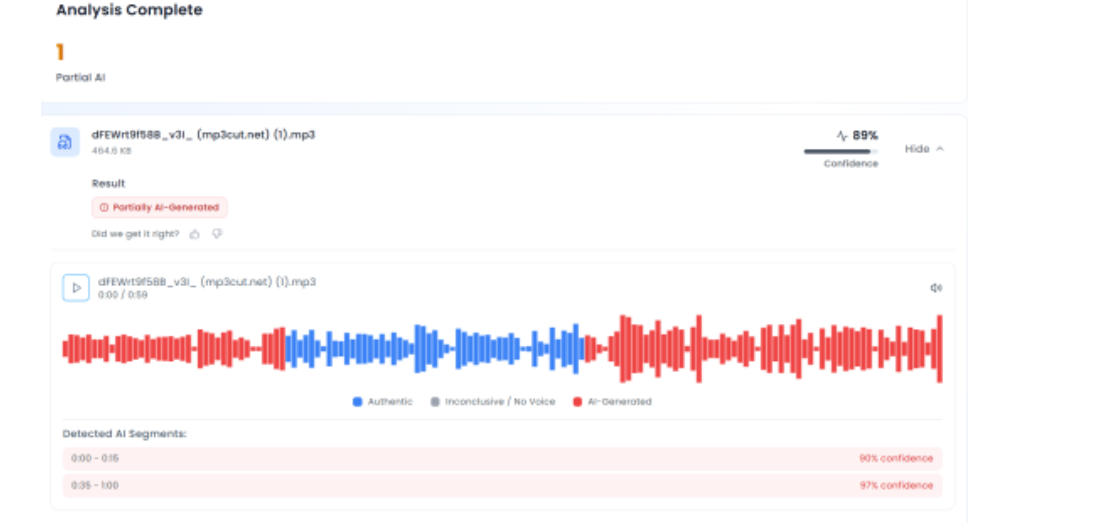
To further verify the claim, CyberPeace extracted the audio track from the viral video and analysed it using the AI-based voice detection tool Aurigin. The analysis revealed that the voice heard in the clip was artificially generated, indicating the use of synthetic or manipulated audio. This confirmed that while genuine visuals from the Army’s official press briefing were used, a fabricated audio track had been overlaid to falsely attribute controversial statements to the Army Chief and a Zee News journalist.
Conclusion
The CyberPeace concludes that the viral video claiming to show a discussion between a Zee News journalist and Chief of Army Staff General Upendra Dwivedi on ‘Operation Sindoor’ is misleading and digitally manipulated. Although the visuals were sourced from the Indian Army’s Annual Press Briefing 2026, the audio was artificially created and added later to misinform viewers. The Army Chief did not make any remarks regarding diplomatic interference or limitations on military action during the briefing. The video is a clear case of digital manipulation and misinformation, aimed at creating confusion and casting doubts over the Indian Army’s official position.

Related Blogs

Introduction:
The National Security Council Secretariat, in strategic partnership with the Rashtriya Raksha University, Gujarat, conducted a 12-day Bharat National Cyber Security Exercise in 2024 (from 18th November to 29th November). This exercise included landmark events such as a CISO (Chief Information Security Officers) Conclave and a Cyber Security Start-up exhibition, which were inaugurated on 27 November 2024. Other key features of the exercise include cyber defense training, live-fire simulations, and strategic decision-making simulations. The aim of the exercise was to equip senior government officials and personnel in critical sector organisations with skills to deal with cybersecurity issues. The event also consisted of speeches, panel discussions, and initiatives such as the release of the National Cyber Reference Framework (NCRF)- which provides a structured approach to cyber governance, and the launch of the National Cyber Range(NCR) 1.0., a cutting-edge facility for cyber security research training.
The Deputy National Security Advisor, Shri T.V. Ravichandran (IPS) reiterated, through his speech, the importance of the inclusion of technology in challenges with respect to cyber security and shaping India’s cyber strategy in a manner that is proactive. The CISOs of both government and private entities were encouraged to take up multidimensional efforts which included technological upkeep but also soft skills for awareness.
CyberPeace Outlook
The Bharat National Cybersecurity Exercise (Bharat NCX) 2024 underscores India’s commitment to a comprehensive and inclusive approach to strengthening its cybersecurity ecosystem. By fostering collaboration between startups, government bodies, and private organizations, the initiative facilitates dialogue among CISOs and promotes a unified strategy toward cyber resilience. Platforms like Bharat NCX encourage exploration in the Indian entrepreneurial space, enabling startups to innovate and contribute to critical domains like cybersecurity. Developments such as IIT Indore’s intelligent receivers (useful for both telecommunications and military operations) and the Bangalore Metro Rail Corporation Limited’s plans to establish a dedicated Security Operations Centre (SOC) to counter cyber threats are prime examples of technological strides fostering national cyber resilience.
Cybersecurity cannot be understood in isolation: it is an integral aspect of national security, impacting the broader digital infrastructure supporting Digital India initiatives. The exercise emphasises skills training, creating a workforce adept in cyber hygiene, incident response, and resilience-building techniques. Such efforts bolster proficiency across sectors, aligning with the government’s Atmanirbhar Bharat vision. By integrating cybersecurity into workplace technologies and fostering a culture of awareness, Bharat NCX 2024 is a platform that encourages innovation and is a testament to the government’s resolve to fortify India’s digital landscape against evolving threats.
References
- https://ciso.economictimes.indiatimes.com/news/cybercrime-fraud/bharat-cisos-conclave-cybersecurity-startup-exhibition-inaugurated-under-bharat-ncx-2024/115755679
- https://pib.gov.in/PressReleasePage.aspx?PRID=2078093
- https://timesofindia.indiatimes.com/city/indore/iit-indore-unveils-groundbreaking-intelligent-receivers-for-enhanced-6g-and-military-communication-security/articleshow/115265902.cms
- https://www.thehindu.com/news/cities/bangalore/defence-system-to-be-set-up-to-protect-metro-rail-from-cyber-threats/article68841318.ece
- https://rru.ac.in/wp-content/uploads/2021/04/Brochure12-min.pdf

Introduction
An age of unprecedented problems has been brought about by the constantly changing technological world, and misuse of deepfake technology has become a reason for concern which has also been discussed by the Indian Judiciary. Supreme Court has expressed concerns about the consequences of this quickly developing technology, citing a variety of issues from security hazards to privacy violations to the spread of disinformation. In general, misuse of deepfake technology is particularly dangerous since it may fool even the sharpest eye because they are almost identical to the actual thing.
SC judge expressed Concerns: A Complex Issue
During a recent speech, Supreme Court Justice Hima Kohli emphasized the various issues that deepfakes present. She conveyed grave concerns about the possibility of invasions of privacy, the dissemination of false information, and the emergence of security threats. The ability of deepfakes to be created so convincingly that they seem to come from reliable sources is especially concerning as it increases the potential harm that may be done by misleading information.
Gender-Based Harassment Enhanced
In this internet era, there is a concerning chance that harassment based on gender will become more severe, as Justice Kohli noted. She pointed out that internet platforms may develop into epicentres for the quick spread of false information by anonymous offenders who act worrisomely and freely. The fact that virtual harassment is invisible may make it difficult to lessen the negative effects of toxic online postings. In response, It is advocated that we can develop a comprehensive policy framework that modifies current legal frameworks—such as laws prohibiting sexual harassment online —to adequately handle the issues brought on by technology breakthroughs.
Judicial Stance on Regulating Deepfake Content
In a different move, the Delhi High Court voiced concerns about the misuse of deepfake and exercised judicial intervention to limit the use of artificial intelligence (AI)-generated deepfake content. The intricacy of the matter was highlighted by a division bench. The bench proposed that the government, with its wider outlook, could be more qualified to handle the situation and come up with a fair resolution. This position highlights the necessity for an all-encompassing strategy by reflecting the court's acknowledgement of the technology's global and borderless character.
PIL on Deepfake
In light of these worries, an Advocate from Delhi has taken it upon himself to address the unchecked use of AI, with a particular emphasis on deepfake material. In the event that regulatory measures are not taken, his Public Interest Litigation (PIL), which is filed at the Delhi High Court, emphasises the necessity of either strict limits on AI or an outright prohibition. The necessity to discern between real and fake information is at the center of this case. Advocate suggests using distinguishable indicators, such as watermarks, to identify AI-generated work, reiterating the demand for openness and responsibility in the digital sphere.
The Way Ahead:
Finding a Balance
- The authorities must strike a careful balance between protecting privacy, promoting innovation, and safeguarding individual rights as they negotiate the complex world of deepfakes. The Delhi High Court's cautious stance and Justice Kohli's concerns highlight the necessity for a nuanced response that takes into account the complexity of deepfake technology.
- Because of the increased complexity with which the information may be manipulated in this digital era, the court plays a critical role in preserving the integrity of the truth and shielding people from the possible dangers of misleading technology. The legal actions will surely influence how the Indian judiciary and legislature respond to deepfakes and establish guidelines for the regulation of AI in the nation. The legal environment needs to change as technology does in order to allow innovation and accountability to live together.
Collaborative Frameworks:
- Misuse of deepfake technology poses an international problem that cuts beyond national boundaries. International collaborative frameworks might make it easier to share technical innovations, legal insights, and best practices. A coordinated response to this digital threat may be ensured by starting a worldwide conversation on deepfake regulation.
Legislative Flexibility:
- Given the speed at which technology is advancing, the legislative system must continue to adapt. It will be required to introduce new legislation expressly addressing developing technology and to regularly evaluate and update current laws. This guarantees that the judicial system can adapt to the changing difficulties brought forth by the misuse of deepfakes.
AI Development Ethics:
- Promoting moral behaviour in AI development is crucial. Tech businesses should abide by moral or ethical standards that place a premium on user privacy, responsibility, and openness. As a preventive strategy, ethical AI practices can lessen the possibility that AI technology will be misused for malevolent purposes.
Government-Industry Cooperation:
- It is essential that the public and commercial sectors work closely together. Governments and IT corporations should collaborate to develop and implement legislation. A thorough and equitable approach to the regulation of deepfakes may be ensured by establishing regulatory organizations with representation from both sectors.
Conclusion
A comprehensive strategy integrating technical, legal, and social interventions is necessary to navigate the path ahead. Governments, IT corporations, the courts, and the general public must all actively participate in the collective effort to combat the misuse of deepfakes, which goes beyond only legal measures. We can create a future where the digital ecosystem is safe and inventive by encouraging a shared commitment to tackling the issues raised by deepfakes. The Government is on its way to come up with dedicated legislation to tackle the issue of deepfakes. Followed by the recently issued government advisory on misinformation and deepfake.
References:
.webp)
The Delhi High Court vide order dated 21st November 2024 directed the Centre to nominate members for a committee constituted to examine the issue of deepfakes. The court was informed by the Union Ministry of Electronics and Information Technology (MeitY) that a committee had been formed on 20 November 2024 on deepfake matters. The Delhi High Court passed an order while hearing two writ petitions against the non-regulation of deepfake technology in the country and the threat of its potential misuse. The Centre submitted that it was actively taking measures to address and mitigate the issues related to deepfake technology. The court directed the central government to nominate the members within a week.
The court further stated that the committee shall examine and take into consideration the suggestions filed by the petitioners and consider the regulations as well as statutory frameworks in foreign countries like the European Union. The court has directed the committee to invite the experiences and suggestions of stakeholders such as intermediary platforms, telecom service providers, victims of deepfakes, and websites which provide and deploy deepfakes. The counsel for the petitioners stated that delay in the creation, detection and removal of deepfakes is causing immense hardship to the public at large. Further, the court has directed the said committee to submit its report, as expeditiously as possible, preferably within three months. The matter is further listed on 24th March 2025.
CyberPeace Outlook
Through the issue of misuse of deepfakes by bad actors, it has become increasingly difficult for users to differentiate between genuine and altered content created by deepfakes. This increasing misuse has led to a rise in cyber crimes and poses dangers to users' privacy. Bad actors use any number of random pictures or images collected from the internet to create such non-consensual deepfake content. Such deepfake videos further pose risks of misinformation and fake news campaigns with the potential to sway elections, cause confusion and mistrust in authorities, and more.
The conceivable legislation governing the deepfake is the need of the hour. It is important to foster regulated, ethical and responsible consumption of technology. The comprehensive legislation governing the issue can help ensure technology can be used in a better manner. The dedicated deepfake regulation and deploying ethical practices through a coordinated approach by concerned stakeholders can effectively manage the problems presented by the misuse of deepfake technology. Legal frameworks in this regard need to be equipped to handle the challenges posed by deepfake and AI. Accountability in AI is also a complex issue that requires comprehensive legal reforms. The government should draft policies and regulations that balance innovation and regulation. Through a multifaceted approach and comprehensive regulatory landscape, we can mitigate the risks posed by deepfakes and safeguard privacy, trust, and security in the digital age.
References
- https://www.devdiscourse.com/article/law-order/3168452-delhi-high-court-calls-for-action-on-deepfake-regulation
- https://images.assettype.com/barandbench/2024-11-23/w63zribm/Chaitanya_Rohilla_vs_Union_of_India.pdf
