
Venezuela Data Breaches Expose Fragmented Privacy Regulation
Introduction
Over the last few years, several public data breaches in Venezuela have revealed a lack of cohesion and progress in its data privacy system and left many people susceptible to fraud, identity theft and long-term harm via the internet. It is clear from these data breaches that when organizations fail to adequately protect their data, both through cybersecurity failures and weak legal protections, they can lead to problems throughout an entire system through which all individuals in the system could potentially suffer.
Among the more notable breaches are the Movistar Venezuela data breach from 2025 and the Cashea App data leak from earlier this year. Each of these examples demonstrates to some extent how the absence of an adequate privacy regulatory scheme can worsen the results of a data breach.
The Movistar Breach: A Regulatory Warning (2025)
Venezuelan digital rights group VE Sin Filtro published a report late in April 2025, which found a database revealed to have been opened onto the internet containing personal information belonging to over 3.2 million Movistar customers. The initial breach contained personal, and confidential, data of Venezuelan citizens such as national identification numbers, full names, city of residence, and phone numbers which could have been exploited to commit identity theft, SIM-swap fraud, and targeted scams.
One significant issue with this situation was that Movistar failed to disclose the breach publicly or contact impacted customers at the time of the disclosure. As a result, there appears to be a significant gap in Sanctions / Other Means of Enforcing Security Countermeasures Laws. Since there are numerous countries that enforce GDPR-style regulations and as such, this matter should lead to a complete investigation and possible fines against those responsible but in Venezuela there is still a lack of accountability.
Cashea App Leak: A 2026 Data Shock
A second alleged data breach came to light in February of 2026. It involved a Venezuelan buy-now-pay-later (BNPL) fintech called Cashea App, which is typically heavily utilized domestically. Reports have circulated that threat actors have been offering a database, believed to hold more than 79 million transaction records. This is more than double the size and sensitivity of the data involved in the Movistar Breach.
According to reports, the leaked data included:
- Bank account details and payment methods
- Merchant profiles and internal business identifiers
- Detailed transaction histories with names, national ID numbers, timestamps, and installment data
This level of exposure goes far beyond basic identifiers. Financial transaction histories combined with personal identifiers enable sophisticated fraud, targeted social engineering, and long-term misuse of financial identities. As with the Movistar breach, no official acknowledgment or notification was issued by Cashea at the time of reporting, again underscoring Venezuela’s weak enforcement environment.
Why These Breaches Matter: The Legal Dimension
The incidents show us that there is a bigger problem with the way Venezuela has set up its framework for protecting data. For instance, the Venezuelan Constitution recognises the principles of data protection and privacy; however, these rights only exist in a theoretical manner; they lack implementing legislation, procedural clarity, and institutional enforcement.
Constitutional Basis of Data Protection
The Supreme Tribunal of Justice (TSJ) stated the core principles for protecting data are found in the Venezuelan Constitution. After the TSJ issued its 2011 ruling, Article 28 of the Venezuelan Constitution gives individuals the right to know what data the state has about them, how the state uses that data, and to correct or delete any harmful data. Article 60 of the Venezuelan Constitution protects individuals' privacy and restricts excessive data collection by the state.
The Constitutional Chamber also put into place additional guiding principles for how to protect personal data, including:
- The data subject must give prior informed and revocable consent.
- The purpose for which the data is collected must be specified and only the minimum amount of information necessary can be collected.
- The data collected must be accurate and of good quality.
- There are confidentiality obligations for third parties regarding the use of the data.
- It is the government's responsibility to put into place procedures and mechanisms to monitor compliance with the data protection laws.
- There are civil, criminal and administrative liabilities for individuals and legal entities that violate the data protection laws.
But, in a civil law country, when courts make rulings, they usually are persuasive only as opposed to being legally binding, and even constitutional rulings cannot be implemented until enabling legislation is passed.
Absence of a Comprehensive Data Protection Law
In contrast to the European Union's GDPR (General Data Protection Regulation), the United States' sectoral approach, and emerging Latin American data protection systems such as the ones in Brazil, Chile and Colombia, Venezuela has no independent data protection law. This lack of law leads to numerous types of uncertainty in the realm of data protection laws:
- No defined data controller or processor obligations
- No standardized lawful bases for processing
- No clear breach notification timelines
- No independent data protection authority
- No procedural pathway for individuals to seek redress
As a result, data protection in Venezuela is not treated as an independent legal discipline but instead becomes derivative, arising incidentally within constitutional litigation or sector-specific disputes.
Regulatory Fragmentation and Institutional Weakness
Due to the TSJ decisions made in 2011, there has been a lack of regulatory action taken in a systematic fashion and instead most actions have been done on a case by case basis as valid incidents arise. The National Cybersecurity Council was established in 2024; however, its function is to support the establishment of cybersecurity infrastructure and has no defined powers regarding the enforcement of privacy.
This creates a fragmented institutional landscape where:
- Authorities lack clear jurisdiction over privacy violations
- Companies face minimal compliance guidance
- Individuals struggle to understand or enforce their rights
The Movistar and Cashea incidents highlight how this fragmentation translates into practical impunity following major data exposures.
What’s Next? A Legal Opportunity for Reform
The repercussions of insufficient safeguards for data protection extend past the damage incurred to a person's privacy:
- Loss of trust in both financial and digital services
- Heightened likelihood of financial fraud and crime
- Lack of willingness from foreign companies to conduct business with Venezuela’s platforms.
- Long-term negative impact on the reputation of domestic companies.
- Possible inability to access cross-border transfer of data due to other jurisdictions’ decisions to restrict transfers into jurisdictions without cutting-edge enforcement of protections for privacy.
In a digital economy that increasingly requires robust data protection to function successfully, a lack of action to create strong protections will cause a significant economic impact.
Conclusion
Major data breaches such as the ones at Movistar in 2025 and Cashea App in 2026 show that constitutional privacy rights alone are insufficient without enforceable legal framework. Privacy laws must move from being just a principle to being a law that has institutions, procedures, and accountability to make sure the privacy of the users is protected.
Now with the global digital economy being so interconnected, not having regulations creates openings for vulnerabilities for people. If Venezuela hopes to protect their citizens, create an innovation-friendly environment, and compete in the global market, they must implement comprehensive data privacy reforms as soon as possible.
REFERENCES
- https://iapp.org/news/a/venezuela-data-breach-highlights-scattered-privacy-regulation
- https://www.apolocybersecurity.com/en/blog-posts/ciberataque-a-movistar-que-ha-pasado-a-quien-afecta-y-como-proteger-tus-datos
- https://darknetsearch.com/knowledge/news/en/cashea-app-data-leak-79m-records-exposed-in-venezuela/
- https://www.binance.com/en-IN/square/post/294369884695410

Related Blogs

Introduction
An age of unprecedented problems has been brought about by the constantly changing technological world, and misuse of deepfake technology has become a reason for concern which has also been discussed by the Indian Judiciary. Supreme Court has expressed concerns about the consequences of this quickly developing technology, citing a variety of issues from security hazards to privacy violations to the spread of disinformation. In general, misuse of deepfake technology is particularly dangerous since it may fool even the sharpest eye because they are almost identical to the actual thing.
SC judge expressed Concerns: A Complex Issue
During a recent speech, Supreme Court Justice Hima Kohli emphasized the various issues that deepfakes present. She conveyed grave concerns about the possibility of invasions of privacy, the dissemination of false information, and the emergence of security threats. The ability of deepfakes to be created so convincingly that they seem to come from reliable sources is especially concerning as it increases the potential harm that may be done by misleading information.
Gender-Based Harassment Enhanced
In this internet era, there is a concerning chance that harassment based on gender will become more severe, as Justice Kohli noted. She pointed out that internet platforms may develop into epicentres for the quick spread of false information by anonymous offenders who act worrisomely and freely. The fact that virtual harassment is invisible may make it difficult to lessen the negative effects of toxic online postings. In response, It is advocated that we can develop a comprehensive policy framework that modifies current legal frameworks—such as laws prohibiting sexual harassment online —to adequately handle the issues brought on by technology breakthroughs.
Judicial Stance on Regulating Deepfake Content
In a different move, the Delhi High Court voiced concerns about the misuse of deepfake and exercised judicial intervention to limit the use of artificial intelligence (AI)-generated deepfake content. The intricacy of the matter was highlighted by a division bench. The bench proposed that the government, with its wider outlook, could be more qualified to handle the situation and come up with a fair resolution. This position highlights the necessity for an all-encompassing strategy by reflecting the court's acknowledgement of the technology's global and borderless character.
PIL on Deepfake
In light of these worries, an Advocate from Delhi has taken it upon himself to address the unchecked use of AI, with a particular emphasis on deepfake material. In the event that regulatory measures are not taken, his Public Interest Litigation (PIL), which is filed at the Delhi High Court, emphasises the necessity of either strict limits on AI or an outright prohibition. The necessity to discern between real and fake information is at the center of this case. Advocate suggests using distinguishable indicators, such as watermarks, to identify AI-generated work, reiterating the demand for openness and responsibility in the digital sphere.
The Way Ahead:
Finding a Balance
- The authorities must strike a careful balance between protecting privacy, promoting innovation, and safeguarding individual rights as they negotiate the complex world of deepfakes. The Delhi High Court's cautious stance and Justice Kohli's concerns highlight the necessity for a nuanced response that takes into account the complexity of deepfake technology.
- Because of the increased complexity with which the information may be manipulated in this digital era, the court plays a critical role in preserving the integrity of the truth and shielding people from the possible dangers of misleading technology. The legal actions will surely influence how the Indian judiciary and legislature respond to deepfakes and establish guidelines for the regulation of AI in the nation. The legal environment needs to change as technology does in order to allow innovation and accountability to live together.
Collaborative Frameworks:
- Misuse of deepfake technology poses an international problem that cuts beyond national boundaries. International collaborative frameworks might make it easier to share technical innovations, legal insights, and best practices. A coordinated response to this digital threat may be ensured by starting a worldwide conversation on deepfake regulation.
Legislative Flexibility:
- Given the speed at which technology is advancing, the legislative system must continue to adapt. It will be required to introduce new legislation expressly addressing developing technology and to regularly evaluate and update current laws. This guarantees that the judicial system can adapt to the changing difficulties brought forth by the misuse of deepfakes.
AI Development Ethics:
- Promoting moral behaviour in AI development is crucial. Tech businesses should abide by moral or ethical standards that place a premium on user privacy, responsibility, and openness. As a preventive strategy, ethical AI practices can lessen the possibility that AI technology will be misused for malevolent purposes.
Government-Industry Cooperation:
- It is essential that the public and commercial sectors work closely together. Governments and IT corporations should collaborate to develop and implement legislation. A thorough and equitable approach to the regulation of deepfakes may be ensured by establishing regulatory organizations with representation from both sectors.
Conclusion
A comprehensive strategy integrating technical, legal, and social interventions is necessary to navigate the path ahead. Governments, IT corporations, the courts, and the general public must all actively participate in the collective effort to combat the misuse of deepfakes, which goes beyond only legal measures. We can create a future where the digital ecosystem is safe and inventive by encouraging a shared commitment to tackling the issues raised by deepfakes. The Government is on its way to come up with dedicated legislation to tackle the issue of deepfakes. Followed by the recently issued government advisory on misinformation and deepfake.
References:
Executive Summary
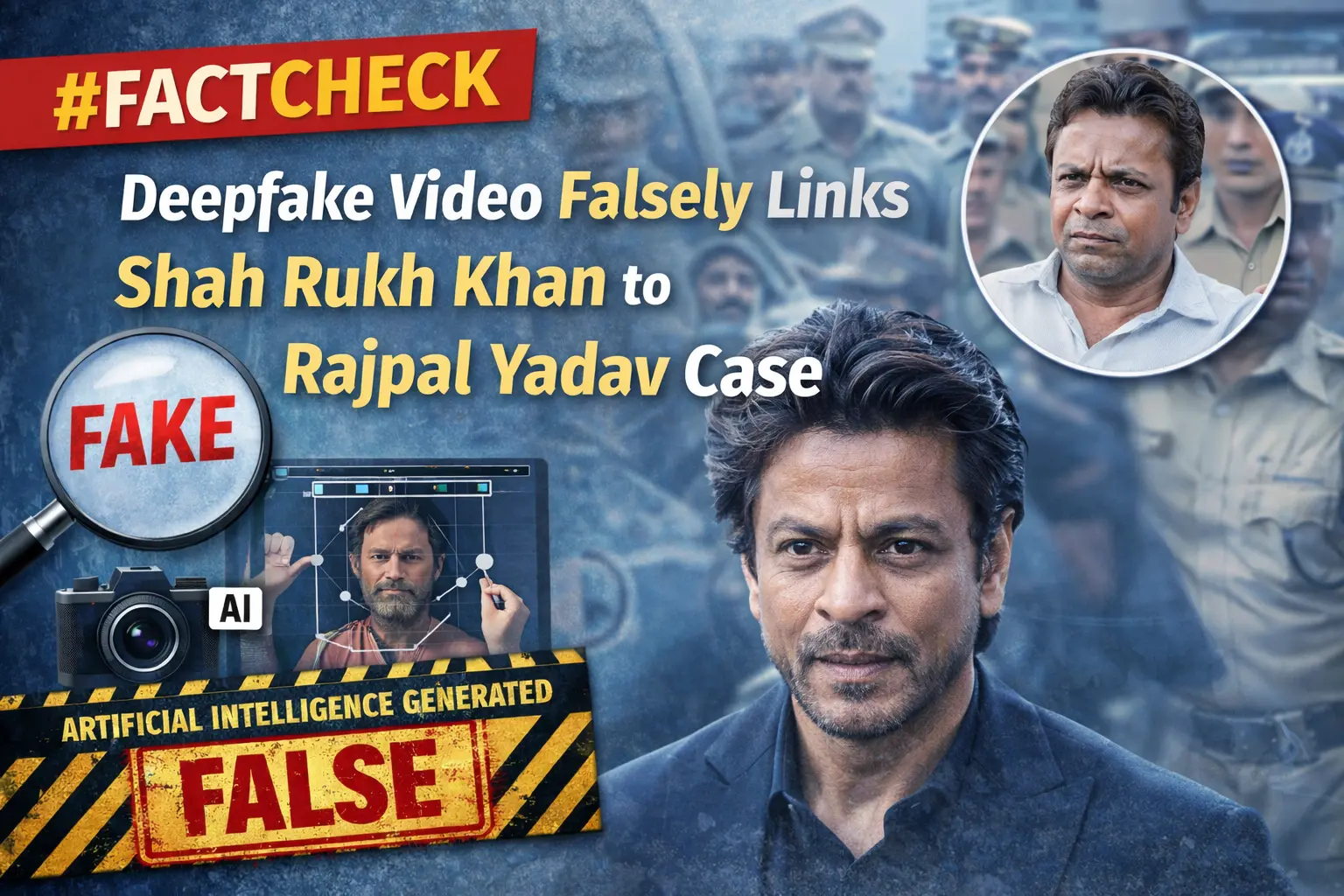
A video featuring popular comedian Rajpal Yadav has recently gone viral on social media, claiming that he is currently lodged in Tihar Jail in connection with a loan default and cheque bounce case. In connection with this, another video showing Bollywood superstar Shah Rukh Khan is being widely shared online. In the viral clip, Khan is purportedly seen saying that he would help Rajpal Yadav get out of jail and also offer him a role in his upcoming film. However, research by the CyberPeace found the viral video to be fake. The clip is a deepfake, in which the audio has been manipulated using artificial intelligence. In the original video, Shah Rukh Khan is speaking about his life and personal experiences. Although several prominent Bollywood personalities have expressed support for Rajpal Yadav, the claims made in the viral video are misleading.
Claim
An Instagram user named “ayubeditz” shared the viral video on February 11, 2026, with the caption: “Rajpal Yadav bhai, stay strong, we are all with you — Shah Rukh Khan.” The link to the post and its archived version are provided below.

Fact Check
To verify the claim, we extracted key frames from the viral video and conducted a Google reverse image search. This led us to the original video uploaded on a YouTube channel titled “Locarno Film Festival” on August 11, 2024. According to the available information, Shah Rukh Khan was sharing insights about his life and career during a conversation with the festival’s Artistic Director, Giona A. Nazzaro. This raised strong suspicion that the viral video had been edited using AI.

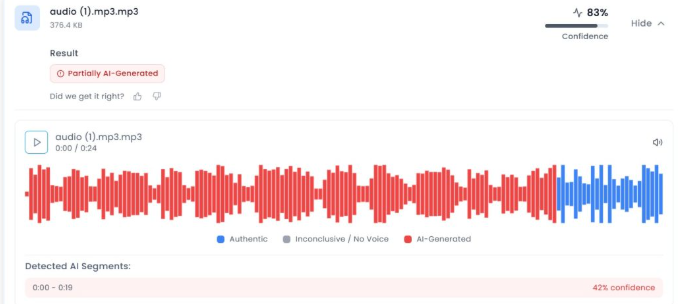
To further examine the authenticity of the audio, we analysed it using AI detection tools. The audio was first checked using Aurigin.ai, which indicated an 83 percent probability that the voice in the viral clip was AI-generated.
Conclusion
The CyberPeace’s research confirmed that the claim associated with Shah Rukh Khan’s viral video is false. The video is a deepfake in which the audio has been altered using artificial intelligence. In the original footage, Khan was discussing his life and experiences, and he did not make any statement about helping Rajpal Yadav.

Executive Summary:
Viral pictures featuring US Secret Service agents smiling while protecting former President Donald Trump during a planned attempt to kill him in Pittsburgh have been clarified as photoshopped pictures. The pictures making the rounds on social media were produced by AI-manipulated tools. The original image shows no smiling agents found on several websites. The event happened with Thomas Mathew Crooks firing bullets at Trump at an event in Butler, PA on July 13, 2024. During the incident one was deceased and two were critically injured. The Secret Service stopped the shooter, and circulating photos in which smiles were faked have stirred up suspicion. The verification of the face-manipulated image was debunked by the CyberPeace Research Team.

Claims:
Viral photos allegedly show United States Secret Service agents smiling while rushing to protect former President Donald Trump during an attempted assassination in Pittsburgh, Pennsylvania.


Fact Check:
Upon receiving the posts, we searched for any credible source that supports the claim made, we found several articles and images of the incident but in those the images were different.

This image was published by CNN news media, in this image we can see the US Secret Service protecting Donald Trump but not smiling. We then checked for AI Manipulation in the image using the AI Image Detection tool, True Media.


We then checked with another AI Image detection tool named, contentatscale AI image detection, which also found it to be AI Manipulated.

Comparison of both photos:

Hence, upon lack of credible sources and detection of AI Manipulation concluded that the image is fake and misleading.
Conclusion:
The viral photos claiming to show Secret Service agents smiling when protecting former President Donald Trump during an assassination attempt have been proven to be digitally manipulated. The original image found on CNN Media shows no agents smiling. The spread of these altered photos resulted in misinformation. The CyberPeace Research Team's investigation and comparison of the original and manipulated images confirm that the viral claims are false.
- Claim: Viral photos allegedly show United States Secret Service agents smiling while rushing to protect former President Donald Trump during an attempted assassination in Pittsburgh, Pennsylvania.
- Claimed on: X, Thread
- Fact Check: Fake & Misleading

