
The Imperative of Cyber Resilience in 2024
Introduction
As the calendar pages turn inexorably towards 2024, a question looms large on the horizon of our collective consciousness: Are we cyber-resilient? This is not a rhetorical flourish but a pragmatic inquiry, as the digital landscape we navigate is fraught with cyberattacks and disruptions that threaten to capsize our virtual vessels.
What, then, is Cyber Resilience? It is the capacity to prepare for, respond to, and recover from these cyber squalls. Picture, if you will, a venerable oak amid a howling gale. The roots, those unseen sinews, delve deep into the earth, anchoring the tree – this is preparation. The robust trunk and flexible branches, swaying yet unbroken, embody response. And the new growth that follows the storm's rage is recovery. Cyber resilience is the digital echo of this natural strength and flexibility.
The Need for Resilience
Why, you might ask, is Cyber Resilience of such paramount importance as we approach 2024? The answer lies in the stark reality of our times:
- A staggering half of businesses have been breached by cyberattacks in the past three years.
- The financial haemorrhage from these incursions is projected to exceed a mind-numbing $10 trillion by the end of 2024.
- The relentless march of technology has not only brought innovation but also escalated the arms race against cyber threats.
- Cyber resilience transcends mere cybersecurity; it is a holistic approach that weaves recovery and continuity into the fabric of digital defenses.
- The adaptability of organisations, often through measures such as remote working protocols, is a testament to the evolving strategies of cyber resilience.
- The advent of AI and Machine Learning heralds a new era of automated cyber defense, necessitating an integrated framework that marries security with continuity protocols.
- Societal awareness, particularly of social engineering tactics, and maintaining public relations during crises are now recognised as critical elements of resilience strategies.
- Cyber threats have evolved in sophistication, paralleling the intense competition to develop new AI-driven solutions.
- As we gaze towards the future, cyber resilience is expected to be a prominent trend in both business and consumer technology sectors throughout 2024.
The Virtues
The benefits of cyber resilience for organisations are manifold, offering a bulwark against the digital onslaught:
- A reduction in the risk of data breaches, safeguarding sensitive information and customer data.
- Business continuity, ensuring operations persist with minimal disruption.
- Protection of reputation, as companies that demonstrate effective cyber resilience engender trust.
- Compliance with data protection and privacy regulations, thus avoiding fines and legal entanglements.
- Financial stability, as the costs associated with breaches can be mitigated or even prevented.
- Enhanced customer trust, as clients feel more secure with companies that take cybersecurity seriously.
- A competitive advantage in a market rife with cyber threats.
- Innovation and agility, as cyber-resilient companies can pivot and adapt without fear of digital disruptions.
- Employee confidence, leading to improved morale and productivity.
- Long-term savings by sidestepping the expenses of frequent or major cyber incidents.
As the year wanes, it is a propitious moment to evaluate your organisation's cyber resilience. In this edition, we will guide you through the labyrinth of cyber investment buy-in, tailored discussions with stakeholders, and the quintessential security tools for your 2024 cybersecurity strategy.
How to be more Resilient
Cyber resilience is more than a shield; it is the preparedness to withstand and recover from a cyber onslaught. Let us explore the key steps to fortify your digital defenses:
- Know your risks: Map the terrain where you are most vulnerable, identify the treasures that could be plundered, and fortify accordingly.
- Get the technology right: Invest in solutions that not only detect threats with alacrity but also facilitate rapid recovery, all the while staying one step ahead of the cyber brigands.
- Involve your people: Embed cybersecurity awareness into the fabric of every role. Train your crew in the art of recognising and repelling digital dangers.
- Test your strategies: Regularly simulate incidents to stress-test your policies and procedures, honing your ability to contain and neutralise threats.
- Plan for the worst: Develop a playbook so that everyone knows their part in the grand scheme of damage control and communication in the event of a breach.
- Continually review: The digital seas are ever-changing; adjust your sails accordingly. Cyber resilience is not a one-time endeavour but a perpetual commitment.
Conclusion
As we stand on the precipice of 2024, let us not be daunted by the digital storms that rage on the horizon. Instead, let us embrace the imperative of cyber resilience, for it is our steadfast companion in navigating the treacherous waters of the cyber world. Civil Society Organizations such as ‘CyberPeace Foundation’ playing a crucial role in promoting cyber resilience by bridging the gap between the public and cybersecurity complexities, conducting awareness campaigns, and advocating for robust policies to safeguard collective digital interests. Their active role is imperative in fostering a culture of cyber hygiene and vigilance.
References
- https://www.loginradius.com/blog/identity/cybersecurity-trends-2024/
- https://ciso.economictimes.indiatimes.com/news/ciso-strategies/cisos-guide-to-2024-top-10-cybersecurity-trends/106293196

Related Blogs
Executive Summary
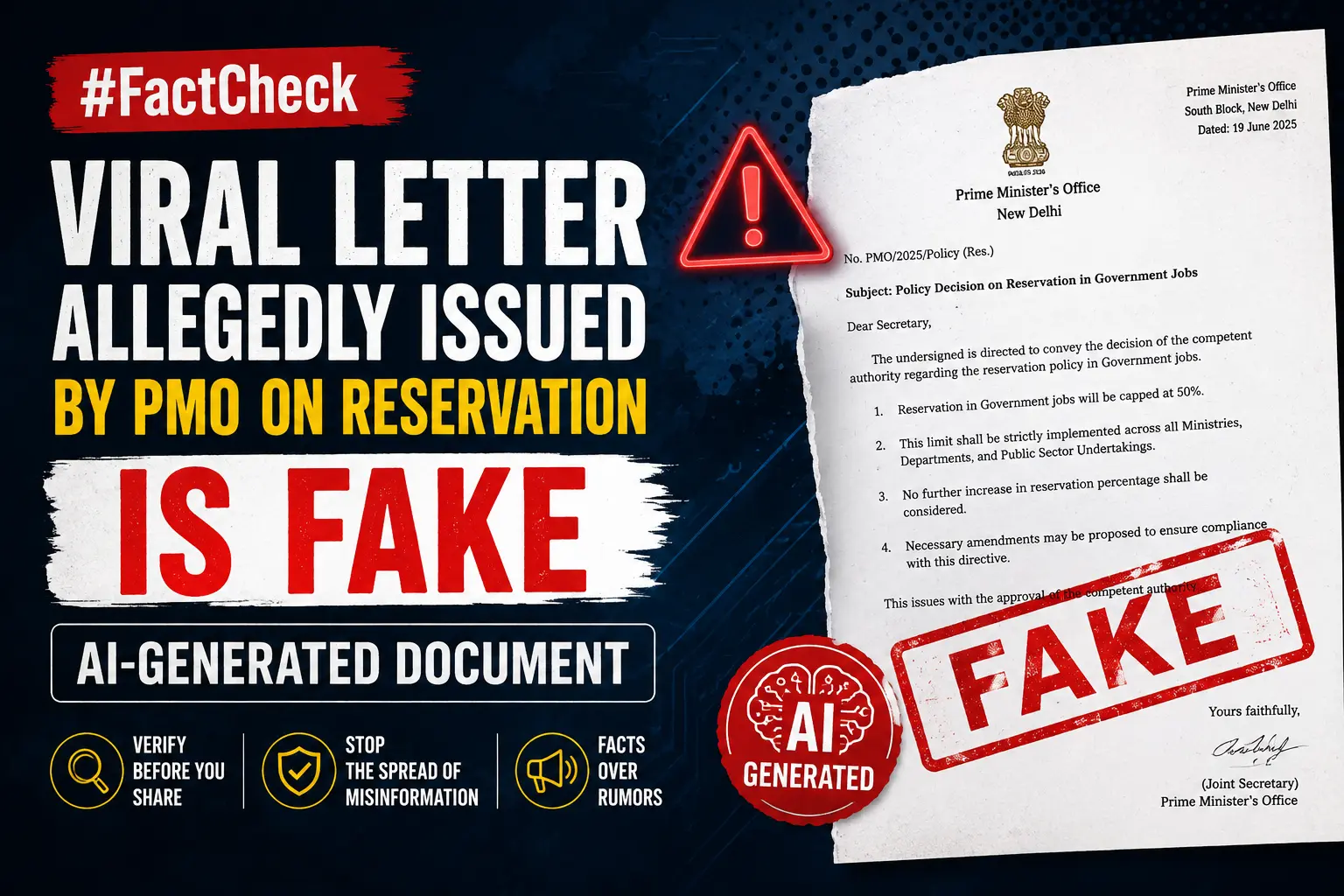
A purported letter issued in the name of the Prime Minister’s Office (PMO) is being widely shared on social media. The letter claims that the government has not made any changes to the reservation system regarding the “Remove Reservation Movement” and appeals to people not to pay attention to rumours. The viral letter is dated July 27, 2026, and also carries what appear to be Prime Minister Narendra Modi’s signatures in both Hindi and English.
CyberPeace Research Wing’s research found the viral claim to be false. The research revealed that the Prime Minister’s Office (PMO) has neither issued any official statement regarding reservation nor released any such letter. No credible media reports related to the alleged letter were found. The research further revealed that the purported reservation-related letter circulating on social media was a fake document created with the help of AI.
Claim:
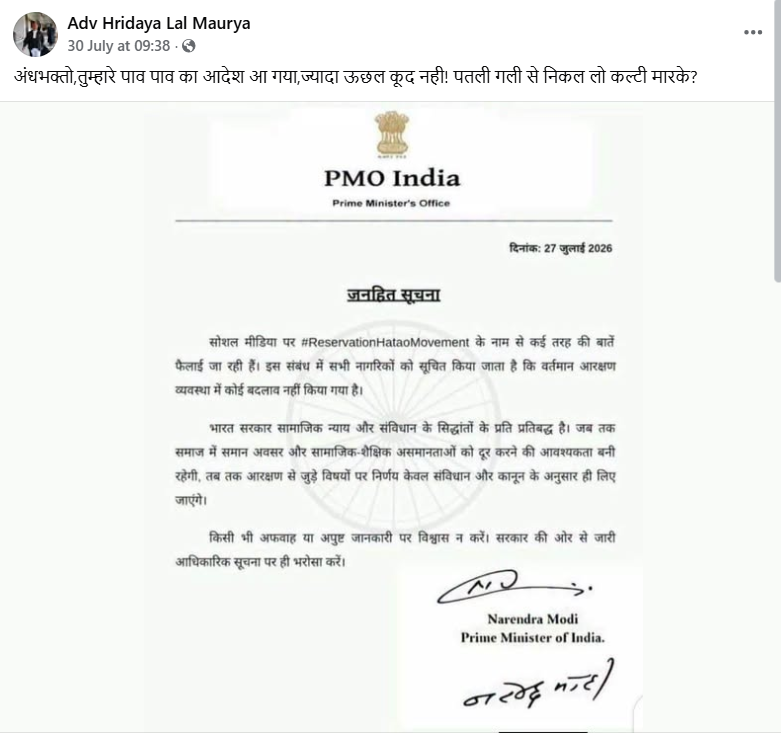
A Facebook user shared the alleged letter issued in the name of the Prime Minister’s Office on July 30, 2026, claiming that the government has not made any changes to the reservation system in connection with the “Remove Reservation Movement” and appealed to citizens not to believe rumours. The viral letter bears the date July 27, 2026, and displays signatures of Prime Minister Narendra Modi in both Hindi and English. The archived link and screenshot of the post are provided below:
https://www.facebook.com/share/p/1b9nD5k3As/
Factcheck
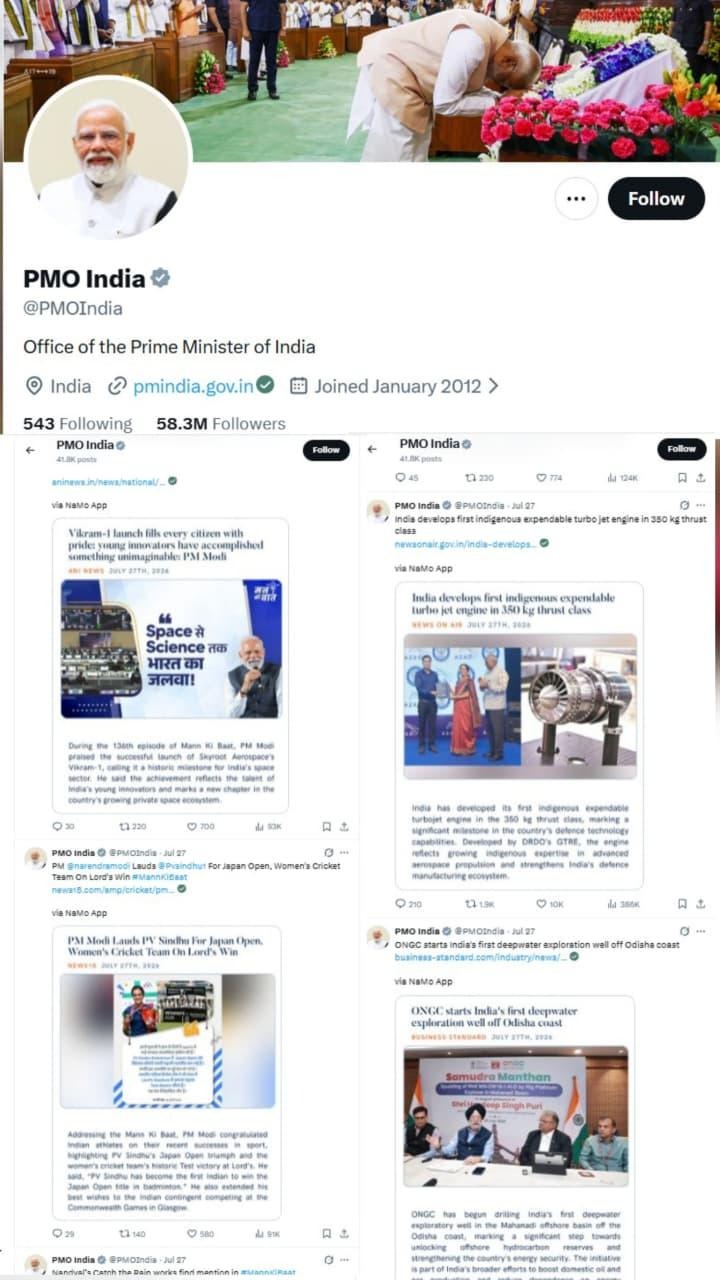
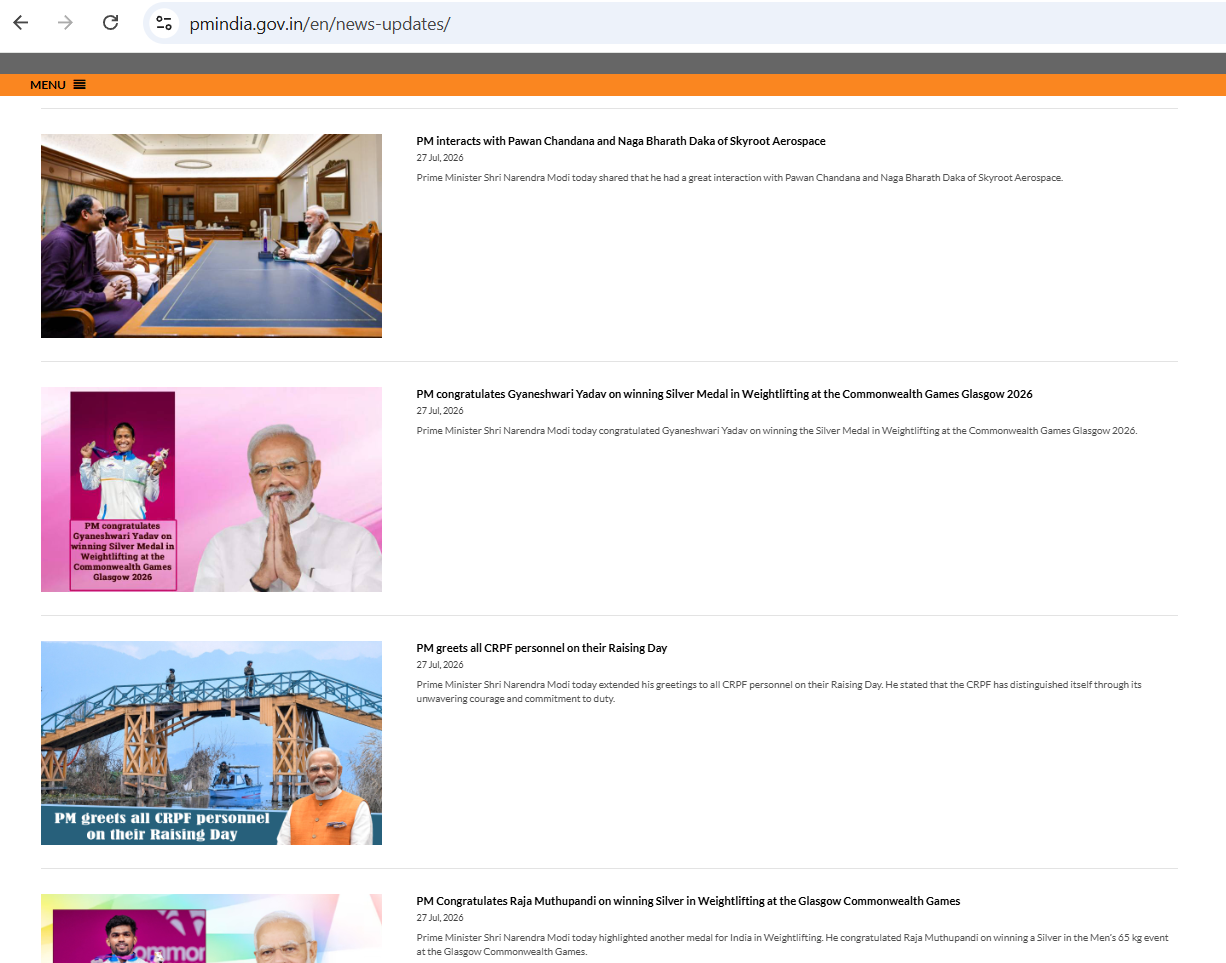
To verify the authenticity of the viral claim, we conducted a Google search using relevant keywords. However, no credible media reports related to the alleged letter were found. During the next stage of the research, we scanned the official X account (formerly Twitter) of PMO India. We did not find any such letter posted on July 27 or around that date. Continuing the research, we checked the official website of PMO India. No such letter was found in the news updates section or anywhere else on the website that could confirm the viral claim.
Further, we reviewed the press releases issued by the Prime Minister’s Office on July 27 available on the official website of the Press Information Bureau (PIB). We found no press release or official communication related to reservation or matching the viral letter.
https://www.pmindia.gov.in/en/
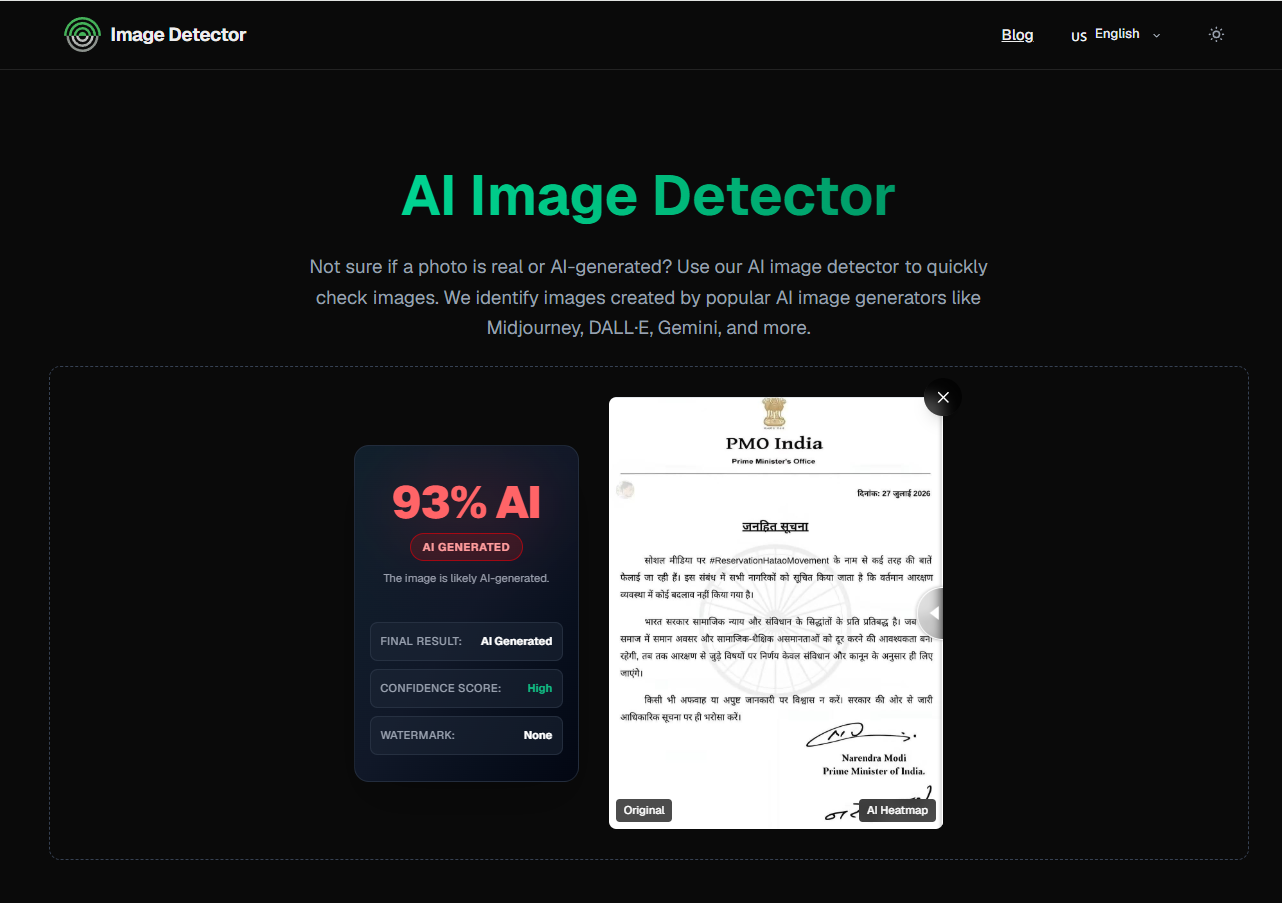
As part of the research, we scanned the viral letter using the AI detection tool Image Detector. The results indicated that the document was 93 percent likely to be AI-generated.
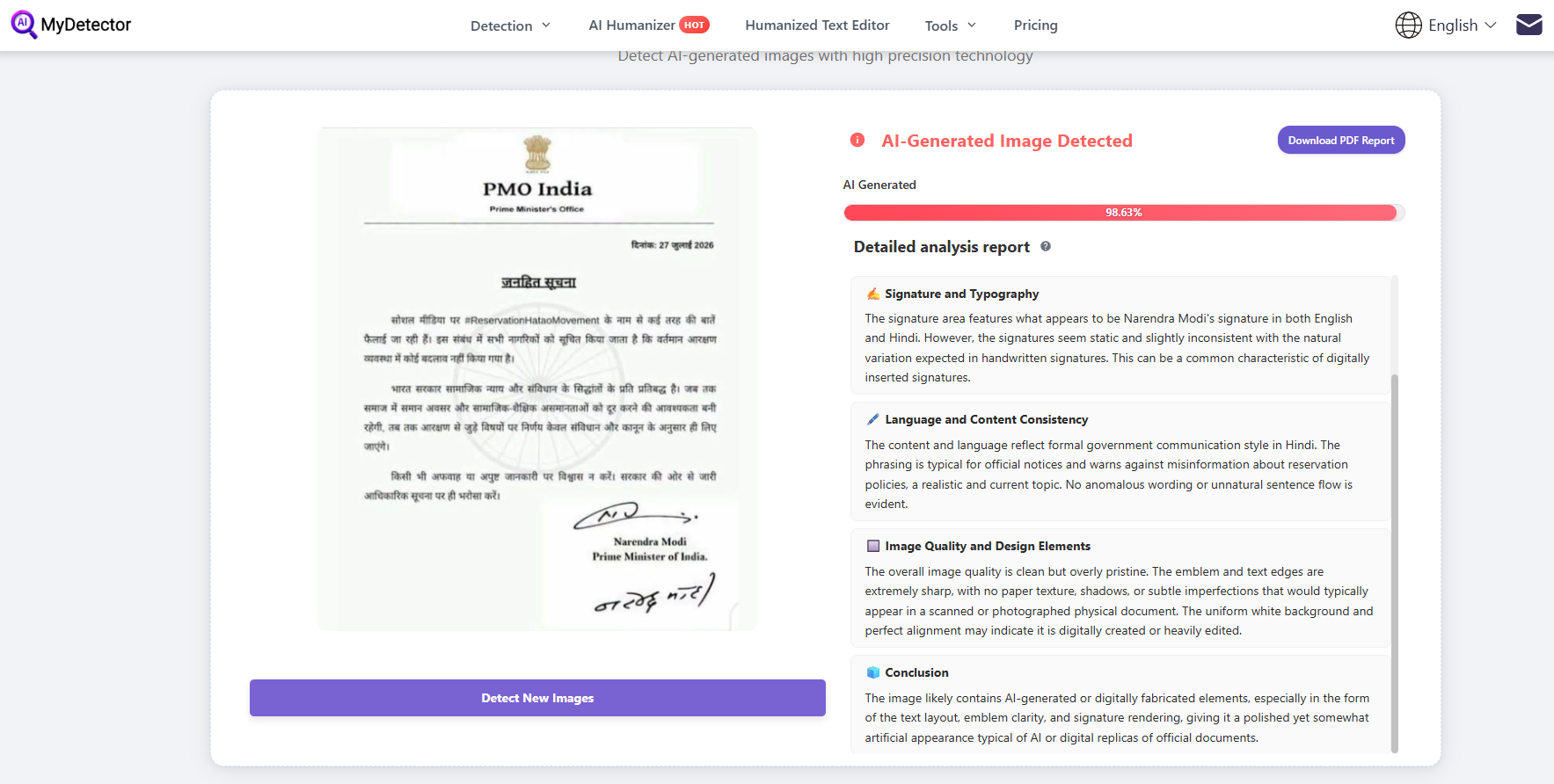
We also analysed the viral letter using another AI detection tool, My Detector. The results showed a 98 percent probability that the letter was created using AI.
Conclusion:
Our research found no official evidence confirming that the Prime Minister’s Office issued the viral letter. The purported PMO letter regarding reservation was found to be fake and AI-generated.
Most laws regulate what people do. This one regulates what clock everyone is doing it by, and once you sit with that idea for a moment, it stops sounding like a bureaucratic footnote and starts sounding like something genuinely foundational.
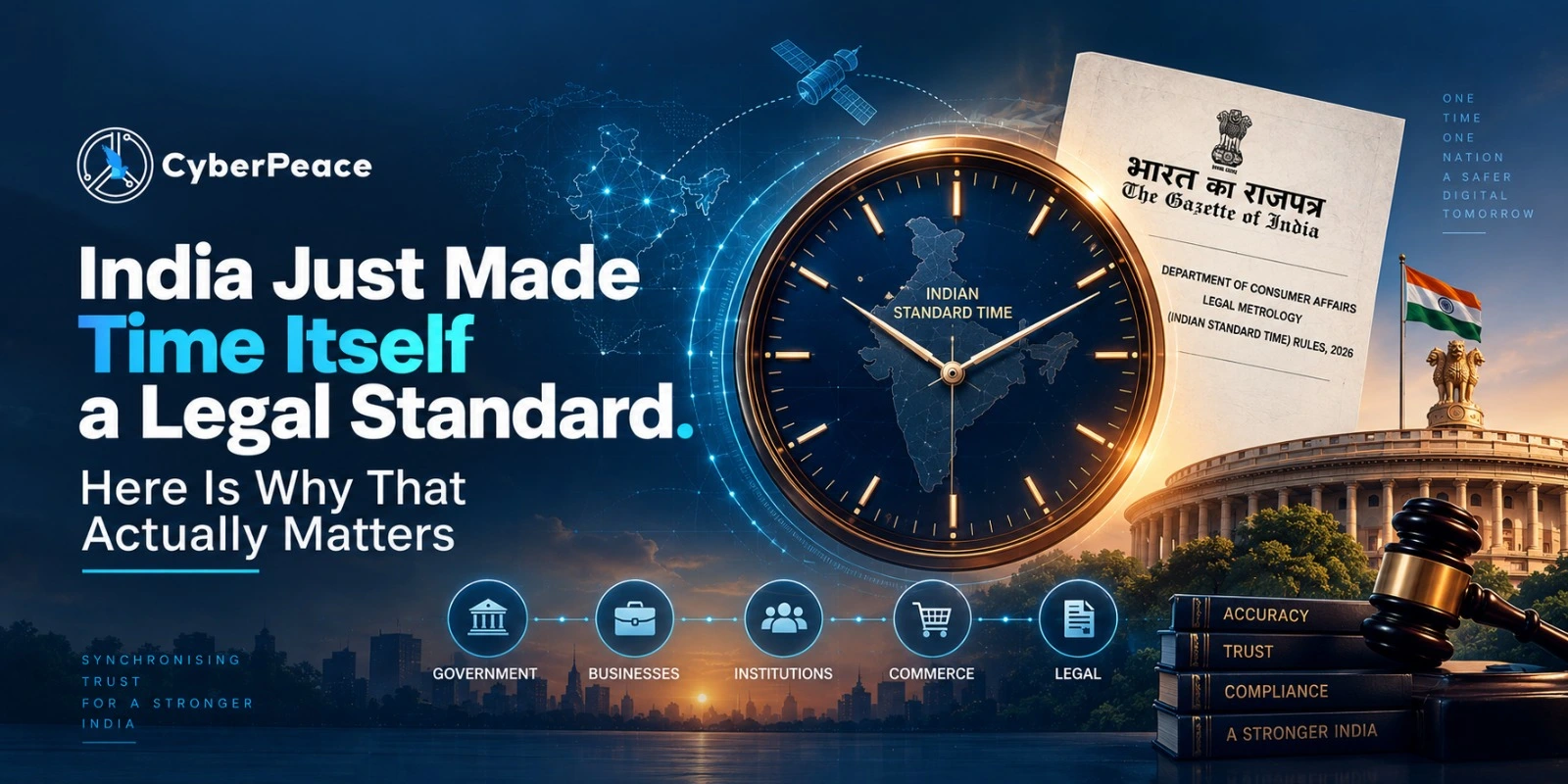
On 27 August 2026, India's Department of Consumer Affairs notified the Legal Metrology (Indian Standard Time) Rules, 2026, making Indian Standard Time the single legally binding reference for every legal, administrative, commercial, and official purpose across the country. The Rules will come into force 180 days after their publication in the Official Gazette, giving government departments, businesses, and institutions a compliance runway to align their systems before the requirement actually bites.
Why time needed a law at all
It might seem strange that a country needs legislation to tell everyone what time it is. India has used IST, a single time zone five and a half hours ahead of Coordinated Universal Time, since 1947. But using a time zone informally and legally mandating it as the sole authoritative reference for every official and commercial transaction are two very different things, and the gap between them is exactly where this rule lives.
The government's own reasoning, laid out in its official statement, centres on a shift most people experience daily without ever thinking about its plumbing. Banking and digital payments, telecommunications networks, railways, power grids, and government record systems all depend on accurate, synchronised time stamps to function correctly. When different systems quietly draw their time from different sources, even by fractions of a second, the resulting inconsistencies can affect the coordination and recording of transactions in ways that are invisible until something goes wrong. A trade executed on a stock exchange, a UPI payment cleared between banks, a railway signal handoff between two junctions, and an emergency service dispatch all depend on every clock in the chain agreeing with every other clock, and until now, India had no single rule compelling that agreement.
The quieter, more interesting part of the rule
Buried inside the announcement is a detail that matters more than the headline. The Rules do not simply declare IST the law of the land; they also authorise the use of NavIC, India's own satellite navigation system, alongside other approved domestic timing sources, as legitimate means of disseminating that time. The government's stated rationale is candid about the current state of affairs: several critical Indian systems presently draw their time from foreign satellite based sources, and building domestic timing infrastructure through NavIC and legal metrology laboratories is intended to reduce that dependence going forward.
That single sentence carries real weight once you consider how global positioning and timing systems actually work. Most of the world's precise digital time synchronisation ultimately traces back to GPS, the American satellite constellation, whose signals also happen to be notoriously easy to disrupt. GPS and other satellite navigation signals arrive at receivers on Earth as extremely weak radio transmissions, weak enough that they can be jammed with cheap equipment or spoofed, meaning an attacker broadcasts a counterfeit signal that mimics a legitimate one closely enough to fool a receiver into accepting false position or timing data. Researchers and government reports going back years have flagged that a large share of critical infrastructure sectors, power grids, financial markets, telecommunications, and transport among them, carry meaningful dependence on GPS derived timing, and a 2017 UK government assessment specifically warned that systematic satellite signal jamming could cause serious disruption to a country's financial, electricity, and communications systems all at once. Cybersecurity researchers have separately demonstrated proof of concept attacks where a deliberately falsified timing signal, rather than a falsified position, was enough to destabilise systems that assumed their clock could always be trusted.
Seen against that backdrop, embedding NavIC as an approved domestic timing source inside a legal metrology framework is not merely a nationalistic footnote about self reliance. It is a genuine resilience decision. A country that can generate, verify, and distribute its own trusted time signal, independent of a foreign satellite constellation that it does not control and cannot secure on its own, has a meaningfully smaller attack surface for an entire category of infrastructure disruption that rarely makes headlines until it actually happens.
Who actually built this, and why that composition matters
The drafting process itself offers a useful clue about how seriously this was treated. Reports on the rule making process indicate the Rules were shaped by a high powered inter ministerial committee chaired by the Secretary of Consumer Affairs, with representation from the National Physical Laboratory and the Indian Space Research Organisation for the underlying science and satellites, IIT Kanpur for engineering expertise, the National Informatics Centre and CERT In for network infrastructure and its security, the Securities and Exchange Board of India for financial market implications, and the Railways, Telecom, and Financial Services departments for the systems that will actually have to run on this new standard day to day. That is not a committee assembled around a single ministry's convenience; it is a committee assembled around the actual shape of the problem, spanning physics, engineering, finance, and network security together. As part of the broader One Nation, One Time initiative, a White Rabbit Technology based IST Dissemination Demonstration Network was already commissioned at the Regional Reference Standard Laboratory in Bengaluru back in July 2026, suggesting the infrastructure groundwork was underway well before the legal framework caught up to it.
What the 180 day window actually means in practice
It is worth being precise about what compliance actually requires here. This is not a deadline demanding new hardware overnight; for most organisations, it means auditing which internal systems currently reference time from an unverified or foreign source and ensuring they align with certified IST going forward, alongside institutions preparing to receive that certified time through the domestic infrastructure the government is simultaneously building out. The six month runway exists precisely because this touches an unusually wide spread of sectors at once, and forcing an abrupt cutover would create more operational risk than the rule is designed to remove.
The bigger picture
A rule about what time it is legally does not sound like cybersecurity news, and on the surface, it is not. But underneath the administrative language sits a genuinely forward looking recognition: as more of daily life, banking, communication, transport, and governance runs on systems that must agree, down to the second, on a shared reference point, the integrity of that reference point becomes critical infrastructure in its own right. India choosing to build, verify, and legally anchor its own trusted time source, rather than continuing to quietly rely on a foreign satellite system it cannot secure independently, is less about symbolism and more about closing a vulnerability most people never knew existed until they were asked to think about it.
References
- OpenGov Asia, "India Issues Rules to Standardise National Time Reference Systems." https://opengovasia.com/india-issues-rules-to-standardise-national-time-reference-systems/?c=us
- Daily Excelsior, "Centre notifies rules mandating IST as common time reference; 180 day window for compliance." https://www.dailyexcelsior.com/centre-notifies-rules-mandating-ist-as-common-time-reference-180-day-window-for-compliance/
- Greater Kashmir, "Department of Consumer Affairs notifies Legal Metrology Rules, 2026." https://www.greaterkashmir.com/national/department-of-consumer-affairs-notifies-legal-metrology-rules-2026-12454447
- Insights on India, "Legal Metrology (Indian Standard Time) Rules, 2026." https://www.insightsonindia.com/2026/08/31/legal-metrology-indian-standard-time-rules-2026/
- Blitz India Media, "Indian Standard Time Rules 2026: NavIC, Legal Metrology." https://blitzindiamedia.com/news/indian-standard-time-rules-2026-navic-legal-metrology/
- Observer Voice, "India Establishes Legal Framework for Standard Time." https://observervoice.com/india-establishes-legal-framework-for-standard-time-225958/
- The Live Nagpur, "Govt notifies rules to make IST the common time reference." https://thelivenagpur.com/2026/08/31/govt-notifies-rules-to-make-ist-the-common-time-reference/
- Safran Navigation and Timing, "GNSS Security and Cybersecurity: What are the Parallels?" https://safran-navigation-timing.com/gnss-security-and-cybersecurity-what-are-the-parallels/
- Safran Navigation and Timing, "Securing Critical Infrastructures from Jamming and Spoofing Cyberattacks." https://safran-navigation-timing.com/securing-critical-infrastructures-from-jamming-and-spoofing-cyberattacks/
- Combain, "The Silent Threat In The Sky: GPS Jamming, GPS Spoofing." https://combain.com/gps-jamming-spoofing/

Overview:
The rapid digitization of educational institutions in India has created both opportunities and challenges. While technology has improved access to education and administrative efficiency, it has also exposed institutions to significant cyber threats. This report, published by CyberPeace, examines the types, causes, impacts, and preventive measures related to cyber risks in Indian educational institutions. It highlights global best practices, national strategies, and actionable recommendations to mitigate these threats.

Significance of the Study:
The pandemic-induced shift to online learning, combined with limited cybersecurity budgets, has made educational institutions prime targets for cyberattacks. These threats compromise sensitive student, faculty, and institutional data, leading to operational disruptions, financial losses, and reputational damage. Globally, educational institutions face similar challenges, emphasizing the need for universal and localized responses.
Threat Faced by Education Institutions:
Based on the insights from the CyberPeace’s report titled 'Exploring Cyber Threats and Digital Risks in Indian Educational Institutions', this concise blog provides a comprehensive overview of cybersecurity threats and risks faced by educational institutions, along with essential details to address these challenges.
🎣 Phishing: Phishing is a social engineering tactic where cyber criminals impersonate trusted sources to steal sensitive information, such as login credentials and financial details. It often involves deceptive emails or messages that lead to counterfeit websites, pressuring victims to provide information quickly. Variants include spear phishing, smishing, and vishing.
💰 Ransomware: Ransomware is malware that locks users out of their systems or data until a ransom is paid. It spreads through phishing emails, malvertising, and exploiting vulnerabilities, causing downtime, data leaks, and theft. Ransom demands can range from hundreds to hundreds of thousands of dollars.
🌐 Distributed Denial of Service (DDoS): DDoS attacks overwhelm servers, denying users access to websites and disrupting daily operations, which can hinder students and teachers from accessing learning resources or submitting assignments. These attacks are relatively easy to execute, especially against poorly protected networks, and can be carried out by amateur cybercriminals, including students or staff, seeking to cause disruptions for various reasons
🕵️ Cyber Espionage: Higher education institutions, particularly research-focused universities, are vulnerable to spyware, insider threats, and cyber espionage. Spyware is unauthorized software that collects sensitive information or damages devices. Insider threats arise from negligent or malicious individuals, such as staff or vendors, who misuse their access to steal intellectual property or cause data leaks..
🔒 Data Theft: Data theft is a major threat to educational institutions, which store valuable personal and research information. Cybercriminals may sell this data or use it for extortion, while stealing university research can provide unfair competitive advantages. These attacks can go undetected for long periods, as seen in the University of California, Berkeley breach, where hackers allegedly stole 160,000 medical records over several months.
🛠️ SQL Injection: SQL injection (SQLI) is an attack that uses malicious code to manipulate backend databases, granting unauthorized access to sensitive information like customer details. Successful SQLI attacks can result in data deletion, unauthorized viewing of user lists, or administrative access to the database.
🔍Eavesdropping attack: An eavesdropping breach, or sniffing, is a network attack where cybercriminals steal information from unsecured transmissions between devices. These attacks are hard to detect since they don't cause abnormal data activity. Attackers often use network monitors, like sniffers, to intercept data during transmission.
🤖 AI-Powered Attacks: AI enhances cyber attacks like identity theft, password cracking, and denial-of-service attacks, making them more powerful, efficient, and automated. It can be used to inflict harm, steal information, cause emotional distress, disrupt organizations, and even threaten national security by shutting down services or cutting power to entire regions
Insights from Project eKawach
The CyberPeace Research Wing, in collaboration with SAKEC CyberPeace Center of Excellence (CCoE) and Autobot Infosec Private Limited, conducted a study simulating educational institutions' networks to gather intelligence on cyber threats. As part of the e-Kawach project, a nationwide initiative to strengthen cybersecurity, threat intelligence sensors were deployed to monitor internet traffic and analyze real-time cyber attacks from July 2023 to April 2024, revealing critical insights into the evolving cyber threat landscape.
Cyber Attack Trends
Between July 2023 and April 2024, the e-Kawach network recorded 217,886 cyberattacks from IP addresses worldwide, with a significant portion originating from countries including the United States, China, Germany, South Korea, Brazil, Netherlands, Russia, France, Vietnam, India, Singapore, and Hong Kong. However, attributing these attacks to specific nations or actors is complex, as threat actors often use techniques like exploiting resources from other countries, or employing VPNs and proxies to obscure their true locations, making it difficult to pinpoint the real origin of the attacks.
Brute Force Attack:
The analysis uncovered an extensive use of automated tools in brute force attacks, with 8,337 unique usernames and 54,784 unique passwords identified. Among these, the most frequently targeted username was “root,” which accounted for over 200,000 attempts. Other commonly targeted usernames included: "admin", "test", "user", "oracle", "ubuntu", "guest", "ftpuser", "pi", "support"
Similarly, the study identified several weak passwords commonly targeted by attackers. “123456” was attempted over 3,500 times, followed by “password” with over 2,500 attempts. Other frequently targeted passwords included: "1234", "12345", "12345678", "admin", "123", "root", "test", "raspberry", "admin123", "123456789"

Insights from Threat Landscape Analysis
Research done by the USI - CyberPeace Centre of Excellence (CCoE) and Resecurity has uncovered several breached databases belonging to public, private, and government universities in India, highlighting significant cybersecurity threats in the education sector. The research aims to identify and mitigate cybersecurity risks without harming individuals or assigning blame, based on data available at the time, which may evolve with new information. Institutions were assigned risk ratings that descend from A to F, with most falling under a D rating, indicating numerous security vulnerabilities. Institutions rated D or F are 5.4 times more likely to experience data breaches compared to those rated A or B. Immediate action is recommended to address the identified risks.


Risk Findings :
The risk findings for the institutions are summarized through a pie chart, highlighting factors such as data breaches, dark web activity, botnet activity, and phishing/domain squatting. Data breaches and botnet activity are significantly higher compared to dark web leakages and phishing/domain squatting. The findings show 393,518 instances of data breaches, 339,442 instances of botnet activity, 7,926 instances related to the dark web and phishing & domain activity - 6711.

Key Indicators: Multiple instances of data breaches containing credentials (email/passwords) in plain text.


- Botnet activity indicating network hosts compromised by malware.

- Credentials from third-party government and non-governmental websites linked to official institutional emails

- Details of software applications, drivers installed on compromised hosts.

- Sensitive cookie data exfiltrated from various browsers.


- IP addresses of compromised systems.
- Login credentials for different Android applications.

Below is the sample detail of one of the top educational institutions that provides the insights about the higher rate of data breaches, botnet activity, dark web activities and phishing & domain squatting.
Risk Detection:
It indicates the number of data breaches, network hygiene, dark web activities, botnet activities, cloud security, phishing & domain squatting, media monitoring and miscellaneous risks. In the below example, we are able to see the highest number of data breaches and botnet activities in the sample particular domain.

Risk Changes:

Risk by Categories:

Risk is categorized with factors such as high, medium and low, the risk is at high level for data breaches and botnet activities.

Challenges Faced by Educational Institutions
Educational institutions face cyberattack risks, the challenges leading to cyberattack incidents in educational institutions are as follows:
🔒 Lack of a Security Framework: A key challenge in cybersecurity for educational institutions is the lack of a dedicated framework for higher education. Existing frameworks like ISO 27001, NIST, COBIT, and ITIL are designed for commercial organizations and are often difficult and costly to implement. Consequently, many educational institutions in India do not have a clearly defined cybersecurity framework.
🔑 Diverse User Accounts: Educational institutions manage numerous accounts for staff, students, alumni, and third-party contractors, with high user turnover. The continuous influx of new users makes maintaining account security a challenge, requiring effective systems and comprehensive security training for all users.
📚 Limited Awareness: Cybersecurity awareness among students, parents, teachers, and staff in educational institutions is limited due to the recent and rapid integration of technology. The surge in tech use, accelerated by the pandemic, has outpaced stakeholders' ability to address cybersecurity issues, leaving them unprepared to manage or train others on these challenges.
📱 Increased Use of Personal/Shared Devices: The growing reliance on unvetted personal/Shared devices for academic and administrative activities amplifies security risks.
💬 Lack of Incident Reporting: Educational institutions often neglect reporting cyber incidents, increasing vulnerability to future attacks. It is essential to report all cases, from minor to severe, to strengthen cybersecurity and institutional resilience.
Impact of Cybersecurity Attacks on Educational Institutions
Cybersecurity attacks on educational institutions lead to learning disruptions, financial losses, and data breaches. They also harm the institution's reputation and pose security risks to students. The following are the impacts of cybersecurity attacks on educational institutions:
📚Impact on the Learning Process: A report by the US Government Accountability Office (GAO) found that cyberattacks on school districts resulted in learning losses ranging from three days to three weeks, with recovery times taking between two to nine months.
💸Financial Loss: US schools reported financial losses ranging from $50,000 to $1 million due to expenses like hardware replacement and cybersecurity upgrades, with recovery taking an average of 2 to 9 months.
🔒Data Security Breaches: Cyberattacks exposed sensitive data, including grades, social security numbers, and bullying reports. Accidental breaches were often caused by staff, accounting for 21 out of 25 cases, while intentional breaches by students, comprising 27 out of 52 cases, frequently involved tampering with grades.
⚠️Data Security Breach: Cyberattacks on schools result in breaches of personal information, including grades and social security numbers, causing emotional, physical, and financial harm. These breaches can be intentional or accidental, with a US study showing staff responsible for most accidental breaches (21 out of 25) and students primarily behind intentional breaches (27 out of 52) to change grades.
🏫Impact on Institutional Reputation: Cyberattacks damaged the reputation of educational institutions, eroding trust among students, staff, and families. Negative media coverage and scrutiny impacted staff retention, student admissions, and overall credibility.
🛡️ Impact on Student Safety: Cyberattacks compromised student safety and privacy. For example, breaches like live-streaming school CCTV footage caused severe distress, negatively impacting students' sense of security and mental well-being.
CyberPeace Advisory:
CyberPeace emphasizes the importance of vigilance and proactive measures to address cybersecurity risks:
- Develop effective incident response plans: Establish a clear and structured plan to quickly identify, respond to, and recover from cyber threats. Ensure that staff are well-trained and know their roles during an attack to minimize disruption and prevent further damage.
- Implement access controls with role-based permissions: Restrict access to sensitive information based on individual roles within the institution. This ensures that only authorized personnel can access certain data, reducing the risk of unauthorized access or data breaches.
- Regularly update software and conduct cybersecurity training: Keep all software and systems up-to-date with the latest security patches to close vulnerabilities. Provide ongoing cybersecurity awareness training for students and staff to equip them with the knowledge to prevent attacks, such as phishing.
- Ensure regular and secure backups of critical data: Perform regular backups of essential data and store them securely in case of cyber incidents like ransomware. This ensures that, if data is compromised, it can be restored quickly, minimizing downtime.
- Adopt multi-factor authentication (MFA): Enforce Multi-Factor Authentication(MFA) for accessing sensitive systems or information to strengthen security. MFA adds an extra layer of protection by requiring users to verify their identity through more than one method, such as a password and a one-time code.
- Deploy anti-malware tools: Use advanced anti-malware software to detect, block, and remove malicious programs. This helps protect institutional systems from viruses, ransomware, and other forms of malware that can compromise data security.
- Monitor networks using intrusion detection systems (IDS): Implement IDS to monitor network traffic and detect suspicious activity. By identifying threats in real time, institutions can respond quickly to prevent breaches and minimize potential damage.
- Conduct penetration testing: Regularly conduct penetration testing to simulate cyberattacks and assess the security of institutional networks. This proactive approach helps identify vulnerabilities before they can be exploited by actual attackers.
- Collaborate with cybersecurity firms: Partner with cybersecurity experts to benefit from specialized knowledge and advanced security solutions. Collaboration provides access to the latest technologies, threat intelligence, and best practices to enhance the institution's overall cybersecurity posture.
- Share best practices across institutions: Create forums for collaboration among educational institutions to exchange knowledge and strategies for cybersecurity. Sharing successful practices helps build a collective defense against common threats and improves security across the education sector.
Conclusion:
The increasing cyber threats to Indian educational institutions demand immediate attention and action. With vulnerabilities like data breaches, botnet activities, and outdated infrastructure, institutions must prioritize effective cybersecurity measures. By adopting proactive strategies such as regular software updates, multi-factor authentication, and incident response plans, educational institutions can mitigate risks and safeguard sensitive data. Collaborative efforts, awareness, and investment in cybersecurity will be essential to creating a secure digital environment for academia.
