The rise in start-up culture, increasing investments, and technological breakthroughs are being encouraged alongside innovations and the incorporation of generative Artificial Intelligence elements. Witnessing the growing focus on human-centred AI, its potential to transform industries like education remains undeniable. Enhancing experiences and inculcating new ways of learning, there is much to be explored. Recently, a Delhi-based non-profit called Rocket Learning, in collaboration with Google.org, launched Appu- a personalised AI educational tool providing a multilingual and conversational learning experience for kids between 3 and 6.
AI Appu
Developed in 6 months, along with the help of dedicated Google.org fellows, interactive Appu has resonated with those the founders call “super-users,” i.e. parents and caregivers. Instead of redirecting students to standard content and instructional videos, it operates on the idea of conversational learning, one equally important for children in the targeted age bracket. Designed in the form of an elephant, Appu is supposed to be a personalised tutor, helping both children and parents understand concepts through dialogue. AI enables the generation of different explanations in case of doubt, aiding in understanding. If children were to answer in mixed languages instead of one complete sentence in a single language (eg, Hindi and English), the AI would still consider it as a response. The AI lessons are two minutes long and are inculcated with real-world examples. The emphasis on interactive and fun learning of concepts through innovation enhances the learning experience. Currently only available in Hindi, it is being worked on to include 20 other languages such as Punjabi and Marathi.
UNESCO, AI, and Education
It is important to note that such innovations also find encouragement in UNESCO’s mandate as AI in education contributes to achieving the 2030 Agenda of Sustainable Development Goals (here; SDG 4- focusing on quality education). Within the ambit of the Beijing Consensus held in 2019, UNESCO encourages a human-centred approach to AI, and has also developed the “Artificial Intelligence and Education: Guidance for Policymakers” aiming towards understanding its potential and opportunities in education as well as the core competencies it needs to work on. Another publication was launched during one of the flagship events of UNESCO- (Digital Learning Week, 2024) - AI competency frameworks for both, students and teachers which provide a roadmap for assessing the potential and risks of AI, each covering common aspects such as AI ethics, and human-centred mindset and even certain distinct options such as AI system design for students and AI pedagogy for teachers.
Potential Challenges
While AI holds immense promise in education, innovation with regard to learning is contentious as several risks must be carefully managed. Depending on the innovation, AI’s struggle with multitasking beyond the classroom, such as administrative duties and tedious grading, which require highly detailed role descriptions could prove to be a challenge. This can become exhausting for developers managing innovative AI systems, as they would have to fit various responses owing to the inherent nature of AI needing to be trained to produce output. Security concerns are another major issue, as data breaches could compromise sensitive student information. Implementation costs also present challenges, as access to AI-driven tools depends on financial resources. Furthermore, AI-driven personalised learning, while beneficial, may inadvertently reduce student motivation, also compromising students' soft skills, such as teamwork and communication, which are crucial for real-world success. These risks highlight the need for a balanced approach to AI integration in education.
Conclusion
Innovations related to education, especially the ones that focus on a human-centred AI approach, have immense potential in not only enhancing learning experiences but also reshaping how knowledge is accessed, understood, and applied. Untapped potential using other services is also encouraged in this sector. However, maintaining a balance between fostering intrigue and ensuring the inculcation of ethical and secure AI remains imperative.
A 57-second video featuring India’s Chief of Army Staff Upendra Dwivedi is widely circulating on social media. The clip is being shared with the claim that the Army chief admitted India had “betrayed” Iran by providing the location of an Iranian naval ship to Israel, allegedly leading to its destruction The video is spreading amid heightened tensions in West Asia involving United States, Israel, and Iran. According to posts sharing the claim, the Iranian naval vessel IRIS Dena, which had participated in a naval event in Visakhapatnam and was returning to Iran with around 130 personnel onboard, was torpedoed by a US submarine near the southern coast of Sri Lanka on March 4 while sailing in the Indian Ocean.
In the viral clip, the speaker—presented as the Indian Army chief—appears to say that India informed Israel about the exact location of the Iranian ship after it left Indian waters, describing Israel as a strategic ally and suggesting that the attack occurred in international waters. The clip also claims that India had no direct involvement in the alleged joint US-Israel torpedo strike.
However, research conducted by the CyberPeace found the claim to be false. Our research shows that the video does not contain a genuine statement from Army Chief Upendra Dwivedi and is in fact a manipulated clip.
Claim
On X (formerly Twitter), a page named GPX (@GPX_Press) shared the video on March 9 with the caption: “India confesses it BETRAYED Iran by leaking the location of an Iranian ship to Israel, leading to its total destruction!”
During the verification process, researchers noticed a ticker in the viral video reading “Raisina Dialogue 2026 × Firstpost.” Using this clue, we conducted a keyword search on YouTube and located a video uploaded by Firstpost on March 7 titled “India’s Army Chief Speaks on Op Sindoor, Pakistan and Future of Warfare | Raisina Dialogue 2026.”
In the 21-minute interview, Army Chief Upendra Dwivedi is seen speaking with strategic affairs expert Harsh V. Pant. According to the video description, the discussion focuses on lessons from Operation Sindoor and the evolving nature of modern warfare.
The viral clip appears to be taken from this interview. However, throughout the conversation, Dwivedi does not mention any conflict involving the United States, Israel, and Iran, nor does he refer to the sinking of an Iranian naval ship in the Indian Ocean. This indicates that the circulating clip has been edited and misrepresented to create a misleading narrative.
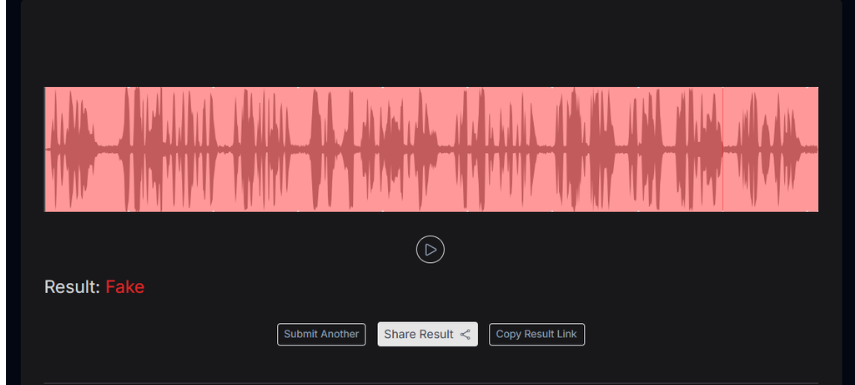
For additional verification, the viral video was analyzed using the AI detection tool Hive Moderation. The results suggested a 99.9% probability that the speech in the clip was generated using AI, indicating manipulation of the original footage.
Conclusion
The research makes it clear that the viral video does not reflect an authentic statement by India’s Army Chief Upendra Dwivedi. The clip has been altered and the audio appears to be AI-generated. In other words, the circulating video is a deepfake being shared with a misleading claim.
Holi 2025 is just around the corner. In fact, in the Braj region, Mathura and Vrindavan, the celebrations have already begun, starting from Basant Panchami on 2nd February 2025. Temples in Vrindavan are sprinkling flowers on devotees, creating mesmerising scenes with the spirit of devotion. While cities like Delhi, Bangalore, Mumbai, etc., are all set, with pre-bookings for Holi events, parties and music festivals.
However, in the current digital era, cybercriminals attempt to conduct manipulative campaigns to deceive innocent people. They attempt to send fake cashback offers, freebies, lucrative deals, giveaways, and phishing scams under the guise of Holi deals and offers. The upcoming festival of colors requires you to know the warning signs so you can remain alert and safeguard against digital scams.
How Scammers Might Target You
Holi is a time for joy, colors, and celebrations, but cybercriminals see it as the perfect opportunity to trick people into falling for scams. With increased online shopping, event bookings, and digital transactions, scammers exploit the festive mood to steal money and personal information. Here are some common Holi-related cyber scams and how they operate:
Exclusive Fake Holi Offers
Scammers send out promotional messages via WhatsApp, SMS, or email claiming to offer exclusive Holi discounts. For example, you might receive a message like: "Get 70% off on Holi color packs! Limited-time deal! Click here to order now." However, clicking the link leads to a fraudulent website designed to steal your card details or make unauthorized transactions.
Fake Holi Cashback Offers
You may get an SMS that reads: "Congratulations! You’ve won ₹500 cashback for your Holi purchases. Claim now by clicking this link." The link may take you to a phishing page that asks for your UPI PIN or bank login credentials, allowing scammers to siphon off your money.
Fake Quizzes to Win Freebies
Scammers circulate links to Holi-themed quizzes or surveys promising free gifts like branded clothing, sweets, or smart gadgets. These often ask users to enter personal details such as phone numbers, email addresses, or even Aadhaar numbers. Once entered, the scammers misuse this information for identity theft or further phishing attempts.
Fake Social Media Giveaways
Many fraudsters create fake Instagram and Facebook pages mimicking well-known brands, announcing contests with tempting prizes. For example: "Holi Giveaway! Win a free Bluetooth speaker or chance to win smartphone by following us and sending a small registration fee!" Once you pay, the page disappears, leaving you with nothing but regret.
Targeted Phishing Scams
During Holi, phishing attempts surge as scammers disguise themselves as banks, e-wallet services, or e-commerce platforms. You might receive an email with a subject like: "Urgent: Your Holi order needs confirmation, update your details now!" The email contains a fake link that, when clicked, prompts you to enter sensitive login information, which the scammers then use to access your account.
Clickbait Links on Social Media
Cybercriminals circulate enticing headlines such as: "This New Holi Color Is Banned – Find Out Why!" These links often lead to malware-infected pages that compromise your device security or steal browsing data.
Bogus Online Booking Platforms
With many people looking for Holi event tickets or holiday stays, scammers set up fake booking websites. Imagine you come across a site advertising "Holi Pool Party – Entry Just INR 299!" you eagerly make the payment, only to find out later that the event never existed.
How to Stay Safe This Festive Season
Verify offers directly from official websites instead of clicking on random links.
Avoid sharing personal or banking details on unfamiliar platforms.
Look for HTTPS in website URLs before making any payments.
Be cautious of unsolicited messages, even if they appear to be from known contacts.
If an offer seems too good to be true, it it is likely a scam or deception.
Conclusion:
As Holi 2025 approaches, make sure your online security remains a priority. Keep an eye on potential frauds that attempt to take advantage of the festive seasons like Holi. Protect yourself against various cyber threats. Before engaging with any Internet content, prioritize the verification of sources. Let us safeguard our celebrations with critical cyber security precautions. Wishing you all a cyber-safe and Happy Holi 2025!
The rapid digitization of educational institutions in India has created both opportunities and challenges. While technology has improved access to education and administrative efficiency, it has also exposed institutions to significant cyber threats. This report, published by CyberPeace, examines the types, causes, impacts, and preventive measures related to cyber risks in Indian educational institutions. It highlights global best practices, national strategies, and actionable recommendations to mitigate these threats.
Image: Recent CyberAttack on Eindhoven University
Significance of the Study:
The pandemic-induced shift to online learning, combined with limited cybersecurity budgets, has made educational institutions prime targets for cyberattacks. These threats compromise sensitive student, faculty, and institutional data, leading to operational disruptions, financial losses, and reputational damage. Globally, educational institutions face similar challenges, emphasizing the need for universal and localized responses.
Threat Faced by Education Institutions:
Based on the insights from the CyberPeace’s report titled 'Exploring Cyber Threats and Digital Risks in Indian Educational Institutions', this concise blog provides a comprehensive overview of cybersecurity threats and risks faced by educational institutions, along with essential details to address these challenges.
🎣 Phishing: Phishing is a social engineering tactic where cyber criminals impersonate trusted sources to steal sensitive information, such as login credentials and financial details. It often involves deceptive emails or messages that lead to counterfeit websites, pressuring victims to provide information quickly. Variants include spear phishing, smishing, and vishing.
💰 Ransomware: Ransomware is malware that locks users out of their systems or data until a ransom is paid. It spreads through phishing emails, malvertising, and exploiting vulnerabilities, causing downtime, data leaks, and theft. Ransom demands can range from hundreds to hundreds of thousands of dollars.
🌐 Distributed Denial of Service (DDoS): DDoS attacks overwhelm servers, denying users access to websites and disrupting daily operations, which can hinder students and teachers from accessing learning resources or submitting assignments. These attacks are relatively easy to execute, especially against poorly protected networks, and can be carried out by amateur cybercriminals, including students or staff, seeking to cause disruptions for various reasons
🕵️ Cyber Espionage: Higher education institutions, particularly research-focused universities, are vulnerable to spyware, insider threats, and cyber espionage. Spyware is unauthorized software that collects sensitive information or damages devices. Insider threats arise from negligent or malicious individuals, such as staff or vendors, who misuse their access to steal intellectual property or cause data leaks..
🔒 Data Theft: Data theft is a major threat to educational institutions, which store valuable personal and research information. Cybercriminals may sell this data or use it for extortion, while stealing university research can provide unfair competitive advantages. These attacks can go undetected for long periods, as seen in the University of California, Berkeley breach, where hackers allegedly stole 160,000 medical records over several months.
🛠️ SQL Injection: SQL injection (SQLI) is an attack that uses malicious code to manipulate backend databases, granting unauthorized access to sensitive information like customer details. Successful SQLI attacks can result in data deletion, unauthorized viewing of user lists, or administrative access to the database.
🔍Eavesdropping attack: An eavesdropping breach, or sniffing, is a network attack where cybercriminals steal information from unsecured transmissions between devices. These attacks are hard to detect since they don't cause abnormal data activity. Attackers often use network monitors, like sniffers, to intercept data during transmission.
🤖 AI-Powered Attacks: AI enhances cyber attacks like identity theft, password cracking, and denial-of-service attacks, making them more powerful, efficient, and automated. It can be used to inflict harm, steal information, cause emotional distress, disrupt organizations, and even threaten national security by shutting down services or cutting power to entire regions
Insights from Project eKawach
The CyberPeace Research Wing, in collaboration with SAKEC CyberPeace Center of Excellence (CCoE) and Autobot Infosec Private Limited, conducted a study simulating educational institutions' networks to gather intelligence on cyber threats. As part of the e-Kawach project, a nationwide initiative to strengthen cybersecurity, threat intelligence sensors were deployed to monitor internet traffic and analyze real-time cyber attacks from July 2023 to April 2024, revealing critical insights into the evolving cyber threat landscape.
Cyber Attack Trends
Between July 2023 and April 2024, the e-Kawach network recorded 217,886 cyberattacks from IP addresses worldwide, with a significant portion originating from countries including the United States, China, Germany, South Korea, Brazil, Netherlands, Russia, France, Vietnam, India, Singapore, and Hong Kong. However, attributing these attacks to specific nations or actors is complex, as threat actors often use techniques like exploiting resources from other countries, or employing VPNs and proxies to obscure their true locations, making it difficult to pinpoint the real origin of the attacks.
Brute Force Attack:
The analysis uncovered an extensive use of automated tools in brute force attacks, with 8,337 unique usernames and 54,784 unique passwords identified. Among these, the most frequently targeted username was “root,” which accounted for over 200,000 attempts. Other commonly targeted usernames included: "admin", "test", "user", "oracle", "ubuntu", "guest", "ftpuser", "pi", "support"
Similarly, the study identified several weak passwords commonly targeted by attackers. “123456” was attempted over 3,500 times, followed by “password” with over 2,500 attempts. Other frequently targeted passwords included: "1234", "12345", "12345678", "admin", "123", "root", "test", "raspberry", "admin123", "123456789"
Insights from Threat Landscape Analysis
Research done by the USI - CyberPeace Centre of Excellence (CCoE) and Resecurity has uncovered several breached databases belonging to public, private, and government universities in India, highlighting significant cybersecurity threats in the education sector. The research aims to identify and mitigate cybersecurity risks without harming individuals or assigning blame, based on data available at the time, which may evolve with new information. Institutions were assigned risk ratings that descend from A to F, with most falling under a D rating, indicating numerous security vulnerabilities. Institutions rated D or F are 5.4 times more likely to experience data breaches compared to those rated A or B. Immediate action is recommended to address the identified risks.
Risk Findings :
The risk findings for the institutions are summarized through a pie chart, highlighting factors such as data breaches, dark web activity, botnet activity, and phishing/domain squatting. Data breaches and botnet activity are significantly higher compared to dark web leakages and phishing/domain squatting. The findings show 393,518 instances of data breaches, 339,442 instances of botnet activity, 7,926 instances related to the dark web and phishing & domain activity - 6711.
Key Indicators: Multiple instances of data breaches containing credentials (email/passwords) in plain text.
Botnet activity indicating network hosts compromised by malware.
Credentials from third-party government and non-governmental websites linked to official institutional emails
Details of software applications, drivers installed on compromised hosts.
Sensitive cookie data exfiltrated from various browsers.
IP addresses of compromised systems.
Login credentials for different Android applications.
Below is the sample detail of one of the top educational institutions that provides the insights about the higher rate of data breaches, botnet activity, dark web activities and phishing & domain squatting.
Risk Detection:
It indicates the number of data breaches, network hygiene, dark web activities, botnet activities, cloud security, phishing & domain squatting, media monitoring and miscellaneous risks. In the below example, we are able to see the highest number of data breaches and botnet activities in the sample particular domain.
Risk Changes:
Risk by Categories:
Risk is categorized with factors such as high, medium and low, the risk is at high level for data breaches and botnet activities.
Challenges Faced by Educational Institutions
Educational institutions face cyberattack risks, the challenges leading to cyberattack incidents in educational institutions are as follows:
🔒 Lack of a Security Framework: A key challenge in cybersecurity for educational institutions is the lack of a dedicated framework for higher education. Existing frameworks like ISO 27001, NIST, COBIT, and ITIL are designed for commercial organizations and are often difficult and costly to implement. Consequently, many educational institutions in India do not have a clearly defined cybersecurity framework.
🔑 Diverse User Accounts: Educational institutions manage numerous accounts for staff, students, alumni, and third-party contractors, with high user turnover. The continuous influx of new users makes maintaining account security a challenge, requiring effective systems and comprehensive security training for all users.
📚 Limited Awareness: Cybersecurity awareness among students, parents, teachers, and staff in educational institutions is limited due to the recent and rapid integration of technology. The surge in tech use, accelerated by the pandemic, has outpaced stakeholders' ability to address cybersecurity issues, leaving them unprepared to manage or train others on these challenges.
📱 Increased Use of Personal/Shared Devices: The growing reliance on unvetted personal/Shared devices for academic and administrative activities amplifies security risks.
💬 Lack of Incident Reporting: Educational institutions often neglect reporting cyber incidents, increasing vulnerability to future attacks. It is essential to report all cases, from minor to severe, to strengthen cybersecurity and institutional resilience.
Impact of Cybersecurity Attacks on Educational Institutions
Cybersecurity attacks on educational institutions lead to learning disruptions, financial losses, and data breaches. They also harm the institution's reputation and pose security risks to students. The following are the impacts of cybersecurity attacks on educational institutions:
📚Impact on the Learning Process: A report by the US Government Accountability Office (GAO) found that cyberattacks on school districts resulted in learning losses ranging from three days to three weeks, with recovery times taking between two to nine months.
💸Financial Loss: US schools reported financial losses ranging from $50,000 to $1 million due to expenses like hardware replacement and cybersecurity upgrades, with recovery taking an average of 2 to 9 months.
🔒Data Security Breaches: Cyberattacks exposed sensitive data, including grades, social security numbers, and bullying reports. Accidental breaches were often caused by staff, accounting for 21 out of 25 cases, while intentional breaches by students, comprising 27 out of 52 cases, frequently involved tampering with grades.
⚠️Data Security Breach: Cyberattacks on schools result in breaches of personal information, including grades and social security numbers, causing emotional, physical, and financial harm. These breaches can be intentional or accidental, with a US study showing staff responsible for most accidental breaches (21 out of 25) and students primarily behind intentional breaches (27 out of 52) to change grades.
🏫Impact on Institutional Reputation: Cyberattacks damaged the reputation of educational institutions, eroding trust among students, staff, and families. Negative media coverage and scrutiny impacted staff retention, student admissions, and overall credibility.
🛡️ Impact on Student Safety: Cyberattacks compromised student safety and privacy. For example, breaches like live-streaming school CCTV footage caused severe distress, negatively impacting students' sense of security and mental well-being.
CyberPeace Advisory:
CyberPeace emphasizes the importance of vigilance and proactive measures to address cybersecurity risks:
Develop effective incident response plans: Establish a clear and structured plan to quickly identify, respond to, and recover from cyber threats. Ensure that staff are well-trained and know their roles during an attack to minimize disruption and prevent further damage.
Implement access controls with role-based permissions: Restrict access to sensitive information based on individual roles within the institution. This ensures that only authorized personnel can access certain data, reducing the risk of unauthorized access or data breaches.
Regularly update software and conduct cybersecurity training: Keep all software and systems up-to-date with the latest security patches to close vulnerabilities. Provide ongoing cybersecurity awareness training for students and staff to equip them with the knowledge to prevent attacks, such as phishing.
Ensure regular and secure backups of critical data: Perform regular backups of essential data and store them securely in case of cyber incidents like ransomware. This ensures that, if data is compromised, it can be restored quickly, minimizing downtime.
Adopt multi-factor authentication (MFA): Enforce Multi-Factor Authentication(MFA) for accessing sensitive systems or information to strengthen security. MFA adds an extra layer of protection by requiring users to verify their identity through more than one method, such as a password and a one-time code.
Deploy anti-malware tools: Use advanced anti-malware software to detect, block, and remove malicious programs. This helps protect institutional systems from viruses, ransomware, and other forms of malware that can compromise data security.
Monitor networks using intrusion detection systems (IDS): Implement IDS to monitor network traffic and detect suspicious activity. By identifying threats in real time, institutions can respond quickly to prevent breaches and minimize potential damage.
Conduct penetration testing: Regularly conduct penetration testing to simulate cyberattacks and assess the security of institutional networks. This proactive approach helps identify vulnerabilities before they can be exploited by actual attackers.
Collaborate with cybersecurity firms: Partner with cybersecurity experts to benefit from specialized knowledge and advanced security solutions. Collaboration provides access to the latest technologies, threat intelligence, and best practices to enhance the institution's overall cybersecurity posture.
Share best practices across institutions: Create forums for collaboration among educational institutions to exchange knowledge and strategies for cybersecurity. Sharing successful practices helps build a collective defense against common threats and improves security across the education sector.
Conclusion:
The increasing cyber threats to Indian educational institutions demand immediate attention and action. With vulnerabilities like data breaches, botnet activities, and outdated infrastructure, institutions must prioritize effective cybersecurity measures. By adopting proactive strategies such as regular software updates, multi-factor authentication, and incident response plans, educational institutions can mitigate risks and safeguard sensitive data. Collaborative efforts, awareness, and investment in cybersecurity will be essential to creating a secure digital environment for academia.
Become a part of our vision to make the digital world safe for all!
Numerous avenues exist for individuals to unite with us and our collaborators in fostering global cyber security
Awareness
Stay Informed: Elevate Your Awareness with Our Latest Events and News Articles Promoting Cyber Peace and Security.
Your institution or organization can partner with us in any one of our initiatives or policy research activities and complement the region-specific resources and talent we need.