
#FactCheck-False Claim Links PM Modi to 320 Visits to Epstein Island
Executive Summary
A viral social media post claims that the recently released Epstein files reveal that Prime Minister Narendra Modi visited Epstein Island more than 320 times. CyberPeace Research Wing research found that the claim is false. There is no evidence in the Epstein files suggesting that Prime Minister Modi visited Epstein Island over 320 times.
Claim:
An X user shared a viral graphic claiming that Prime Minister Narendra Modi had visited Epstein Island more than 320 times. https://x.com/Ramesh18498367/status/206501995913534715 , https://ghostarchive.org/archive/2V12W

Fact Check:
We first examined credible international media reports related to the Epstein files, particularly those mentioning Prime Minister Narendra Modi. During this process, we found a report published by the Australian Broadcasting Corporation (ABC) in February 2026. The report mentioned that the names of the Prime Ministers of India and Malaysia appeared in certain documents linked to the Epstein files. However, it clarified that references to Prime Minister Modi were limited to emails discussing his 2017 visit to Israel. The emails reportedly contained comments made by Jeffrey Epstein regarding the Prime Minister’s Israel visit. https://www.abc.net.au/news/2026-02-04/leaders-of-malaysia-india-named-in-epstein-files/106298458
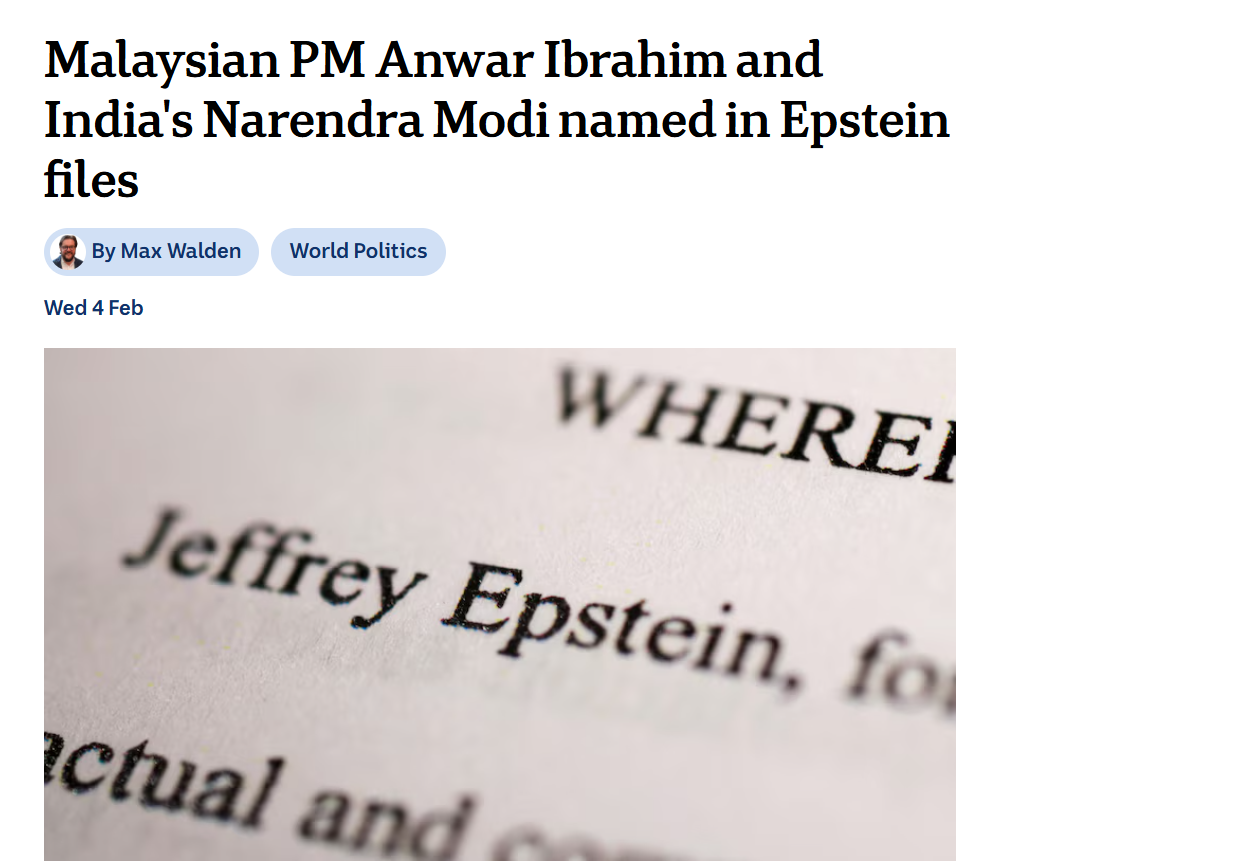
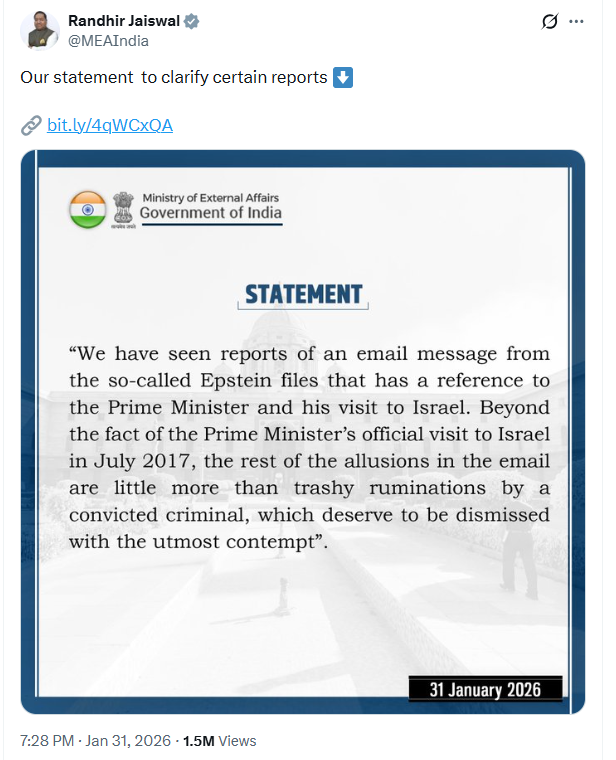
We also reviewed reports published by several other international media organizations. None of them contained any information supporting the viral claim that Prime Minister Modi visited Epstein Island more than 320 times. The Government of India also issued a clarification regarding references to Prime Minister Modi in the Epstein files. The clarification stated that, apart from references to his 2017 Israel visit, the files contain no other mention of the Prime Minister. The government further described subsequent claims and speculation on the matter as baseless.
https://x.com/MEAIndia/status/2017598414733840649?s=20
Conclusion:
The viral claim that the Epstein files reveal Prime Minister Narendra Modi visited Epstein Island more than 320 times is false. Available records, international media reports, and the Indian government's clarification do not support the claim.

Related Blogs

Executive Summary
A claim is being shared on social media alleging that two women were shot dead and their homes were set on fire in Manipur. The post alleges that the Indian Army carried out the attack on the orders of Lieutenant General V. M. Bhuvana Krishnan, Commander of the Eastern Command. CyberPeace Research found the claim to be false. According to available reports, suspected militants attacked a hill village in Manipur’s Kangpokpi district. During an exchange of fire with security forces, the attackers set at least two houses on fire.
Claim:
The Indian Army, on the orders of Eastern Command Commander Lieutenant General V. M. Bhuvana Krishnan, shot two women in Manipur and set their homes on fire, following which the situation in the state deteriorated severely.
https://x.com/indiantiwari01/status/2100204995425743103?s=20
https://archive.ph/SOm7I

Fact Check
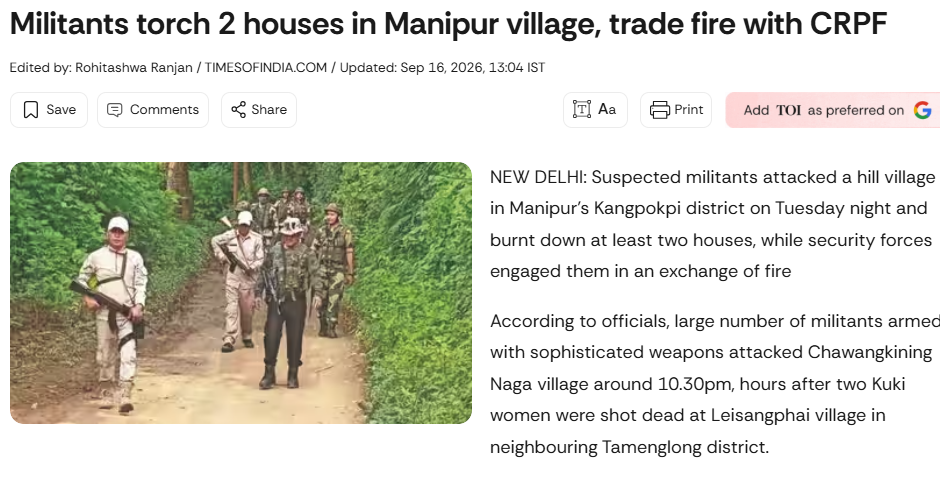
To verify the viral claim, we conducted a Google search using relevant keywords. During the search, we found a report published on The Times of India website on September 16, 2026. According to the report, suspected militants attacked a hill village in Manipur’s Kangpokpi district on Tuesday night and set at least two houses on fire. Security forces engaged the attackers in an exchange of fire during the incident.According to officials, a large number of militants armed with sophisticated weapons attacked Chawangkining Naga village at around 10:30 p.m. on Tuesday. The attack took place hours after two Kuki women were shot dead at Leisangphai village in neighbouring Tamenglong district.CRPF personnel deployed in the nearby area returned fire, triggering intermittent firing that continued for nearly six hours until around 4:30 a.m. on Wednesday.An official said, “Intermittent firing was reported for nearly six hours till 4:30 a.m. on Wednesday. The CRPF returned fire, preventing the militants from entering the village.” He added that two wooden houses on the outskirts of the village were nevertheless set ablaze.
As part of our further investigation, we conducted a reverse image search of keyframes from the video. During the search, we found the visuals from the viral video on the YouTube channel of @ukhrultimes. According to the accompanying information, intermittent firing continued for nearly six hours in Chawangkining Naga village in Manipur’s Kangpokpi district on the night of September 15, 2026. During the incident, two houses on the outskirts of the village were completely burnt down, while several others were damaged.According to local reports, suspected militants targeted the village despite the deployment of CRPF personnel in the area and engaged in an exchange of fire with security forces. Meanwhile, the Liangmai Naga Council, Manipur (LNC-M), condemned the attack and alleged that suspected Kuki militants operating from the Songtung Suspension of Operations (SoO) camp were behind the firing. However, these allegations regarding the identity of the attackers should be reported as allegations and should not be presented as independently verified facts.
https://www.youtube.com/shorts/QuZ2FoLyA5A

At the end of our investigation, we found a report published on The Hindu website on September 16, 2026. According to the report, officials said that suspected militants had attacked Chawangkining Naga village in Manipur’s Kangpokpi district. During the attack, they engaged in an exchange of fire with security forces and set at least two houses on the outskirts of the village on fire. The report quoted an official as saying that a large number of militants armed with sophisticated weapons attacked the village at around 10:30 p.m. on September 15. The incident took place hours after two Kuki women were shot dead in Leisangphai village in neighbouring Tamenglong district.

Conclusion
Our investigation revealed that separate incidents of the killing of two women and the burning of their houses in Manipur are being falsely shared on social media, claiming them to be actions taken by the Indian Army. According to available reports, on September 15, 2026, two Kuki women were shot dead by unidentified armed assailants in Leisangphai village, Tamenglong district. On the same night, suspected militants attacked Chawangkining Naga village, Kangpokpi district. Security forces exchanged fire, and two houses on the outskirts of the village were set on fire. No credible report has confirmed the links between these incidents and the orders of the Indian Army or Eastern Command Commander Lieutenant General V.M. Bhuvana Krishnan. Therefore, the claim that the Indian Army shot two women and set their houses on fire by linking the two incidents is false and misleading.
.webp)
Introduction
Cyber slavery is a form of modern exploitation that begins with online deception and evolves into physical human trafficking. In recent times, cyber slavery has emerged as a serious threat that involves exploiting individuals through digital means under coercive or deceptive conditions. Offenders target innocent individuals and lure them by giving fake promises to offer them employment or alike. Cyber slavery can occur on a global scale, targeting vulnerable individuals worldwide through the internet and is a disturbing continuum of online manipulation that leads to real-world abuse and exploitation, where individuals are entrapped by false promises and subjected to severe human rights violations. It can take many different forms, such as coercive involvement in cybercrime, forced employment in online frauds, exploitation in the gig economy, or involuntary slavery. This issue has escalated to the highest level where Indians are being trafficked for jobs in countries like Laos and Cambodia. Recently over 5,000 Indians were reported to be trapped in Southeast Asia, where they are allegedly being coerced into carrying out cyber fraud. It was reported that particularly Indian techies were lured to Cambodia for high-paying jobs and later they found themselves trapped in cyber fraud schemes, forced to work 16 hours a day under severe conditions. This is the harsh reality for thousands of Indian tech professionals who are lured under false pretences to employment in Southeast Asia, where they are forced into committing cyber crimes.
Over 5,000 Indians Held in Cyber Slavery and Human Trafficking Rings
India has rescued 250 citizens in Cambodia who were forced to run online scams, with more than 5,000 Indians stuck in Southeast Asia. The victims, mostly young and tech-savvy, are lured into illegal online work ranging from money laundering and crypto fraud to love scams, where they pose as lovers online. It was reported that Indians are being trafficked for jobs in countries like Laos and Cambodia, where they are forced to conduct cybercrime activities. Victims are often deceived about where they would be working, thinking it will be in Thailand or the Philippines. Instead, they are sent to Cambodia, where their travel documents are confiscated and they are forced to carry out a variety of cybercrimes, from stealing life savings to attacking international governmental or non-governmental organizations. The Indian embassy in Phnom Penh has also released an advisory warning Indian nationals of advertisements for fake jobs in the country through which victims are coerced to undertake online financial scams and other illegal activities.
Regulatory Landscape
Trafficking in Human Beings (THB) is prohibited under the Constitution of India under Article
23 (1). The Immoral Traffic (Prevention) Act, of 1956 (ITPA) is the premier legislation for the prevention of trafficking for commercial sexual exploitation. Section 111 of the Bharatiya Nyaya Sanhita (BNS), 2023, is a comprehensive legal provision aimed at combating organized crime and will be useful in persecuting people involved in such large-scale scams. India has also ratified certain bilateral agreements with several countries to facilitate intelligence sharing and coordinated efforts to combat transnational organized crime and human trafficking.
CyberPeace Policy Recommendations
● Misuse of Technology has exploited the new genre of cybercrimes whereby cybercriminals utilise social media platforms as a tool for targeting innocent individuals. It requires collective efforts from social media companies and regulatory authorities to time to time address the new emerging cybercrimes and develop robust preventive measures to counter them.
● Despite the regulatory mechanism in place, there are certain challenges such as jurisdictional challenges, challenges in detection due to anonymity, and investigations challenges which significantly make the issue of cyber human trafficking a serious evolving threat. Hence International collaboration between the countries is encouraged to address the issue considering the present situation in a technologically driven world. Robust legislation that addresses both national and international cases of human trafficking and contains strict penalties for offenders must be enforced.
● Cybercriminals target innocent people by offering fake high-pay job opportunities, building trust and luring them. It is high time that all netizens should be aware of such tactics deployed by bad actors and recognise the early signs of them. By staying vigilant and cross-verifying the details from authentic sources, netizens can safeguard themselves from such serious threats which even endanger their life by putting them under restrictions once they are being trafficked. It is a notable fact that the Indian government and its agencies are continuously making efforts to rescue the victims of cyber human trafficking or cyber slavery, they must further develop robust mechanisms in place to conduct specialised operations by specialised government agencies to rescue the victims in a timely manner.
● Capacity building and support mechanisms must be encouraged by government entities, cyber security experts and Non-Governmental Organisations (NGOs) to empower the netizens to follow best practices while navigating the online landscape, providing them with helpline or help centres to report any suspicious activity or behaviour they encounter, and making them empowered to feel safe on the Internet while simultaneously building defenses to stay protected from cyber threats.
References:
2. https://www.bbc.com/news/world-asia-india-68705913
3. https://therecord.media/india-rescued-cambodia-scam-centers-citizens
4. https://www.the420.in/rescue-indian-tech-workers-cambodia-cyber-fraud-awareness/
7. https://www.dyami.services/post/intel-brief-250-indian-citizens-rescued-from-cyber-slavery
8. https://www.mea.gov.in/human-trafficking.htm
9. https://www.drishtiias.com/blog/the-vicious-cycle-of-human-trafficking-and-cybercrime

One of the best forums for many video producers is YouTube. It also has a great chance of generating huge profits. YouTube content producers need assistance to get the most views, likes, comments, and subscribers for their videos and channels. As a result, some people could use YouTube bots to unnaturally raise their ranks on the YouTube site, which might help them get more organic views and reach a larger audience. However, this strategy is typically seen as unfair and can violate the YouTube platform’s terms of service.
As YouTube grows in popularity, so does the usage of YouTube bots. These bots are software programs that may automate operations on the YouTube platform, such as watching, liking, or disliking videos, subscribing to or unsubscribing from channels, making comments, and adding videos to playlists, among others. There have been YouTube bots around for a while. Many YouTubers widely use these computer codes to increase the number of views on their videos and accounts, which helps them rank higher in YouTube’s algorithm. Researchers discovered a new bot that takes private information from YouTube users’ accounts.
CRIL (Cyble Research and Intelligence Labs) has been monitoring new and active malware families CRIL has discovered a new YouTube bot virus capable of viewing, liking, and commenting on YouTube videos. Furthermore, it is capable of stealing sensitive information from browsers and acting as a bot that accepts orders from the Command and Control (C&C) server to carry out other harmful operations.
The Bot Insight
This YouTube bot has the same capabilities as all other YouTube bots, including the ability to view, like, and comment on videos. Additionally, it has the ability to steal private data from browsers and act as a bot that takes commands from a Command and Control (C&C) server for various malicious purposes. Researchers from Cyble discovered the inner workings of this information breach the Youtube bot uses the sample hash(SHA256) e9dac8b677a670e70919730ee65ab66cc27730378b9233d944ad7879c530d312.They discovered that it was created using the.NET compiler and is an executable file with a 32-bit size.
- The virus runs an AntiVM check as soon as it is executed to thwart researchers’ attempts to find and analyze malware in a virtual environment.
- It stops the execution if it finds that it is operating in a regulated setting. If not, it will carry out the tasks listed in the argument strings.
- Additionally, the virus creates a mutex, copies itself to the %appdata% folder as AvastSecurity.exe, and then uses cmd.exe to run.
- The new mutex makes a task scheduler entry and aids in ensuring
- The victim’s system’s installed Chromium browsers are used to harvest cookies, autofill information, and login information by the AvastSecurity.exe program.
- In order to view the chosen video, the virus runs the YouTube Playwright function, passing the previously indicated arguments along with the browser’s path and cookie data.
- YouTube bot uses the YouTube Playwright function to launch the browser environment with the specified parameters and automate actions like watching, liking, and commenting on YouTube videos. The feature is dependent on Microsoft. playwright’s kit.
- The malware establishes a connection to a C2 server and gets instructions to erase the entry for the scheduled task and end its own process, extract log files to the C2 server, download and run other files, and start/stop watching a YouTube movie.
- Additionally, it verifies that the victim’s PC has the required dependencies, including the Playwright package and the Chrome browser, installed. When it gets the command “view,” it will download and install these dependencies if they are missing.
Recommendations
The following is a list of some of the most critical cybersecurity best practices that serve as the first line of defense against intruders. We propose that our readers follow the advice provided below:
- Downloading pirated software from warez/torrent websites should be avoided. Such a virus is commonly found in “Hack Tools” available on websites such as YouTube, pirate sites, etc.
- When feasible, use strong passwords and impose multi-factor authentication.
- Enable automatic software updates on your laptop, smartphone, and other linked devices.
- Use a reputable antivirus and internet security software package on your linked devices, such as your computer, laptop, and smartphone.
- Avoid clicking on suspicious links and opening email attachments without verifying they are legitimate.Inform staff members on how to guard against dangers like phishing and unsafe URLs.
- Block URLs like Torrent/Warez that might be used to propagate malware.To prevent malware or TAs from stealing data, keep an eye on the beacon at the network level.
Conclusion
Using YouTube bots may be a seductive strategy for content producers looking to increase their ranks and expand their viewership on the site. However, the employment of bots is typically regarded as unfair and may violate YouTube’s terms of service. Utilizing YouTube bots carries additional risk because they might be identified, which could lead to account suspension or termination for the user. Mitigating this pressing issue through awareness drives and surveys to determine the bone of contention is best. NonProfits and civil society organizations can bridge the gap between the tech giant and the end user to facilitate better know-how about these unknown bots.
