#FactCheck- Viral Photo Claiming PM Modi Met ‘Cockroach Janata Party’ Founder Abhijeet Dipke Is AI-Generated
Executive Summary
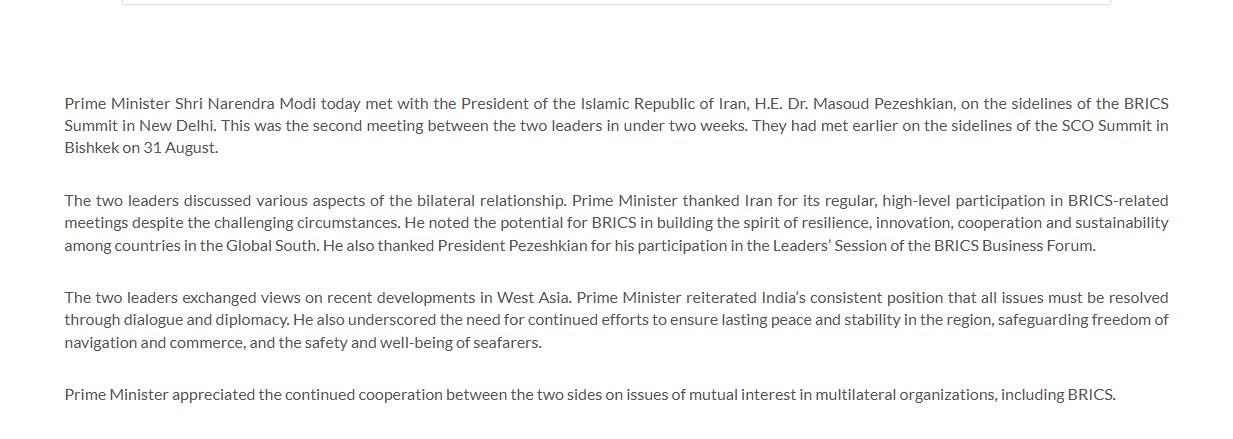
Following a recent protest at Delhi’s Jantar Mantar, members of the self-styled “Cockroach Janata Party” also staged a demonstration in Pune, Maharashtra, demanding the resignation of Union Education Minister Dharmendra Pradhan. Amid this backdrop, a photograph has gone viral on social media purportedly showing the party’s founder, Abhijeet Dipke, posing with Prime Minister Narendra Modi. CyberPeace Research Wing research found that the image is not genuine. The photograph has been created using Artificial Intelligence (AI) and does not depict a real meeting between the two individuals.
Claim
An X user, “subhash Kumar sharma,” shared the viral image on June 8, 2026, with the caption: “This is the real face of the Cockroach... the rest you all understand. They were begging for Pradhan’s resignation at Jantar Mantar… did they get it or not?” The archived and original links to the post can be seen below:
https://x.com/sharmass27/status/2063691212662686102?s=20

Fact Check
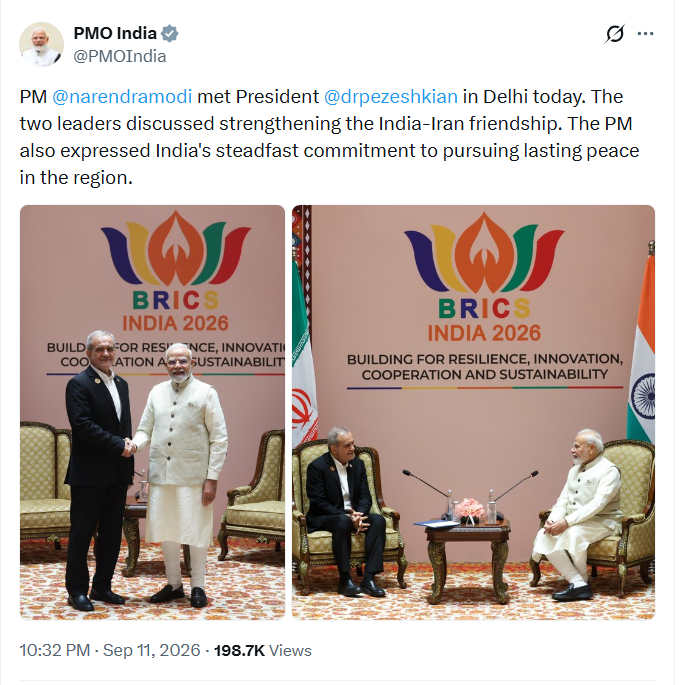
To verify the claim, we conducted a reverse image search using Google. However, we did not find any credible news reports related to the viral photograph. We also searched using relevant keywords, but no reliable information supporting the claim was found. We then examined the official X account of Abhijeet Dipke, founder of the “Cockroach Janata Party.” No post, photograph, or information related to any meeting with Prime Minister Narendra Modi was found on his account.
https://x.com/abhijeet_dipke?lang=en

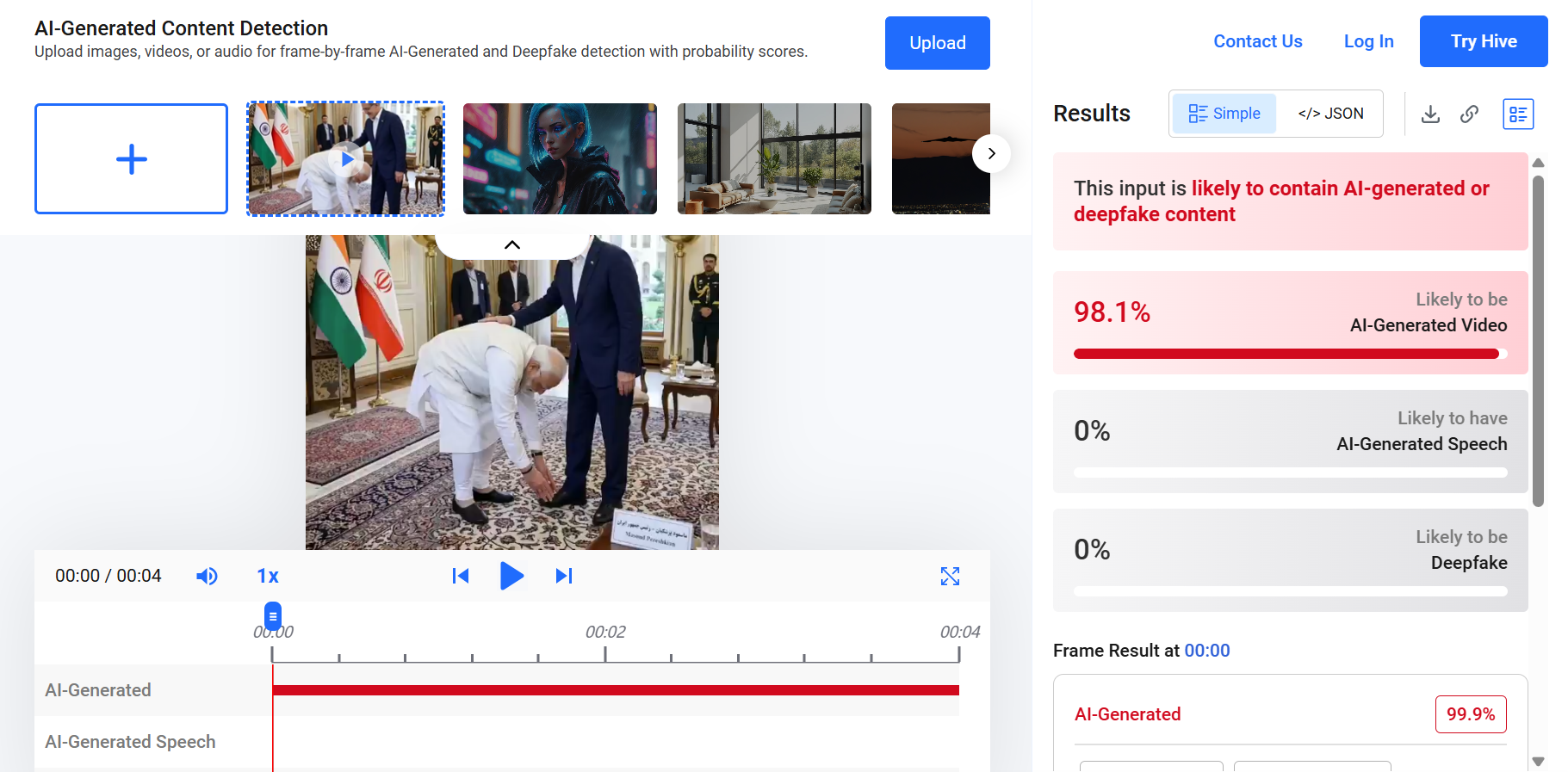
The absence of any credible evidence led us to suspect that the image may have been generated using AI. To further verify its authenticity, we analyzed the image using AI-detection tools. The first tool, Hive Moderation, indicated a nearly 99 percent probability that the image was AI-generated. The analysis also suggested signs consistent with content produced by generative AI models.
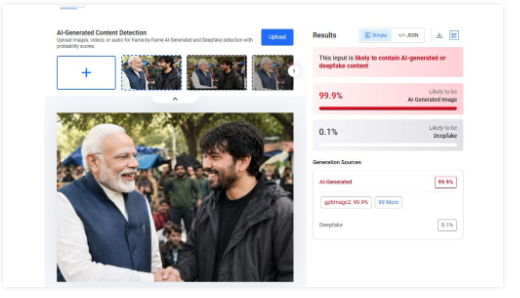
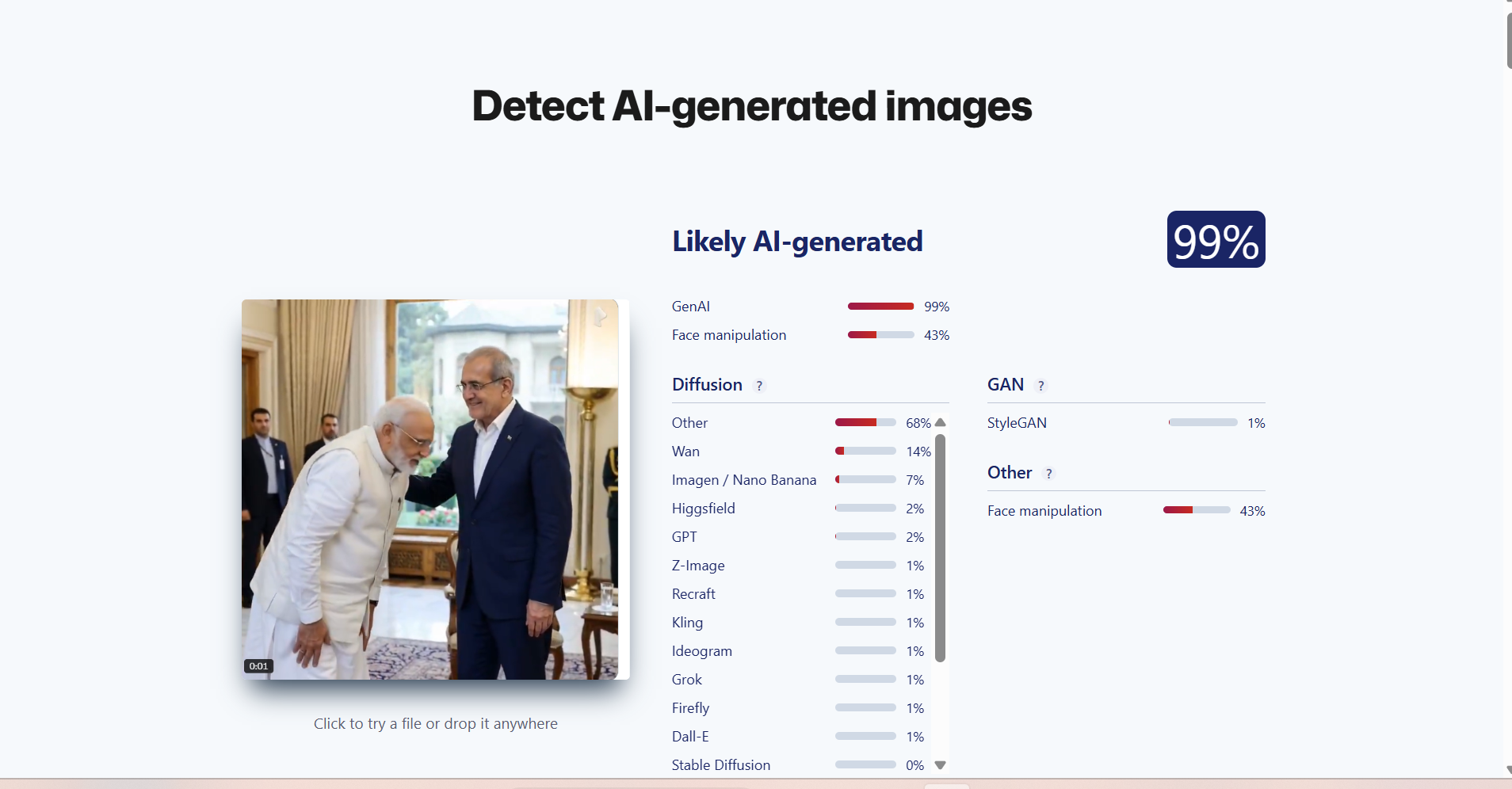
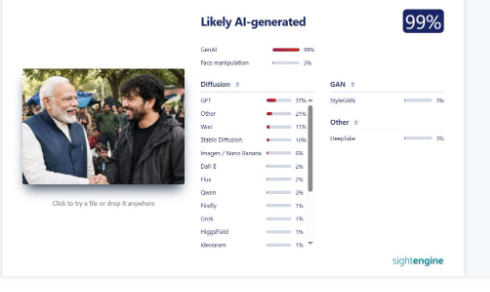
We then examined the image using another AI-detection platform, Sightengine. Its analysis likewise indicated a 99 percent likelihood that the image was AI-generated and showed characteristics commonly associated with AI-created visuals.
Conclusion
Our research found that the claim accompanying the viral image is false. The photograph purportedly showing Prime Minister Narendra Modi with Cockroach Janata Party founder Abhijeet Dipke is not real. The image has been generated using Artificial Intelligence and does not represent an actual meeting or event.
Related Blogs

.webp)
Introduction
The judiciary as an institution has always been kept on a pedestal and is often seen as the embodiment of justice. From Dictatorship to Democracy, the judiciary plays a central role; even where the judiciary is controlled, the legitimacy of the policies, in one sense or another, is derived from it. In democracies around the world, the independence and well-being of the judiciary are seen as the barometer of democracy’s strength. In this global age, where technology is omnipresent, it seems the judiciary is no exception. Now more than ever, when the judiciary is at the centre of evaluative focus, it becomes imperative to make the judiciary transparent. Digitisation of the judiciary is not just an administrative reform; it is an extension of constitutionalism into the technological realm, an effort to ensure that justice is accessible, transparent, and efficient. On July 25, which is the International Day on Judicial Well-being, is commemorated every year with a clear message that judicial well-being supports “anti-corruption, access to justice, and sustainable peace.”
Digitisation by Design: Justice in the Age of Transformation
The Prime Minister of India envisioned the future of the Indian legal system in alignment with the digitised world, as when he said, “Technology will integrate police, forensics, jails, and courts, and will speed up their work as well. We are moving towards a justice system that will be fully future-ready,” he said, almost predicting the future. Although there are many challenges in the face of this future, there are various initiatives that ease the transition. To clarify, India is streamlining operations, reducing delays, and enhancing access to justice for all by integrating AI into legal research, case management, judicial procedures, and law enforcement. Machine Learning (ML), Natural Language Processing (NLP), Optical Character Recognition (OCR), and predictive analytics are just a few of the AI-powered technologies that are currently being used to increase crime prevention, automate administrative duties, and improve case monitoring.
The digitisation of Indian courts is a structural necessity rather than just a question of contemporary convenience. Miscarriages of justice have frequently resulted from the growing backlog of cases, challenges with maintaining records, and the loss of physical files. In the seminal case of State of U.P. v. Abhay Raj Singh, the courts acknowledged that a conviction could be overturned by missing records alone. With millions of legal documents at risk, digitisation becomes a shield against such a collapse and a tool for preserving judicial memory.
Judicial Digitalisation in India: Institutional Initiatives and Infrastructural Advancements
For centuries, towering bundles of courtroom files stood as dusty monuments to knowledge, sacred, chaotic, and accessible to a select few. But as we now stand in 2025, the physical boundaries of a traditional courtroom have blurred, and the Indian government is actively working towards transforming the legal system. The e-Courts Mission Mode Project is a flagship initiative that aims to utilise Information and Communication Technology (ICT) to modernise and advance the Indian judiciary. This groundbreaking effort, led by the Department of Justice, Government of India, is being carried out in close coordination with the Supreme Court of India’s e-Committee. As a news report suggests, the Supreme Court (SC) held 7.5 lakh hearings through video conferencing between 2020 and 2024, as stated by the Ministry of Law and Justice, responding to a query in the Rajya Sabha on Thursday. Technological tools such as the Supreme Court Vidhik Anuvaad Software (SUVAS), the Case Information Software (CIS), and the Supreme Court Portal for Assistance in Court’s Efficiency (SUPACE) were established to make all pertinent case facts easily available. In another move, the Registry, SC, in close coordination with IIT, Madras, has created and implemented AI and ML-based technologies that are integrated with the Registry’s electronic filing software. This serves as a statement to the fact that cybersecurity and digital infrastructure are no longer administrative add-ons but essential building blocks for ensuring judicial transparency, efficiency, and resilience.
E-Governance and Integrity: The Judiciary in Transition
The United Nations recognises the fundamentals of the judiciary’s well-being and how corruption acts like water to the rust and taints the integrity of not a single judge in general but creates a perception of the whole institution. This threat of corruption is recognised by the United Nations Convention against Corruption (UNCAC), particularly Article 11, which urges the protection of the judiciary’s independence and integrity. Digitisation, while it cannot operate in a vacuum, acts as a structural antidote to corruption by embedding transparency into the fabric of justice delivery as automated registry systems, e-filing, and real-time access to case data drastically reduce discretionary power and the potential for behind-the-scenes manipulation. However, digital systems are only as ethical as the people who design, maintain, and oversee them, bringing their own limitations.
Conclusion: CyberPeace and the Future of Ethical Digital Justice
The potential of digitalisation resides not just in efficiency but also in equity, as India’s judiciary balances tradition and change. A robust democracy, where justice is lit by code rather than hidden under files, is built on a foundation of an open, accessible, and technologically advanced court. This change is not risk-free, though. Secure justice must also be a component of digital justice. The very values that digitisation seeks to preserve are at risk from algorithmic opacity, data breaches, and insecure technologies.
Our vision is not just of a digitalised court system but of a digitally just society, one where judicial data is protected, legal processes are democratised, and innovation upholds constitutionalism. Therefore, as a step forward, CyberPeace resolves to support AI upskilling for legal professionals, advocate for secure-by-design court infrastructure, and facilitate dialogue between technologists and judicial actors to build trust in the digital justice ecosystem. CyberPeace is dedicated to cyber transparency, privacy protection, and ethical AI.
References
- https://www.un.org/en/observances/judicial-well-being
- https://www.pib.gov.in/PressReleasePage.aspx?PRID=2106239
- https://www.barandbench.com/view-point/facilitating-legal-access-digitalization-of-supreme-court-high-court-records
- https://www.pib.gov.in/PressReleaseIframePage.aspx?PRID=2085127
- https://www.medianama.com/2024/12/223-supreme-court-seven-lakh-video-conferences-four-year-rajya-sabha/

Introduction
The integration of Artificial Intelligence into our daily workflows has compelled global policymakers to develop legislative frameworks to govern its impact efficiently. The question that we arrive at here is: While AI is undoubtedly transforming global economies, who governs the transformation? The EU AI Act was the first of its kind legislation to govern Artificial Intelligence, making the EU a pioneer in the emerging technology regulation space. This blog analyses the EU's Draft AI Rules and Code of Practice, exploring their implications for ethics, innovation, and governance.
Background: The Need for AI Regulation
AI adoption has been happening at a rapid pace and is projected to contribute $15.7 trillion to the global economy by 2030. The AI market size is expected to grow by at least 120% year-over-year. Both of these statistics have been stated in arguments citing concrete examples of AI risks (e.g., bias in recruitment tools, misinformation spread through deepfakes). Unlike the U.S., which relies on sector-specific regulations, the EU proposes a unified framework to address AI's challenges comprehensively, especially with the vacuum that exists in the governance of emerging technologies such as AI. It should be noted that the GDPR or the General Data Protection Regulation has been a success with its global influence on data privacy laws and has started a domino effect for the creation of privacy regulations all over the world. This precedent emphasises the EU's proactive approach towards regulations which are population-centric.
Overview of the Draft EU AI Rules
This Draft General Purpose AI Code of Practice details the AI rules for the AI Act rules and the providers of general-purpose AI models with systemic risks. The European AI Office facilitated the drawing up of the code, and was chaired by independent experts and involved nearly 1000 stakeholders and EU member state representatives and observers both European and international observers.
14th November 2024 marks the publishing of the first draft of the EU’s General-Purpose AI Code of Practice, established by the EU AI Act. As per Article 56 of the EU AI Act, the code outlines the rules that operationalise the requirements, set out for General-Purpose AI (GPAI) model under Article 53 and GPAI models with systemic risks under Article 55. The AI Act is legislation that finds its base in product safety and relies on setting harmonised standards in order to support compliance. These harmonised standards are essentially sets of operational rules that have been established by the European Standardisation bodies, such as the European Committee for Standardisation (CEN), the European Committee for Electrotechnical Standardisation (CENELEC) and the European Telecommunications Standards Institute. Industry experts, civil society and trade unions are translating the requirements set out by the EU sectoral legislation into the specific mandates set by the European Commission. The AI Act obligates the developers, deployers and users of AI on mandates for transparency, risk management and compliance mechanisms
The Code of Practice for General Purpose AI
The most popular applications of GPAI include ChatGPT and other foundational models such as CoPilot from Microsoft, BERT from Google, Llama from Meta AI and many others and they are under constant development and upgradation. The 36-pages long draft Code of Practice for General Purpose AI is meant to serve as a roadmap for tech companies to comply with the AI Act and avoid paying penalties. It focuses on transparency, copyright compliance, risk assessment, and technical/governance risk mitigation as the core areas for the companies that are developing GPAIs. It also lays down guidelines that look to enable greater transparency on what goes into developing GPAIs.
The Draft Code's provisions for risk assessment focus on preventing cyber attacks, large-scale discrimination, nuclear and misinformation risks, and the risk of the models acting autonomously without oversight.
Policy Implications
The EU’s Draft AI Rules and Code of Practice represent a bold step in shaping the governance of general-purpose AI, positioning the EU as a global pioneer in responsible AI regulation. By prioritising harmonised standards, ethical safeguards, and risk mitigation, these rules aim to ensure AI benefits society while addressing its inherent risks. While the code is a welcome step, the compliance burdens on MSMEs and startups could hinder innovation, whereas, the voluntary nature of the Code raises concerns about accountability. Additionally, harmonising these ambitious standards with varying global frameworks, especially in regions like the U.S. and India, presents a significant challenge to achieving a cohesive global approach.
Conclusion
The EU’s initiative to regulate general-purpose AI aligns with its legacy of proactive governance, setting the stage for a transformative approach to balancing innovation with ethical accountability. However, challenges remain. Striking the right balance is crucial to avoid stifling innovation while ensuring robust enforcement and inclusivity for smaller players. Global collaboration is the next frontier. As the EU leads, the world must respond by building bridges between regional regulations and fostering a unified vision for AI governance. This demands active stakeholder engagement, adaptive frameworks, and a shared commitment to addressing emerging challenges in AI. The EU’s Draft AI Rules are not just about regulation, they are about leading a global conversation.
References
- https://indianexpress.com/article/technology/artificial-intelligence/new-eu-ai-code-of-practice-draft-rules-9671152/
- https://digital-strategy.ec.europa.eu/en/policies/ai-code-practice
- https://www.csis.org/analysis/eu-code-practice-general-purpose-ai-key-takeaways-first-draft#:~:text=Drafting%20of%20the%20Code%20of%20Practice%20is%20taking%20place%20under,the%20drafting%20of%20the%20code.
- https://copyrightblog.kluweriplaw.com/2024/12/16/first-draft-of-the-general-purpose-ai-code-of-practice-has-been-released/

Introduction
Iran stands as a nation poised at the threshold of a transformative era. The Islamic Republic, a land of ancient civilisations now grappling with the exigencies of the 21st century, is now making strides in the emerging field of artificial intelligence (AI). This is not merely an adoption of new tools; it is a strategic embrace, a calculated leap into the digital unknown, where the potential for economic growth and security enhancement resonates with the promise of a redefined future.
Embarking on this technological odyssey, Iranian President Ebrahim Raisi, in a conclave with the nation’s virtual business activists, delineated the ‘big steps’ being undertaken in the realm of AI. The gathering, as reported by the pro-government Tasnim News, was not a simple exchange of polite remarks but a profound discourse that offered an incisive overview of the burgeoning digital economy and the strides Iran is making in the AI landscape. The conversation deeply revolved around the current ecosystem of technology and innovation within Iran, delving into the burgeoning startup culture and the commendable drive within its youth populace to propel the nation to the forefront of technology.
Iranian AI Integration
Military Implications
The discourse ranged from the current technological infrastructure to the broader implications for the security and defense of the region. The Iranian polity, with its rich history that seamlessly blends with aspirations for the future, is acutely aware that the implications of AI reach far beyond mere economic growth. They extend into the very fibres of military might and the structure of national security. The investment in cyber capabilities in Iran is well-documented, a display of shrewdness and pragmatism. And the integration of AI technologies is the next logical step in an ever-evolving defense architecture. Brigadier General Alireza Sabahifard, Commander of the Iranian Army Air Defense Force, has underscored the pivotal role of AI in modern warfare. He identifies the ongoing adoption of AI technologies as a strategic imperative, a top priority fundamentally designed to elevate the air defense capabilities in Iran to meet 21st-century threats.
Economic Implications
Yet, the Iranian pursuit of AI is not solely confined to bolstering military prowess. It is also pervasive in nurturing economic opportunity. President Raisi’s rhetoric touches upon economic rejuvenation, job creation, and the proliferation of financial and legal support mechanisms, all blurred into a cohesive vision that would foster a suitable environment for the private sector in the AI domain. The ambition is grand and strikingly clear — a nation committed to training several thousand individuals in the digital economy sector, signaling a deep-rooted commitment to cultivating a healthy environment for AI-driven innovation.
The Iranian leader’s vision extends beyond the simple creation of infrastructure. It extends to the fostering of a healthy, competitive, and peaceful social milieu where domestic and international markets are within easy reach, promoting the prosperity of the digital economy and its activists. Such a vision of technological symbiosis, in many Western democracies, would be labelled as audaciously progressive. In Iran, however, withdrawing a major chunk of economic investments from the country's security state adds layers of complexity and nuance to this transformative narrative.
Cultural Integration
Still, Iran’s ambitious AI journey unfolds with a recognition of its cultural underpinnings and societal structure. The Nexus between the private sector, with its cyber-technocratic visionaries, and the regime, with its omnipresent ties to the Islamic Revolutionary Guard Corps, is a tightrope that requires unparalleled poise and vigilance.
Moreover, in the holy city of Qom, a hub of intellectual fervour and the domicile of half of Iran's 200,000 Shia clerics, there burgeons a captivating interest in the possible synergies between AI and theological study. The clerical establishment, hidden within a stronghold of religious scholarship, perceives AI not as a problem but as a potential solution, a harbinger of progress that could ally with tradition. It sees in AI the potential of parsing Islamic texts with newfound precision, thereby allowing religious rulings, or fatwas, to resonate with the everchanging Iranian society. This integration of technology is a testament to the dynamic interplay between tradition and modernity.
Yet the integration of AI into the venerable traditions of societies such as Iran's is threaded with challenges. Herein lays the paradox, for as AI is poised to potentially bolster religious study, the threat of cultural dissolution remains present. AI, if not judiciously designed with local values and ethics in mind, could inadvertently propagate an ideology at odds with local customs, beliefs, and the cornerstone principles of a society.
Natural Resources
Similarly, Iran's strategic foray into AI extends into its sovereign dominion—the charge of its natural resources. As Mehr News Agency reports, the National Iranian Oil Company (NIOC) is on the cusp of pioneering a joint venture with international tech juggernauts, chiefly Chinese companies, to inject the lifeblood of AI into the heart of its oil and gas production processes. This grand undertaking is nothing short of a digital renaissance aimed at achieving 'great reforms’ and driving a drastic 20% improvement in efficiency. AI’s algorithmic potency, unleashed in the hydrocarbon fields, promises to streamline expenses, enhance efficacy, and maximise production outputs, thereby bolstering Iran's economic bulwark.
The AI way Forward
As we delve further into Iran's sophisticated AI strategy, we observe an approach that is both vibrant and multi-dimensional. From military development to religious tutelage, from the diligent charge of the environment to the pursuit of sustainable economic development, Iran's AI ventures are emblematic of the broader global discourse. They mark a vivid intersection of AI governance, security, and the future of technological enterprise, highlighting the evolution of technological adoption and its societal, ethical, and geopolitical repercussions.
Conclusion
The multifaceted nature of Iran's AI pursuits encapsulates a spectrum of strategic imperatives, bringing the spearheads of defense modernisation and religious academics with the imperatives of resource allocation. It reflects a nuanced approach to the adoption and integration of technology, adjudicating between the venerable pillars of traditional values and the inexorable forces of modernisation. As Iran continues to delineate and traverse its path through the burgeoning landscape of AI, attending global stakeholders, watch with renewed interest and measured apprehension. Mindful of the intricate geopolitical implications and the transformative potential inherent in Iran's burgeoning AI endeavours, the global community watches, waits, and wonders at what may emerge from this ancient civilisation’s bold, resolute strides into the future.
References
- https://www.jpost.com/middle-east/article-792391
- https://www.ft.com/content/9c1c3fd3-4aea-40ab-977b-24fe5527300c
- https://www.foxnews.com/world/iran-looks-ai-weather-western-sanctions-help-military-fight-cheap