
Are UPI Transactions Really Chargeable? Understanding UPI Charges and Payment Scams
Introduction
For most of us, UPI is part of daily routine: scan a QR code for chai, send money to family, split a bill, or pay a shopkeeper in seconds. That convenience is exactly why a message saying “UPI charges are coming” can cause confusion. Scammers can use that uncertainty through fake calls, WhatsApp messages, payment links, or edited screenshots. This blog keeps the topic simple: what MDR means, which UPI payments remain free, how scammers misuse the word “fee”, and what a reader should do when a payment request does not look right.
News in Focus: Why the “UPI Charge” Headline Needs Context
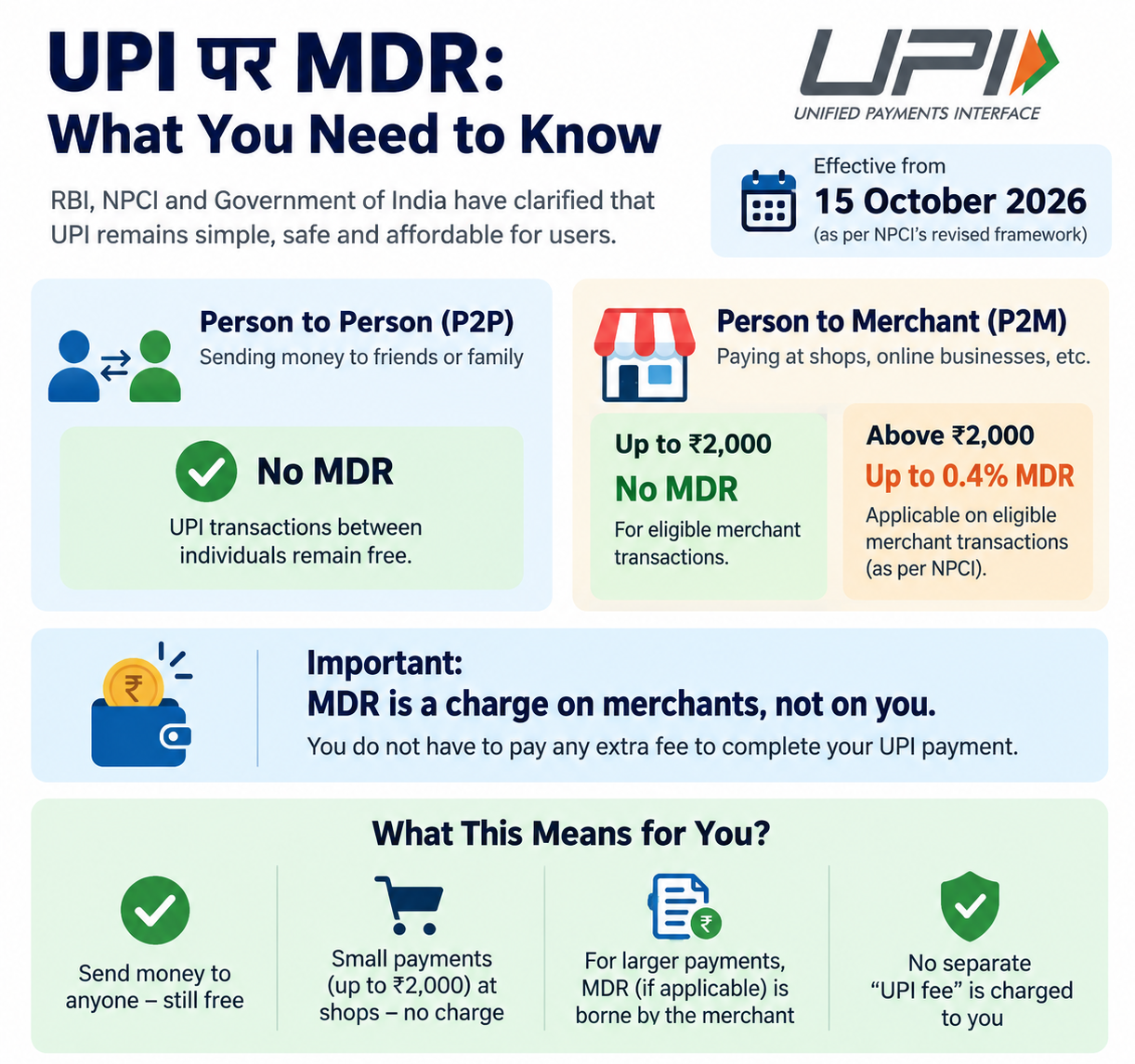
On 15 September 2026, the Ministry of Finance clarified the revised UPI framework. From 15 October 2026, a 0.4% MDR will apply to specified P2M transactions above ₹2,000, subject to the published conditions and caps. P2P transfers remain free, payments to merchants up to ₹2,000 remain free, and the government states that MDR is an ecosystem charge, not a customer fee. Banks are to ensure it is not passed on to customers. [1]
So, What Does This Mean for an Everyday User?
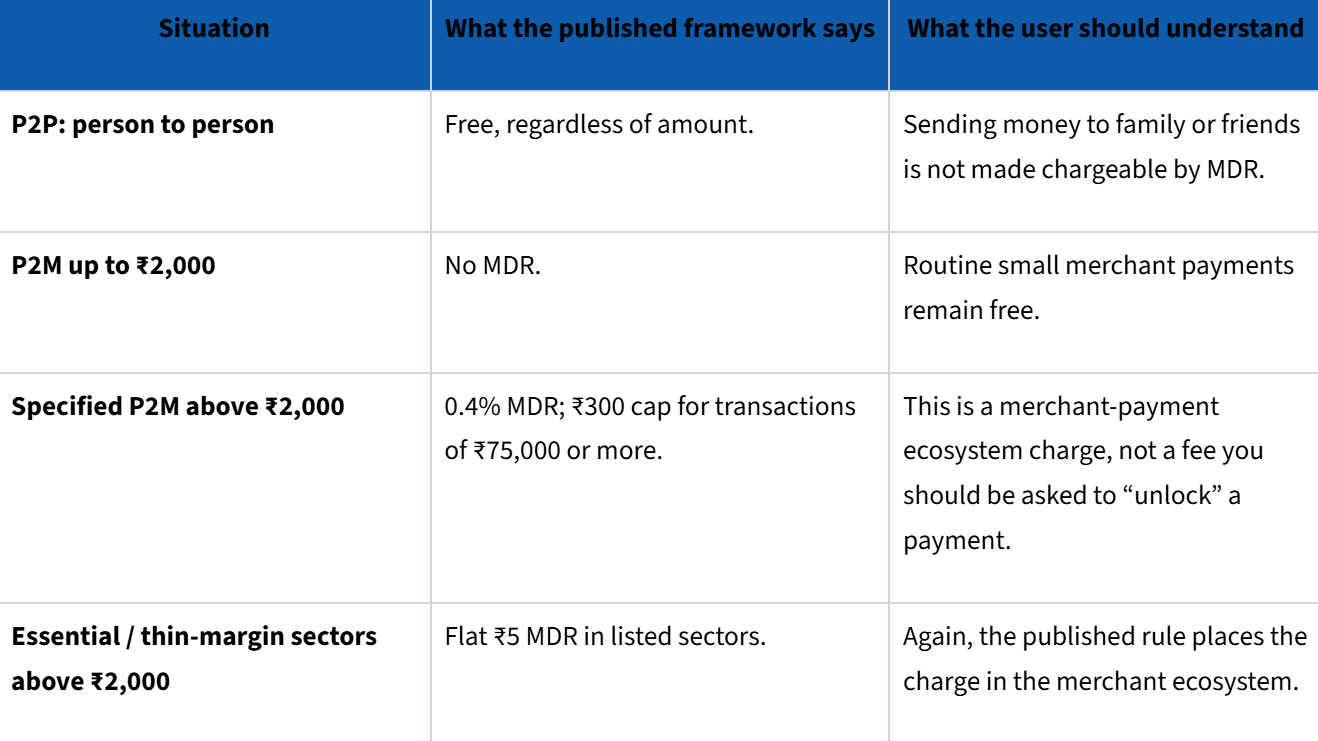
The important distinction is between a legitimate MDR rule and a scammer’s request for money. A message saying “pay ₹99 to release your UPI transaction” is not made genuine by mentioning NPCI, a bank, a government notice, or a news report.
A Related Cyber-Fraud Headline: Do Not Mix Two Different Issues
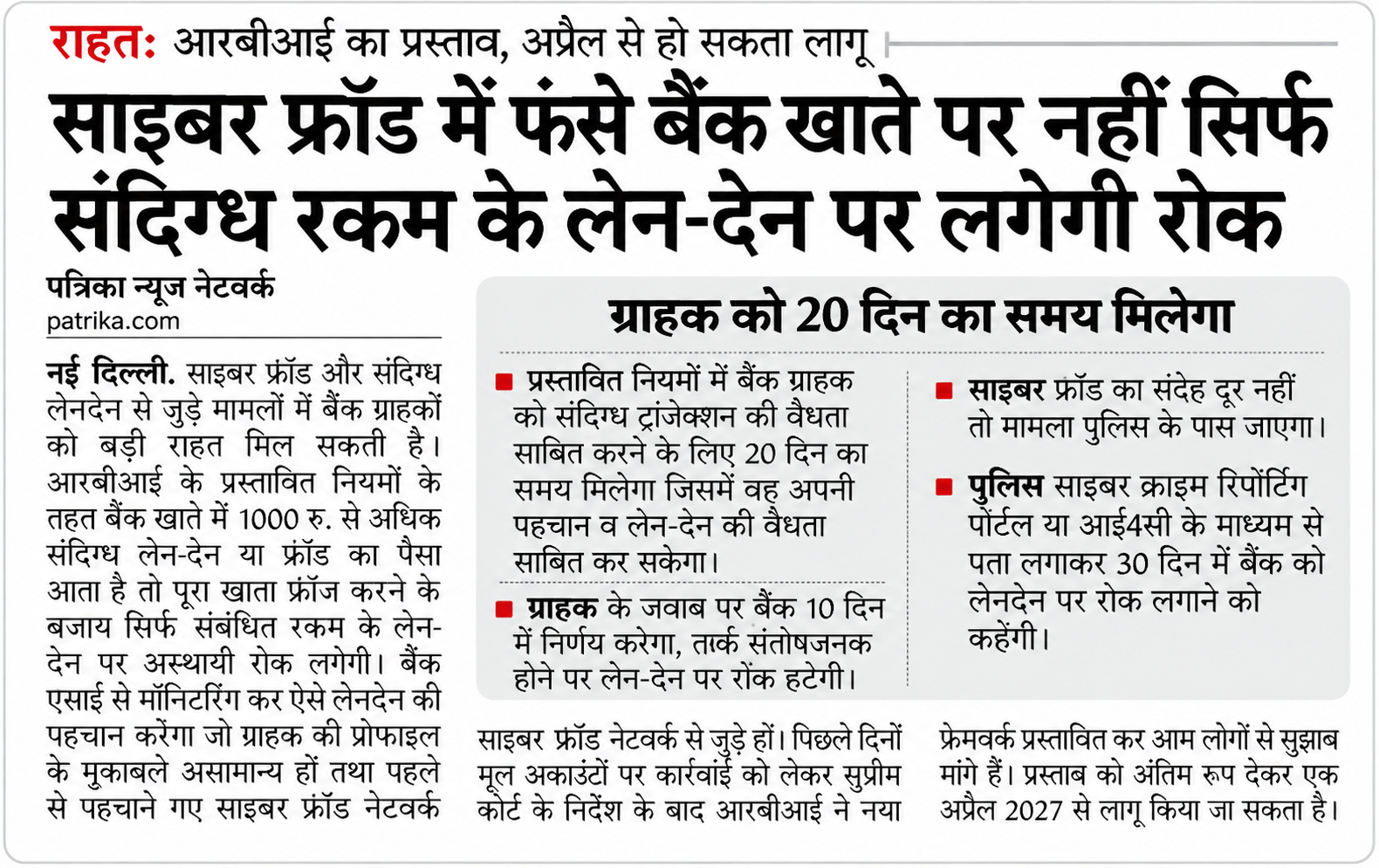
The supplied newspaper clipping discusses a separate cyber-fraud issue involving suspicious transactions and bank accounts linked to cybercrime. It is useful context, but it should not be read as proof that ordinary UPI users must pay a special “verification” or “release” fee. Separating the two issues helps prevent panic and misinformation.
Where Scammers Use the Confusion
“Pay a small fee to receive money”
A simple red flag is the demand for an upfront fee: “Your refund is ready, pay a processing fee first.” NPCI warns that scanning a QR code and entering a UPI PIN is for making a payment, not for receiving money or cashback. [2]
Fake payment success screens
Another common trick targets merchants: a fraudster shows a convincing “Payment Successful” screenshot and collects goods before the seller checks the account. In August 2026, Delhi Police reported a case involving allegedly fake or manipulated Paytm/UPI screenshots, followed by an attempt to gain access to victims’ mobile phones. [3] In September, police in Jharsuguda and Basti reported similar fake-confirmation cases; the Basti case involved a fabricated SBI YONO screenshot. [4][5]
“Your UPI is blocked because of new charges”
Scammers also borrow the language of genuine policy announcements. The caller creates urgency, claims your account is restricted, and asks you to install an app, share an OTP, approve a collect request, or transfer a small amount “for verification”. A real headline does not make an unexpected payment request genuine.
The Five-Second UPI Safety Check
Puse Before You Pay
WHO is asking? WHAT exactly are they asking you to do? WHERE did the payment request appear? WHEN did the request arrive? WHY would you need to pay to receive money? Verify the transaction in your own bank or UPI app. Merchants should not rely on a screenshot shown by a customer. Customers should not treat a QR code, collect request, or incoming message as proof that they are “receiving” money. Read the final authorisation screen before entering the UPI PIN. NPCI says users should never share the PIN and that bank customer support will not ask for it. [6]
If You Think You Have Been Scammed
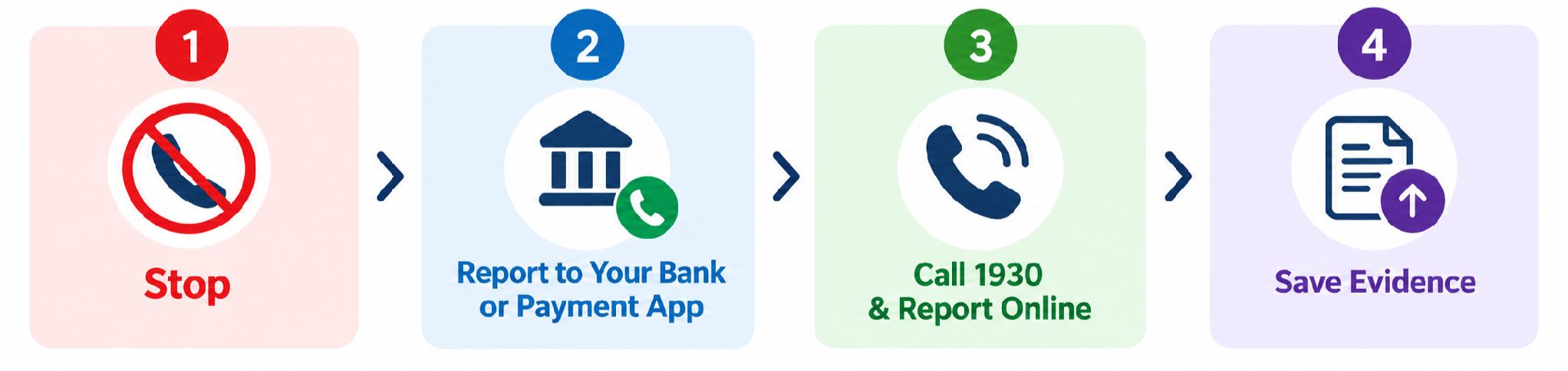
- Stop engaging with the suspected caller, account, or chat. Do not send another payment to “fix” the first one.
- Contact your bank or the relevant payment app using an official support channel and report the transaction.
- For financial cyber fraud in India, call 1930 as soon as possible and report the incident through the National Cyber Crime Reporting Portal. The official portal identifies 1930 as the helpline for immediate reporting of financial cyber fraud. [7]
- Keep the transaction ID, screenshots, phone numbers, messages, and dates. Do not delete useful evidence.
Conclusion
The safest way to understand the UPI charge discussion is to slow the headline down. Yes, a revised MDR framework has been announced for certain merchant transactions above ₹2,000 from 15 October 2026. But that does not make a P2P transfer subject to a “release fee”, and it does not make an unsolicited ₹49, ₹99, or ₹199 demand legitimate. Check the transaction type, confirm where the charge sits, verify the payment in your own app or bank account, and never disclose your UPI PIN. Digital safety is not about fearing every payment; it is about recognising when someone asks you to leave the normal payment process.
Remember
UPI convenience should never require blind trust. Verify the sender, verify the screen, verify the transaction.
References
[1] Press Information Bureau, Ministry of Finance, “UPI Continues to Remain Free for Peer to Peer Transactions and 96% of Merchant Transactions,” 15 September 2026. https://www.pib.gov.in/PressReleseDetailm.aspx?PRID=2310586
[2] National Payments Corporation of India (NPCI), “Fraud Awareness,” current guidance on fake cashback links, QR codes and UPI PIN safety. https://www.npci.org.in/fraud-awareness
[3] Hindustan Times / PTI, “Delhi Police arrest man in ₹30.81 lakh cyber fraud involving fake UPI payments,” 26 August 2026. https://www.hindustantimes.com/cities/delhi-news/delhi-police-arrest-man-in-rs-30-81-lakh-cyber-fraud-involving-fake-upi-payments-101787734051785.html
[4] The Times of India, “Two held for fake UPI payment fraud in Jharsuguda,” 11 September 2026. https://timesofindia.indiatimes.com/city/bhubaneswar/two-held-for-fake-upi-payment-fraud-in-jharsuguda/articleshow/134072823.cms
[5] The Times of India, “Basti: 2 held for fake UPI payment scam,” 13 September 2026. https://timesofindia.indiatimes.com/articleshow/134154561.cms
[6] NPCI, “UPI - Frequently Asked Questions,” UPI PIN and transaction-confirmation guidance. https://www.npci.org.in/what-we-do/upi/faqs
[7] Government of India, National Cyber Crime Reporting Portal, financial cyber fraud reporting guidance and helpline 1930. https://www.cybercrime.gov.in/
[8] Moneycontrol, “Don't trust the screenshot: How to spot a fake UPI payment,” 6 August 2026. https://www.moneycontrol.com/news/business/personal-finance/don-t-trust-the-screenshot-how-to-spot-a-fake-upi-payment-13996275.html
Image note: Both visuals were supplied by the requester. Figure 1 was cross-checked against the Ministry of Finance/PIB clarification cited in Reference [1].

Related Blogs

Introduction
The government has announced that the new criminal laws will come into force on 1st July 2024. The Union Government notified that three recently enacted criminal laws, viz. Bhartiya Nyaya Sanhita 2023, Bharatiya Nagarik Suraksha Sanhita 2023, and Bharatiya Sakshya Adhiniyam 2023 will be effective from 1st July 2024. The Indian Penal Code 1860, Code of Criminal Procedure 1973, and Indian Evidence Act 1872 have been replaced by these new criminal laws.
On 23 February 2024, the Ministry of Home Affairs Announced the Effective Date of new criminal laws as follows:
- Bharatiya Nyaya Sanhita, 2023 Effective from 1-7-2024, except Section 106(2).
- Bharatiya Sakshya Adhiniyam, 2023 Effective from 1-7-2024.
- Bharatiya Nagarik Suraksha Sanhita, 2023 The provisions will come into force on 1-7-2024 except the provisions of the entry relating to section 106(2) of the Bharatiya Nyaya Sanhita, 2023, in the First Schedule.
Section 106(2) Will Not Be Enforced
Truckers protested against this provision, which provides 10 years imprisonment and fines for those who cause death by rash and negligent driving of a vehicle not amounting to culpable homicide, and escape without reporting it to a police officer. As of now, the government has promised truckers and transporters that subsection 2 of Section 106 of Bharatiya Nyay Sanhita (BNS) will not come into force. This subsection deals with fatal hit-and-run cases and prescribes higher penalties for not informing authorities immediately after an accident.
Section 106(2) of Bharatiya Nyaya Sanhita, 2023 read as follows;
106. Causing death by negligence.—
(2) Whoever causes death of any person by rash and negligent driving of vehicle not amounting to culpable homicide, and escapes without reporting it to a police officer or a Magistrate soon after the incident, shall be punished with imprisonment of either description of aterm which may extend to ten years, and shall also be liable to fine.
BHARATIYA SAKSHYA ADHINIYAM, 2023
The Bhartiya Sakshya Adhiniyam 2023 will replace the Indian Evidence Act 1872. The Act has undergone significant modification to maintain its fundamental principles for fair legal proceedings and adapt to technological advancements and changes in societal norms. This Act recognises electronic records as primary evidence under Section 57. It also allows the electronic presentation of oral evidence, enabling remote testimony and ensuring that electronic records will have the same legal effect as paper records.
Bharatiya Nagarik Suraksha Sanhita, 2023
The Bharatiya Nagarik Suraksha Sanhita, 2023 replaces the 1973 Code of Criminal Procedure, introducing certain modifications. This Act, under section 176, requires forensic investigation for crimes punished with seven years' imprisonment or more. Section 530 of BNSS, 2023 is a newly inserted provision which envisages the use of electronic communication audio-video electronic means for trials, inquiries, proceedings, service and issuance of summons. Electronic mode is permitted for all trials, inquiries, and proceedings under section 173 of this Act. The concept of Zero FIR is also introduced under section 173(1) and mandates police stations to register the FIR, irrespective of jurisdiction.
Conclusion
India's new criminal laws are set to take effect on 1st July 2024. These laws modernise the country's legal framework, replacing outdated statutes and incorporating technological advancements. The concerns from stakeholders led to the withholding of enforcement of Section 106(2) of Bharatiya Nyaya Sanhita 2023. The new criminal laws aim to address contemporary society's complexities while upholding justice and fairness.
References
- https://www.indiatoday.in/india/video/new-criminal-laws-to-come-into-effect-from-july-1-2506664-2024-02-24
- https://www.lawrbit.com/article/ipc-crpc-evidence-act-replaced-by-new-criminal-laws/

Overview:
The rapid digitization of educational institutions in India has created both opportunities and challenges. While technology has improved access to education and administrative efficiency, it has also exposed institutions to significant cyber threats. This report, published by CyberPeace, examines the types, causes, impacts, and preventive measures related to cyber risks in Indian educational institutions. It highlights global best practices, national strategies, and actionable recommendations to mitigate these threats.

Significance of the Study:
The pandemic-induced shift to online learning, combined with limited cybersecurity budgets, has made educational institutions prime targets for cyberattacks. These threats compromise sensitive student, faculty, and institutional data, leading to operational disruptions, financial losses, and reputational damage. Globally, educational institutions face similar challenges, emphasizing the need for universal and localized responses.
Threat Faced by Education Institutions:
Based on the insights from the CyberPeace’s report titled 'Exploring Cyber Threats and Digital Risks in Indian Educational Institutions', this concise blog provides a comprehensive overview of cybersecurity threats and risks faced by educational institutions, along with essential details to address these challenges.
🎣 Phishing: Phishing is a social engineering tactic where cyber criminals impersonate trusted sources to steal sensitive information, such as login credentials and financial details. It often involves deceptive emails or messages that lead to counterfeit websites, pressuring victims to provide information quickly. Variants include spear phishing, smishing, and vishing.
💰 Ransomware: Ransomware is malware that locks users out of their systems or data until a ransom is paid. It spreads through phishing emails, malvertising, and exploiting vulnerabilities, causing downtime, data leaks, and theft. Ransom demands can range from hundreds to hundreds of thousands of dollars.
🌐 Distributed Denial of Service (DDoS): DDoS attacks overwhelm servers, denying users access to websites and disrupting daily operations, which can hinder students and teachers from accessing learning resources or submitting assignments. These attacks are relatively easy to execute, especially against poorly protected networks, and can be carried out by amateur cybercriminals, including students or staff, seeking to cause disruptions for various reasons
🕵️ Cyber Espionage: Higher education institutions, particularly research-focused universities, are vulnerable to spyware, insider threats, and cyber espionage. Spyware is unauthorized software that collects sensitive information or damages devices. Insider threats arise from negligent or malicious individuals, such as staff or vendors, who misuse their access to steal intellectual property or cause data leaks..
🔒 Data Theft: Data theft is a major threat to educational institutions, which store valuable personal and research information. Cybercriminals may sell this data or use it for extortion, while stealing university research can provide unfair competitive advantages. These attacks can go undetected for long periods, as seen in the University of California, Berkeley breach, where hackers allegedly stole 160,000 medical records over several months.
🛠️ SQL Injection: SQL injection (SQLI) is an attack that uses malicious code to manipulate backend databases, granting unauthorized access to sensitive information like customer details. Successful SQLI attacks can result in data deletion, unauthorized viewing of user lists, or administrative access to the database.
🔍Eavesdropping attack: An eavesdropping breach, or sniffing, is a network attack where cybercriminals steal information from unsecured transmissions between devices. These attacks are hard to detect since they don't cause abnormal data activity. Attackers often use network monitors, like sniffers, to intercept data during transmission.
🤖 AI-Powered Attacks: AI enhances cyber attacks like identity theft, password cracking, and denial-of-service attacks, making them more powerful, efficient, and automated. It can be used to inflict harm, steal information, cause emotional distress, disrupt organizations, and even threaten national security by shutting down services or cutting power to entire regions
Insights from Project eKawach
The CyberPeace Research Wing, in collaboration with SAKEC CyberPeace Center of Excellence (CCoE) and Autobot Infosec Private Limited, conducted a study simulating educational institutions' networks to gather intelligence on cyber threats. As part of the e-Kawach project, a nationwide initiative to strengthen cybersecurity, threat intelligence sensors were deployed to monitor internet traffic and analyze real-time cyber attacks from July 2023 to April 2024, revealing critical insights into the evolving cyber threat landscape.
Cyber Attack Trends
Between July 2023 and April 2024, the e-Kawach network recorded 217,886 cyberattacks from IP addresses worldwide, with a significant portion originating from countries including the United States, China, Germany, South Korea, Brazil, Netherlands, Russia, France, Vietnam, India, Singapore, and Hong Kong. However, attributing these attacks to specific nations or actors is complex, as threat actors often use techniques like exploiting resources from other countries, or employing VPNs and proxies to obscure their true locations, making it difficult to pinpoint the real origin of the attacks.
Brute Force Attack:
The analysis uncovered an extensive use of automated tools in brute force attacks, with 8,337 unique usernames and 54,784 unique passwords identified. Among these, the most frequently targeted username was “root,” which accounted for over 200,000 attempts. Other commonly targeted usernames included: "admin", "test", "user", "oracle", "ubuntu", "guest", "ftpuser", "pi", "support"
Similarly, the study identified several weak passwords commonly targeted by attackers. “123456” was attempted over 3,500 times, followed by “password” with over 2,500 attempts. Other frequently targeted passwords included: "1234", "12345", "12345678", "admin", "123", "root", "test", "raspberry", "admin123", "123456789"

Insights from Threat Landscape Analysis
Research done by the USI - CyberPeace Centre of Excellence (CCoE) and Resecurity has uncovered several breached databases belonging to public, private, and government universities in India, highlighting significant cybersecurity threats in the education sector. The research aims to identify and mitigate cybersecurity risks without harming individuals or assigning blame, based on data available at the time, which may evolve with new information. Institutions were assigned risk ratings that descend from A to F, with most falling under a D rating, indicating numerous security vulnerabilities. Institutions rated D or F are 5.4 times more likely to experience data breaches compared to those rated A or B. Immediate action is recommended to address the identified risks.


Risk Findings :
The risk findings for the institutions are summarized through a pie chart, highlighting factors such as data breaches, dark web activity, botnet activity, and phishing/domain squatting. Data breaches and botnet activity are significantly higher compared to dark web leakages and phishing/domain squatting. The findings show 393,518 instances of data breaches, 339,442 instances of botnet activity, 7,926 instances related to the dark web and phishing & domain activity - 6711.

Key Indicators: Multiple instances of data breaches containing credentials (email/passwords) in plain text.


- Botnet activity indicating network hosts compromised by malware.

- Credentials from third-party government and non-governmental websites linked to official institutional emails

- Details of software applications, drivers installed on compromised hosts.

- Sensitive cookie data exfiltrated from various browsers.


- IP addresses of compromised systems.
- Login credentials for different Android applications.

Below is the sample detail of one of the top educational institutions that provides the insights about the higher rate of data breaches, botnet activity, dark web activities and phishing & domain squatting.
Risk Detection:
It indicates the number of data breaches, network hygiene, dark web activities, botnet activities, cloud security, phishing & domain squatting, media monitoring and miscellaneous risks. In the below example, we are able to see the highest number of data breaches and botnet activities in the sample particular domain.

Risk Changes:

Risk by Categories:

Risk is categorized with factors such as high, medium and low, the risk is at high level for data breaches and botnet activities.

Challenges Faced by Educational Institutions
Educational institutions face cyberattack risks, the challenges leading to cyberattack incidents in educational institutions are as follows:
🔒 Lack of a Security Framework: A key challenge in cybersecurity for educational institutions is the lack of a dedicated framework for higher education. Existing frameworks like ISO 27001, NIST, COBIT, and ITIL are designed for commercial organizations and are often difficult and costly to implement. Consequently, many educational institutions in India do not have a clearly defined cybersecurity framework.
🔑 Diverse User Accounts: Educational institutions manage numerous accounts for staff, students, alumni, and third-party contractors, with high user turnover. The continuous influx of new users makes maintaining account security a challenge, requiring effective systems and comprehensive security training for all users.
📚 Limited Awareness: Cybersecurity awareness among students, parents, teachers, and staff in educational institutions is limited due to the recent and rapid integration of technology. The surge in tech use, accelerated by the pandemic, has outpaced stakeholders' ability to address cybersecurity issues, leaving them unprepared to manage or train others on these challenges.
📱 Increased Use of Personal/Shared Devices: The growing reliance on unvetted personal/Shared devices for academic and administrative activities amplifies security risks.
💬 Lack of Incident Reporting: Educational institutions often neglect reporting cyber incidents, increasing vulnerability to future attacks. It is essential to report all cases, from minor to severe, to strengthen cybersecurity and institutional resilience.
Impact of Cybersecurity Attacks on Educational Institutions
Cybersecurity attacks on educational institutions lead to learning disruptions, financial losses, and data breaches. They also harm the institution's reputation and pose security risks to students. The following are the impacts of cybersecurity attacks on educational institutions:
📚Impact on the Learning Process: A report by the US Government Accountability Office (GAO) found that cyberattacks on school districts resulted in learning losses ranging from three days to three weeks, with recovery times taking between two to nine months.
💸Financial Loss: US schools reported financial losses ranging from $50,000 to $1 million due to expenses like hardware replacement and cybersecurity upgrades, with recovery taking an average of 2 to 9 months.
🔒Data Security Breaches: Cyberattacks exposed sensitive data, including grades, social security numbers, and bullying reports. Accidental breaches were often caused by staff, accounting for 21 out of 25 cases, while intentional breaches by students, comprising 27 out of 52 cases, frequently involved tampering with grades.
⚠️Data Security Breach: Cyberattacks on schools result in breaches of personal information, including grades and social security numbers, causing emotional, physical, and financial harm. These breaches can be intentional or accidental, with a US study showing staff responsible for most accidental breaches (21 out of 25) and students primarily behind intentional breaches (27 out of 52) to change grades.
🏫Impact on Institutional Reputation: Cyberattacks damaged the reputation of educational institutions, eroding trust among students, staff, and families. Negative media coverage and scrutiny impacted staff retention, student admissions, and overall credibility.
🛡️ Impact on Student Safety: Cyberattacks compromised student safety and privacy. For example, breaches like live-streaming school CCTV footage caused severe distress, negatively impacting students' sense of security and mental well-being.
CyberPeace Advisory:
CyberPeace emphasizes the importance of vigilance and proactive measures to address cybersecurity risks:
- Develop effective incident response plans: Establish a clear and structured plan to quickly identify, respond to, and recover from cyber threats. Ensure that staff are well-trained and know their roles during an attack to minimize disruption and prevent further damage.
- Implement access controls with role-based permissions: Restrict access to sensitive information based on individual roles within the institution. This ensures that only authorized personnel can access certain data, reducing the risk of unauthorized access or data breaches.
- Regularly update software and conduct cybersecurity training: Keep all software and systems up-to-date with the latest security patches to close vulnerabilities. Provide ongoing cybersecurity awareness training for students and staff to equip them with the knowledge to prevent attacks, such as phishing.
- Ensure regular and secure backups of critical data: Perform regular backups of essential data and store them securely in case of cyber incidents like ransomware. This ensures that, if data is compromised, it can be restored quickly, minimizing downtime.
- Adopt multi-factor authentication (MFA): Enforce Multi-Factor Authentication(MFA) for accessing sensitive systems or information to strengthen security. MFA adds an extra layer of protection by requiring users to verify their identity through more than one method, such as a password and a one-time code.
- Deploy anti-malware tools: Use advanced anti-malware software to detect, block, and remove malicious programs. This helps protect institutional systems from viruses, ransomware, and other forms of malware that can compromise data security.
- Monitor networks using intrusion detection systems (IDS): Implement IDS to monitor network traffic and detect suspicious activity. By identifying threats in real time, institutions can respond quickly to prevent breaches and minimize potential damage.
- Conduct penetration testing: Regularly conduct penetration testing to simulate cyberattacks and assess the security of institutional networks. This proactive approach helps identify vulnerabilities before they can be exploited by actual attackers.
- Collaborate with cybersecurity firms: Partner with cybersecurity experts to benefit from specialized knowledge and advanced security solutions. Collaboration provides access to the latest technologies, threat intelligence, and best practices to enhance the institution's overall cybersecurity posture.
- Share best practices across institutions: Create forums for collaboration among educational institutions to exchange knowledge and strategies for cybersecurity. Sharing successful practices helps build a collective defense against common threats and improves security across the education sector.
Conclusion:
The increasing cyber threats to Indian educational institutions demand immediate attention and action. With vulnerabilities like data breaches, botnet activities, and outdated infrastructure, institutions must prioritize effective cybersecurity measures. By adopting proactive strategies such as regular software updates, multi-factor authentication, and incident response plans, educational institutions can mitigate risks and safeguard sensitive data. Collaborative efforts, awareness, and investment in cybersecurity will be essential to creating a secure digital environment for academia.
.webp)
Introduction
The scam involving "drugs in parcels' has resurfaced again with a new face. Cybercriminals impersonating and acting as FedEx, Police and various other authorities and in actuality, they are the perpetrators or bad actors behind the renewed "drugs in parcel" scam, which entails pressuring victims into sending money and divulging private information in order to escape fictitious legal repercussions.
Modus operandi
The modus operandi followed in this scam usually begins with a hacker calling someone on their cell phone posing as FedEx. They say that they are the recipients of a package under their name that includes illegal goods like jewellery, narcotics, or other items. The victim would feel afraid and apprehensive by now. Then there will be a video call with someone else who is posing as a police officer. The victim will be asked to keep the matter confidential while it is being investigated by this "fake officer."
After the call, they would get falsified paperwork from the CBI and RBI stating that an arrest warrant had been issued. Once the victim has fallen entirely under their sway, they would claim that the victim's Aadhaar has been used to carry out the unlawful conduct. They then request that the victim submit their bank account information and Aadhaar data for investigation. Subsequently, the hackers request that the victim transfer funds to a bank account for RBI validation. The victims thus submit money to the hackers believing it to be true for clearing their name.
Recent incidence:
In the most recent instance of a "drug-in-parcel" scam, an IT expert in Pune was defrauded of Rs 27.9 lakh by internet con artists acting as members of the Mumbai police's Cyber Crime Cell. The victim filed the First Information Report (FIR) in this matter at the police station. The victim stated that on November 11, 2023, the complainant received a call from a fraudster posing as a Mumbai police Cyber Crime Cell officer. The scammer falsely claimed to have discovered illegal narcotics in a package addressed to the complainant sent from Mumbai to Taiwan, along with an expired passport and an SBI card. To avoid arrest in a fabricated drug case, the fraudster coerced the complainant into providing bank account information under the guise of "verification." The victim, fearing legal consequences, transferred Rs 27,98,776 in ten online transactions to two separate bank accounts as instructed. Upon realizing the deception, the complainant reported the incident to the police, leading to an investigation.
In another such incident, the victim received an online bogus identity card from the scammers who had phoned him on the phone in October 2023. In an attempt to "clear the case" and issue a "no-objection certificate (NOC)," the fraudster persuaded the victim to wire money to a bank account, claiming to have seized narcotics in a shipment shipped from Mumbai to Thailand under his name. Fraudsters threatened to arrest the victim for mailing the narcotics package if money was not provided.
Furthermore, In August 2023, fraudsters acting as police officers and executives of courier companies defrauded a 25-year-old advertising student of Rs 53 lakh. They extorted money from her under the guise of avoiding legal action, which would include arrest, and informed her that narcotics had been discovered in a package she had delivered to Taiwan. According to the police, callers acting as police officers threatened to arrest the girl and forced her to complete up to 34 transactions totalling Rs 53.63 lakh from her and her mother's bank accounts to different bank accounts.
Measures to protect oneself from such scams
Call Verification:
- Be sure to always confirm the legitimacy of unexpected calls, particularly those purporting to be from law enforcement or delivery services. Make use of official contact information obtained from reliable sources to confirm the information presented.
Confidentiality:
- Use caution while disclosing personal information online or over the phone, particularly Aadhaar and bank account information. In general, legitimate authorities don't ask for private information in this way.
Official Documentation:
- Request official documents via the appropriate means. Make sure that any documents—such as arrest warrants or other government documents—are authentic by getting in touch with the relevant authorities.
No Haste in Transactions:
- Proceed with caution when responding hastily to requests for money or quick fixes. Creating a sense of urgency is a common tactic used by scammers to coerce victims into acting quickly.
Knowledge and Awareness:
- Remain up to date on common fraud schemes and frauds. Keep up with the most recent strategies employed by online fraudsters to prevent falling for fresh scam iterations.
Report Suspicious Activity:
- Notify the local police or other appropriate authorities of any suspicious calls or activities. Reports received in a timely manner can help investigations and shield others from falling for the same fraud.
2fA:
- Enable two-factor authentication (2FA) wherever you can to provide online accounts and transactions an additional degree of protection. This may lessen the chance of unwanted access.
Cybersecurity Software:
- To defend against malware, phishing attempts, and other online risks, install and update reputable antivirus and anti-malware software on a regular basis.
Educate Friends and Family:
- Inform friends and family about typical scams and how to avoid falling victim to fraud. A safer online environment can be achieved through increased collective knowledge.
Be skeptical
- Whenever anything looks strange or too good to be true, it most often is. Trust your instincts. Prior to acting, follow your gut and confirm the information.
By taking these precautions and exercising caution, people may lessen their vulnerability to scams and safeguard their money and personal data from online fraudsters.
Conclusion:
Verifying calls, maintaining secrecy, checking official papers, transacting cautiously, and keeping up to date are all examples of protective measures for protecting ourselves from such scams. Using cybersecurity software, turning on two-factor authentication, and reporting suspicious activity are essential in stopping these types of frauds. Raising awareness and working together are essential to making the internet a safer place and resisting the activities of cybercriminals.
References:
- https://indianexpress.com/article/cities/pune/pune-cybercrime-drug-in-parcel-cyber-scam-it-duping-9058298/#:~:text=In%20August%20this%20year%2C%20a,avoiding%20legal%20action%20including%20arrest.
- https://www.the420.in/pune-it-professional-duped-of-rs-27-9-lakh-in-drug-in-parcel-scam/
- https://www.newindianexpress.com/states/tamil-nadu/2023/oct/16/the-return-of-drugs-in-parcel-scam-2624323.html
- https://timesofindia.indiatimes.com/city/hyderabad/2-techies-fall-prey-to-drug-parcel-scam/articleshow/102786234.cms
