
#FactCheck - AI-Generated Video of Monkey Falsely Linked to Hanuman Devotion
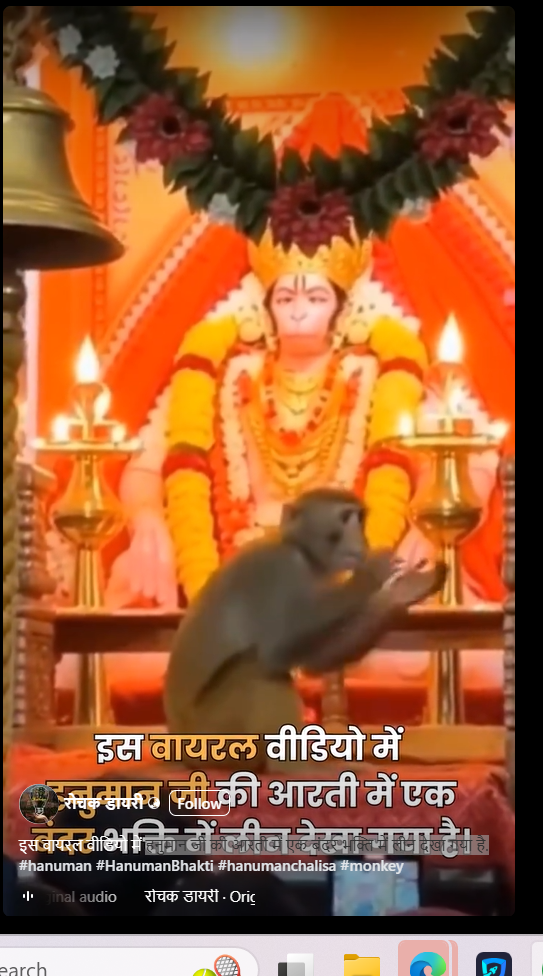
A video is being widely shared on social media showing a monkey, with users claiming that the animal is immersed in devotion to Lord Hanuman. The clip is being circulated with assertions that the monkey was seen participating in Hanuman Aarti. Cyber Peace Foundation’s research found that the viral claim is fake. Our investigation revealed that the video is not real and has been generated using artificial intelligence tools.
Claim
On January 6, 2026, Facebook users shared the viral video claiming, “A monkey was seen immersed in devotion during Hanuman Aarti.”
- Post link: https://www.facebook.com/reel/1261813845766976
- Archived link: https://archive.ph/anid5
Screenshots of the post can be seen below.
FactCheck:
When we closely examined the viral video, we noticed several visual inconsistencies. These anomalies raised suspicion that the video might be AI-generated. To verify this, we scanned the video using the AI detection tool Hive Moderation. According to the results, the video was found to be 97 percent AI-generated.

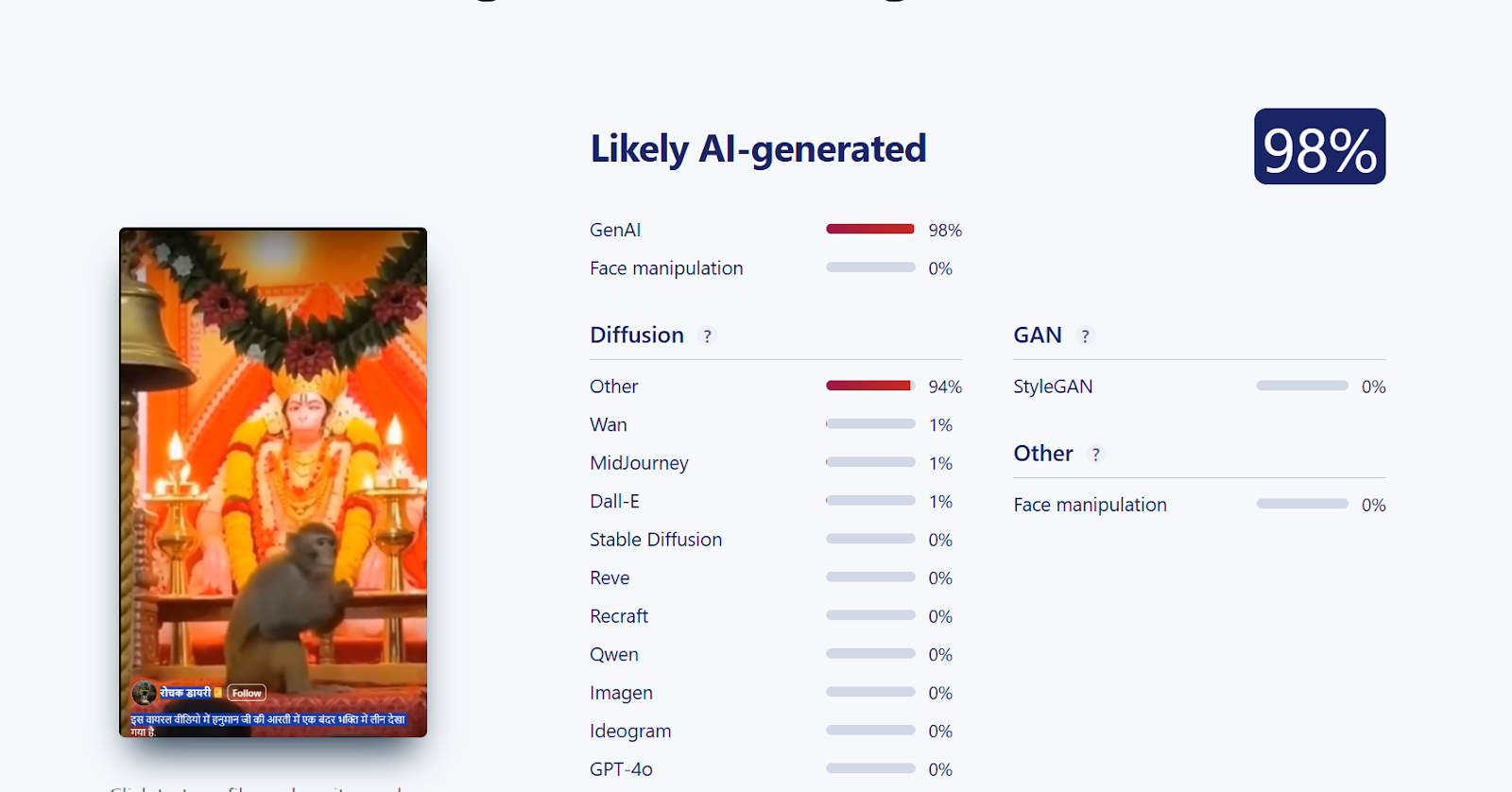
Further, we analysed the video using another AI detection tool, Sightengine. The tool’s assessment indicated that the viral video is 98 percent AI-generated.
Conclusion
Our investigation confirms that the viral video claiming to show a monkey immersed in devotion to Lord Hanuman is AI-generated and not real. The claim circulating on social media is false and misleading.

Related Blogs
Executive Summary
A video is being shared on social media with the claim that a woman in New Delhi slapped an Indian Army soldier who allegedly followed and harassed her on the road. The post claims that the woman confronted the soldier on the spot, linking the incident to harassment of women. CyberPeace Research found the viral claim to be misleading. Our research found that the video is not recent but dates back to an incident in Delhi in September 2017. The video is from a road rage incident that took place in the Vasant Kunj-Rajokari Flyover area of South Delhi in September 2017. According to available reports, the woman allegedly assaulted two Army personnel. The claim that the video shows an incident in which a woman slapped an Army soldier in response to being followed or harassed by him is misleading.
Claim:
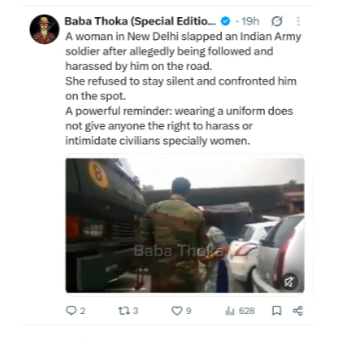
A social media user shared the viral video claiming that a woman in New Delhi slapped an Indian Army soldier who allegedly followed and harassed her on the road. The post claimed that instead of remaining silent, the woman confronted the soldier on the spot. The post further stated that the incident sends a strong message that wearing a uniform does not give anyone the right to harass or intimidate civilians, especially women.
https://x.com/OfficialThoka/status/2101989813071307032
Fact Check
To verify the viral claim, we conducted a Google search using relevant keywords. However, we did not find any credible media reports related to the claim.To further verify the authenticity of the viral claim, we conducted a reverse image search of the keyframes of the video. During the search, we found the same video on the NDTV website, which was published on September 15, 2017. According to the NDTV report, a woman in New Delhi was caught on camera repeatedly slapping an Army personnel. The soldier did not appear to retaliate during the incident. Following a complaint by the Army to the Delhi Police, the woman was arrested. However, she was released within a few hours after a judge granted her bail. The report stated that in a video recorded by a witness on a mobile phone in South Delhi’s Vasant Kunj the previous Saturday, 44-year-old Smriti Kalra was seen repeatedly slapping the soldier on the face before walking angrily towards her car. The soldier appeared to be trying to reason with her while attempting to defend himself against the assault.Smriti Kalra, a resident of Gurgaon, had stopped her Tata Indica car in front of an Army truck carrying soldiers. At first glance, the incident appeared to be a case of road rage, although there was no reported collision or any obvious provocation for the attack.Smriti Kalra, who was divorced, was charged with causing hurt to deter a public servant from performing his duty. She was also accused of obstructing and assaulting a public servant on duty and wrongfully restraining him. Police seized her car.
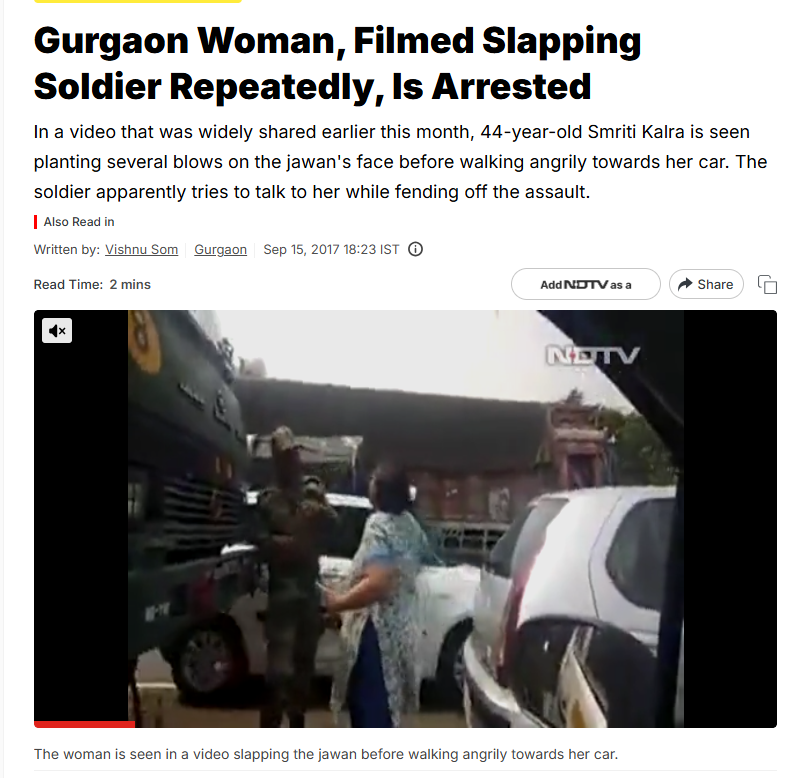
In the next stage of our research, we found a report on the Aaj Tak website related to the incident, which also featured the viral video. The report included an exclusive interview with the Army personnel involved in the incident. He was identified as Mahavir Singh, who was serving as a Junior Commissioned Officer (JCO) in the Army at the time.
In an exclusive interview with Aaj Tak, Mahavir Singh said that he was deeply saddened by the incident. He questioned how anyone could behave in such a manner with Indian Army personnel, abuse them, or slap them. He said that the Army vehicle was moving slowly when a car suddenly came in front of it and started driving ahead of them. A woman was the only person in the car, and she was allegedly driving in a zigzag manner in front of the Army vehicle.
Conclusion
Our research found that the viral video is being shared with a misleading context. The video is not from a recent incident but from a road rage incident that took place in the Vasant Kunj-Rajokari Flyover area of South Delhi in September 2017. According to available media reports, the woman had allegedly misbehaved with Army personnel and slapped one of the soldiers during the incident. Mahavir Singh, who was serving as a JCO in the Army at the time, also spoke to the media about the incident. Our research found no credible information confirming that the Army personnel had followed or harassed the woman. Therefore, the claim that the video from the 2017 incident shows a woman slapping a soldier in response to being allegedly followed or harassed by him is misleading.

Executive Summary
Iran’s Supreme Leader Ayatollah Ali Khamenei was reportedly killed in a major attack carried out by Israel and the United States, with claims circulating that Iranian state media confirmed his death early Sunday morning. Amid these claims, a video is being widely shared on social media. The viral video shows a body trapped under debris. Users sharing the clip claim that the body seen in the footage is that of Ayatollah Ali Khamenei. However, research conducted by CyberPeace found the viral claim to be false. Our research revealed that the video is not authentic but AI-generated.
Claim:
On March 1, 2026, an Instagram user shared the viral video with the caption: “Shaheed Ayatollah Sayyid Ali Hosseini Khamenei — Neither fled nor hid in a bunker, embraced death like a brave man.” The link to the post and its archived version are provided below along with a screenshot.
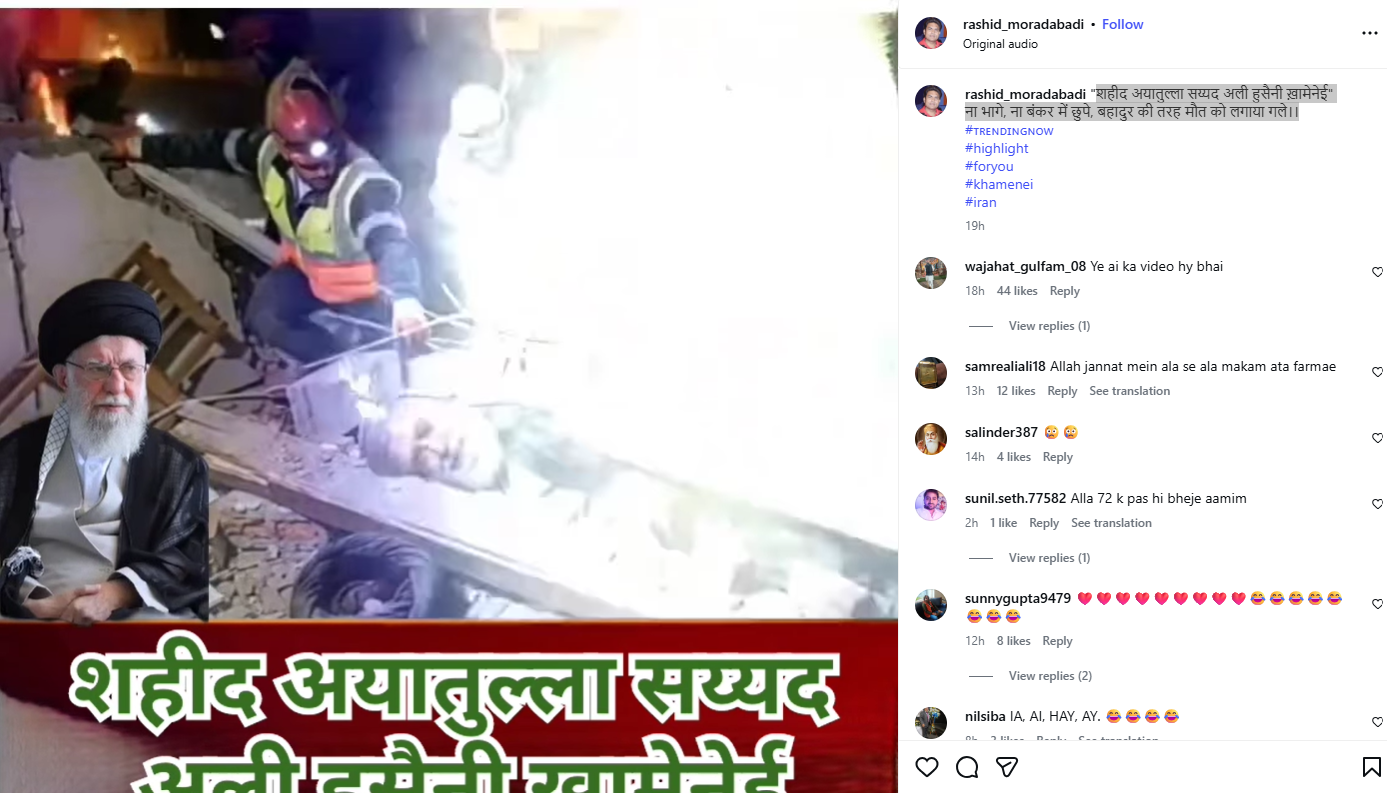
Fact Check:
Upon closely examining the viral video, we noticed several visual irregularities and technical inconsistencies. This raised suspicion about its authenticity. We then scanned the video using the AI detection tool Hive Moderation. The results indicated that approximately 83 percent of the content showed signs of being AI-generated.
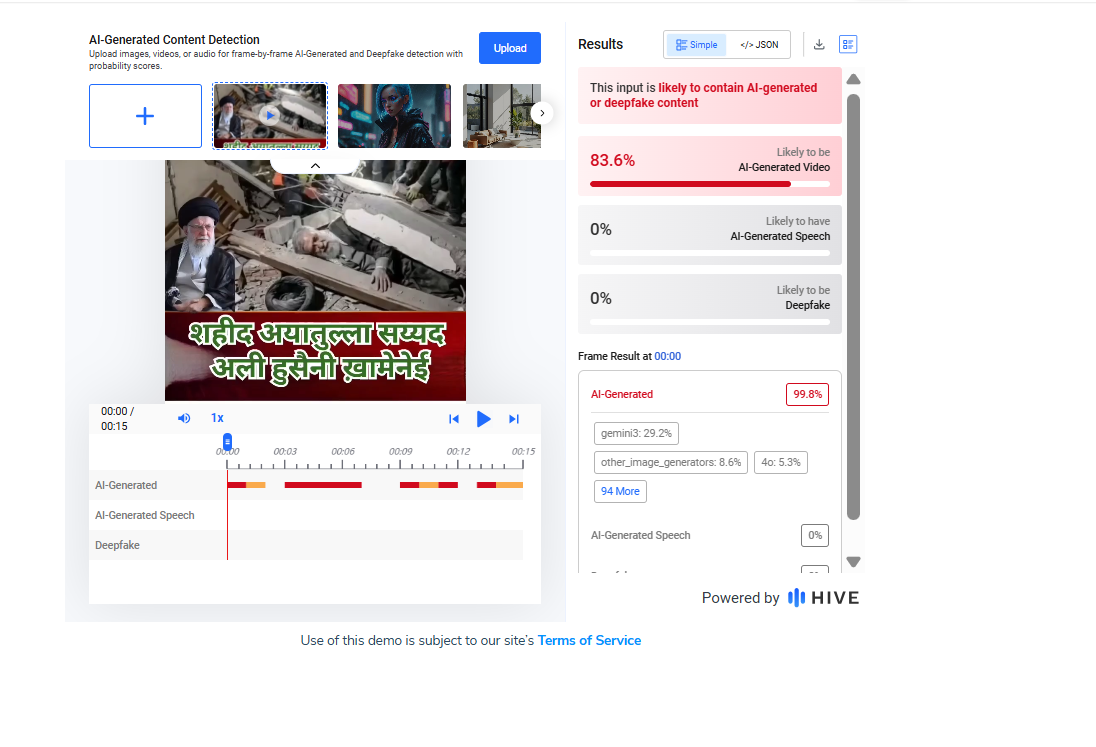
To further verify the claim, we also analyzed the video using another AI detection tool, WasItAI. The findings similarly suggested that the video was generated using artificial intelligence.

Conclusion:
Our research establishes that the viral video is not real. It has been artificially generated using AI and is being shared with misleading claims.

Executive Summary
A video is being widely shared on social media, allegedly showing Chief of Defence Staff (CDS) Raja Subramani referring to the resignation of more than 30,000 Indian soldiers. The video is being circulated with the claim that CDS Raja Subramani confirmed that over 30,000 personnel resigned in protest following the demonstration held at Jantar Mantar. CyberPeace Research Wing’s research found that the viral claim is false. The research revealed that the video featuring CDS Raja Subramani has been digitally manipulated and created using Artificial Intelligence (AI). The original video does not contain any statement related to soldiers’ resignations or the Jantar Mantar protest.
Claim
A Facebook user shared the video with a claim stating: “After the protests at Jantar Mantar, India’s Chief of Defence Staff Raja Subramani has issued an emergency alert, saying that more than 30,000 soldiers have resigned in protest because their children were brutally beaten at Jantar Mantar.”
The post link, archive link and screenshot are provided below:

Fact Check
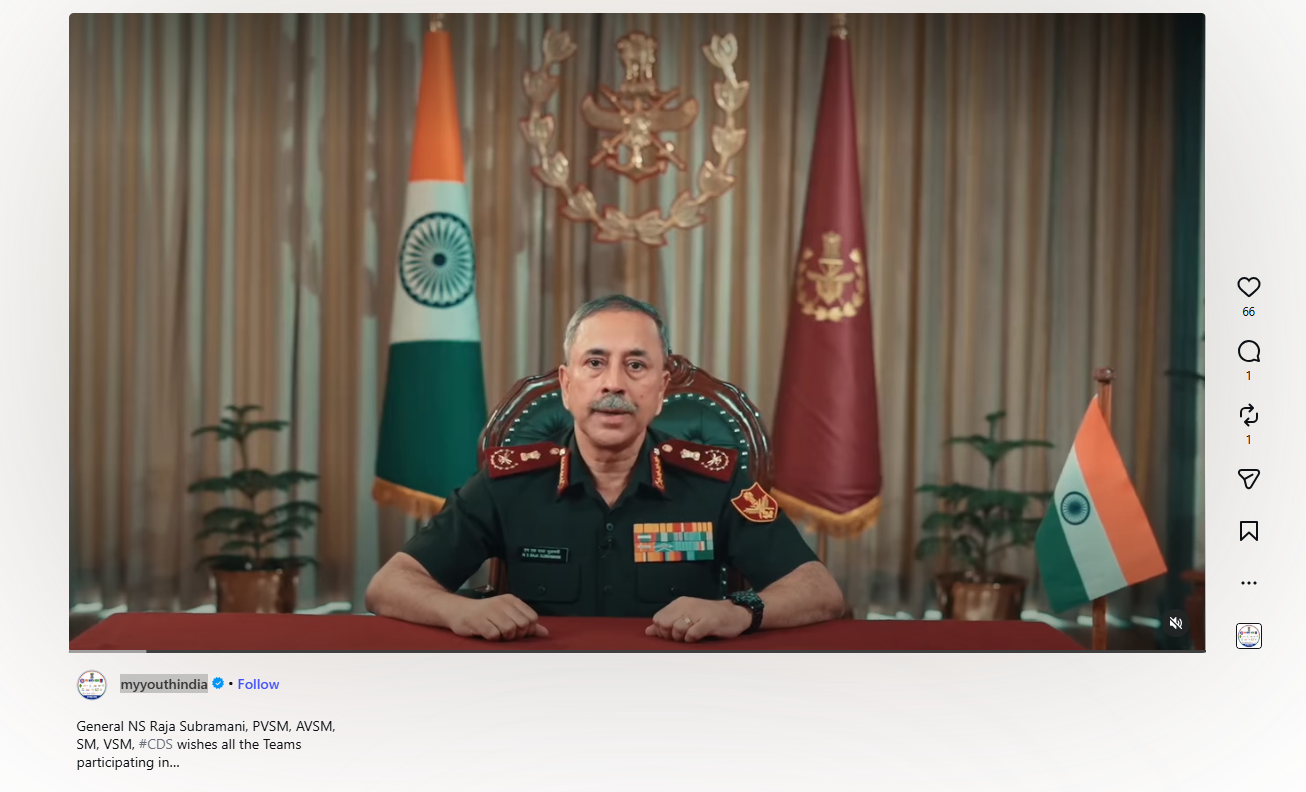
To verify the authenticity of the viral video, we extracted a key frame and conducted a reverse image search using Google Lens. During the search, we found the same video uploaded by the Eastern Command of the Indian Army (@easterncomd) on its official X account on July 21, 2026. The original video shows CDS Raja Subramani extending his best wishes to all participating teams of the 135th Indian Oil Durand Cup Football Tournament. There is no mention of any soldier resignations or the Jantar Mantar protest in the original footage.
https://x.com/easterncomd/status/2079485496988967225
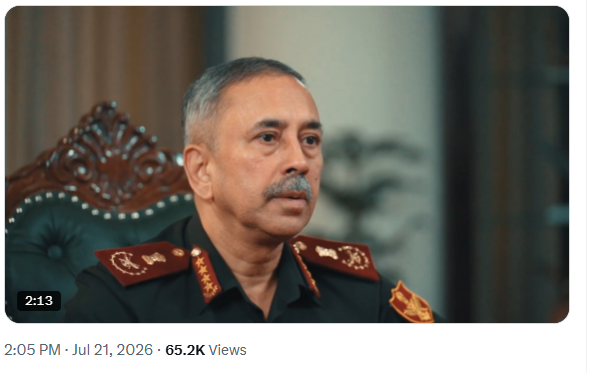
Further research led us to the same video posted by the Instagram account myyouthindia, where CDS Raja Subramani can again be seen wishing teams participating in the 135th Indian Oil Durand Cup Football Tournament.
https://www.instagram.com/reels/DbEGRGBsKv8/
Conclusion
The research established that the viral video of CDS Raja Subramani has been manipulated using AI-generated content. The original video is related to the 135th Indian Oil Durand Cup Football Tournament and does not contain any statement about the resignation of 30,000 Indian soldiers or the Jantar Mantar protest. The digitally altered video is being shared with a false claim.
