
The New SIM Binding Rule - Safety, Access, and the Future of Messaging Apps
Introduction
India currently faces a crucial moment because its digital system experiences rapid growth while cyber criminals take advantage of this development to increase their fraudulent activities. The Department of Telecommunications (DoT) has implemented a new regulatory requirement that mandates all messaging and communication platforms to use SIM-binding technology as their primary security measure. The new rule, which starts on 1st March 2026, requires WhatsApp, Telegram, Signal and other similar applications to operate only when users have their registered SIM card present in their device. The telecom identifier restriction aims to prevent unauthorised access, but it creates significant privacy concerns, together with issues of proportionality and platform governance.
Understanding the SIM-Binding Directive
SIM-binding establishes direct links between communication platform accounts and the SIM cards used for registration. The application will stop working when users take out their SIM card, turn it off, or get a new SIM card. Users must re-authenticate their sessions through the main device because web-based sessions, including WhatsApp Web, will automatically log out after six hours of use.
The Telecommunications Act, 2023 and Telecom Cyber Security Rules serve as the base legal authority for this directive. The regulation requires Telecommunication Identity User Entities (TIUEs), which identify users through mobile numbers, to maintain service access based on verified telecommunications credentials.
Rationale: Addressing Cyber Fraud and Misuse
The policy exists because cyber fraud activities have reached a point where they require a more powerful response. Authorities have stated that messaging applications maintain their operational capacity even after users remove their SIM cards, which allows international scammers to use Indian phone numbers for their fraudulent activities. SIM-binding aims to:
- Restore traceability by linking active accounts to verified SIM-based identities.
- Reduce remote access abuse, which includes both account takeovers and impersonation scams.
- Stop fraudulent activities that require physical device access through the creation of permanent sessions.
- Build a system of accountability that extends throughout the telecommunications industry.
The government introduced this measure as an appropriate solution to deal with systemic vulnerabilities because reported cyber fraud losses in 2024 reached more than ₹22,800 crore.
Security with Responsibility
The system requires digital trust to be established through secure identity verification systems, which include official systems for verification and operational systems that enable governmental agencies to work together.
CyberPeace principles require security measures to maintain three essential conditions, which are:
- They must respond to existing dangers
- Their execution process must be open to public observation
- They need to protect user rights, which include their right to privacy and personal independence
- They must provide equal access while safeguarding against negative impacts on at-risk user groups.
Industry Response and Governance Challenges
The directive has received diverse responses from people who work in different fields. Some platforms are testing SIM presence verification features for their upcoming changes, according to reports, while industry groups representing major technology companies have raised legal issues. They argue that the mandate may exceed the regulatory scope of the DoT and potentially conflict with constitutional protections. The existing tension demonstrates how governments face difficulties because they must protect national security while managing international platform operations and legal systems. The situation requires multiple stakeholders to work together because governments, industry, and civil society need to design policies through their collective input.
Policy Insights and Recommendations
The successful balanced execution of this initiative depends on these two essential elements:
- Clear Implementation Guidelines: Organizations need to establish detailed technical standards together with compliance frameworks, which must be followed during their implementation process across various platforms.
- Privacy Safeguards: The telecom service provider must implement strong data protection measures that protect customer data from unauthorised access through SIM-binding technology.
- User Awareness and Transparency: Users should receive information about SIM-binding effects on their access rights, together with security controls, which will help them build trust and provide informed consent.
- Flexibility for Edge Cases: Provisions should exist for legitimate use cases such as device changes, international travel, and accessibility needs.
- Global Interoperability Dialogue: India should engage with global stakeholders to ensure that such measures do not fragment the digital ecosystem.
Conclusion
The SIM-binding directive establishes India’s defence against cyber threats by solving a specific problem that exists in digital identity verification. The system establishes CyberPeace as its fundamental base through its shift from reactive cybersecurity practices toward preventive digital governance methods.
The system will achieve its desired results only if it effectively manages the three elements of security protection, privacy maintenance, and user convenience. SIM-binding and similar policies require ongoing assessment because their implementation affects both national security and the fundamental principles of trustworthiness, inclusiveness, and ethical digital governance.
References
- https://www.opindia.com/2026/02/sim-binding-to-be-implemented-from-1st-march-what-it-means-and-how-it-will-impact-users/
- https://www.ndtv.com/india-news/sim-binding-rule-set-to-change-how-whatsapp-telegram-work-in-india-from-march-1-11148903#:~:text=Under%20the%20new%20framework%2C%20messaging,is%20re%2Dinserted%20and%20authenticated.
- https://timesofindia.indiatimes.com/technology/tech-news/telecom-departments-sim-binding-rule-to-come-into-effect-from-tomorrow-march-1-what-is-sim-binding-how-it-works-and-what-it-means-for-whatsapp-users/articleshow/128879561.cms
- https://www.deccanherald.com/technology/whatsapp-begins-testing-sim-binding-in-india-3913963

Related Blogs

The evolution of technology has presented both profound benefits and considerable challenges. It has benefited us with global interconnectivity, optimisation of the workforce, faster and solution-oriented approach, but at the same time increases risks of cybercrimes and the misuse of technology via online theft, fraud, and abuse. As the reliance on technology increases, it makes the users vulnerable to cyberattacks.
One way to address this nuisance is to set global standards and initiate measures for cooperation by integrating the efforts of international institutions such as UN bodies and others. The United Nations Interregional Crime and Justice Research Institute, which combats cybercrime and promotes the responsible use of technology, is making waves in these issues.
Understanding the Scope of the Problem
Crowdstrike had estimated the cybersecurity market at $207.77 billion in 2024 and expected it to reach $376.55 billion by 2029 and continue growing at a CAGR of 12.63% during the forecast period. In October of 2024, Forbes predicted that the cost of cyber attacks on the global economy would be over $10.5 trillion.
The developments in technology have provided cybercriminals with more sophisticated means to commit cybercrimes. These include cybercrimes like data breaches, which are increasingly common, such as phishing attacks, ransomware, social engineering, and IoT attacks. Their impact is evident across various domains, including economic and social spheres. The victims of cybercrimes can often suffer from stress, anxiety, fear of being victimised again, a lack of trust and social polarisation/stigmatisation.
UNICRI’s Strategic Approach
UNICRI actively combats cybercrimes and technology misuse, focusing on cybersecurity, organized crime in cyberspace, and terrorists' internet use. Since 2020, it has monitored social media misuse, analysed tools to debunk misinformation and balanced security with human rights.
The key focus areas of UNICRI’s strategic approach include cybersecurity in robotics, critical infrastructure, and SCADA systems, digital forensics, child online protection and addressing online profiling and discrimination. It further supports LEAs (judges, prosecutors, and investigators) by providing them with specialised training. Its strategies to counter cybercrime and tech misuse include capacity-building exercises for law enforcement, developing international legal frameworks, and fostering public-private collaborations.
Key Initiatives under UNICRI Strategic Programme Framework of 2023-2026
The key initiatives under UNICRI set out the strategic priority areas that will guide its work. It includes:
- Prevent and Counter Violent Extremism: By addressing the drivers of radicalisation, gender-based discrimination, and leveraging sports for prevention.
- Combat Organised Crime: Via tackling illicit financial flows, counterfeiting, and supply chain crimes while promoting asset recovery.
- Promotion of Emerging Technology Governance: Encouraging responsible AI use, mitigating cybercrime risks, and fostering digital inclusivity.
- Rule of Law and Justice Access: Enhancing justice systems for women and vulnerable populations while advancing criminal law education.
- CBRN Risk Mitigation: Leveraging expert networks and whole-of-society strategies to address chemical, biological, radiological, and nuclear risks.
The Challenges and Opportunities: CyberPeace Takeaways
The challenges that affect the regulation of cybercrimes are most often caused due to jurisdictional barriers, the lack of resources, and the rapid pace of technological change. This is due to the cross-border nature of cybercrimes and as many nations lack the expertise or infrastructure to address sophisticated cyber threats. The regulatory or legislative frameworks often get outpaced by technology developments, including quantum computing, deepfakes, or blockchain misuse. Due to this, these crimes are often unpunished.
The opportunities that have been developing for innovation in cybercrime prevention, include AI and machine learning tools to detect cybercrimes, enhanced international cooperation that can strengthen the collective defence mechanisms, like multi-stakeholder approaches. Capacity Building initiatives for continuous training and education help LEAs and judicial systems adapt to emerging threats, is a continuous effort that requires participation from all sectors, be it public or private.
Conclusion
Due to cybercrimes and the threats they induce on individuals, communities, and global security, the proactive approach by UNICRI of combining international cooperation, capacity-building and innovative strategies is pivotal in combating these challenges. By addressing the challenges of organised crime in cyberspace, child online protection, and emerging technology governance, UNICRI exemplifies the power of strategic engagement. While jurisdictional barriers and resource limitations persist, the opportunities in AI, global collaboration, and education offer a path forward. With the evolution of technology, our defences must also be dynamic and ever evolving, and UNICRI’s efforts are essential to building a safer, more inclusive digital future for all.
References
- https://unicri.it/special_topics/securing_cyberspace
- https://www.forbes.com/sites/bernardmarr/2023/10/11/the-10-biggest-cyber-security-trends-in-2024-everyone-must-be-ready-for-now/

Executive Summary:
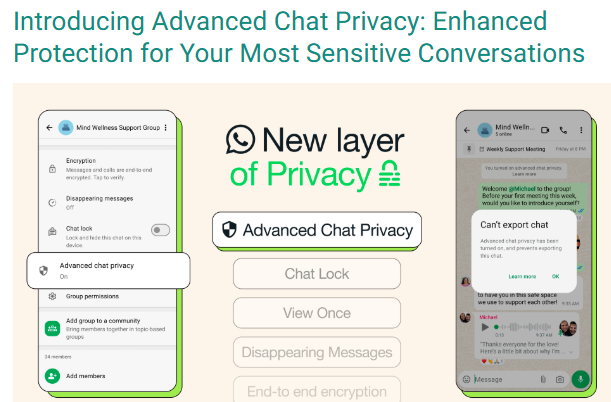
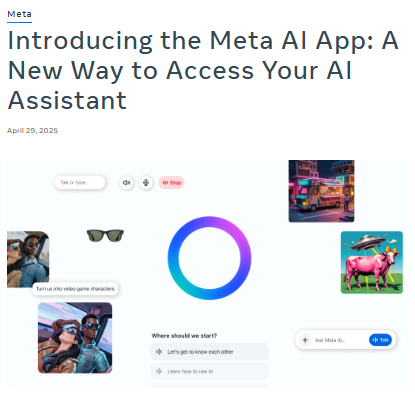
A viral social media video falsely claims that Meta AI reads all WhatsApp group and individual chats by default, and that enabling “Advanced Chat Privacy” can stop this. On performing reverse image search we found a blog post of WhatsApp which was posted in the month of April 2025 which claims that all personal and group chats remain protected with end to end (E2E) encryption, accessible only to the sender and recipient. Meta AI can interact only with messages explicitly sent to it or tagged with @MetaAI. The “Advanced Chat Privacy” feature is designed to prevent external sharing of chats, not to restrict Meta AI access. Therefore, the viral claim is misleading and factually incorrect, aimed at creating unnecessary fear among users.
Claim:
A viral social media video [archived link] alleges that Meta AI is actively accessing private conversations on WhatsApp, including both group and individual chats, due to the current default settings. The video further claims that users can safeguard their privacy by enabling the “Advanced Chat Privacy” feature, which purportedly prevents such access.

Fact Check:
Upon doing reverse image search from the keyframe of the viral video, we found a WhatsApp blog post from April 2025 that explains new privacy features to help users control their chats and data. It states that Meta AI can only see messages directly sent to it or tagged with @Meta AI. All personal and group chats are secured with end-to-end encryption, so only the sender and receiver can read them. The "Advanced Chat Privacy" setting helps stop chats from being shared outside WhatsApp, like blocking exports or auto-downloads, but it doesn’t affect Meta AI since it’s already blocked from reading chats. This shows the viral claim is false and meant to confuse people.
Conclusion:
The claim that Meta AI is reading WhatsApp Group Chats and that enabling the "Advance Chat Privacy" setting can prevent this is false and misleading. WhatsApp has officially confirmed that Meta AI only accesses messages explicitly shared with it, and all chats remain protected by end-to-end encryption, ensuring privacy. The "Advanced Chat Privacy" setting does not relate to Meta AI access, as it is already restricted by default.
- Claim: Viral social media video claims that WhatsApp Group Chats are being read by Meta AI due to current settings, and enabling the "Advance Chat Privacy" setting can prevent this.
- Claimed On: Social Media
- Fact Check: False and Misleading

Amid reports of widespread protests in Iran over the past two weeks, a video showing protesters setting cars on fire is being widely shared on social media with claims that it depicts recent unrest in the country.
However, research by Cyber Peace Foundation has found the viral claim to be false. Our resarch shows that the video is not from Iran, but from violent protests that took place near the Turkish Consulate in Thessaloniki, Greece, on November 1, 2025.
Claim:
On January 11, 2026, users on social media platform X (formerly Twitter) shared the viral video claiming it showed massive anti-regime protests in Iran. One such post alleged:
“1.5–1.85 million Iranians are fighting on the streets tonight. 180 cities are burning… The revolution has spread. Iranians have decided to continue this fight for freedom until Iran becomes free from Islamic rule.”
The post’s link and archived version can be seen below: (Link and archive link)

Fact Check:
To verify the claim, we extracted keyframes from the viral video and conducted a Google Reverse Image Search. During this process, we found the same video uploaded on Instagram on November 2, 2025, well before the recent protests in Iran. (Link): https://www.instagram.com/reel/DQjRtCOjOPM/

Further analysis revealed that the video was uploaded from a Greek Instagram account, indicating that the visuals are unrelated to Iran.
It is important to note that while protests in Iran have been ongoing for the past two weeks, the viral video has been circulating on the internet since early November 2025, establishing a clear timeline mismatch.
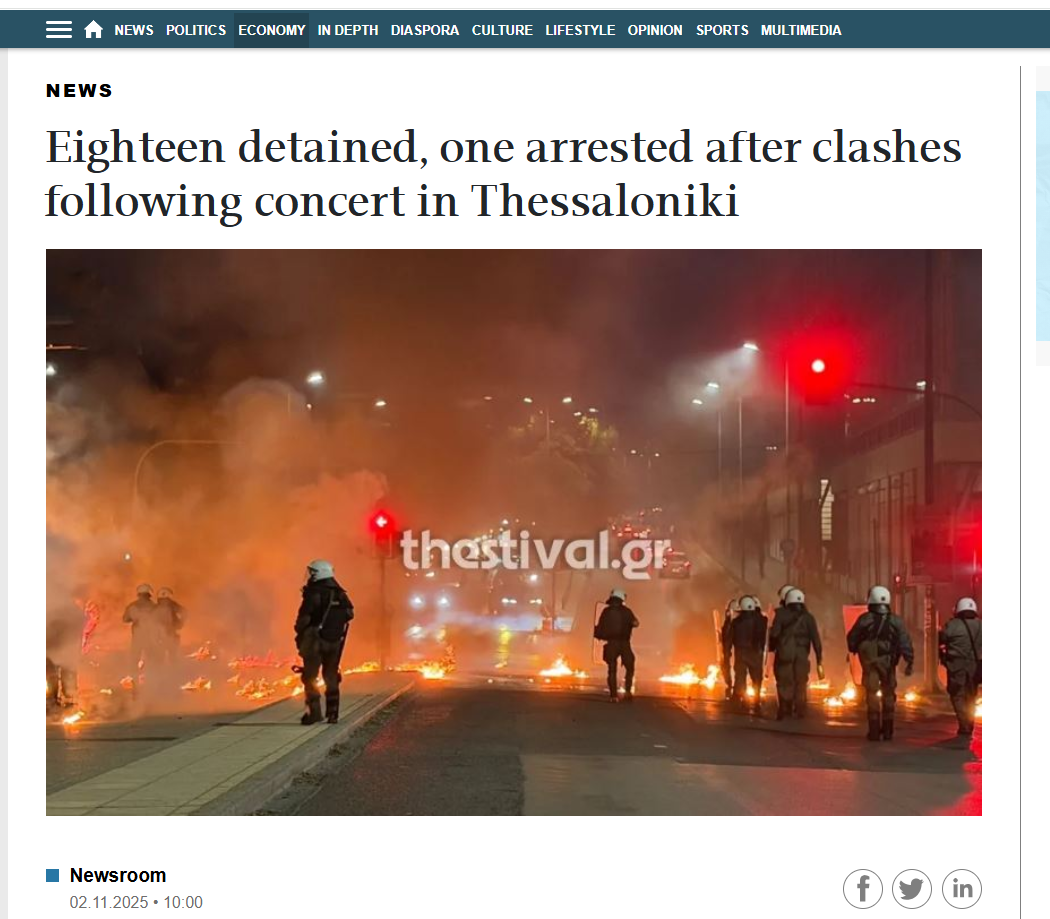
A keyword search led us to a report published on November 2, 2025, by Ekathimerini, a leading Greek media outlet. The report detailed violent clashes that erupted in Thessaloniki following a concert by Greek rapper Lex.
According to the report:
Police in Thessaloniki detained 18 people and arrested one individual on drug-related charges. The unrest began when a group attacked police forces stationed outside the Turkish Consulate. During the clashes, six cars were damaged, two of them completely burned, along with a garbage bin. ( report link and screenshot)
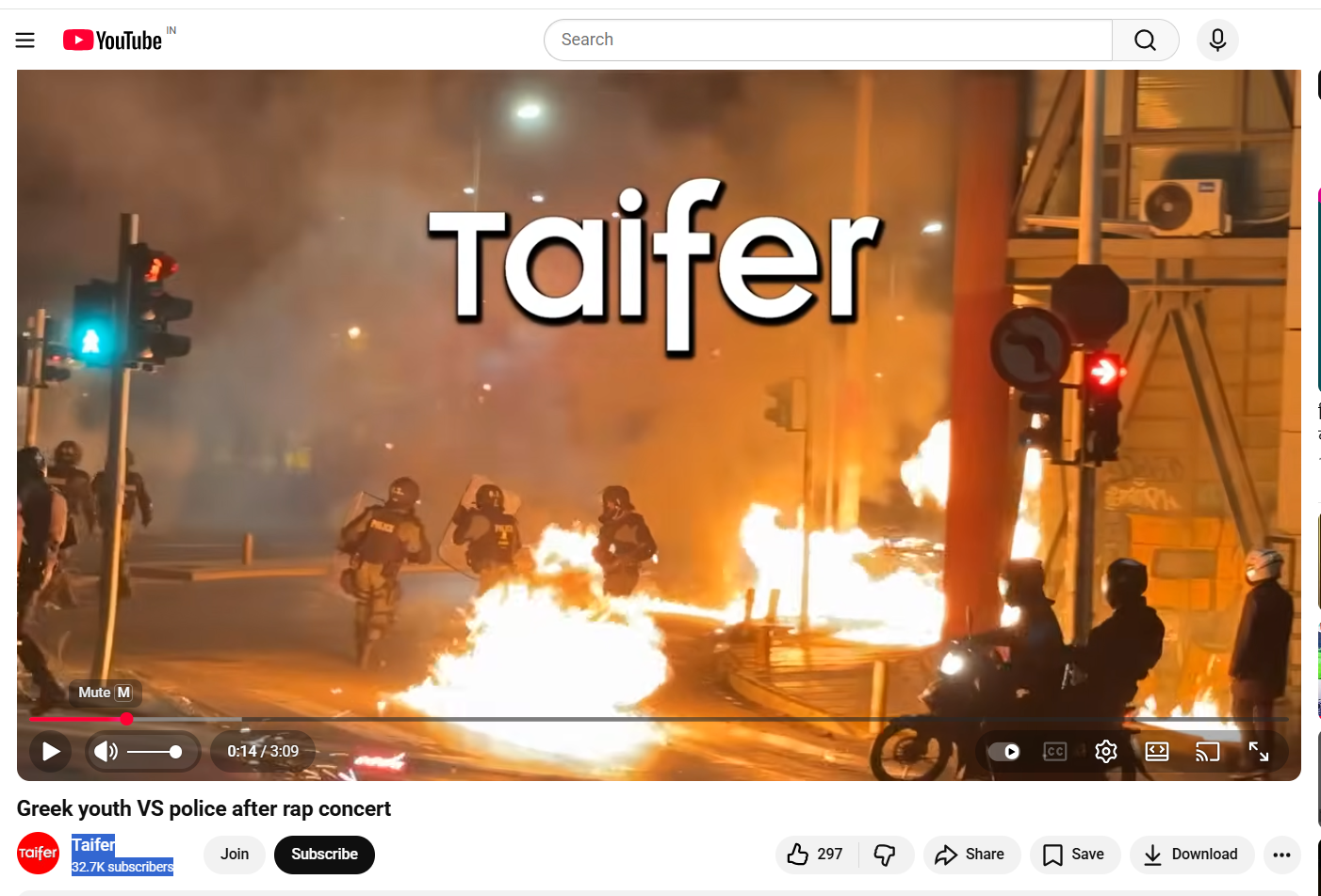
In the next stage of the investigation, we found similar visuals to the viral video on a YouTube channel named “Taifer”, where the footage was published on November 2, 2025. The link to the post and its screenshot can be seen below.
(YouTube link): https://www.youtube.com/watch?v=TejETjQRmTQ
To strengthen our findings, we conducted a geolocation analysis of the video. By comparing road layouts, surrounding buildings, light poles, and other visual markers with online maps and images, we confirmed that the location shown in the video matches Agios Dimitriou Street in Thessaloniki, Greece.
(Location link)
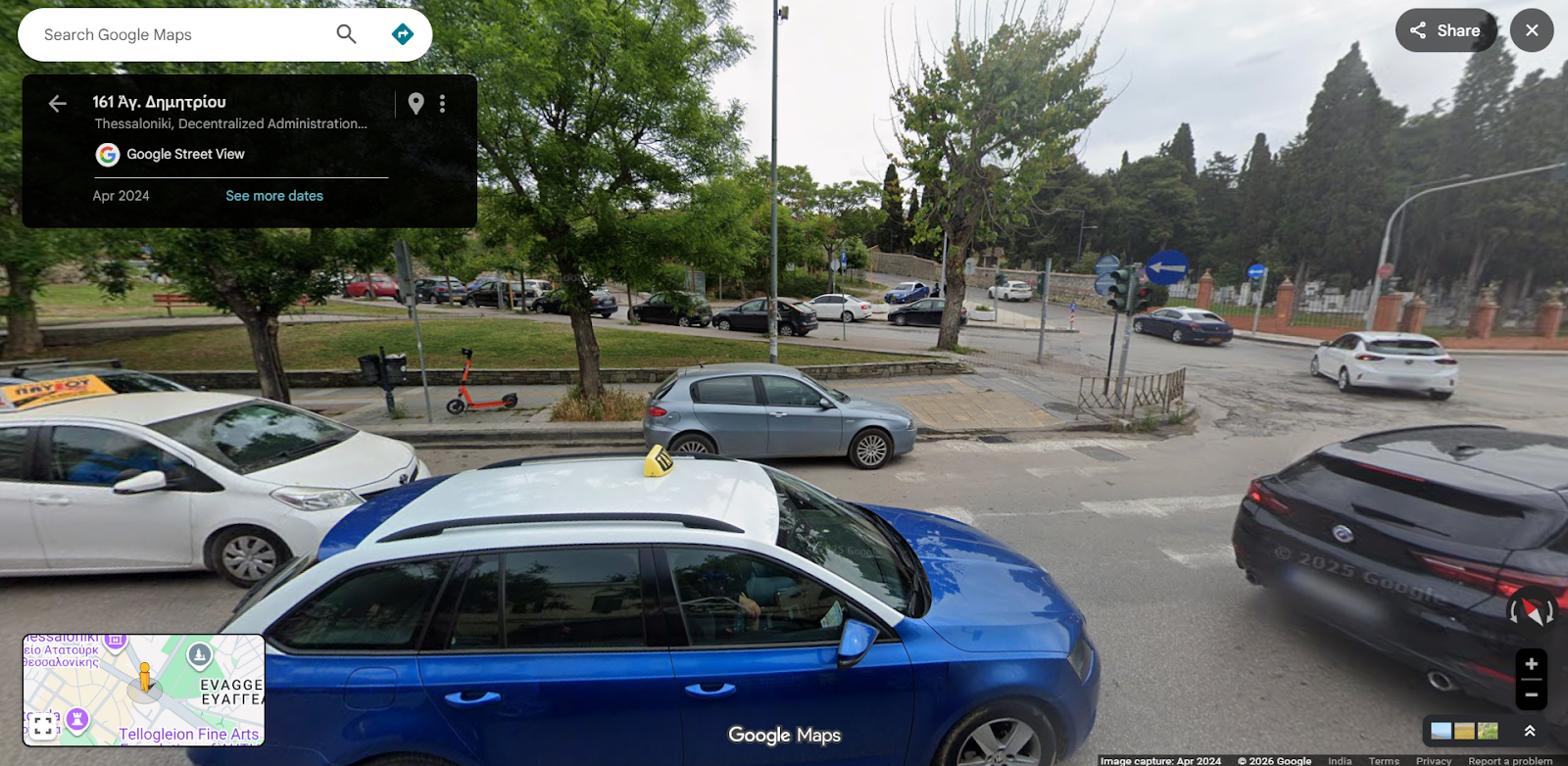
Our research clearly establishes that the viral video being shared as footage of recent protests in Iran is misleading. The video actually shows violent demonstrations near the Turkish Consulate in Thessaloniki, Greece, on November 1, 2025, and has no connection to the current situation in Iran.
