
The National Transport Repository: Legal Fault Lines in India’s Transport Data Policy
Introduction
India’s new Policy for Data Sharing from the National Transport Repository (NTR) released by the Ministry of Road Transport and Highways (MoRTH) in August, 2025, can be seen as a constitutional turning point and a milestone in administrative efficiency. The state has established an unprecedentedly large unified infrastructure by combining the records of 390 million vehicles, 220 million driver’s licenses, and the streams from the e-challan, e-DAR, and FASTag systems. Its supporters hail its promise of private-sector innovation, data-driven research, and smooth governance. However, there is a troubling paradox beneath this facade of advancement: the very structures intended to improve citizen mobility may simultaneously strengthen widespread surveillance. Without strict protections, the NTR runs the risk of violating the constitutional trifecta of need, proportionality, and legality as stated in Puttaswamy v. UOI, which brings to light important issues at the nexus of liberty, law, and data.
The other pertinent question to be addressed is as India unifies one of its comprehensive datasets on citizen mobility the question becomes more pressing: while motorised citizens are now in the spotlight for accountability, what about the millions of other datasets that are still dispersed, unregulated, and shared inconsistently in the areas of health, education, telecom, and welfare?
The Legal Backdrop
MoRTH grounds its new policy in Sections 25A and 62B of the Motor Vehicles Act, 1988. Data is consolidated into a single repository since states are required by Section 136A to electronically monitor road safety. According to the policy, it complies with the Digital Personal Data Protection Act, 2023.
The DPDP Act itself, however, is rife with state exclusions, particularly Sections 7 and 17, which give government organisations access to personal information for “any function under any law” or for law enforcement purposes. This is where the constitutional issue lies. Prior judicial supervision, warrants, or independent checks are not necessary. With legislative approval, MoRTH is essentially creating a national vehicle database without any constitutional protections.
Data, Domination and the New Privacy Paradigm
As an efficiency and governance reform, VAHAN, SARATHI, e-challan, eDAR, and FASTag are being consolidated into a single National Transport Repository (NTR). However, centralising extensive mobility and identity-linked records on a large scale is more than just a technical advancement; it also changes how the state and private life interact. The NTR must therefore be interpreted through a more comprehensive privacy paradigm, one that acknowledges that data aggregation is a means of enhancing administrative capacity and has the potential to develop into a long-lasting tool of social control and surveillance unless both technological and constitutional restrictions are placed at the same time.
Two recent doctrinal developments sharpen this concern. First, the Supreme Court’s foundational ruling that privacy is a fundamental right remains the constitutional lodestar, any state interference must satisfy legality, necessity and proportionality (KS Puttaswamy & Anr. vs UOI). Second, as seen by the court’s most recent refusals to normalise ongoing, warrantless location monitoring, such as the ruling overturning bail requirements that required accused individuals to provide a Google maps pin, as movement tracking necessitates closer examination (Frank Vitus v. Narcotics Control Bureau & Ors.,).When taken as a whole, these authorities maintain that unrestricted, ongoing access to mobility and toll-transaction records is a constitutional issue and cannot be handled as an administrative convenience.
Structural Fault Lines in the NTR Framework
Fundamentally, the NTR policy generates structural vulnerabilities by providing nearly unrestricted access through APIs and even mass transfers on physical media to a broad range of parties, including insurance companies, law enforcement, and intelligence services. This design undermines constitutional protections in three ways: first, it makes it possible to draw conclusions about private life patterns that the Supreme Court has identified as one of the most sensitive data categories by exposing rich mobility trails like FASTag logs and vehicle-linked identities; Second, it allows bulk datasets to circulate outside the ministry’s custodial boundary, which creates the possibility of function creep, secondary use, and monetisation risks reminiscent of the bulk sharing regime that the government itself once abandoned; and third, it introduces coercive exclusion by tying private sector access to Aadhaar-based OTP consent.
Reference

Related Blogs
Introduction
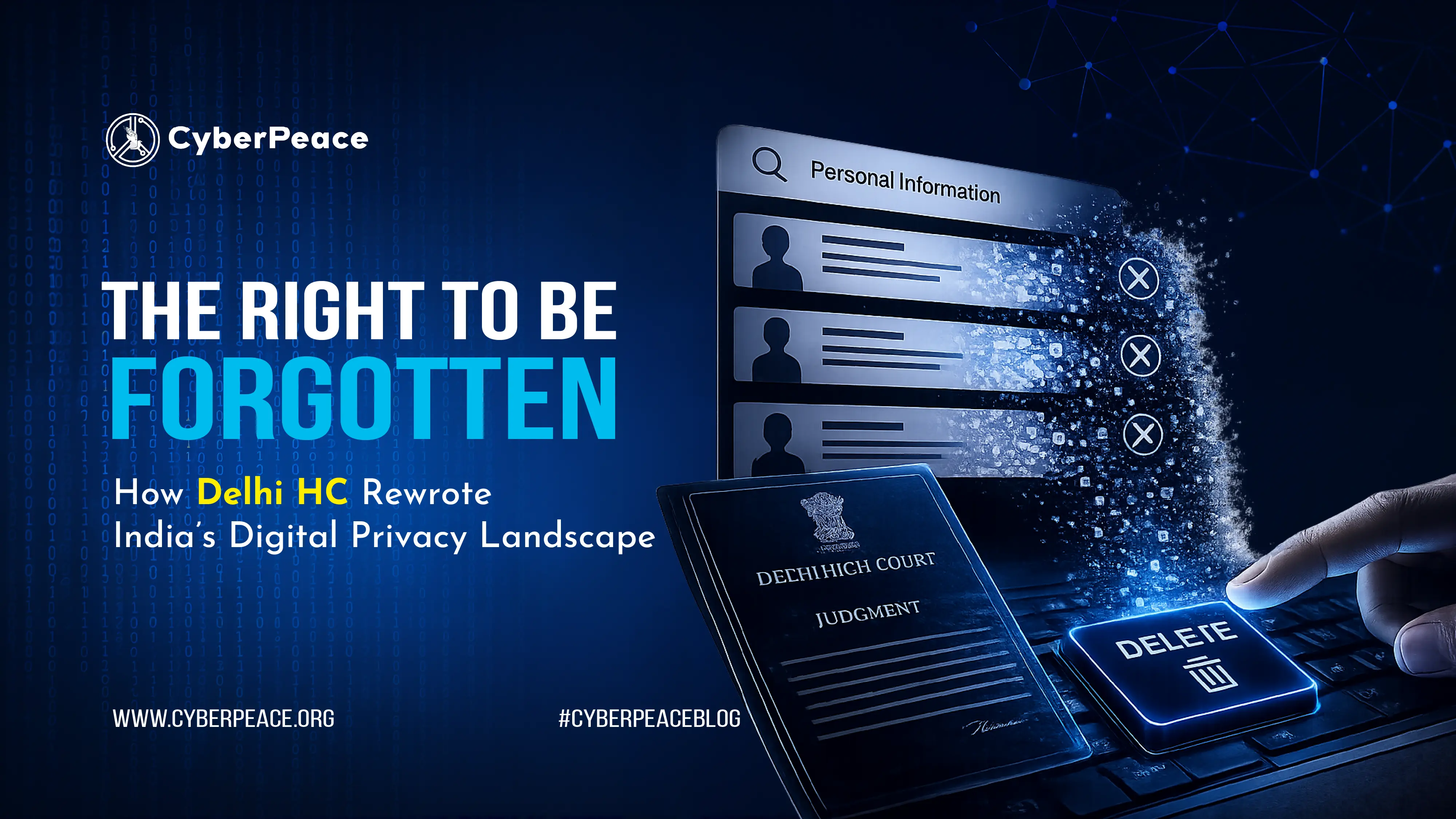
In an extensive order of 144 pages passed on May 29, 2026, Justice Sachin Datta of the Delhi High Court inter alia affirmed the right of an acquitted or discharged person to reinstate their digital identity. In a batch of more than 30 petitions relating to acquittals, family dispute cases, quashed criminal cases, and parties to proceedings, the petitioners argued that court documents and accusations, having lost their purpose, have kept occupying the search engine, leading to infringement of dignity, privacy, and career and personal life of these individuals. Citing Article 21 of the Indian Constitution as its foundation, the court affirmed that a right to life and personal liberty also includes a right to privacy and to leave behind failed proceedings and adopted wide de-indexing policies, including, where necessary, global de-indexing, thereby ushering in India's "right to be forgotten."
The Constitutional Argument: Article 21 and the Digital Self
The constitutional basis of the right to be forgotten in India rests on the landmark nine-judge bench ruling in Justice K.S. Puttaswamy v. Union of India. In 2017, the Supreme Court ruled privacy to be a fundamental right under Article 21 of the Constitution and stated informational privacy is a facet of personal liberty. The Supreme Court observed that individuals have an interest in determining how the information concerning them is gathered, disseminated, and accessed.
Building upon this precedent, Justice Sachin Datta held that the right to be forgotten flows naturally from the constitutional guarantee of informational privacy. The judgment represents one of the most significant judicial applications of the Puttaswamy principles, particularly in the context of search engines and online judicial records. Noting the absence of a fully operational statutory framework despite the enactment of the Digital Personal Data Protection Act, 2023, the court exercised its constitutional jurisdiction to protect individuals from enduring digital harm caused by continued public accessibility of outdated or irrelevant personal information.
INDIAN APPLICATION OF THE GLOBAL PRECEDENT
Tracing back the genesis of this right, it lies in the worldwide jurisdiction on privacy, especially the European Court of Justice's landmark ruling of 2014 in Google Spain SL v. AEPD and Mario Costeja Gonzlez, where it ruled that it is within one's power to ask search engines to de-list links that show personal information that is found to be outdated or irrelevant. This led to a legislated right to erasure by the inclusion of Article 17 in the General Data Protection Regulation (GDPR), creating the right throughout the EU. India, on the other hand, saw a slow process of evolution when it came to this right. The Madras High Court acknowledged the right to be forgotten partially in 2021 when it directed a petitioner's name to be deleted from an acquittal judgment, which was affirmed by a Division Bench in 2024. Nevertheless, the above were merely judgments confined to the facts of a particular case. However, the decision of the Delhi High Court dated May 2026 proves to be the benchmark in laying down a comprehensive constitutional framework under Article 21 with guiding principles on when a request for de-linking would be entertained and, if warranted, would be extended throughout the world.
Anatomy of the Framework by the Delhi High Court
While Justice Sachin Datta’s ruling recognizes the right to be forgotten, its actual import lies in devising an operative framework. The Court noted that it would maintain judicial records indefinitely in keeping with open justice principles, but an individual's name may not act as a perennial search key with respect to private entities' search engines. Thus, courts will be allowed to de-index judicial records (except their legal reasoning, findings, and ratio decidendi, which will continue to be accessible) from the names appearing therein from search engines and legal databases. While personally identifying data will be obfuscated, the underlying legal reasoning will not be rendered unusable, as access to unredacted records will continue to be available to courts, parties, and authorities. Such orders are also possible to be effective internationally, rendering avoidance difficult. However, the right cannot be absolute, as it is largely unavailable for convicted individuals (particularly if convicted of offenses against women or children or crimes of breach of trust). Courts must pass a proportionality test in considering the balance between privacy and the public right to know. By stating that masking information has an impact on discoverability, not access, it achieves a reconciliation between informational privacy and open justice so that acquitted accused are not held hostage to past accusations forever in the online age.
The Road to Implementation
However, the judgment presents a thick knot of practical issues, the solution to which may take considerable time to untangle. How will petitions for masking orders be filed by those who need them? Will there be a prescribed form? How will legal database systems such as Indian Kanoon and SCC Online operationalize name-based de-indexing while keeping their vast archives usable for lawyers? More significantly, what kind of legal force will global directions for de-indexing hold over those search engines whose main servers lie outside of Indian territory?
This is not to say the judgment isn't important. It simply presents a predictable, almost mundane set of issues that all ambitious pronouncements on constitutional rights face when translated into the world of administration issues that came up even when the EU was first struggling with enforcing the GDPR in 2018. India now has its framework, and the details of its implementation will undoubtedly come through future rounds of litigation, guidelines, and perhaps even legislation.
What remains abundantly clear, though, is the message conveyed by the Delhi High Court that digital permanency is a crime, especially when it causes the most incriminating of a person's legal actions to follow them perpetually, even long after they have been given due process by the system. As Justice Datta eloquently put it, privacy in the digital age is 'not about secrecy but about an individual's control over the dissemination of personal information.' "Now an element of constitutional law in India, the verdict is a declaration that will resonate long beyond the thirty-odd petitions that called it into being.
Conclusion
The ultimate finding of the 2026 right-to-be-forgotten judgment in Delhi High Court reinforces human dignity in the digital era. The Court has acknowledged the need for acquittals and exonerations to have meaningful implications offline, ensuring an individual is not eternally punished through online searches for alleged wrongdoing. Building on the right to privacy established by K.S. Puttaswamy v. Union of India, informational privacy now stands at the core of constitutional guarantees, and India joins the nations establishing precedents to balance openness with dignity.

Executive Summary:
A circulating picture which is said to be of United States President Joe Biden wearing military uniform during a meeting with military officials has been found out to be AI-generated. This viral image however falsely claims to show President Biden authorizing US military action in the Middle East. The Cyberpeace Research Team has identified that the photo is generated by generative AI and not real. Multiple visual discrepancies in the picture mark it as a product of AI.
Claims:
A viral image claiming to be US President Joe Biden wearing a military outfit during a meeting with military officials has been created using artificial intelligence. This picture is being shared on social media with the false claim that it is of President Biden convening to authorize the use of the US military in the Middle East.

Similar Post:

Fact Check:
CyberPeace Research Team discovered that the photo of US President Joe Biden in a military uniform at a meeting with military officials was made using generative-AI and is not authentic. There are some obvious visual differences that plainly suggest this is an AI-generated shot.

Firstly, the eyes of US President Joe Biden are full black, secondly the military officials face is blended, thirdly the phone is standing without any support.
We then put the image in Image AI Detection tool

The tool predicted 4% human and 96% AI, Which tells that it’s a deep fake content.
Let’s do it with another tool named Hive Detector.

Hive Detector predicted to be as 100% AI Detected, Which likely to be a Deep Fake Content.
Conclusion:
Thus, the growth of AI-produced content is a challenge in determining fact from fiction, particularly in the sphere of social media. In the case of the fake photo supposedly showing President Joe Biden, the need for critical thinking and verification of information online is emphasized. With technology constantly evolving, it is of great importance that people be watchful and use verified sources to fight the spread of disinformation. Furthermore, initiatives to make people aware of the existence and impact of AI-produced content should be undertaken in order to promote a more aware and digitally literate society.
- Claim: A circulating picture which is said to be of United States President Joe Biden wearing military uniform during a meeting with military officials
- Claimed on: X
- Fact Check: Fake

Executive Summary:
Recently, we came upon some AI-generated deep fake videos that have gone viral on social media, purporting to show Indian political figures Prime Minister Narendra Modi, Home Minister Amit Shah, and External Affairs Minister Dr. S. Jaishankar apologizing in public for initiating "Operation Sindoor." The videos are fake and use artificial intelligence tools to mimic the leaders' voices and appearances, as concluded by our research. The purpose of this report is to provide a clear understanding of the facts and to reveal the truth behind these viral videos.
Claim:
Multiple videos circulating on social media claim to show Prime Minister Narendra Modi, Central Home Minister Amit Shah, and External Affairs Minister Dr. S. Jaishankar publicly apologised for launching "Operation Sindoor." The videos, which are being circulated to suggest a political and diplomatic failure, feature the leaders speaking passionately and expressing regret over the operation.


Fact Check:
Our research revealed that the widely shared videos were deepfakes made with artificial intelligence tools. Following the 22 April 2025 Pahalgam terror attack, after “Operation Sindoor”, which was held by the Indian Armed Forces, this video emerged, intending to spread false propaganda and misinformation.
Finding important frames and visual clues from the videos that seemed suspicious, such as strange lip movements, misaligned audio, and facial distortions, was the first step in the fact-checking process. By putting audio samples and video frames in Hive AI Content Moderation, a program for detecting AI-generated content. After examining audio, facial, and visual cues, Hive's deepfake detection system verified that all three of the videos were artificial intelligence (AI) produced.
Below are three Hive Moderator result screenshots that clearly flag the videos as synthetic content, confirming that none of them are authentic or released by any official government source.


Conclusion:
The artificial intelligence-generated videos that claim Prime Minister Narendra Modi, Home Minister Amit Shah, and External Affairs Minister Dr. S. Jaishankar apologized for the start of "Operation Sindoor" are completely untrue. A purposeful disinformation campaign to mislead the public and incite political unrest includes these deepfake videos. No such apology has been made by the Indian government, and the operation in question does not exist in any official or verified capacity. The public must exercise caution, avoid disseminating videos that have not been verified, and rely on reliable fact-checking websites. Such disinformation can seriously affect national discourse and security in addition to eroding public trust.
- Claim: India's top executives apologize publicly for Operation Sindoor blunder.
- Claimed On: Social Media
- Fact Check: AI Misleads
