
#FactCheck - Claim That Palki Sharma’s Viral Video Questions Jordan’s Protocol Is False; Video Is AI-Manipulated
A video clip of journalist Palki Sharma is being widely shared on social media. Along with the video, it is being claimed that during Prime Minister Narendra Modi’s recent Middle East visit, she questioned Jordan’s diplomatic protocol.
In the viral clip, Palki Sharma is allegedly seen asking why Jordan’s King Abdullah II did not come to the airport to receive Prime Minister Modi, and whether this indicated a downgrade in the level of welcome.
However, an investigation by the Cyber Peace Foundation found this claim to be misleading. The probe revealed that while the visuals in the viral video are genuine, the audio has been altered using Artificial Intelligence (AI).
On the social media platform ‘X’, a user named “Ammar Solangi” shared this video on 18 December. The post claimed that the video was related to questions raised about Jordan’s diplomatic protocol during Prime Minister Modi’s visit. According to the post, Palki Sharma questioned why King Abdullah II did not receive Prime Minister Modi at the airport. The archive link of the viral post can be seen here: https://ghostarchive.org/archive/26aK0
Verification
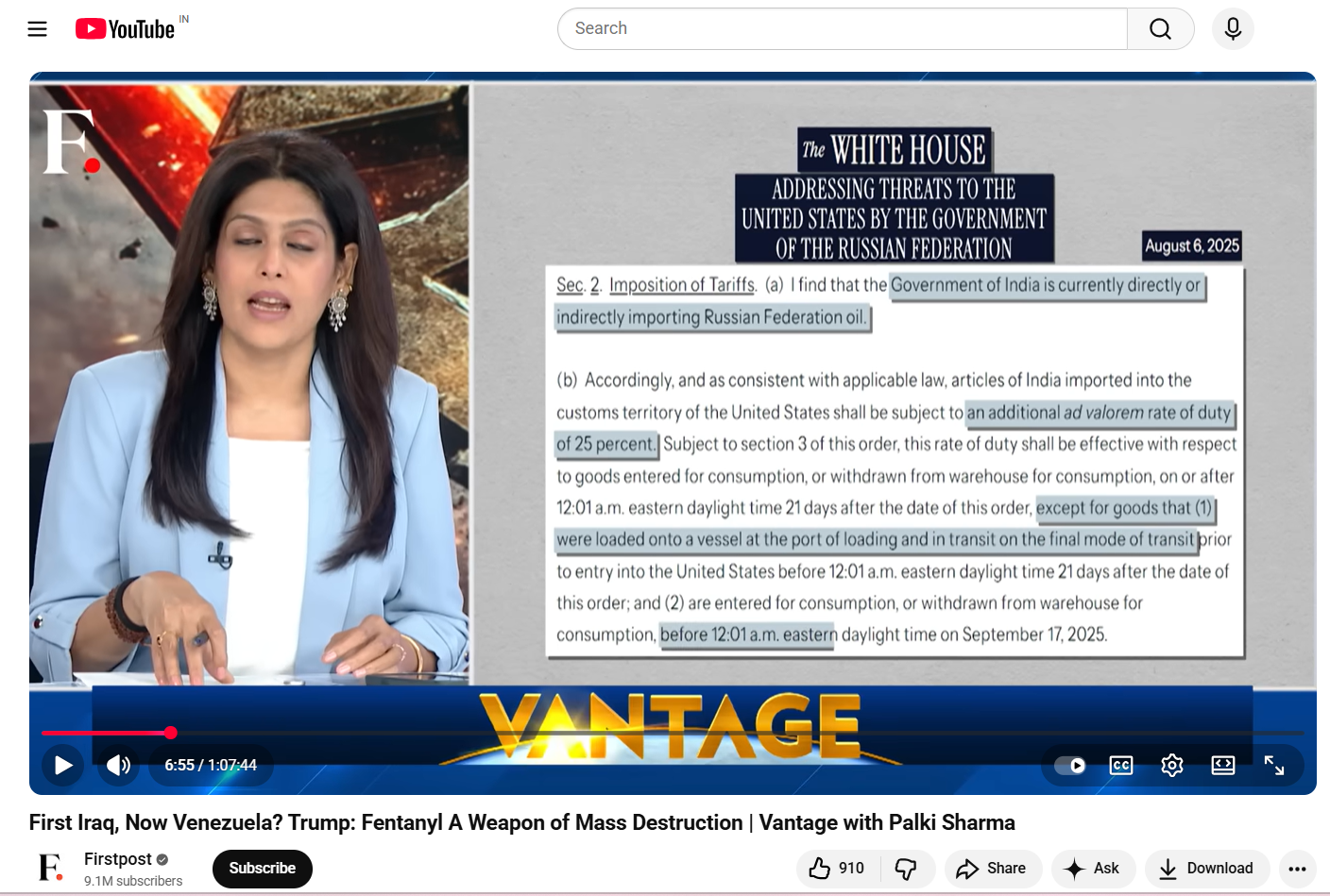
During the investigation, the fact-check desk noticed the ‘Firstpost’ logo in the top-left corner of the viral video. Based on this clue, a customized Google search was conducted, which led to the original news report.
The investigation revealed that the viral video was taken from an episode of journalist Palki Sharma’s show “Vantage with Palki Sharma”, which aired on 17 December.
Analysis of the video showed that the visuals appearing at the 33 minutes 30 seconds timestamp in the original report exactly match those used in the viral clip. However, in the original broadcast, Palki Sharma neither questioned Jordan’s protocol nor made any comment about King Abdullah II not being present at the airport.
In the original video, Palki Sharma says:
“Prime Minister Modi was on a diplomatic tour of Jordan, Ethiopia, and Oman, and in Jordan he was received at the airport by the country’s Prime Minister…” The link to the original report can be seen here: https://www.youtube.com/watch?v=-VYZYe9l6Bs
AI Audio Examination
Further investigation involved separating the audio from the viral video and analyzing it using the AI voice detection tool ‘Resemble AI’. The tool’s results confirmed that fake, AI-generated audio had been added over the real footage in the viral clip to spread a misleading claim. A screenshot of the results from this examination can be seen below.

Conclusion
The video being circulated in the name of journalist Palki Sharma has been tampered with. Her voice has been altered using AI technology, and the claim made regarding the Jordan visit is completely misleading.

Related Blogs

Introduction
Artificial intelligence is often hailed as a democratiser of knowledge, opportunity and skill. It is set to improve diagnostics, personalised learning, and productivity to boost the economy, which can assist millions of people to leave poverty. However, this may be an incomplete picture. A report of the United Nations Development Programme in 2025 tells a more complex tale. The Next Great Divergence: Why AI May Widen Inequality Between Countries cautions that, unless acts are taken to intervene, AI will not alleviate inequality between countries but will instead concentrate benefits in already advantaged economies and increase risks in more vulnerable ones.
Two Gaps, One Crisis
AI is not going to create a level playing field: it has been injected into a world where there is unprecedented inequality. The report outlines two structural asymmetries that will influence the ways in which its effects manifest: a capability gap and a vulnerability gap.
Those countries that have high connectivity, skills, compute and regulation will be in a position to reap a greater portion of the AI dividend. Others will be exposed to greater risks of job losses, information exclusion, misinformation, and the indirect consequences of increased energy and water demands.
The centre of this transition is the Asia-Pacific region, that harbors a population of more than 55 per cent of the world. More than half of the global AI users are now located in the region, but the initial positions are quite different. Nations such as Singapore and South Korea are already spending a lot of money on AI infrastructure, with others still striving to offer basic broadband services. Two out of three individuals already use AI tools in certain high-income economies. In most countries with low incomes, the utilisation is lower. Such figures are important as they depict not only a gap in technology but also a structural difference in terms of who controls AI and who is controlled by the latter.
When Inequality Becomes a Trust Problem
Any trusted technological system is based on three tenets: transparency, fairness and accountability. AI inequality negatively impacts all three.
If governments implement imported AI systems in areas with limited technical capability, with limited transparency on their operation, their construction, and their biases. Citizens do not really trust when decision-making systems are black boxes and domestic institutions lack the know-how to question them.
Data exclusion also interferes with fairness. The AI systems trained with the datasets not sufficiently representative of the rural population, linguistic minorities, and women will generate poorer results in those groups systematically. Since South Asian women are much less likely to own a smartphone, this impacts their representation in digital data, and consequently in any AI system trained on such data.
Safety Risks Are Not Evenly Distributed
The lack of trust has a direct safety aspect. For example, those countries that have less robust information ecosystems have a greater exposure to AI-generated misinformation that can bias the discourse of the populace, alter elections, and cause violence. They also have the weakest capability of screening, tagging, or combating such content.
The same can be said about labour markets. The very same technologies that can speed up marginalisation and destabilise governance increase human insecurity, especially among employees in the informal economy with weak social security. The UNDP report points out that the exposure of female employment to disruption by AI is disproportionate to that of male employment, which further presents a gendered dimension in an already unequal situation.
Risks of infrastructure are skewed as well. Large AI systems may create disproportionately high energy and water demands on countries that host the data infrastructure without there being an equivalent economic payback. The environmental cost is local while profits are outsourced. Dangers of AI spread downwards, and the advantages go upwards.
The Governance Gap and Regulatory Arbitrage
Governance is perhaps the most important aspect. There are only a few states that presently have extensive AI regulation systems. This gives rise to a patchy landscape, in which safety standards differ dramatically and where companies have an incentive to install systems in jurisdictions that have weaker regulation.
The main reason is the lack of capability, as expressed by Philip Schellekens, chief economist of the UNDP in Asia and the Pacific, who says that those countries that invest in skills, computing power and well-run governance structures will gain. The rest will be left far behind.
This departure has its ramifications outside the nations. When users in other areas are subjected to widely different rates of safety and equity by the same international platforms, the concept of uniform digital norms would no longer be sustainable. Confidence in AI systems is lost not only locally but also on a global scale.
Way Forward
The UNDP report makes it clear that there is no inevitability of divergence. To avert it, however, it is necessary to consider AI governance as a development, rather than a technology problem.
The capacity to govern should be constructed and not presumed. This implies assisting countries in establishing regulatory systems, institutional capacity, and facilitating cross-border collaboration on standards. It can also imply considering some AI features as a public good, with common models and open standards that do not allow a few firms or states to become too powerful.
The UNDP articulates the problem in a simple manner: in the end, the world's people and not machines must decide on what technologies should be given priority and how to utilise them optimally.
Conclusion
AI inequality is often framed as an economic divergence story. But its implications run deeper. It reshapes who is protected, who is visible in data, and who has the power to challenge harmful outcomes. The risk is not just that some countries fall behind economically. It is that the global digital ecosystem fragments into zones of high trust and low trust, high protection and low protection. The choices made now will determine which path prevails. AI can reinforce existing divides or help bridge them.
But that outcome will not be decided by the technology itself. It will be decided by how societies choose to distribute access, power, and responsibility in the systems they build.
References
- https://www.undp.org/sites/g/files/zskgke326/files/2025-12/undp-rbap-the-next-great-divergence_1.pdf
- https://www.undp.org/asia-pacific/press-releases/ai-risks-sparking-new-era-divergence-development-gaps-between-countries-widen-undp-report-finds
- https://www.undp.org/asia-pacific/blog/next-great-divergence-how-ai-could-split-world-again-if-we-dont-intervene
- https://www.aljazeera.com/news/2025/12/2/ai-threatens-to-widen-inequality-among-states-un
- https://www.undp.org/asia-pacific/next-great-divergence
- https://www.eco-business.com/press-releases/ai-risks-spark-new-era-of-divergence-as-development-gaps-widen-undp-report/
Executive Summary:
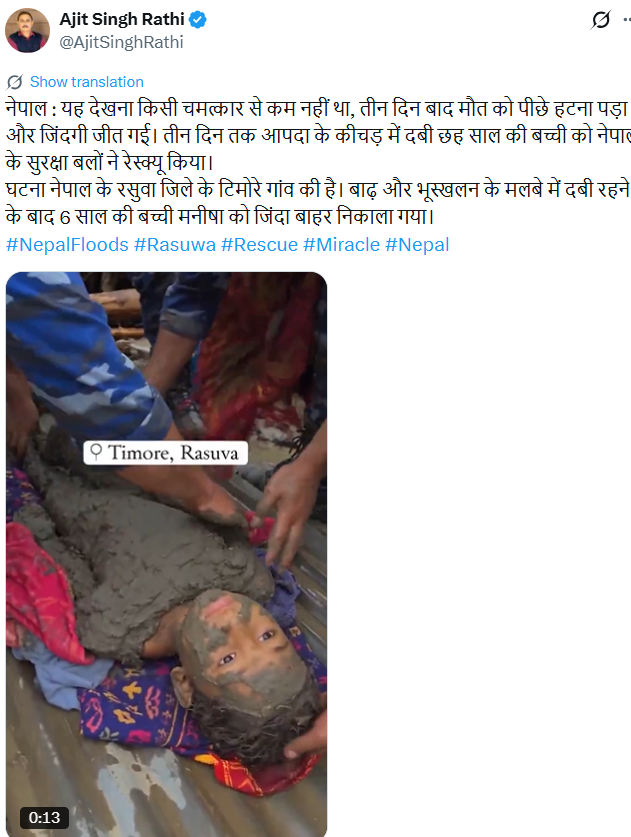
A video is being widely circulated on social media in connection with the relief and rescue operations following the devastating floods in Nepal. The video shows security personnel rescuing a girl trapped under debris and later giving her soup. The video is being shared with the claim that security personnel rescued a girl who had been buried under mud three days after the disaster in Timure village of Nepal’s Rasuwa district. A research by CyberPeace Research Wing found the viral claim to be false. Our research revealed that the viral video does not depict a real incident but is AI-generated.
Claim:
A user on social media platform X (formerly Twitter) shared the viral video with the caption: “Nepal: It was nothing short of a miracle to witness this. After three days, death had to retreat and life emerged victorious. A six-year-old girl, who had been buried under the disaster debris for three days, was rescued by Nepal’s security forces. The incident took place in Timure village of Nepal’s Rasuwa district. Six-year-old Manisha was pulled out alive after being buried under debris caused by floods and landslides.”
https://x.com/AjitSinghRathi/status/2094306889001742826?s=20
Fact Check:
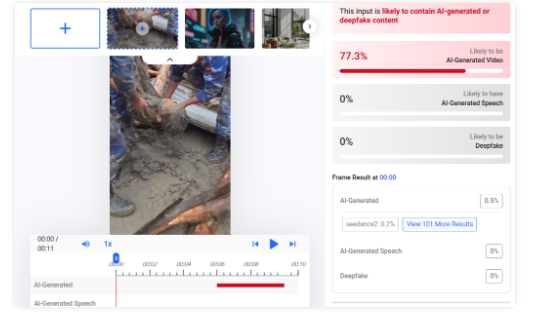
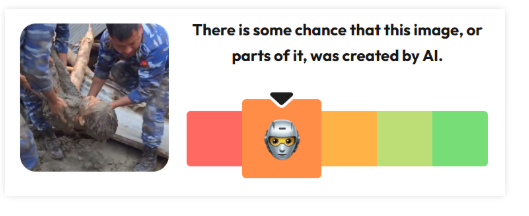
A close examination of the viral video revealed several inconsistencies, raising suspicions that the video was AI-generated. We then scanned the viral video using the AI detection tool Hive Moderation. According to the results, there is a 77 per cent likelihood that the viral video is AI-generated.
As part of our research, we scanned the video using the AI detection tool Wasitai. According to the results, the viral video is AI-generated.
Conclusion:
Our research found the viral claim to be false. Our findings revealed that the viral video does not depict a real incident but is AI-generated.
Executive Summary
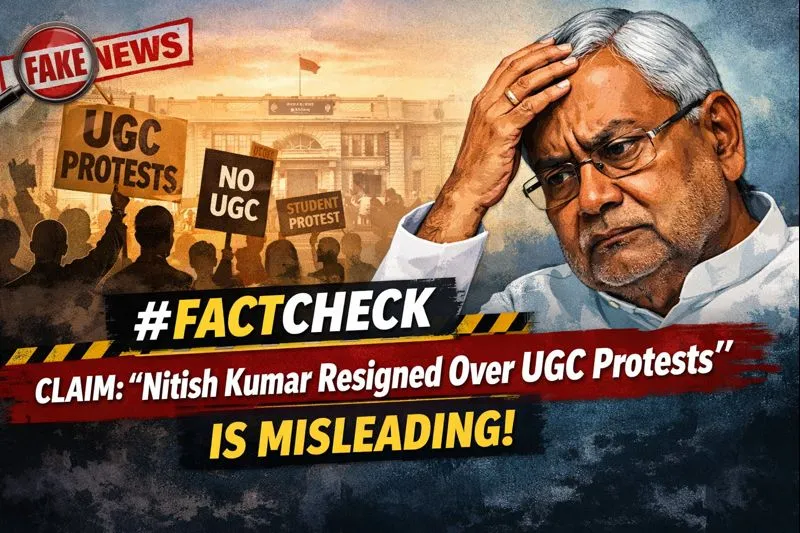
A news video is being widely circulated on social media with the claim that Bihar Chief Minister Nitish Kumar has resigned from his post in protest against the ongoing UGC-related controversy. Several users are sharing the clip while alleging that Kumar stepped down after opposing the issue. However, CyberPeace research has found the claim to be false. The researchrevealed that the video being shared is from 2022 and has no connection whatsoever with the UGC or any recent protests related to it. An old video has been misleadingly linked to a current issue to spread misinformation on social media.
Claim:
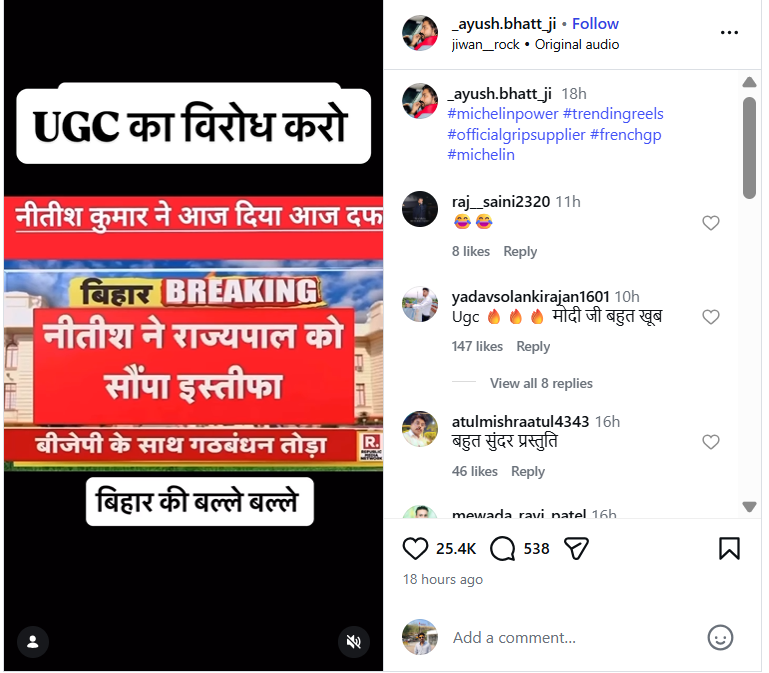
An Instagram user shared a video on January 26 claiming that Bihar Chief Minister Nitish Kumar had resigned. The post further alleged that the news was first aired on Republic channel and that Kumar had submitted his resignation to then-Governor Phagu Chauhan. The link to the post, its archived version, and screenshots can be seen below. (Links as provided)
Fact Check:
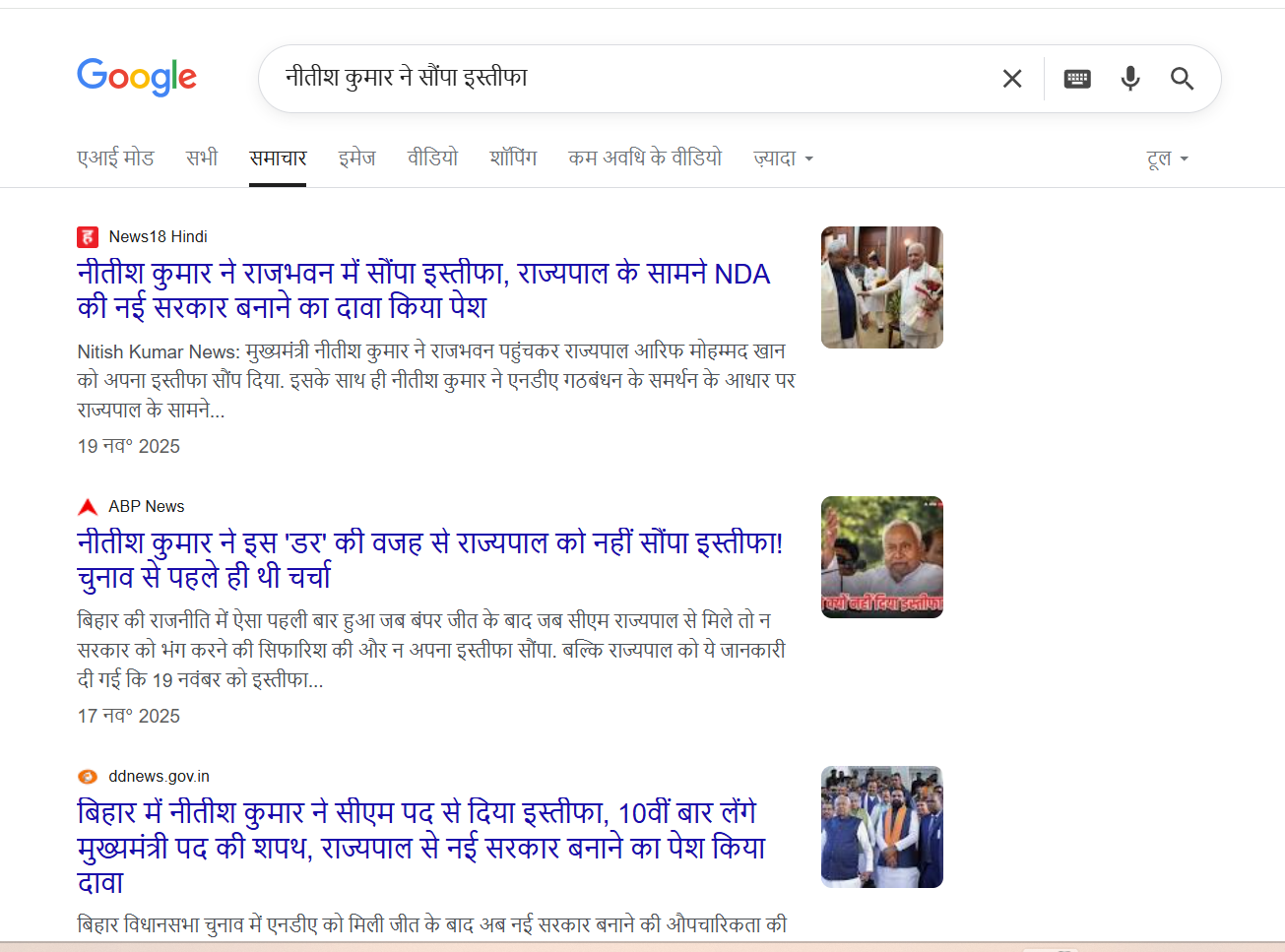
To verify the claim, CyberPeace first conducted a keyword-based search on Google. No credible or established media organisation reported any such resignation, clearly indicating that the viral claim lacked authenticity.
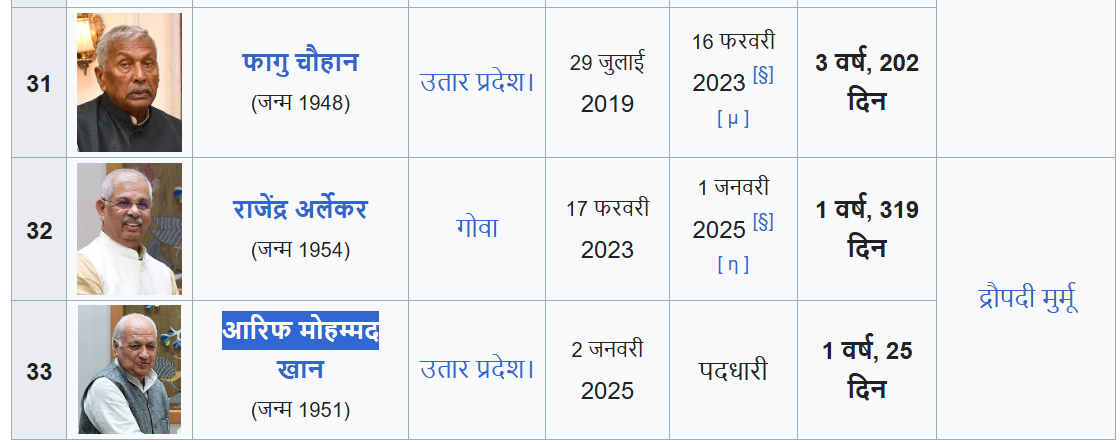
Further, the voiceover in the viral video states that Nitish Kumar handed over his resignation to Governor Phagu Chauhan. However, Phagu Chauhan ceased to be the Governor of Bihar in February 2023. The current Governor of Bihar is Arif Mohammad Khan, making the claim in the video factually incorrect and misleading.
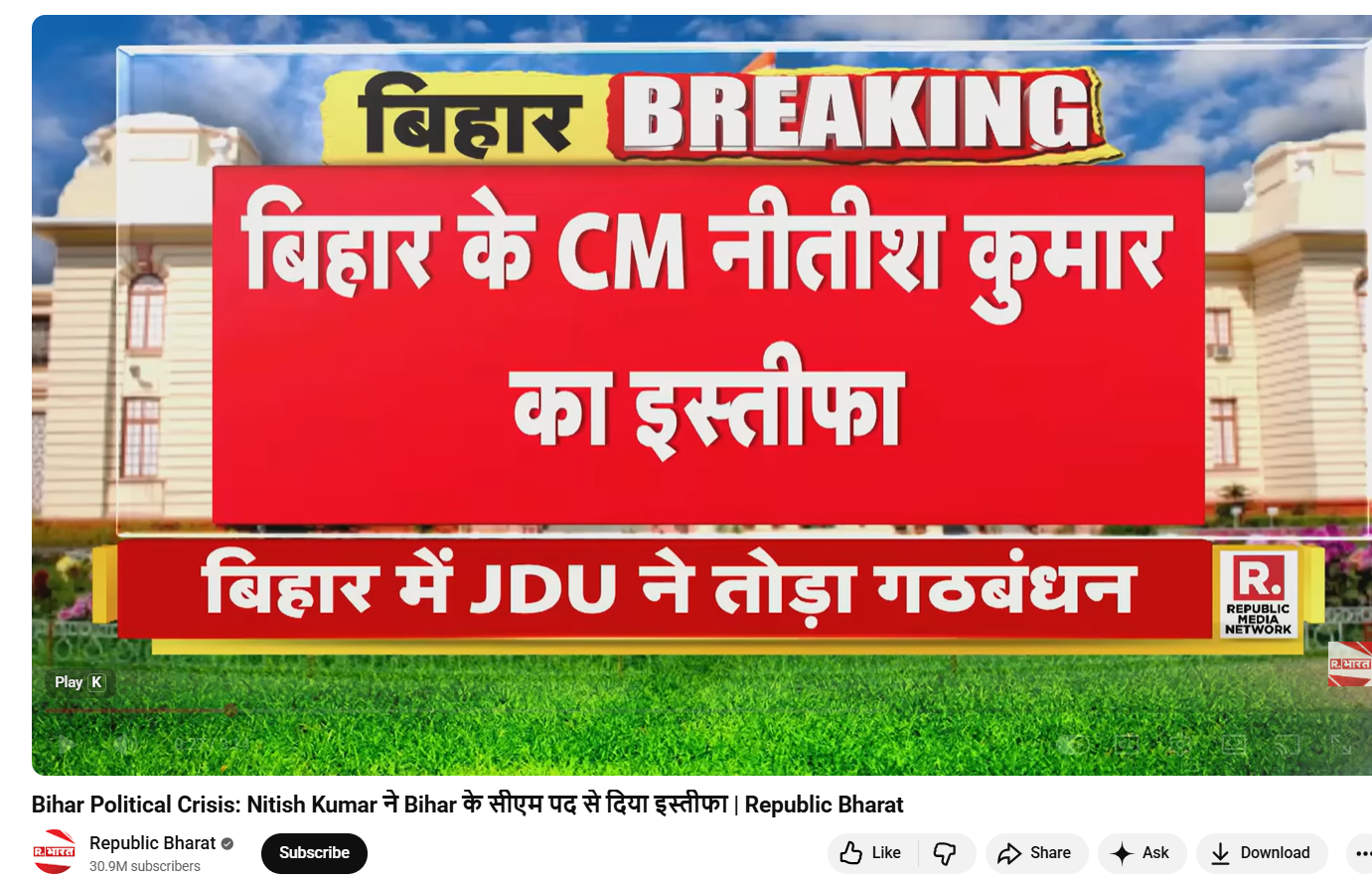
In the next step, keyframes from the viral video were extracted and reverse-searched using Google Lens. This led to the official YouTube channel of Republic Bharat, where the full version of the same video was found. The video was uploaded on August 9, 2022. This clearly establishes that the clip circulating on social media is not recent and is being shared out of context.
Conclusion
CyberPeace’s research confirms that the viral video claiming Nitish Kumar resigned over the UGC issue is false. The video dates back to 2022 and has no link to the current UGC controversy. An old political video has been deliberately circulated with a misleading narrative to create confusion on social media.
