
iOS vs. Android - 2023

Introduction
The world has been surfing the wave of technological advancements and innovations for the past decade, and it all pins down to one device – our mobile phone. For all mobile users, the primary choices of operating systems are Android and iOS. Android is an OS created by google in 2008 and is supported by most brands like – One+, Mi, OPPO, VIVO, Motorola, and many more and is one of the most used operating systems. iOS is an OS that was developed by Apple and was introduced in their first phone – The iPhone, in 2007. Both OS came into existence when mobile phone penetration was slow globally, and so the scope of expansion and advancements was always in favor of such operating systems.
The Evolution
iOS
Ever since the advent of the iPhone, iOS has seen many changes since 2007. The current version of iOs is iOS 16. However, in the course of creating new iOS and updating the old ones, Apple has come out with various advancements like the App Store, Touch ID & Face ID, Apple Music, Podcasts, Augmented reality, Contact exposure, and many more, which have later become part of features of Android phone as well. Apple is one of the oldest tech and gadget developers in the world, most of the devices manufactured by Apple have received global recognition, and hence Apple enjoys providing services to a huge global user base.
Android
The OS has been famous for using the software version names on the food items like – Pie, Oreo, Nougat, KitKat, Eclairs, etc. From Android 10 onwards, the new versions were demoted by number. The most recent Android OS is Android 13; this OS is known for its practicality and flexibility. In 2012 Android became the most popular operating system for mobile devices, surpassing Apple’s iOS, and as of 2020, about 75 percent of mobile devices run Android.
Android vs. iOS
1. USER INTERFACE
One of the most noticeable differences between Android and iPhone is their user interface. Android devices have a more customizable interface, with options to change the home screen, app icons, and overall theme. The iPhone, on the other hand, has a more uniform interface with less room for customization. Android allows users to customize their home screen by adding widgets and changing the layout of their app icons. This can be useful for people who want quick access to certain functions or information on their home screen. IOS does not have this feature, but it does allow users to organize their app icons into folders for easier navigation.
2. APP SELECTION
Another factor to consider when choosing between Android and iOS is the app selection. Both platforms have a wide range of apps available, but there are some differences to consider. Android has a larger selection of apps overall, including a larger selection of free apps. However, some popular apps, such as certain music streaming apps and games, may be released first or only available on iPhone. iOS also has a more curated app store, meaning that all apps must go through a review process before being accepted for download. This can result in a higher quality of apps overall, but it can also mean that it takes longer for new apps to become available on the platform. iPhone devices tend to have less processing power and RAM. But they are generally more efficient in their use of resources. This can result in longer battery life, but it may also mean that iPhones are slower at handling multiple tasks or running resource-intensive apps.
3. PERFORMANCE
When it comes to performance, both Android and iPhone have their own strengths and weaknesses. Android devices tend to have more processing power and RAM. This can make them faster and more capable of handling multiple tasks simultaneously. However, this can also lead to Android devices having shorter battery life compared to iPhones.
4. SECURITY
Security is an important consideration for any smartphone user, and Android and iPhone have their own measures to protect user data. Android devices are generally seen as being less secure than iPhones due to their open nature. Android allows users to install apps from sources other than the Google Play Store, which can increase the risk of downloading malicious apps. However, Android has made improvements in recent years to address this issue. Including the introduction of Google Play Protect, which scans apps for malware before they are downloaded. On the other hand, iPhone devices have a more closed ecosystem, with all apps required to go through Apple‘s review process before being available for download. This helps reduce the risk of downloading malicious apps, but it can also limit the platform’s flexibility.
Conclusion
The debate about the better OS has been going on for some time now, and it looks like it will get more comprehensive in the times to come, as netizens go deeper into cyberspace, they will get more aware and critical of their uses and demands, which will allow them to opt for the best OS for their convenience. Although the Andriod OS, due to its integration, stands more vulnerable to security threats as compared to iOS, no software is secure in today’s time, what is secure is its use and application hence the netizen and the platforms need to increase their awareness and knowledge to safeguard themselves and the wholesome cyberspace.

Related Blogs

Executive Summary:
A photo claiming that Mr. Rowan Atkinson, the famous actor who played the role of Mr. Bean, lying sick on bed is circulating on social media. However, this claim is false. The image is a digitally altered picture of Mr.Barry Balderstone from Bollington, England, who died in October 2019 from advanced Parkinson’s disease. Reverse image searches and media news reports confirm that the original photo is of Barry, not Rowan Atkinson. Furthermore, there are no reports of Atkinson being ill; he was recently seen attending the 2024 British Grand Prix. Thus, the viral claim is baseless and misleading.

Claims:
A viral photo of Rowan Atkinson aka Mr. Bean, lying on a bed in sick condition.


Fact Check:
When we received the posts, we first did some keyword search based on the claim made, but no such posts were found to support the claim made.Though, we found an interview video where it was seen Mr. Bean attending F1 Race on July 7, 2024.

Then we reverse searched the viral image and found a news report that looked similar to the viral photo of Mr. Bean, the T-Shirt seems to be similar in both the images.

The man in this photo is Barry Balderstone who was a civil engineer from Bollington, England, died in October 2019 due to advanced Parkinson’s disease. Barry received many illnesses according to the news report and his application for extensive healthcare reimbursement was rejected by the East Cheshire Clinical Commissioning Group.
Taking a cue from this, we then analyzed the image in an AI Image detection tool named, TrueMedia. The detection tool found the image to be AI manipulated. The original image is manipulated by replacing the face with Rowan Atkinson aka Mr. Bean.


Hence, it is clear that the viral claimed image of Rowan Atkinson bedridden is fake and misleading. Netizens should verify before sharing anything on the internet.
Conclusion:
Therefore, it can be summarized that the photo claiming Rowan Atkinson in a sick state is fake and has been manipulated with another man’s image. The original photo features Barry Balderstone, the man who was diagnosed with stage 4 Parkinson’s disease and subsequently died in 2019. In fact, Rowan Atkinson seemed perfectly healthy recently at the 2024 British Grand Prix. It is important for people to check on the authenticity before sharing so as to avoid the spreading of misinformation.
- Claim: A Viral photo of Rowan Atkinson aka Mr. Bean, lying on a bed in a sick condition.
- Claimed on: X, Facebook
- Fact Check: Fake & Misleading
Introduction
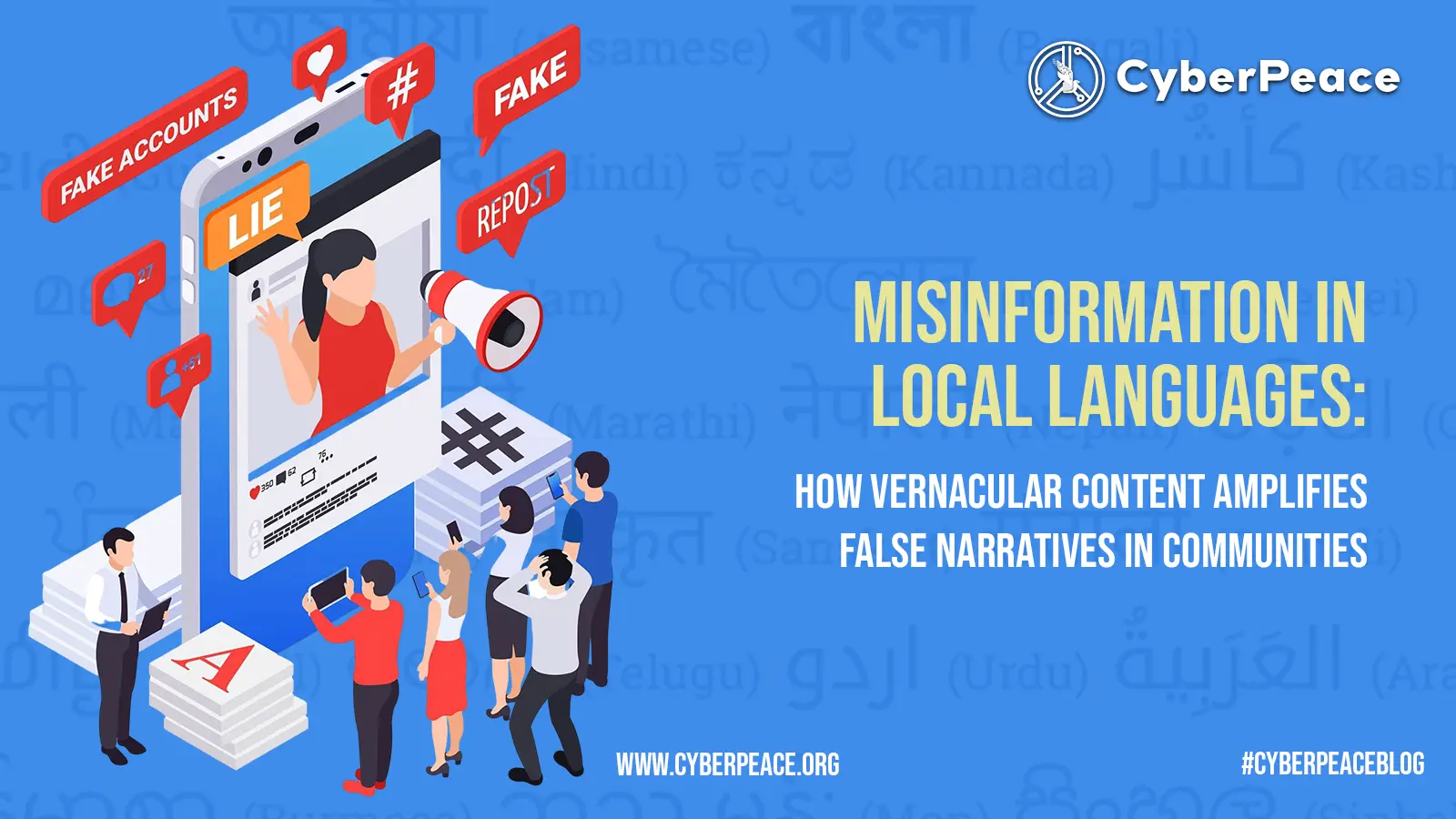
Misinformation is no longer a challenge limited to major global platforms or widely spoken languages. In India and many other countries, false information is increasingly disseminated through local and vernacular languages, allowing it to reach communities more directly and intimately. While regional language content has played a crucial role in expanding access to information, it has also emerged as a powerful driver of misinformation by bad actors, and it often becomes harder to detect and counter. The challenge of local language misinformation is not merely digital in nature; it is deeply social, cultural, and shaped by specific local contexts.
Why Local-Language Misinformation Is More Impactful
A person’s mother tongue can be a highly effective medium for misinformation because it carries emotional resonance and a sense of authenticity. Information that aligns with an individual’s linguistic and cultural background is often trusted the most. When false narratives are framed using familiar expressions, local references, or community-specific concerns, they are more readily accepted and shared more widely.
Misinformation in a language like English, which is more heavily moderated, does not usually have the same impact as content in vernacular languages. In the latter case, such content tends to circulate within closed networks such as family WhatsApp groups, regional Facebook pages, local YouTube channels, and community forums. These spaces are often perceived as safe or trusted, which lowers scepticism and encourages the spread of unverified information.
The Role of Digital Platforms and Algorithms
Although social media platforms have opened up access to the content of regional languages, the moderation mechanisms have not kept up. The automated control systems for content are frequently trained mainly on the dominant languages, thus missing the detection of vernacular speech, slang, dialects, and code-mixing.
This results in a disparity in the enforcement of laws where misinformation in local languages:
- Doesn’t go through automated fact-checking tools
- Is subject to human moderation takes place at a slower pace
- Is less prone to being reported or flagged
- Gains unrestrained access for a longer time period than first imagined
The problem is further magnified by algorithmic amplification. Content that triggers very strong emotional reactions fear, anger, pride, or outrage, has a higher chance of being promoted, irrespective of its truthfulness. In regional situations, such content may very quickly sway public opinion even in very closely knit communities.
Forms of Vernacular Misinformation
Local-language misinformation appears in various forms:
- Health misinformation, with such examples as panic remedies, vaccine myths, and misleading medical prescriptions
- Political misinformation, which is mostly identified with regional identity, local grievances, or community narratives
- Rumours regarding disasters that are very hard to control and spread hatred during floods, earthquakes, or other public emergencies
- Economic and financial frauds that are perpetrated via the local dialect authorities or trusted institutions
- Cultural and religious untruths, which are based on exploiting the core of the beliefs
The regional aspect of such misinformation makes it very difficult to be corrected because the fact-checks in other languages may not get to that audience.
Community-Level Consequences
The effect of misinformation in local languages is not only about the misdirection of individuals. It can also:
- Negatively affect the process of public institutions gaining trust
- Support social polarisation and communal strife
- Get in the way of public health measures
- Help shape the decision-making process in elections at the grassroots level
- Take advantage of the digitally illiterate poor people
In a lot of scenarios, the damage done is not instant but rather accumulative, thus changing perceptions and supporting false worldviews more.
Why Countering Vernacular Misinformation Is Difficult
Multiple structural layers make it difficult to respond effectively:
- Variety of Languages: Just in India, there are many languages and dialects, which are very hard to monitor universally.
- Culturally Aware Systems: The local languages sometimes bear meanings that are deeply rooted in the culture, such as by using sarcasm or referring to history, and automated systems are unable to interpret it correctly.
- Reporting Not Common: Users might not spot misinformation or may not want to be a part of the struggle by showing the content shared by reliable members of the community.
- Insufficient Fact-Checking Capacity: Resources are often unavailable for fact-checking organisations to perform their duties worldwide in different languages effectively.
Building a Community-Centric Response
Overcoming misinformation in local languages needs a community-driven resilience approach instead of a platform-centric one. Some of the key actions are:
- Boosting Digital Literacy: Users will be able to question, verify, and put the content on hold before sharing it, thanks to the regional language awareness campaigns that will be conducted.
- Facilitating Local Fact-Checkers: Local journalists, educators, and NGOs are the main players in providing the context for verification.
- Accountability of Platforms: It is necessary for technology companies to support global moderation in several languages, the hiring of local experts, and the implementation of transparent enforcement mechanisms.
- Contemplating Policy and Governance: Regulatory frameworks should facilitate proactive risk assessment while controlling the right to free expression.
- Establishment of Trusted Local Intermediaries: Community leaders, health workers, teachers, and local organisations can engage in preventing misinformation among the networks that they are trusted in.
The Way Forward
Misinformation in local languages is not a minor concern; it is an issue that directly affects the future of digital trust. As the number of users accessing the internet through local language interfaces continues to grow, the volume and influence of regional content will also increase. If measures do not include all language groups, misinformation will remain least corrected and most influential at the community level, where it is also the hardest to identify and address.
Such a problem exists only if the power of language is not recognised. Therefore, one can say that it is necessary to protect the quality of information in local languages, not only for digital safety but for other factors as well, such as social cohesion, democratic participation, and public well-being.
Conclusion
Vernacular content has the potential to be very powerful in the ways it can inform, include and empower; meanwhile, if it goes unmonitored, it has the same potential to mislead, divide, and harm. Mis-disinformation in local languages calls for the cooperation of platforms, regulators, NGOs, and the communities involved. To win over the digital ecosystem, it has to speak all languages, not only for communication but also for protection.
References
- https://www.mdpi.com/2304-6775/10/2/15
- https://afpr.in/regional-languages-shaping-indias-online-discourse/
- https://medium.com/@pratikgsalvi03/how-indias-misinformation-surge-and-media-credibility-crisis-are-undermining-democracy-public-dc8ad7be8e12
- https://projectshakti.in/
- https://journals.sagepub.com/doi/10.1177/02683962211037693
- https://rsisinternational.org/journals/ijriss/Digital-Library/volume-8-issue-11/505-518.pdf
- https://www.irjmets.com/upload_newfiles/irjmets71200016652/paper_file/irjmets71200016652.pdf

The UN established its first permanent Global Mechanism for cybersecurity which will begin operations in March 2026. The policy framework for Western countries exists because their current strategies are being developed. The situation in India presents greater complexity and higher levels of interest than any other country.
The Fence That Became a Vantage Point
The United Nations cybersecurity talks have seen India actively participate since their start. India brought its proposal for an open and inclusive multilateral framework which was supported by Western states who wanted to establish universal norms and responsible state behaviour but India did not accept their geopolitical viewpoint.
India did not support the Russia-led bloc which wanted a permanent open-ended working group that would focus only on plenary meetings and the country also rejected the European Union's Program of Action. India maintained its previous stance by supporting multilateralism as a general principle while showing hesitation about backing specific power structures.
The fence now provides an advantage because it no longer serves as a point of vulnerability. India's non-alignment provides him with operational power because the body operates through decision-making which requires all members to agree.
Sovereignty First, Norms Second
The digital sovereignty framework which defines India's long-standing cybersecurity diplomatic activities serves as the country's fundamental cybersecurity diplomatic framework. New Delhi has been reluctant to endorse frameworks that could constrain how it manages its own cyberspace, whether through content regulation, surveillance architecture, or incident response. The Indian government establishes its control over internet governance through its implementation of VPN regulations and CERT-In reporting requirements and data localization discussions.
The new Global Mechanism creates a situation which India must handle because it creates an uncommon diplomatic situation. The framework's five pillars, threats, norms, international law, confidence-building measures, and capacity-building, each carry embedded assumptions that don't sit neatly with India's domestic policy posture. India supports the norm which prohibits countries from attacking each other's critical infrastructure while developing offensive cyber abilities and keeping its cyber response strategies secret.
The Capacity-Building Opening
The Indian government has a definite interest in dedicated thematic group 2 which focuses on building cybersecurity capacity. India exists in two opposing states because it operates as a developing nation which lacks basic national cybersecurity systems while also maintaining advanced cyber defense capabilities. The donor table exists as a platform which gives India both funding rights and complete rights to speak for developing nations. India should serve as a connecting force for DTG 2 by sharing its experience with CERT-In development and its sectoral frameworks for finance and telecom and its National Cyber Coordination Centre programs which train cybersecurity professionals while requesting capacity-building programs that follow demand-based needs assessment and local context understanding and which do not include the typical restrictions that accompany Western technical assistance.
India has done this before in other multilateral settings. The organization maintains its independence through its role as a credible Global South representative which it uses to speak for the Global South without aligning with any particular alliance.
The DTG 1 Question: Critical Infrastructure and Strategic Ambiguity
The DTG 1 study about ICT security challenges shows how resilience and cooperation and stability work together as different themes but creates complex challenges for India.
The 2020 Mumbai power grid incident which some researchers attribute to Chinese state-linked actors has become one of three major attacks against India's critical infrastructure together with AIIMS Delhi incidents in 2022 and ongoing cyber intrusions into defence and government networks. The international standards which govern critical infrastructure protection require actual implementation from India because the country possesses vital national assets.
India has not yet established formal processes for cyberattack attribution while its officials avoid the norm-enforcement diplomacy which Western countries practice through their coordinated attribution and sanction procedures.
India must either develop deeper transparency about its operations or create specialized operational plans which can keep its needed information undercover if it wants to participate in DTG 1 about cross-border interdependencies and incident response collaboration. India will likely engage selectively, supporting the idea of critical infrastructure norms while resisting mechanisms that operationalise accountability.
Geopolitical Triangulation
The new Global Mechanism needs countries to implement their national policies because states must stop merely restating their positions. Multilateral cybersecurity forums operate as Geopolitical triangulation platforms for India. India's security system must protect its interests against its two main cyber adversaries which include China and Pakistan-based groups.
The US and EU strategic partnership between India and these Western governments requires India to show closer ties with democratic nations through its participation in international forums. The new Global Mechanism will require India to pursue its current position by participating in capacity-building activities while developing common norms through its work on general norms language.
India will maintain its current position between Western liberal order enforcement and Russia-China sovereignty-maximalist counter-narrative through its capacity-building activities and general norms language work.
What India Should Actually Do
The document establishes core argument which states early DTG development needs to be established for proper assessment of future results which applies to Indian territory and European territory. India has the credibility and technical foundation and diplomatic ties which enable it to establish itself as an agenda-setter who takes proactive actions instead of following others. India should take the following actions to achieve its goals: lead or co-lead DTG 2 discussions which focus on the capacity requirements of the Global South while advancing DG 1 areas that protect developing nations from actual threats and establish South-South cybersecurity agreements through this system which will help them bypass Western capacity development restrictions. The Global Mechanism offers an essential multilateral platform which provides advantages to countries that take initial actions. India has the ability to make an impact because it possesses strategic advantages which will be activated through its choice between active participation and total disengagement.
References
- http://interface-eu.org/publications/the-new-united-nations-mechanism-on-cybersecurity#a-european-strategy-for-the-dtgs
- https://disarmament.unoda.org/en/our-work/emerging-challenges/developments-field-information-and-telecommunications-context
- https://www.recordedfuture.com/research/redecho-targeting-indian-power-sector
- https://www.saikrishnaassociates.com/cert-in-issues-directions-for-information-security-practices-procedure-prevention-response-and-reporting-of-cyber-incidents/

